
3 Reasons Your Reading Osteopath Is Looking at Your Hips for Neck Relief
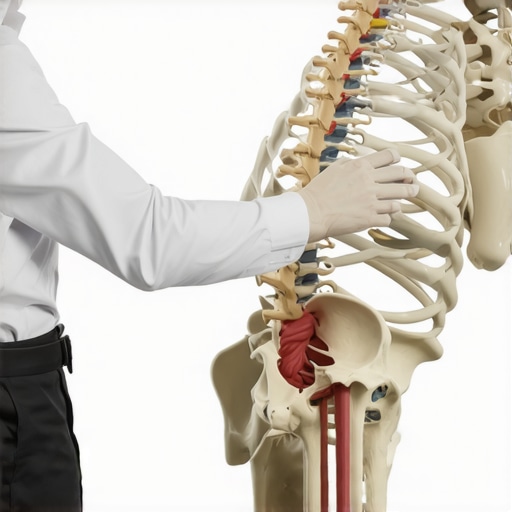
3 Reasons Your Reading Osteopath Is Looking at Your Hips for Neck Relief
Imagine this: You have spent weeks dealing with a nagging, sharp pain at the base of your skull. It is a persistent ache that makes your morning commute along the A329 feel like an endurance test. Finally, you decide to seek professional help and book an appointment at a local clinic. You walk in, sit on the treatment couch, and explain that your neck is stiff, your shoulders are tight, and you are getting tension headaches. But instead of immediately massaging your neck, your practitioner begins by assessing the way you stand, the level of your pelvis, and the mobility of your hips.
This is a common “Why are you touching my hips?” moment for many of my patients here in Reading. As a practicing osteopath, my goal isn’t just to rub the spot that hurts; it is to find out why that spot is under so much pressure. In the world of osteopathy, we follow a Biomechanical Model that views the body as a single, integrated functional unit. We believe that structure governs function, and if one part of the machine is out of alignment, the rest of the system has to compensate.
Research into osteopathic manipulative treatment (OMT) shows that these gentle manual techniques – targeting muscles, bones, and the connective tissue known as fascia – are highly effective because they address the body’s interconnectedness. When you visit osteopaths in Reading, you aren’t just getting a neck crack or a shoulder rub; you are getting a full-body structural investigation. To understand why your neck is screaming for help, we often have to listen to what your hips are saying. For a deeper look at how we approach these issues, you might find our guide on Neck Pain Solutions: Innovative Strategies for Fast Recovery helpful.
Reason 1: The Kinetic Chain & The “Foundation” Effect
To understand the link between your hips and your neck, it helps to use the analogy of a house. If you noticed a large crack in the plaster of a bedroom ceiling on the second floor, you wouldn’t just keep patching the plaster. A surveyor would go straight to the basement to check the foundations. If the foundation is sinking or tilted on one side, the entire frame of the house shifts. The windows might stick, the doors might swing open, and eventually, the roof – the highest point – will show signs of structural stress.
In the human body, your pelvis and hips are the foundation. Your spine is the frame, and your head is the roof. This is known as the “kinetic chain.” The kinetic chain describes how forces are transferred through the body during movement. When you walk through Forbury Gardens or hike up toward the Chilterns, every step you take sends a force from your feet, through your knees, into your hips, up your spine, and finally to your neck.
Many patients searching for a Chiropractor Near Me or an osteopath are often suffering from what we call “Pelvic Tilt.” This occurs when the pelvis is rotated either too far forward (anterior tilt) or too far backward (posterior tilt). If your pelvis is tilted forward – often a result of long hours sitting at a desk in Green Park or commuting on the Great Western Railway – it creates an exaggerated curve in your lower back.
Because the human brain prioritizes keeping the eyes level with the horizon (a mechanism known as the “Righting Reflex”), your upper body must compensate for this tilt. If your lower back arches too much, your mid-back (thoracic spine) usually rounds forward to compensate, and your neck must then extend backward to keep you looking straight ahead. This “Forward Head Posture” puts an incredible amount of strain on the small muscles at the base of your skull. Research into the kinetic chain confirms that joint instability or misalignment in the lower extremities leads to compensatory pain in distant areas, most notably the cervical spine. This is why addressing the foundation is the only way to provide lasting relief for the roof. You can learn more about how your lower body affects your alignment in our article on Why Your Standing Desk Needs an Anti-Fatigue Mat to Save Your Hips or How Your Choice of Sneakers Might Be Wrecking Your Lower Back Alignment.
Reason 2: The Psoas, the Diaphragm, and the Vagus Nerve
The second reason your Reading osteopath is obsessed with your hips involves a muscle you may have never heard of: the Iliopsoas, or “Psoas” for short. The psoas is the only muscle in the human body that connects the upper body to the lower body. It originates from the T12 to L4 vertebrae of your spine and attaches to the femur (thigh bone). It is your primary hip flexor, responsible for bringing your knee toward your chest.
However, the psoas is much more than just a hip muscle. It has a profound relationship with your breathing and your nervous system. Clinical research (Research #2) has shown that OMT focused on the iliopsoas can significantly reduce tension and improve the function of the diaphragm. This is because the psoas is anatomically linked to the diaphragm via the medial arcuate ligament.
When you are stressed – perhaps rushing to catch a train at Reading Station or meeting a tight deadline – your psoas tends to contract. Because we spend so much time sitting, our psoas muscles are often chronically shortened and tight. A tight psoas pulls on the lumbar spine, but more importantly, it restricts the full excursion of the diaphragm. When you cannot breathe deeply using your diaphragm, your body resorts to “chest breathing.”
Chest breathing relies on what we call “secondary respiratory muscles.” These are the muscles in your neck and tops of your shoulders, specifically the scalenes and the upper trapezius. Instead of the diaphragm doing the work, your neck muscles have to lift your entire ribcage 20,000 times a day just so you can breathe. No wonder your neck feels like it’s made of concrete! By performing a Reading sports massage or osteopathic hip release, we can relax the psoas, allow the diaphragm to drop, and finally give those overworked neck muscles a chance to rest. If you’ve been searching for a sports massage near me to fix a stiff neck, don’t be surprised if the therapist spends a significant amount of time working on your abdomen and hip flexors. For a deeper dive into this specific muscle, read The Psoas Release That Finally Ends Your Deep Lower Back Ache.
Reason 3: Fascial Continuity & The “S” Curve
The third reason involves a fascinating substance called fascia. Think of fascia as a thin, tough, continuous “body suit” that wraps around every muscle, bone, nerve, and organ in your body. It isn’t just a series of separate parts; it is one interconnected web. If you pull on the bottom of a sweater, you will feel the collar tighten against your neck. Fascia works exactly the same way.
When I see Reading Osteopaths colleagues treating patients, they are often looking for “snags” in this fascial web. If you have had an old hip injury, a pelvic imbalance, or even chronic tension from local activities like rowing on the Thames, that fascia can become thickened and restricted. A restriction in the hip fascia can create a downward pull that travels through the lateral line or the posterior chain of the body, eventually tugging on the fascia of the upper back and neck.
Furthermore, we must consider the “S” curve of the spine. The spine is designed with natural curves: a forward curve in the neck (cervical lordosis), a backward curve in the mid-back (thoracic kyphosis), and a forward curve in the low back (lumbar lordosis). These curves act like a spring to absorb shock. However, they are mathematically linked. If the curve in your lower back increases because your hips are tight and tilted, the curve in your neck must increase to maintain balance. This is often the root cause of chronic neck pain that simply won’t go away with local treatment.
Many residents seeking caversham massage services find that while a neck massage feels great in the moment, the pain returns within days. This is because the fascial “pull” from the hips hasn’t been addressed. By releasing the hip capsule and the surrounding myofascial structures, we restore the natural “S” curve of the spine, allowing the neck to sit in a neutral, strain-free position. To understand how these curves interact, check out our post on Understanding the Link Between Poor Posture and Chronic Back Pain.
The Role of Integrated Therapy in Reading
In my clinical practice and my work lecturing on sports massage, I emphasize that the best results come from an integrated approach. While osteopathy provides the structural framework and the high-level diagnostic mapping of these kinetic chains, soft tissue work is often the key that unlocks the door.
This is why sports massage reading is such a vital component of our local healthcare ecosystem. A skilled sports massage therapist can spend the necessary time breaking down the stubborn adhesions in the glutes, TFL (tensor fasciae latae), and psoas. Once those “anchor points” in the hips are loosened, the osteopathic adjustment of the neck or upper back becomes much more effective and, more importantly, the results last much longer.
Living and working in Reading, I see a specific set of postural challenges. We are a town of commuters, tech workers, and active individuals. Whether you are spending eight hours a day in an office chair at Apex Plaza or training for the Reading Half Marathon, your hips are under constant demand. If they lose their mobility, your neck will eventually pay the price. Bridging the gap between soft tissue work and structural alignment is what I strive to do every day, ensuring that our community doesn’t just manage pain, but moves toward true functional health. You can even start your own recovery at home with something as simple as The 2-minute foot drill that improves your whole body mobility.
Conclusion: Looking Beyond the Pain
Neck pain is rarely just a neck problem. It is usually the “symptom” of a much larger “cause” located elsewhere in the body. If your practitioner only looks at where it hurts, they are missing the bigger picture. By examining the hips, we are looking for the root of the imbalance. We are checking the foundations of your “house” to ensure that the roof can stay stable for years to come.
If you are struggling with recurring neck stiffness, tension headaches, or shoulder pain that just won’t quit, it might be time for a holistic perspective. Don’t settle for a quick fix that only addresses the surface. Book a consultation with a Reading professional who understands the intricate dance between your hips and your head. Whether it’s through osteopathy, a targeted sports massage reading session, or postural retraining, we are here to help you find lasting relief.
Ready to find the root cause of your pain? Contact Us today to schedule an assessment and start your journey toward a pain-free life.