
4 signs your dizziness is coming from your neck alignment

I was standing in a grocery store line, just trying to decide between two brands of salsa, when the floor suddenly felt like a trampoline. It wasn’t the violent spinning of a tilt-a-whirl; it was more like I was trying to walk on the deck of a boat in a choppy lake. My first thought was a stroke. My second was a weird inner ear virus. But as I gripped the handle of my cart to stay upright, I realized my ears felt fine—it was the base of my skull that felt like it was stuck in a vice. I’d spent years ignoring that dull ache, and now my body was hitting the panic button. Have you ever felt that unsettling sense of being ‘off’ without the world actually spinning around you? [image_placeholder]
The Moment I Realized My Ears Weren’t the Problem
For months, I chased the wrong tail. I saw specialists who checked my hearing and looked for crystals in my inner ear, but everything came back ‘normal.’ It was a classic mistake: I was treating the symptom instead of the source. I finally learned that my poor posture habits had essentially ‘blinded’ the position sensors in my upper neck. When those sensors, called proprioceptors, get compressed or misaligned, they send garbled signals to your brain about where your head is in space. It turns out that effective neck pain solutions are often the missing link in stopping that lightheadedness. I even found that something as small as adjusting my pillow height could be the difference between a clear head and a foggy, wobbly morning.
Is it Really Possible for a Stiff Neck to Make the Room Tilt?
You might be skeptical because we’re taught that balance is all about the ears. However, research published in the Journal of Manual & Manipulative Therapy indicates that cervical spine dysfunction is a major, often overlooked contributor to balance disorders. If the muscles at the top of your neck are constantly tight, they can actually interfere with the vestibular-ocular reflex—the thing that keeps your eyes steady while you move.
Your Neck is the Secret Captain of Your Balance
Today, I want to help you figure out if your ‘vertigo’ is actually cervicogenic dizziness. It’s a fancy term for a simple problem: your neck and your brain aren’t speaking the same language. Many people find that practicing a quick 10-second chin tuck can provide immediate, albeit temporary, grounding when things feel shaky. If your dizziness is worse when you turn your head rather than when you lie down, or if it comes with a headache at the base of your skull, you’re likely dealing with a neck alignment issue rather than an inner ear problem. We are going to break down the four specific red flags that prove your neck is the culprit and, more importantly, how to get your feet back on solid ground.
Stop Your Brain from Misreading Your Neck
Think of your neck like a high-speed fiber-optic cable connecting your head to your body. Inside that cable are millions of sensors telling your brain exactly where your head is in relation to the floor. When you spend hours hunched over, these sensors get compressed and start sending ‘noisy’ data. It is like trying to use a GPS that thinks you are three blocks away from where you actually are. This confusion is what creates that floating, disconnected feeling. To see if this is happening to you, try the one-legged standing test for hidden spinal instability. If you find your balance is significantly worse when you turn your head to the side while standing on one foot, the problem is likely coming from your cervical spine, not your inner ear. 
Reboot Your Internal GPS in Seconds
The first thing I do when I feel the ‘boat-deck’ sensation is a series of resets. I remember one Tuesday morning at the office when the fluorescent lights started making me feel seasick. I didn’t reach for an antacid; I performed a the 10-second chin tuck to combat tech neck instantly. By drawing my skull back over my shoulders, I manually decompressed those sensors. It felt like someone had finally stopped shaking the camera. Following this up with the Bruegger position fast way to reset your posture at work opens up the chest and drops the shoulders, which stops the upper traps from pulling on the base of your skull. If you feel a sharp pull while doing this, you might need to incorporate the 30-second ear-to-shoulder stretch that actually works to loosen the lateral muscles that are tethering your head in a tilted position.
Why Your Desk Setup is Secretly Stealing Your Balance
We often blame stress for our dizziness, but it is often the physical manifestation of how we sit. I realized my monitor was too low, forcing my chin to jut out—a position called ‘turtling.’ This constant extension at the top of the neck grinds the joints where the most important balance sensors live. You must how to adjust your monitor to stop that burning neck pain to ensure your gaze is level. If you are constantly looking down, your brain receives a signal that you are falling forward, so it overcompensates by tensing your back muscles. This creates a vicious cycle where the connection between jaw clenching and chronic neck pain further destabilizes your equilibrium. I also found that how your jaw tension is quietly causing your upper back knots was a major contributor; when the jaw is tight, the neck cannot relax, and the balance signals stay garbled. By fixing the height of my screen and performing micro-resets, I went from feeling like I was on a ship to having solid ground beneath my feet again.One of the biggest lies we are told about recovery is that ‘tightness’ always needs to be stretched out. In my experience, if your dizziness is coming from your neck, aggressive stretching can actually be the gasoline on the fire. When your cervical spine is unstable, your muscles tighten up as a survival mechanism—a literal ‘splinting’ to protect your spinal cord. If you force those muscles to let go without addressing the underlying stability, you are removing your body’s only defense. This is why I often tell people that how professional adjustments improve your balance and coordination works differently; it isn’t just about ‘unsticking’ a joint, but about recalibrating the neural feedback loop between your neck and your brain.
Why do balance tests come back clear when you still feel like you are on a boat?
This is the most common frustration I hear. You pass the caloric tests and the rotary chair at the ENT, yet you still feel ‘off.’ A study in the journal Gait & Posture found that patients with neck-related dizziness often have significant deficits in postural sway that traditional inner-ear tests simply aren’t designed to catch. This happens because your brain is trying to weigh three different inputs: your eyes, your ears, and your neck sensors. If the neck sensors are lying, but the eyes and ears are fine, the brain essentially ‘glitches.’ This is a classic case of the difference between muscle soreness and nerve irritation. Your muscles aren’t just tired; your nerves are confused. 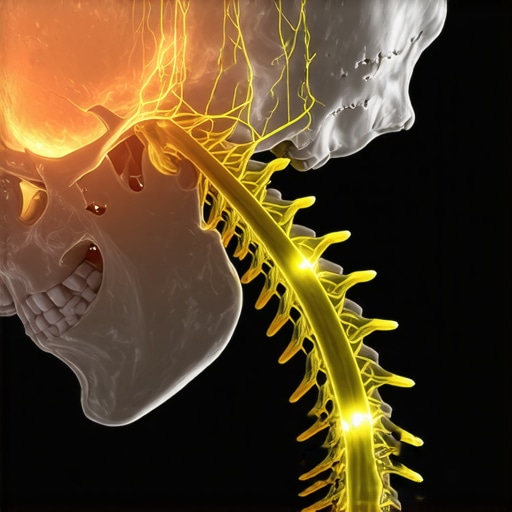 One major ‘trap’ I see is people trying to fix their secondary symptoms with high-intensity movement or ‘power’ stretches. For instance, many people with lower back tension alongside neck issues start pulling their knees to their chest for back relief, but if there is an underlying disc issue, this can actually increase the internal pressure and make you more wobbly. Similarly, understanding why stretching your hamstrings often makes your sciatica worse is a nuance most beginners miss; you might be yanking on a nerve that is already inflamed, rather than a muscle that is actually short. Instead of chasing the stretch, you should be chasing stability. Finding the single best exercise for stabilizing a wobbly lower spine or neck is about teaching the deep stabilizers to fire again. This is why why maintenance care is better than waiting for a spinal crisis is the mantra of anyone who has actually overcome chronic dizziness. You have to keep the ‘fiber optic cable’ clear before it starts sending those garbled signals again. Have you ever fallen into this trap of stretching a ‘tight’ muscle only to have the pain or dizziness come back even worse the next day? Let me know in the comments.
Gear that stops the wobbles before they start
I don’t just rely on exercises; I rely on environmental triggers. My favorite ‘secret weapon’ is a simple monitor riser that cost me twenty dollars but saved me thousands in medical bills. Most people just stack books, but a dedicated riser ensures your eyes hit the top third of the screen without you having to think about it. If you haven’t done it yet, you need to learn how to adjust your monitor to stop that burning neck pain because your eyes dictate your posture. I also swear by a lumbar support pillow for my car. When I’m driving, my lower back tends to flatten out, which sends a ripple effect of tension up to my skull. By keeping that natural curve, I’m essentially telling my brain that the entire spinal foundation is stable and secure. Another non-negotiable for me is ‘spinal hygiene,’ a concept popularized by Dr. Stuart McGill, a world-renowned expert in spine biomechanics. He argues that it’s the little movements—how you brush your teeth or pick up a pen—that determine your long-term success. For instance, I replaced my morning ‘slump’ on the sofa with a specific seating arrangement. I learned that how to use a towel roll to support your neck while watching TV can provide that gentle passive support that prevents my upper cervical joints from locking up during a long movie. 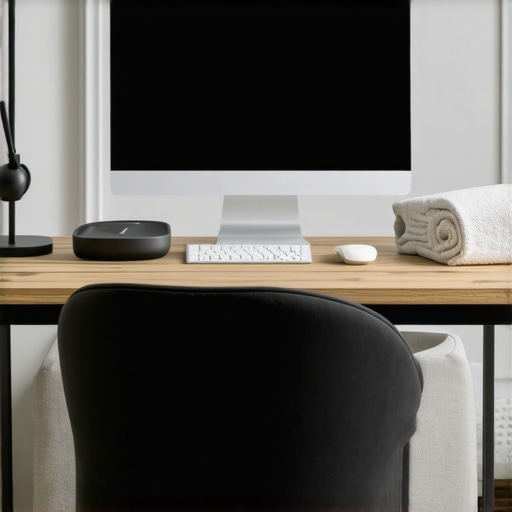
How can I keep my neck sensors calibrated for good?
The secret isn’t a 60-minute gym session; it’s the 20-second interval. I use a haptic feedback app on my phone that vibrates every twenty minutes to remind me to move. This is why I am such a big advocate for why your body needs micro-breaks every 20-minutes to stay mobile. During these breaks, I don’t just stand up; I perform a the 3-second pelvic reset you can do while waiting in line or at my desk. It keeps the proprioceptors in my hips and neck from going ‘dark’ or sending static. I’ve also noticed that sensory input from my feet changes how my neck feels. Believe it or not, knowing how a 5-minute walk barefoot can help your chronic back tension was a game-changer for my balance because it wakes up the entire posterior chain. Looking ahead, I predict we’re going to see a massive shift toward ‘smart clothing’ that tracks spinal shear in real-time. We are moving away from reactive care and toward proactive, wearable biofeedback. But until your shirt can tell you you’re slouching, you have to be your own advocate. You need to keep up with mobility mastery daily tips to keep your spine and joints healthy to stay ahead of the curve. If you feel that familiar tightness creeping back between your shoulder blades today, don’t wait for the room to start tilting. Stop what you are doing right now and perform the 30-second wall slide for instant shoulder blade relief. It’s the fastest way to reset your upper back and keep those balance sensors happy. If you ever feel a sudden change that includes numbness or weakness, always check if your back pain is a sign of something more serious.
Why I Stopped Chasing Symptoms and Started Fixing My Foundation
One of the most profound shifts in my journey was realizing that my dizzy spells weren’t a permanent brain glitch but a communication error between my cervical spine and my brain. I learned that finding the right neck pain solutions requires patience because you are essentially retraining your nervous system to trust the proprioceptive data coming from your neck. If I could go back, I would tell myself that ‘feeling off’ is often just a signal that my upper vertebrae are starving for better alignment. I also discovered that how professional adjustments improve your balance and coordination is less about a quick ‘pop’ and more about clearing the neural static that causes that floaty, disconnected sensation.
The Daily Tools That Keep My World Stationary
Staying balanced isn’t a one-time fix; it is a lifestyle of small, intentional choices. To keep my internal GPS calibrated, I rely on a few non-negotiable items in my environment. First, a simple monitor riser is essential; you must learn how to adjust your monitor to stop that burning neck pain to prevent the ‘turtling’ posture that triggers equilibrium issues. Second, I integrated how a 5-minute walk barefoot can help your chronic back tension into my daily routine to re-engage the sensors in my feet. Finally, for localized relief, knowing how to use a foam roller on your neck without injury allowed me to manage muscle tension without overstressing the delicate joints of the upper spine. These tools aren’t just gadgets; they are the gatekeepers of my stability.
[image_final]
Your Path to a Clearer and Steadier Tomorrow
If you are currently feeling like you are trapped on a moving ship, please know that your body has an incredible capacity to recalibrate once the interference is removed. You don’t have to live in a permanent fog or fear the next sudden head turn. By consistently applying mobility mastery daily tips to keep your spine and joints healthy, you are giving your brain the clean, accurate data it needs to keep you upright and confident. Start small, be consistent with your resets, and listen to the subtle cues your neck is sending you. Have you ever felt like you were walking on a boat even though you were on solid ground? Let me know your experience in the comments below.