
The One-Inch Rule for Setting Up Your Computer Monitor
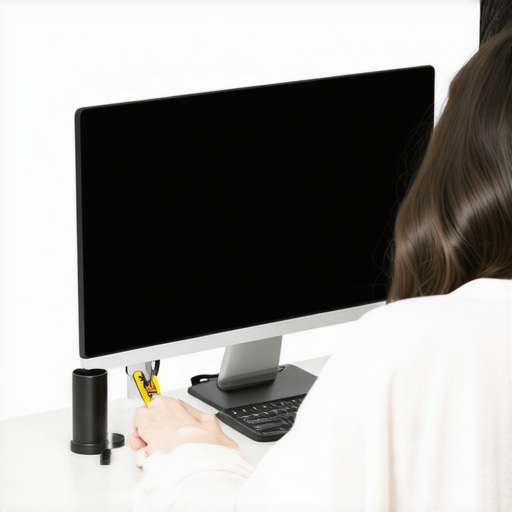
I remember the exact moment I realized my monitor setup was secretly sabotaging my neck health. I was hunched over my desk, neck aching, shoulders tense, and frustration creeping in. It hit me: I’d been ignoring a tiny detail that could be the key to lasting relief. That lightbulb moment? When I discovered the One-Inch Rule for monitor positioning. Just one inch changed everything for me—and it can for you too.
The Power of One Inch: How Your Screen Placement Could Be Costing You Pain
For years, I suffered silently. I thought my bad posture or stressful days were to blame. But it wasn’t until I measured my monitor height and took that crucial Inch into account that I started noticing real improvements. The proper alignment of your screen isn’t just about comfort; it’s about protecting your neck from chronic pain, stiffness, and even nerve issues like sciatica.
Let’s be honest—many of us spend hours at our desks, eyes glued to screens that are often placed too low, too high, or just plain wrong. These seemingly minor details can snowball into serious health issues. I used to think I needed complex exercises or pricey ergonomic gear. Turns out, the solution was simpler than I thought. A tiny adjustment based on the One-Inch Rule made a world of difference for my mobility and neck pain.
Is the One-Inch Rule Actually Worth the Hype?
Now, I’ll admit—I was skeptical at first. It seemed too trivial to have such a profound impact. But I made the mistake early on of neglecting this simple step. I thought my ergonomics were fine, but my neck pain persisted. When I finally measured and adjusted my monitor, I felt immediate relief. Research supports this—proper monitor height can significantly reduce neck strain by aligning your head and spine correctly (source).
So, do you find yourself struggling with similar issues? Do you often sit for long hours, feeling that nagging stiffness or morning pain? If yes, then this is the perfect starting point. Stick around—I’ll guide you through how to implement this simple yet powerful rule in your own workspace. Because sometimes, the smallest changes lead to the biggest benefits.
Position Your Monitor for Maximum Comfort
Start by sitting comfortably at your desk. Think of your neck as the hinge of a camera; if the lens is off-center, your view becomes distorted and strained. To correct this, measure the distance from your eyes to your monitor. Ideally, your screen’s top should be aligned with your eye level plus one inch. Use a ruler or tape measure to check, and adjust your monitor height accordingly. If you’re using a laptop, consider elevating it with books or a stand to reach that perfect height.
Adjust Your Workspace Like a Pro
Once you’ve set your monitor, reconfigure your workspace. Keep your keyboard and mouse at a height where your elbows are bent at about 90 degrees. Your monitor should be directly in front of you, about an arm’s length away. Remember, small tweaks matter—if your monitor’s too far or too close, it can cause additional strain. Think of this as fine-tuning a musical instrument; precision is key.
Test and Refine Your Posture
After making adjustments, sit back and observe your posture. Your head should be balanced over your shoulders, not jutting forward. If you notice tension, return to your setup and tweak the monitor height slightly. A quick trick is to perform the neck mobility exercises to assess comfort and flexibility. Practice this regularly; consistency cements good habits and prevents pain from sneaking back in.
Use Visual Cues and Reminders
Place a sticky note on your screen with a reminder to keep your monitor at the right height. Over time, your body will adapt, and maintaining the correct position will become second nature. Think of it like setting GPS waypoints—initial guidance leads to a smoother journey. If you experience persistent discomfort, consider consulting an expert, like at Body Renew Therapy, for personalized guidance. Remember, small yet deliberate adjustments are your best tools to combat the silent sabotage of poor monitor placement.Many people assume that neck pain, sciatica, and back stiffness stem solely from obvious causes like injury or poor posture. However, as an expert in spinal health, I can tell you there’s often a nuanced layer many overlook. A common myth is that pain always originates from the site where you feel it—like a pinched nerve causing leg numbness. In reality, the root may be a subtle imbalance elsewhere, such as hip mobility or even foot alignment, which affects your entire kinetic chain. Relying solely on isolated stretches or strengthening exercises without addressing these interconnected issues can lead to a frustrating cycle of temporary relief followed by recurrence.
Why does focusing only on the symptomatic area often backfire?
Because the body operates as a complex system, addressing only the immediate pain point misses the underlying cause, leading to compensation and further dysfunction. For example, trying to stretch a tight hamstring might reduce discomfort temporarily, but if your pelvis is misaligned due to weak core muscles or limited ankle mobility, the hamstring tension will persist or worsen. {External citation: The importance of integrated movement correction is supported by research showing that addressing global movement patterns yields more sustainable outcomes than isolated interventions.} Be cautious of quick fixes promising instant relief; instead, invest in comprehensive assessments and personalized strategies. For instance, incorporating mobility exercises that target multiple joints, like the pelvic tilt drills or ankle strengthening routines, enhances overall function and prevents chronic issues. Want to dive deeper? Check out how mobility mastery can transform your spine health and prevent degenerative changes—learn more about daily tips to keep your joints healthy. Do you often overlook subtle misalignments? Let me know in the comments. For more tailored advice, consider consulting experts who understand the interconnectedness of movement, like at {https://bodyrenewtherapy.com/contact-us}. Remember, unlocking lasting relief often requires looking beyond the surface and addressing the root cause with nuanced, deliberate actions.
Ensuring your neck, back, and overall mobility stay in top shape requires more than just occasional stretches. Investing in the right tools and adopting effective methods can make a significant difference in managing pain and preventing long-term issues. One of my go-to equipment pieces is the Tennis Ball Trigger Point Tool. I personally use it daily to release tight fascia and knots in my neck and shoulders, which are common culprits for ongoing tension and headaches. Its portability and simplicity make it an invaluable part of my routine, especially when I feel knots forming after long hours at the computer.
Another essential tool is a high-quality ergonomic monitor stand. I recommend the Varidesk series because it allows quick height adjustments, ensuring your screen remains at the optimal level—the One-Inch Rule in action. Proper monitor positioning reduces neck strain over time and aids in maintaining a healthy spinal curvature. Personally, I’ve found that a slight tilt combined with a consistent setup helps prevent cumulative stress that tends to build up unnoticed.
When it comes to software, I advise using reminder apps like Stretchly or SmartBreak. These programs gently alert me to take short breaks, perform mobility exercises, or simply reposition my workspace. They serve as external cues that reinforce good habits, which can fade without conscious effort. I’ve noticed that a quick, two-minute stretch every hour significantly decreases the stiffness and fatigue that often lead to more severe pain.
Looking ahead, I predict that wearable technology—such as posture-tracking sensors—will become mainstream. These devices can give real-time feedback on your alignment and posture, making proactive adjustments effortless. Companies like Upright are developing such tools, and integrating them into daily routines could become a standard practice for long-term spinal health.
How do I maintain spinal health over time?
Consistency is key. Incorporating the right tools, like a trigger point ball for myofascial release or an adjustable monitor stand, creates a foundation for sustainable habits. Regularly performing mobility routines, guided by expert content such as these tips, ensures your joints and spine stay flexible and resilient. Furthermore, consider scheduling periodic professional assessments—many patients overlook the importance of expert guidance, which can help identify subtle issues before they escalate. You might explore options at specialized clinics for personalized support. Remember, integrating these tools and habits into your daily life now will lead to more comfortable, pain-free movement in the years ahead. Don’t hesitate to try one of these advanced strategies—especially the trigger point massage with a tennis ball—to experience immediate relief and set yourself on a path toward lasting spinal health.
The Hardest Lesson I Learned About Neck Pain and Mobility
One of the most profound lessons I’ve encountered is recognizing how seemingly minor habits—like monitor height or foot placement—can have outsized impacts on spinal health. I used to believe that pain was solely linked to injuries or strenuous activities, but I realized often it’s the daily nuances that cause long-term issues. Embracing this understanding transformed my approach, reminding me that small, consistent adjustments—like the One-Inch Rule—are the real game changers.
Tools That Keep My Spine Happy and Mobile
Over time, I’ve curated a toolkit that supports ongoing spinal wellness. The Trigger Point Tennis Ball helps me release tension knots in my neck and shoulders daily, preventing headaches. An ergonomic monitor stand ensures my screen stays at the perfect height, reinforcing good posture. Additionally, apps like Stretchly serve as gentle reminders to take mindful breaks, which keep my joints flexible and my mind alert.
Embracing Close Calls and Lessons in Patience
My journey hasn’t been without setbacks. There were moments when I ignored subtle signs—like lingering stiffness or slight numbness—and paid the price. These close calls reinforced the importance of listening to my body, taking proactive steps, and seeking expert guidance when needed. Remember, your body is a complex network—focusing solely on isolated pain points can be counterproductive. Instead, I encourage a holistic approach involving mobility routines, proper ergonomics, and patience, knowing that sustainable relief is a marathon, not a sprint.
For deeper insights and personalized strategies, consider visiting Body Renew Therapy. Take small steps today—your spine will thank you tomorrow.