
Why your heavy purse is shifting your shoulder alignment

I remember standing in the checkout line three years ago, feeling a searing heat radiating from my right shoulder blade down to my mid-back. I shifted my everything-but-the-kitchen-sink tote bag to the left side, only to feel my neck cramp up instantly. It was a wake-up call I had been ignoring for months. I used to think I was just getting older or that my desk job was the sole culprit, but the reality was hanging right there on my shoulder. We carry our lives in our bags—laptops, chargers, snacks, and those massive water bottles—without realizing we are essentially asking our bodies to compensate for a permanent, lopsided weight. If you have noticed one shoulder sitting higher than the other in the mirror, or if you feel a persistent ache on one side of your neck, you are not imagining it. Today, I am going to show you exactly how that daily accessory is remodeling your skeleton and share the simple shifts that saved my own posture.
Your Favorite Tote is Redesigning Your Spine
When you carry a heavy weight on just one side, your body performs a complex feat of engineering just to keep you upright. Your brain tells the muscles on the opposite side to tighten up to keep you from toppling over. This creates a functional imbalance where your spine starts to curve to manage the load. I made the mistake of carrying a 15-pound leather bag for years, thinking the discomfort was just part of a busy life. I did not realize that I was deep-diving into the link between poor posture and chronic back pain until I could barely turn my head to check my blind spot while driving. This unilateral loading puts immense pressure on your traps and the levator scapulae muscle. Have you ever felt that sharp tugging sensation near your neck? That is often because your shoulder blade pain is often coming from your lower neck as it struggles to stabilize the weight. According to a study published in the Journal of Physical Therapy Science, carrying a bag on one shoulder for even short periods significantly increases the risk of developing a lateral spinal lean. It is not just about the weight; it is about how the weight forces your joints to compensate. I found that learning how to properly carry groceries to balance your spinal load was the first step in retraining my brain to crave symmetry. Have you noticed your own shoulders looking uneven after a long day of running errands?
Will switching to a backpack actually make a difference?
I was the ultimate skeptic when it came to backpacks. I thought they were for students and hikers, not for my professional life. But the truth is, the physics do not lie. When you split the load across both shoulders, you stop the constant tug-of-war happening in your mid-back. If you are not ready to give up the tote, you at least need a strategy to reset the damage. I started using the 30-second wall slide for instant shoulder blade relief every time I got home and set my bag down. It felt like my spine was finally exhaling. We are going to look at how to audit your bag weight and the specific exercises that can reverse that lopsided tilt before it becomes a permanent fixture in your posture.
Strip Your Bag of the Dead Weight
Start by dumping everything out on your floor. When I finally did this, I found three half-empty water bottles, a novel I finished months ago, and enough loose change to anchor a small boat. Your body is not a forklift; you should not carry more than 10% of your total body weight on a daily basis. If you insist on a one-sided tote, that number needs to drop to 5% to avoid permanent structural shifts. This is the first practical step in mobility mastery—removing the mechanical stress before you attempt to fix the damage. Think of your spine like a sailboat mast; if the tension wires on the right side are always tighter than the left, the mast will eventually warp. By auditing your daily load, you stop the ‘warp’ before it sets in.
Reset Your Nervous System Between Meetings
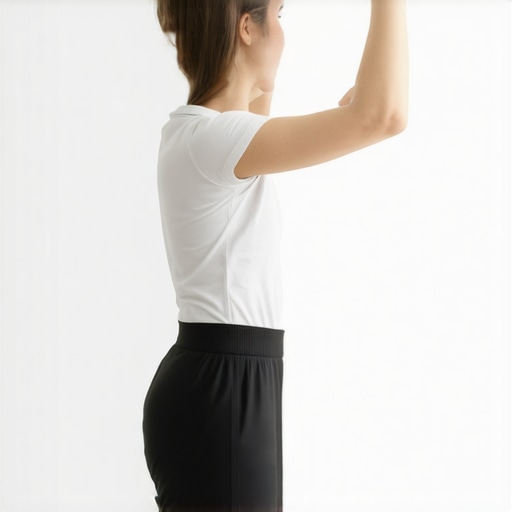
When you carry a bag on one side, your brain creates a new ‘normal’ for your shoulder height. I remember walking into a coffee shop and realizing my right shoulder was glued to my ear, even though my bag was in the car. To break this habit, you need a neurological reset. I found that the bruegger position is a fast way to reset your posture at work because it forces the muscles that have been overstretched to fire again. Sit at the edge of your chair, rotate your arms so your palms face forward, and tuck your chin slightly. It feels like your spine is being pulled back into its proper groove.
Turn Your Core Into a Built-In Brace
If your mid-section is ‘quiet,’ your shoulders have to work twice as hard to stabilize that swinging bag. This is why many people feel a deep, hot ache in their mid-back. To fix this, you have to wake up the deep stabilizers. I started incorporating the dead bug exercise into my morning routine because it teaches your spine to stay neutral while your limbs are moving. It sounds simple, but the first time I tried it, my ribs flared up immediately—a clear sign my core was letting my back do all the heavy lifting. When your core is engaged, your bag weight is distributed through your hips rather than hanging off your delicate neck vertebrae.
Target the Specific Tightness in Your Traps
The burning sensation you feel at the end of the day is often the result of your upper trapezius being in a state of ‘constant on.’ To lower the volume on that pain, you need to lengthen the tissue without overstretching it. I recommend the 30-second ear-to-shoulder stretch to provide immediate relief to the levator scapulae. This is vital because neck pain and stress often feed into each other; once your neck tightens from the bag weight, your stress levels spike, causing you to shrug even higher. You can also find the fix for that constant burning sensation between your shoulder blades by using a lacrosse ball against a wall to pin and stretch the small muscles that have been compressed by your bag straps. I spent months thinking I needed a full-body massage when all I really needed was to release those two-inch clusters of muscle tension.
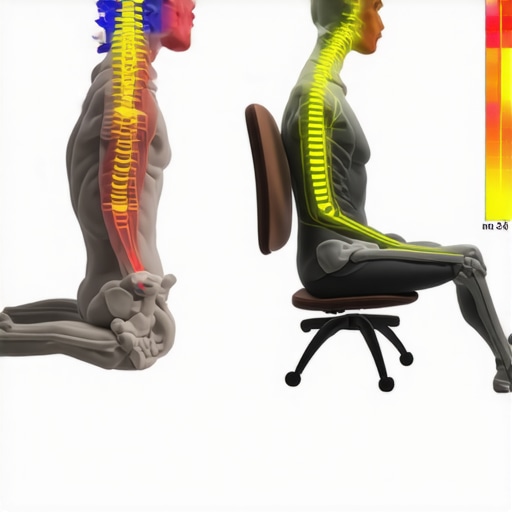
While we have covered the basics of load management, there is a nuance most people miss: we often treat the symptom, not the source. One of the biggest mistakes I see is the ‘correction’ people attempt once they realize their posture is failing. I spent years trying to pull my shoulders back and down, mimicking a soldier on parade, because I thought that was ‘correct.’ However, I was actually falling into a common trap. Research from the Cornell University Department of Ergonomics suggests that ‘static upright’ sitting actually increases spinal disc pressure compared to a more relaxed, slightly reclined position. This is precisely why sitting up straight might be giving you more back pain; you are essentially swapping one form of muscle fatigue for another. Real mobility mastery involves dynamic movement rather than holding a rigid, artificial pose that locks your vertebrae in place.
Stop Fighting Your Spine with Rigid Posture
In my experience, the biggest myth in the wellness world is that symmetry means ‘stillness.’ If you have been carrying a heavy bag on your right side, your left side is not just weak; it is functionally confused. People often try to fix this by stretching the side that feels tight, but this is the ‘Oops’ factor most therapists warn against. If a muscle is tight because it is being overstretched (like the traps on the side of your heavy bag), adding more stretching to it is like pulling on a frayed rope. Instead, you often need to address the link between tight pecs and constant shoulder aches on the opposite side to allow the shoulder blade to sit back naturally. Have you ever fallen into this trap of stretching the pain instead of the restriction? Let me know in the comments.
Why does my leg still burn when I stretch my hamstrings?
This is the question that finally led me to understand the complex world of nerve tension. When the heavy weight of a bag or a lopsided gait starts to affect your lower lumbar, it can compress the sciatic nerve. Most people respond by reaching for their toes, but why stretching your hamstrings often makes your sciatica worse is because nerves do not like to be stretched—they like to be ‘glided.’ If you feel a sharp, electric zing rather than a dull muscle pull, you are dealing with the difference between muscle soreness and nerve irritation. Instead of aggressive stretching, I recommend the nerve glide exercise that calms burning leg pain. This ‘nerve flossing’ allows the nerve to move through the soft tissue without being tugged like a guitar string. It was a complete game-changer for my recovery, shifting the focus from ‘fixing’ a muscle to ‘soothing’ a system. Understanding these subtle distinctions is what separates temporary relief from a permanent return to mobility.
I have spent thousands of dollars on ergonomic gadgets, but the most effective tools in my arsenal are surprisingly low-tech and accessible. For instance, I keep a tennis ball in both my car and my desk drawer. I realized early on that my lower back tension was rarely about my back muscles—it was about my ‘sleeping’ glutes and tight hips. I use the ball for a very specific targeted release, following the protocol on how to use a tennis ball to relieve glute tension, to hit the piriformis muscle before it starts squeezing my sciatic nerve. This isn’t just a ‘feel-good’ massage; it is a strategic mechanical intervention. Authority in this space comes from understanding that the site of the pain is rarely the source of the problem. Biomechanist Dr. Stuart McGill, a leading expert on spinal mechanics, often points out that ‘proximal stiffness’ in the core is the prerequisite for ‘distal mobility’ in the limbs. This is why I shifted my focus toward building a ‘stiff’ core to protect a ‘mobile’ spine, which has been one of the biggest back pain breakthroughs for my personal recovery journey.
Stop Guessing and Use These Real-World Recovery Tools
If you are still using a foam roller on your lower back, you might be doing more harm than good by placing direct pressure on the spinous processes. Instead, I use my roller to target the front of my body. Learning how to use a foam roller on quads to relieve back pressure was a revelation because it addressed the anterior pelvic tilt that was jamming my facet joints every time I stood up. By loosening the quads and hip flexors, my pelvis could finally level out, instantly taking the ‘pinch’ out of my lumbar spine. 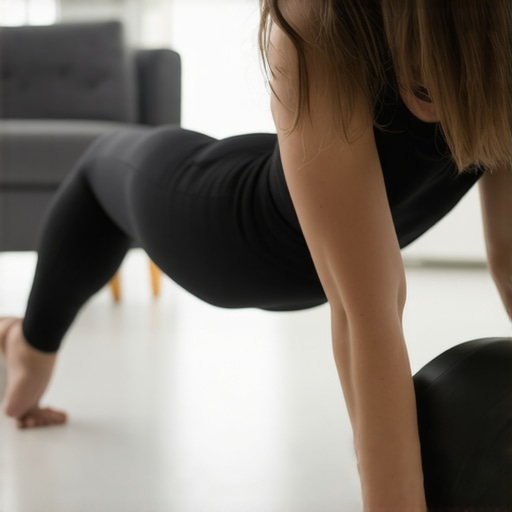
How do I maintain my mobility results over time?
The secret to long-term success isn’t a grueling 90-minute gym session once a week; it is the integration of ‘micro-habits.’ I have learned that why maintenance care is better than waiting for a spinal crisis is largely due to a phenomenon called ’tissue creep.’ If you sit for eight hours, your ligaments physically deform and take hours to return to their original shape. To combat this, I treat my body like a precision instrument that needs daily calibration. This includes being incredibly picky about my footwear. I used to prioritize fashion, but I eventually understood why your choice of work shoes matters more than your chair—if your heels are even slightly elevated, your entire spinal stack is thrown off balance from the ground up. Looking ahead, I predict a massive shift toward wearable biofeedback clothing. Within the next few years, we won’t need to remind ourselves to sit better; our shirts will likely provide haptic vibrations the moment our traps start to hike or our core goes soft. Until then, the responsibility lies with us to use these manual resets. I challenge you to pick one tool—a tennis ball or a foam roller—and spend just two minutes on your quads or glutes tonight. You will be surprised at how much ‘noise’ it clears out of your nervous system.
The Hardest Lessons My Lopsided Shoulder Taught Me
Reflecting on my journey from chronic aches to fluid movement, the biggest epiphany was that awareness is eighty percent of the battle. If you catch yourself shrugging while driving or standing in line, you have already won half the fight because you are no longer operating on autopilot. I also discovered that passive treatment, such as a therapeutic Sacramento massage only provides temporary relief if you return immediately to your old bag-carrying habits. You must change the mechanical input your body receives every day. Finally, I realized that symmetry isn’t a destination you reach and forget; it is a daily practice. I truly learned that maintenance care is better than waiting for a spinal crisis to occur.
#IMAGE_PLACEHOLDER_E#
My Daily Arsenal for Pain-Free Movement
I now swear by three simple, low-tech tools that keep my spine resilient. First, a standard tennis ball is my secret weapon; learning how to use a tennis ball to relieve glute tension saved my lower back when my hips started overcompensating for my shoulder tilt. Second, I audited my footwear and swapped flat, unsupportive loafers for shoes with proper arch support because your choice of work shoes matters more than your chair for overall spinal stacking. Finally, the 30-second ear-to-shoulder stretch is my non-negotiable “reset button” after any long commute or stressful meeting.
Reclaim Your Posture One Micro-Break at a Time
The road to mobility mastery is not about achieving a rigid, perfect pose; it is about persistence and small wins. You do not have to overhaul your entire lifestyle today—just lighten your daily load, focus on breathing into your core, and give your spine the frequent micro-breaks it deserves. Every small adjustment you make now is a significant investment in your future self and your long-term comfort. What is the one heavy item you always keep in your bag that you know you probably do not need? Let me know below!