
How to transition to a standing desk without leg pain
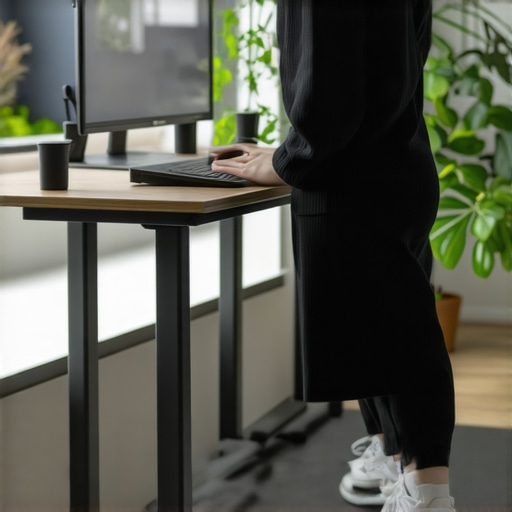
I was three hours into my new ‘healthy’ lifestyle when the reality of the standing desk hit me—not in the back, but in my ankles. They were pulsing. My lower back felt like it was being compressed by a hydraulic press, and my calves were tight enough to snap. I’d spent hundreds of dollars on this motorized mahogany beast only to find myself crawling back to my old, lumpy office chair by lunch. It felt like a betrayal. I followed the advice, I ‘stood up,’ and yet, I felt worse than ever. If you have ever stood there wondering why your feet feel like they are on fire, trust me, I have been there too.
The transition isn’t just about pushing a button and rising up; it is about how your body handles the shift in gravity. Today, I want to share the exact roadmap I used to stop the throbbing and finally enjoy my workspace. We are going to fix your posture, save your legs, and ensure you don’t end up with a sciatica flare-up just from trying to be healthy.
My Legs Were Screaming After Only Two Hours
I didn’t realize that the truth about standing desks is that they can be just as hard on your joints as sitting if you don’t respect the transition. My biggest mistake early on was ‘the statue’—I stood perfectly still, thinking that was the goal. It turns out that static standing is actually a nightmare for your circulation. According to a study published in the Journal of Physical Therapy Science, prolonged static standing leads to significant lower limb muscle fatigue and venous pooling, which explains that heavy, lead-like feeling in your calves. Have you ever felt like you were actually getting more tired just by standing still?
Is a Standing Desk Actually Worth the Hype?
It is a valid question. When you are dealing with transitioning from sitting to standing with a disc bulge or simple muscle fatigue, the ‘hype’ feels like a lie. But the desk isn’t the problem; it is the lack of a strategy. If you just stand up on a hard floor in your socks, you are asking for trouble. I learned the hard way that your choice of work shoes matters more than your chair ever did. Without the right support, your arches collapse, your knees rotate, and suddenly your lower back is in a pinch. We need to move away from the idea that standing is ‘resting’ and start treating it like a low-intensity activity that requires the right equipment and timing. I’ll show you how to build that endurance without the agony.
My first attempt at a four-hour standing marathon ended with me lying on the living room floor, legs propped up against the wall, wondering if I had permanently damaged my spine. The mistake was simple: I was treating my standing desk like a podium and myself like a statue. If you want to survive the workday without your ankles swelling, you have to stop standing still.
Set a Timer Before Your Body Starts to Complain
The most effective change I made was implementing a strict schedule. You shouldn’t wait for the pain to start before you move. I learned that why your body needs micro-breaks every 20 minutes to stay mobile is rooted in preventing that stagnant blood flow. Every 20 minutes, I either sit for five, do a lap around the room, or at the very least, change my stance completely. It feels tedious at first, like your phone is nagging you, but it prevents the cumulative fatigue that leads to a mid-afternoon crash. I used to think I was being productive by ‘powering through,’ but all I was doing was inviting a flare-up.
The Fidgeting Method for Happy Hips
If you watch someone who stands for a living—like a chef or a retail worker—they are never perfectly still. They are constantly shifting their weight from one foot to the other. I started using a small footrest under my desk to alternate which leg was elevated. This subtle shift takes the pressure off the lower lumbar and prevents that heavy sensation in your legs. It is a great way to perform a 10-second hip reset for relief without even leaving your Zoom call. Without this movement, you might find that your glutes are falling asleep, which forces your lower back to do all the heavy lifting of keeping you upright.
Use the Bruegger Reset to Kill the Slouch
Standing doesn’t automatically mean you have good posture. In fact, many people just trade a seated slouch for a standing lean. I caught myself leaning on my elbows or jutting my chin toward the screen far too often. Now, I use the Bruegger position to reset your posture every hour. You simply stand with your feet slightly wider than your hips, turn your palms outward, and pull your shoulder blades back and down. It feels like you are inflating your chest. I remember doing this after a particularly grueling data entry session; it felt like my lungs finally had room to breathe. Pairing this with a quick 30-second drill to open your chest can reverse the damage of hours spent hunching over a keyboard.
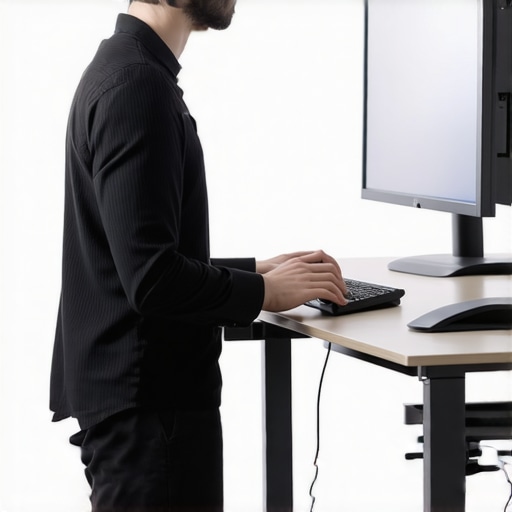
Eye Level is Not Where You Think It Is
The height of your desk is only half the battle. If your monitor is too low, you are still craning your neck, which leads to that familiar tension between the shoulder blades. I had to stack three thick textbooks under my monitor even after raising my desk to the ‘correct’ height. You need to adjust your monitor to stop that burning neck pain by ensuring the top third of the screen is at eye level. When I finally got my screen height dialed in, the headaches I’d been blaming on caffeine withdrawal vanished within two days. It is a small mechanical fix that saves your upper cervical spine from the constant strain of holding up an 11-pound head at an awkward angle.
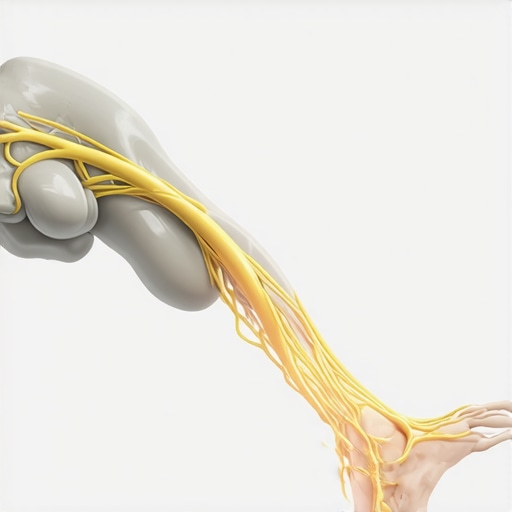
We often treat our bodies like a piece of stiff leather that just needs to be pulled and yanked until it is flexible again. But here is the nuance most people miss: your nerves do not like being stretched. While you might think you are working on a tight muscle, you could actually be aggravating an irritated nerve. One of the most common mistakes I see is the ‘stretch through the pain’ mentality. Everyone says you need to touch your toes to fix a tight back, but in my experience, static hamstring stretching is a recipe for disaster if you are dealing with a disc issue. If you have been doing your daily stretches but the pain is still there—or worse—you are likely trapped in a cycle of neural tension.
The Hamstring Stretch Trap That Fires Up Your Back
The ‘Oops’ factor here is massive. When you bend over to stretch your hamstrings, you are putting the sciatic nerve under maximum tension. If that nerve is already sensitized because of a bulge or inflammation, you aren’t ‘loosening’ it; you are tugging on a raw wire. This is why why stretching your hamstrings often makes your sciatica worse. Instead of relief, you get more throbbing. I spent months doing the classic ‘knees to chest’ move before realizing I was actually prolonging my own recovery. You need to learn the difference between muscle soreness and nerve irritation before you ever touch a yoga mat again. If the sensation feels like a sharp, electric zip or a burning heat, stop stretching and start gliding.
Could Your Favorite Yoga Pose Be Fueling the Fire?
It sounds like heresy in the wellness world, but for an advanced reader or chronic sufferer, the truth is that why your favorite yoga pose might be making your sciatica worse is often down to excessive flexion. A study published in the Journal of Orthopaedic & Sports Physical Therapy highlights that aggressive neural stretching can lead to intraneural edema—essentially swelling inside the nerve itself—which only increases the pressure in the spinal canal. This is why many people find that why sitting up straight might be giving you more back pain; they are forcing a rigid posture on an inflamed system. Instead of heavy stretching, I shifted my focus to the nerve glide exercise that calms burning leg pain. It is about movement without tension. Have you ever fallen into this trap of stretching through the pain? Let me know in the comments.
The Core Myth That Keeps You Stiff
We are told that a ‘weak core’ is the root of all evil, leading many to jump into high-intensity sit-ups or planks. However, if your spine is already in a state of crisis, traditional abdominal work can actually increase intradiscal pressure. I learned that why your core workout should not include traditional sit-ups is because the compression often outweighs the stability benefits. To truly protect your back while you transition back to health, you should focus on the dead bug exercise for back pain sufferers. It provides the stability your spine craves without the crushing force of a crunch. By focusing on mobility mastery for your spine and joints, you move away from ‘fixing’ your back and toward ‘supporting’ it. This shift in perspective changed everything for me, taking me from a frustrated desk worker to someone who can actually stand through a three-hour meeting without a single flare-up.
Once you stop the immediate fire of a flare-up, the real work begins: staying out of the danger zone. I used to think that feeling ‘okay’ meant I was cured, but that is the most dangerous stage. It is the moment we get complacent, stop our resets, and go back to old habits. This is why why maintenance care is better than waiting for a spinal crisis. You wouldn’t wait for your car engine to smoke before changing the oil, yet we treat our L5-S1 discs like they are indestructible until they scream. To keep my progress, I had to stop relying on willpower and start relying on a system of tools and habits that made ‘good’ posture the path of least resistance.
The Gear That Actually Saved My Spine
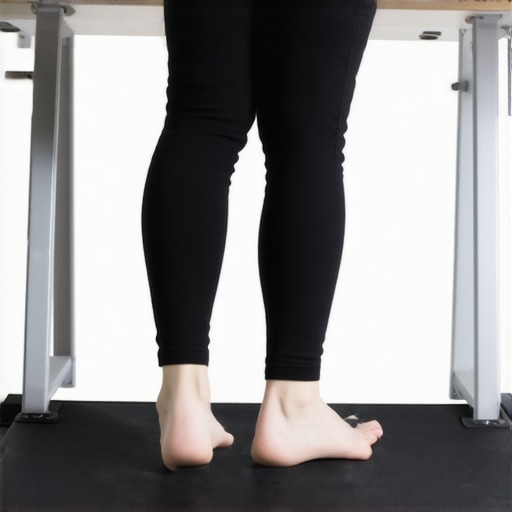
I stopped using a flat, cheap foam mat and invested in a contoured anti-fatigue mat—the kind with hills, ridges, and ramps. Most people think a mat is just for cushioning, but the real benefit of a textured surface is that it forces your feet to constantly engage. This micro-movement keeps the blood flowing and prevents the venous pooling I mentioned earlier. I also integrated ergonomic tips for everyday comfort into my peripheral vision by placing a small mirror next to my monitor. If I see my chin jutting forward or my shoulders creeping toward my ears, it is an instant visual cue to reset. It sounds low-tech, but it is far more effective than a vibrating posture sensor that eventually becomes background noise.
Beyond the desk, I realized that my recovery was being sabotaged by my downtime. I had to look at how to break the cycle of neck pain and stress by auditing my ‘phone time.’ I switched to using a tablet stand at eye level even when I’m just scrolling through social media on the couch. Dr. Stuart McGill, a world-renowned expert on spine biomechanics and author of Back Mechanic, emphasizes the concept of ‘spinal hygiene’—the idea that it isn’t just the one hour of exercise that matters, but the other 23 hours of how you move, sit, and sleep. If you are diligent at your desk but then spend three hours in a C-curve on the sofa, you are undoing all your hard work.
How do I keep my spine healthy for the long haul?
Consistency is the only ‘hack’ that actually works. I set a recurring appointment in my calendar every morning for a specific type of walking that helps a bulging disc—a fast-paced, 15-minute ‘power walk’ with a natural arm swing. This isn’t a stroll; the arm swing creates a gentle, rhythmic twisting in the spine that hydrates the discs and keeps the nerves sliding smoothly. I predict that in the next few years, we will see ‘dynamic workstations’ become the standard, where desks don’t just go up and down, but subtly tilt and shift throughout the day to mimic natural movement. Until then, we have to create that dynamism ourselves. If you want to take your recovery to the next level, I challenge you to try the ‘Wall Slide’ tonight: stand against a wall, keep your lower back flat, and slowly raise your arms. It’s the ultimate test for hidden shoulder and upper back tightness that might be fueling your neck pain.
The Real Reason My Spine Refused to Heal Faster
I spent years looking for a magic bullet—the perfect chair, the most expensive desk, or the one stretch that would ‘pop’ everything back into place. The lightbulb moment for me was realizing that my back pain wasn’t a mechanical failure but a lifestyle signal. First, I learned that consistency always beats intensity. Doing a 90-minute yoga class once a week didn’t undo 40 hours of static standing. Second, I had to accept that ‘comfort’ is often a trap; for example, my softest couch was actually my spine’s worst enemy. Finally, I realized that if I didn’t respect the subtle warnings—the dull ache or the slight tightness—my body would eventually force me to listen with a full-blown flare-up.
#IMAGE_PLACEHOLDER_E#
My Personal Stash of Mobility Essentials
If you are looking to build your own toolkit for a healthier spine, I cannot recommend the work of Dr. Stuart McGill enough. His book Back Mechanic was the foundation of my recovery. Beyond literature, I rely on a few non-negotiable moves and habits. I never start my workday without the 5-minute stretching routine for chronic desk workers to prime my joints. For those days when the nerve irritation feels a bit higher, I swap aggressive stretches for the nerve flossing technique that silences burning thigh pain. And for building that deep, protective stability, I believe the dead bug exercise is essential for every back pain sufferer. These aren’t just exercises; they are the insurance policy for my lower lumbar.
Take the First Step Toward a Pain-Free Workday
Transitioning to a standing desk is a journey of self-discovery as much as it is a workspace upgrade. You don’t have to get it perfect on day one. By paying attention to the link between poor posture and chronic back pain, you are already ahead of 90% of office workers. Start small, use your resets, and listen to the whispers of your body before they become screams. You have the tools, the roadmap, and now, the momentum to change how you feel at work forever. Your back will thank you for the effort you put in today. What was the one piece of equipment or habit you changed that actually made your back feel better? Let me know in the comments below!