
How to fix your gait to reduce chronic hip clicking
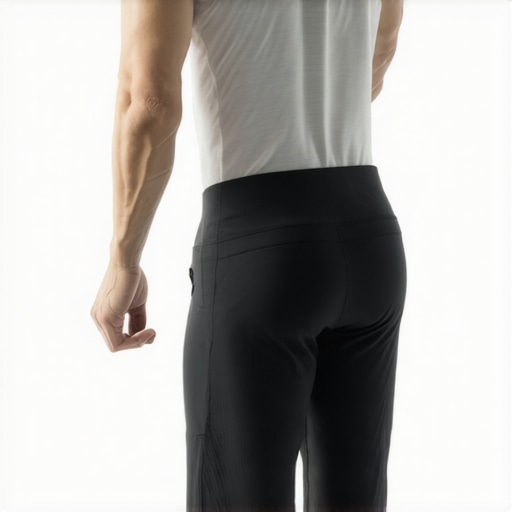
I remember walking through a quiet grocery store aisle when it happened again. Click. A sound so loud I was sure the lady in the cereal aisle heard it. It wasn’t just a noise; it was that weird, unsettling shift in my hip socket that felt like a gear slipping. I used to think I was just built wrong or that my joints were aging prematurely. For years, I ignored it until that clicking turned into a dull, nagging ache that followed me home every single day. I was walking all wrong, and my body was finally screaming at me to pay attention. Today, I’m going to show you how I silenced the noise by recalibrating my gait from the ground up.[image_placeholder]
Stop Stretching Your Way into More Hip Trouble
The biggest mistake I made early on—and maybe you’re doing this too—was thinking that more stretching was the ultimate answer. I spent twenty minutes every morning aggressively lunging, trying to loosen up my hip flexors. I thought if I could just get them to relax, the clicking would stop. I was wrong. In fact, the truth about foam rolling your IT band or over-stretching is that you might be destabilizing a joint that actually needs more support, not more length. According to research published in the Journal of Orthopaedic & Sports Physical Therapy, many hip issues stem not from tightness, but from poor neuromuscular control during the stance phase of walking. My hips weren’t actually tight; they were terrified because my feet and core weren’t doing their job. I realized my flat feet were linked to my lower back pain and were causing my knees to cave in, which pulled my hip out of alignment with every single step. When your gait is off, your muscles have to overcompensate. My glutes had essentially gone on vacation. Have you ever felt like your butt muscles just refuse to fire no matter how many squats you do? You’re not alone, and waking up those sleeping glutes is the first real step to silencing that click.
Can you really fix a walk you’ve used for decades?
It sounds daunting, doesn’t it? You’ve been walking this way since you were a toddler, so how on earth are you supposed to change it now? I used to think my gait was hard-wired into my DNA. But gait is a skill, not a permanent trait. By focusing on how your heel strikes the ground and how your pelvis rotates, you can actually rewrite those movement patterns. It takes a bit of mindfulness, but the relief of walking a mile without a single pop is worth every second of focus. I’m curious—have you noticed your hip clicks more when you’re tired, or is it a constant companion from the first step of the day? The secret isn’t in a magic pill. It’s in the small, subtle shifts in your mechanics. We’re going to look at how simple moves can stop that sharp hip pinch and how your choice of footwear might be sabotaging your progress. Let’s get into the nitty-gritty of rebuilding your stride.The first time I tried to consciously change my walk, I felt like a newborn giraffe. I was so focused on my feet that I almost tripped over a flat rug. But here is the reality: your gait starts with how your foot greets the earth. Think of your heel as the landing gear of a plane. If the gear is shaky or tilted, the entire fuselage—your hips and spine—takes the brunt of the impact. I found that by mastering the heel-to-toe walk drill for better balance and stability, I could finally stop that jarring shock from traveling straight into my hip socket.#IMAGE_PLACE_HOLDER_B#
Rebuild Your Foundation from the Ground Up
To stop the click, you have to stop the clunk. Most of us are “clunkers” who drop our feet flat or drag our toes, forcing the hip flexors to do all the heavy lifting. Instead, aim for a soft, controlled heel strike. As your foot rolls forward, imagine you are trying to show the person behind you the bottom of your shoe. This engagement of the shins and calves takes the pressure off the hip. It is also why your choice of work shoes matters more than your chair; if your shoes have zero arch support, your gait will collapse before you even take a step.
Stop the Swaying Pelvis
Imagine your pelvis is a bucket filled to the brim with water. When you walk, is that water splashing out to the sides? If your hips drop or sway excessively with every step, you are creating a friction point that leads to that signature click. To fix this, you need to stabilize the bucket. I used to practice the 3-second pelvic reset you can do while waiting in line. It involves a slight tuck of the tailbone and a subtle lift of the pelvic floor. It feels invisible to others, but to your hip joint, it is the difference between a smooth ride and a bumpy road. This stability is a core part of mobility mastery and daily tips to keep your spine and joints healthy.
Ignite the Power in Your Glutes
This was the hardest part for me. I remember standing in line for coffee and trying to “find” my glutes. I would squeeze one side, then the other, feeling totally ridiculous. But I realized that during my stride, my glutes were completely silent. Your gluteus medius—the muscle on the side of your hip—is supposed to act like a kickstand. If it is weak, your hip collapses inward. You can check your own stability with the one-legged standing test for hidden spinal instability. If you cannot stand on one leg for 30 seconds without your hip hiking up, your glutes are not supporting your gait. Understanding why your glutes are falling asleep and how to wake them up is the final piece of the puzzle. When my glutes finally started firing during the push-off phase of my walk, the clicking stopped almost instantly because the joint was finally centered in its socket.Let’s dig deeper into why we often fail to see long-term results from standard physical therapy exercises. Everyone says you need more range, but in my experience, you actually need more strength at the edge of that range. We often treat our bodies like a collection of rubber bands, but they are actually sophisticated tensegrity structures. If you keep pulling on a loose band, eventually, something snaps—or worse, the joint it’s supposed to protect becomes unstable. Most people don’t need more flexibility; they need functional ‘stiffness’ or control. Research published in the British Journal of Sports Medicine indicates that joint stability depends more on neuromuscular control than on the absolute length of the muscle. This is a core part of mobility mastery and daily tips to keep your spine and joints healthy. If you’re over-stretching because you feel tight, you might actually be aggravating a protective spasm that’s there to keep your spine safe. 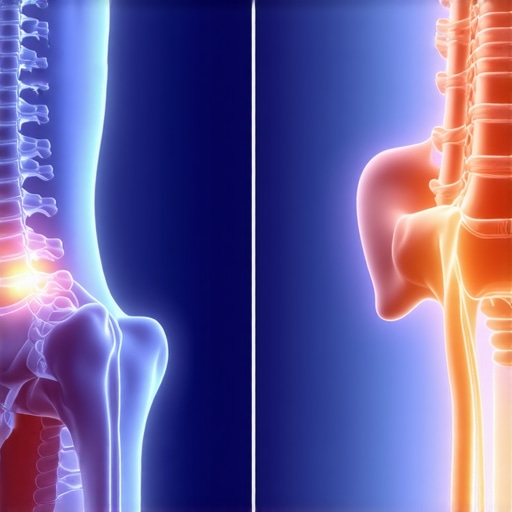
Stop Doing the Knees-to-Chest Stretch for Back Relief
Here is the ultimate ‘oops’ factor: the knees-to-chest stretch. It is the most common advice for lower back tension, yet it is a trap for many. When you have a disc-related issue, rounding your lower back like that increases the hydrostatic pressure inside the disc, potentially pushing the nucleus pulposus further against your nerves. I see so many people do this for sciatica relief, only to find they have a sharp pinch ten minutes later. Instead of aggressive rounding, focus on the nerve flossing technique that silences burning thigh pain to mobilize the nerve without stressing the spine. Understanding how to tell if your sciatica is a disc or muscle issue is vital. Another hidden trap is ignoring the link between your feet and your lumbar spine. The connection between flat feet and recurrent lower back pain is undeniable because your foundation dictates your spinal alignment. If your arches collapse, your knees rotate inward, putting a constant micro-strain on your discs.
Is Your Neck Pain Just a Cover-Up for a Frozen Mid-Back?
We often spend months treating symptoms in the neck using proven techniques to regain your range of motion, only to realize the real culprit is a thoracic spine that is completely locked up. If your mid-back can’t rotate, your neck has to over-compensate every time you turn your head. This is why neck pain and stress often become a self-sustaining cycle. The physical restriction in the ribcage limits your ability to take deep breaths, which keeps your nervous system in a ‘fight or flight’ state. By using the simple reach and rotate move for mid-back stiffness, you address the root cause rather than just chasing the pain up into the cervical spine. Have you ever fallen into the trap of stretching a joint that actually needed more stability? Let me know in the comments.I’ve found that the most expensive equipment isn’t always the best. My favorite tool is a simple tennis ball. I use it to target the piriformis muscle because traditional stretches often miss those deep knots. If you haven’t tried it, learning how to use a tennis ball to relieve glute tension is a total game-changer for anyone dealing with that deep, literal pain in the butt. I carry one in my laptop bag and even use it against the back of my car seat during long drives. It’s about being proactive. This is also why your choice of work shoes matters more than your chair; you can have the best ergonomic setup in the world, but if your foundation is unstable, your hips will pay the price by the time you clock out. 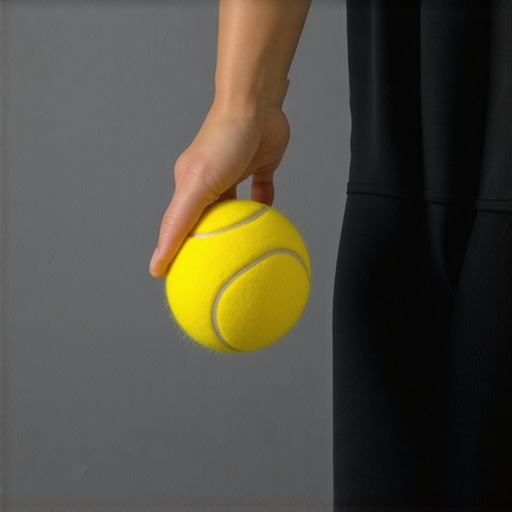
Grab a Tennis Ball and Save Your Hips
Beyond the basics, I’ve integrated specific habits that keep me from sliding back into old patterns. I’m a huge believer in ‘spine hygiene.’ According to Dr. Stuart McGill, a world-renowned expert in spine biomechanics and author of Back Mechanic, the way we perform everyday tasks—like brushing our teeth or tying our shoes—dictates our long-term spinal health more than any 30-minute gym session. This philosophy is at the heart of mobility mastery and daily tips to keep your spine and joints healthy. I stopped bending at the waist to pick up my laundry and started using a golfer’s lift. It felt silly at first, but my L5-S1 disc has never been happier.
How can I ensure my back stays strong forever?
Consistency isn’t about doing an hour of yoga every day; it’s about the micro-choices. I set a timer on my phone to remind me that your body needs micro-breaks every 20 minutes to stay mobile. During those breaks, I don’t just stand up; I perform the 10-second hip reset for relief after sitting. This prevents the hip flexors from ‘setting’ in a shortened position. This long-term approach is exactly why maintenance care is better than waiting for a spinal crisis. If you wait for the pain to return before you move, you’re always playing defense.
Why Wearable Sensors are the Next Mobility Frontier
Looking ahead, I’m incredibly excited about the shift toward real-time biofeedback. I predict that in the next few years, we will see a surge in AI-driven wearable sensors built into our clothing that alert us the moment our gait deviates or our posture slumps. We won’t have to guess if our glutes are firing; our leggings will tell us. Until then, we have to be our own sensors. I challenge you to try the 10-second hip reset every time you stand up today. It’s a tiny investment that pays massive dividends in how your lower back feels by bedtime.
Why I Finally Stopped Chasing Hip Tightness and Started Building Strength
Looking back at my journey, the biggest lightbulb moment was realizing that my body wasn’t actually broken; it was just trying to protect itself. For years, I was convinced that stretching was the cure, but I eventually learned that stretching your hamstrings often makes your sciatica worse and can even destabilize a clicking hip further. My second ‘aha’ moment came when I looked at my feet. I never realized that your toes are the key to better balance and back health; if they can’t grip the ground, your hips have to work double time. Lastly, I had to accept that ‘feeling tight’ is often just my brain’s way of screaming for more stability, not more length. Once I stopped pulling on my muscles and started supporting my joints, the clicking simply faded away.
The Minimalist Toolkit for Pain-Free Movement
You do not need a gym full of machines to rewrite your gait patterns. I keep my routine incredibly simple. First, a firm tennis ball is my secret weapon; learning how to use a tennis ball to relieve glute tension is a skill that has saved me from countless flare-ups after long office days. Second, I highly recommend the book Back Mechanic by Dr. Stuart McGill, which provided the blueprint for my ‘spine hygiene’ approach. Finally, I became obsessive about my footwear because why your choice of work shoes matters more than your chair is a reality you cannot ignore if you want lasting relief. These three tools—the ball, the book, and the boots—are the foundation of my daily comfort.
[image_placeholder]
Your First Step Toward a Quiet Stride
Fixing a walk you have used for decades can feel like learning a new language, but I promise the fluency will come. Do not try to fix everything at once. Start by just noticing your heel strike for five minutes a day. Real mobility mastery and daily tips to keep your spine and joints healthy are built on these tiny, consistent wins. You have the power to recalibrate your body and walk without the fear of that unsettling click. Which part of your walk feels the most uncoordinated right now—the way your foot hits the ground or getting your glutes to actually fire during your stride? Let me know in the comments below!