
How a Tennis Ball Under Your Foot Can Calm Sciatica Flares
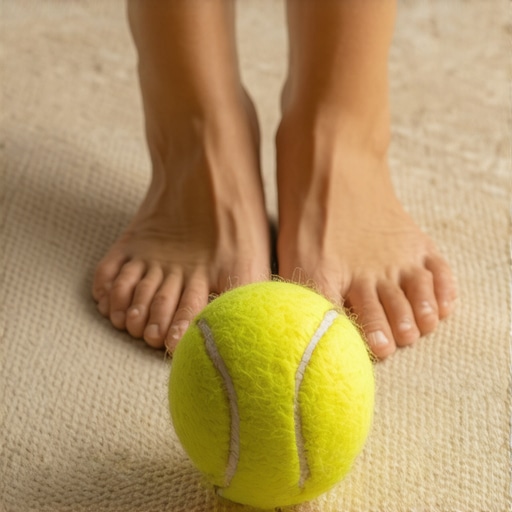
I vividly remember the feeling—an icy kick of pain shooting down my leg as I tried to stand after a long day. It was as if my body was shouting, “Enough!” from my lower back all the way down to my toes. For years, I thought this discomfort was just part of aging or perhaps the price I paid for sitting too much. Little did I know, a simple tennis ball—yes, the one in my tennis bag—would become my unlikely ally in soothing those relentless sciatic flare-ups.
Discovering a Gentle Solution in Unexpected Places
You see, I hit a frustration point one evening after trying every stretch, heat pad, and deep-breathing hack I could find—nothing truly relieved the pain. That’s when I remembered hearing about using a tennis ball to target hard-to-reach muscles and nerve irritations. I skeptically pressed the ball under my foot, focusing on the arch, and pressed gently while rolling it around. Surprisingly, that gentle pressure began to ease the sharpness, providing a calming relief I hadn’t experienced before.
This personal experience sparked a curiosity that led me to dig deeper into how such a simple tool could impact sciatic discomfort. It turns out, the soles of our feet are full of nerve endings and reflex points that connect to various parts of our body, including the lower back and hips. Applying controlled pressure through a tennis ball can stimulate these areas, improve circulation, and even release tension in muscles that contribute to sciatic nerve irritation.
If you’ve ever faced those sudden, stabbing pains down your leg that make you want to curl up or sit down immediately, I understand completely. I want to share how this straightforward technique has transformed my approach—and it might just do the same for you.
Does a Tennis Ball Under Your Foot Really Make a Difference?
Early in my journey, I made a mistake many beginners do—applying too much pressure right away, which caused more discomfort rather than relief. Patience and gentle pressure are key. Now, I incorporate this method into my daily routine, especially during flare-ups, to manage pain proactively and prevent it from spiraling out of control.
This simple habit doesn’t replace professional advice, but it adds a helpful layer to managing sciatica naturally. Curious to explore how exactly this works and what steps you can take to integrate it safely? Let’s delve into the science and practical tips that can bring more relief into your life.
Target Your Foot Reflex Points for Instant Relief
One of the simplest and most effective methods to reduce sciatic discomfort involves using a tennis ball to stimulate reflex zones in your feet. To perform this, find a comfortable seated position and place the tennis ball under the arch of your foot. Gently press downward, applying mild pressure as you roll the ball from the heel to the toes. I vividly recall a morning when I awoke with sharp leg pain; by spending just five minutes massaging my foot this way, the pain noticeably diminished, allowing me to start my day with less stiffness.
Start Gently and Increase Gradually
It’s crucial to begin with light pressure to prevent aggravating sensitive nerves. Imagine your foot as a delicate web—pressing too hard is like pulling tight on fragile threads. As you become more comfortable, you can increase pressure slightly, but always listen to your body. During my initial attempt, I pressed too firmly, which caused discomfort and made my leg ache more. Adjusting to a lighter touch turned this technique into a soothing experience.
Focus on Specific Reflex Zones
The ball should target areas on the sole associated with blood flow and nerve pathways connected to your lower back and hips. Use the ball to trace along the inside and outside edges of your foot, spending extra time on tender spots. Think of your foot as a map; exploring its key points can unlock relief in other areas. By regularly massaging these zones, I noticed a decrease in the frequency and intensity of my flare-ups.
Incorporate It Into Your Routine for Lasting Benefits
Consistency amplifies results. Incorporate this foot massage into your daily routine, especially during times when you feel pain brewing. For instance, I placed a tennis ball near my bed and used it while watching TV, turning downtime into an active pain management session. Over time, this habit helped me build resilience and reduce the severity of future sciatic episodes.
Combine with Lower Back Exercises
While foot stimulation is powerful, pairing it with targeted back mobility exercises enhances overall effectiveness. Simple movements like pelvic tilts or cat-cow stretches can complement the tennis ball technique. Think of it as strengthening bridges—connecting foot reflexology with core stability to create a comprehensive pain relief system. I found that integrating these habits made my progress more consistent and sustained.
Ensure Proper Technique for Safety
Always perform the massage on a comfortable, non-slip surface. Maintain a relaxed posture, avoiding undue tension in your shoulders or neck. If you experience any sharp or worsening pain, stop immediately and consider consulting a professional. Remember, this method is an adjunct, not a replacement for medical treatment. For deep-seated or chronic issues, exploring solutions described in [uncovering effective back pain techniques](https://bodyrenewtherapy.com/unlocking-mobility-expert-tips-on-managing-back-pain-in-2025) can be beneficial. Proper technique and gradual progression are key to safe and effective self-care.Many people believe that sciatica and chronic back pain are solely issues of muscle strain or nerve compression that require aggressive treatment, like surgery or heavy medication. However, as an expert in mobility and pain management, I can tell you that there’s often a nuanced layer many overlook. For example, some assume that rest is the best remedy, but prolonged inactivity can actually worsen mobility issues and prolong recovery times. In my experience, fostering gentle movement and understanding the subtle mechanics behind pain often yields better results than the common ‘rest and wait’ approach.
Another widespread myth is that pain directly correlates with injury severity. Too often, individuals with mild discomfort fear catastrophic damage, leading to unnecessary worry and passive behavior. Instead, understanding pain as an alert system that can be managed through precise strategies—like targeted mobility exercises—can empower you to regain mobility and reduce fear. To truly master recovery, it’s essential to recognize that pain patterns are complex and influenced by factors like posture, load distribution, and nervous system sensitivity.
A common trap many fall into is focusing solely on symptoms rather than root causes. For instance, treating lower back pain with painkillers might mask the issue temporarily, but it doesn’t address underlying dysfunctions like pelvic misalignment or fascial restrictions. Often, these hidden contributors are the real culprits behind persistent issues. For a comprehensive approach, integrating techniques like gentle self-massage or mobility drills, as discussed in [unlocking sciatic relief](https://bodyrenewtherapy.com/unlocking-sciatica-relief-expert-strategies-for-lasting-comfort), can uncover and resolve these root causes.
**Why does a lack of proper movement nuance matter?** Because advanced knowledge reveals that most back and sciatic pains are tied to subtle biomechanical imbalances, not just straightforward injuries. For example, an imbalance in hip mobility can ripple up the kinetic chain, aggravating the lower back and sciatic nerve. Recognizing these intricacies helps prevent common mistakes like neglecting the importance of foot alignment or core stability. For deeper insights, exploring [back pain breakthroughs](https://bodyrenewtherapy.com/back-pain-breakthroughs-navigating-your-path-to-restored-mobility) can illuminate overlooked factors.
Avoid falling into the trap of overemphasizing the spine itself; instead, consider the entire interconnected system. A failure to do so might lead you to fixate on one area while ignoring others that are equally vital—like poor posture habits or ergonomic setups. Studies, such as those summarized in the Journal of Orthopaedic & Sports Physical Therapy, show that addressing these broader elements results in more sustainable relief and improved mobility.
Have you ever fallen into this trap? Let me know in the comments. Remember, understanding the nuanced mechanics behind your pain can be the key to lasting freedom from discomfort, so consider a holistic, informed approach over quick fixes.Maintaining your progress against sciatic, back, or neck pain requires more than just sporadic exercises; it involves adopting effective tools and establishing consistent routines. Personally, I rely heavily on a combination of foam rollers, massage balls, and ergonomic modifications to keep my mobility intact over the long term.
Invest in Quality Self-Massage Tools
Using a high-density foam roller is a game-changer. I prefer the 36-inch cylindrical foam rollers because they’re versatile for targeting muscles like the glutes, hamstrings, and calves. Regular use helps prevent fascial adhesions that can cause or exacerbate nerve irritations. Additionally, I keep a couple of tennis balls in my toolkit for pinpointing trigger points, especially around the lower back and hips. Gentle rolling over these areas daily ensures knots don’t tighten up and restrict movement.
Incorporate Guided Mobility Software
Technology has made it easier than ever to stay consistent. I personally use mobility apps that remind me to perform targeted movements, such as hip openers or spinal twists. These platforms often include video tutorials demonstrating correct form, which is crucial for avoiding injury. Over time, consistent practice helps sustain the gains from initial therapy sessions and reduces the chance of flare-ups.
Optimize Your Workspace for Long-Term Health
Ergonomic adjustments are essential for maintaining good posture, especially if you spend hours at a desk. I recommend ergonomic chairs with adjustable lumbar support and sit-stand desks to vary your posture throughout the day. For instance, setting your monitor at eye level prevents forward head posture, which can cause neck tension. Regular breaks to stretch or perform a quick mobility routine—like the ones outlined in [mobility mastery](https://bodyrenewtherapy.com/mobility-mastery-daily-tips-to-keep-your-spine-and-joints-healthy)—are vital. These practices help reduce strain and maintain flexibility in crucial areas.
Plan Regular Check-Ins with Professionals
Even if you’re diligent with self-care, periodic consultations with a physiotherapist or osteopath can catch emerging issues before they become serious. I schedule biannual reviews to assess my mobility and make adjustments to my routine. They can provide tailored exercises and manual therapies that complement my daily habits, ensuring comprehensive maintenance.
Prediction: The Future of Self-Care for Pain Management
As technology advances, wearable devices equipped with biofeedback sensors might soon offer real-time posture correction prompts, much like how fitness trackers motivate exercise. Combining these with AI-guided routines could make long-term maintenance even more personalized and effortless.
How do I stay motivated to maintain my health?
The key is to integrate these tools into your daily life seamlessly. Making mobility exercises part of your morning routine or setting reminders on your phone can turn maintenance into a habit rather than a chore. Starting with a simple practice, like a five-minute foot massage with a tennis ball, can lead to significant long-term benefits. If you haven’t tried this yet, give it a shot—it’s an effective way to keep your nerves and muscles happy and functioning optimally. To deepen your understanding, exploring [unlocking sciatic relief](https://bodyrenewtherapy.com/unlocking-sciatica-relief-expert-strategies-for-lasting-comfort) offers additional strategies to enhance your self-care arsenal.
Three Surprises That Changed My Approach to Pain Relief
One of the most eye-opening lessons I learned was that patience beats intensity. Applying gentle, sustained pressure with a tennis ball under my foot proved more effective than forceful massage. I realized that respecting the body’s signals is key to avoiding setbacks. Secondly, I discovered that small daily habits, like foot reflexology or ergonomic tweaks, accumulate into significant improvements—transforming pain management from sporadic to consistent. Lastly, I learned that understanding the interconnectedness of foot reflex zones and spinal health unlocked a more holistic path to lasting relief, making me see problems from a systems perspective rather than isolated symptoms.
Tools That Became My Backbone in Recovery
My trusted toolkit now includes a high-density foam roller for muscles like glutes and hamstrings, helping prevent fascial restrictions that trigger sciatic pain. I swear by guided mobility apps which integrate quick, targeted exercises into my daily routine, ensuring I don’t skip essential moves. Additionally, ergonomic modifications—such as adjustable sit-stand desks and correct lumbar support—have significantly reduced strain and supported my ongoing mobility. These tools aren’t just gadgets—they’re investments in my long-term well-being, supported by resources like ergonomic tips that I deeply trust.
Embrace Your Power: Take Action Today
Remember, managing sciatic and neck pain isn’t about quick fixes; it’s about creating habits that empower you to live pain-free. Small consistent steps, like gentle foot massages or proper workstation setups, can lead to transformative results. The journey toward mobility and relief starts now—don’t wait for pain to dictate your life. Begin with what feels manageable, stay curious, and celebrate each progress along the way. Your future self will thank you for the decision to take action today.
What’s one small change you’re willing to try to improve your sciatic or neck pain? Share your plan below!
,