
How to Tie Your Shoes Without Straining Your Lower Back
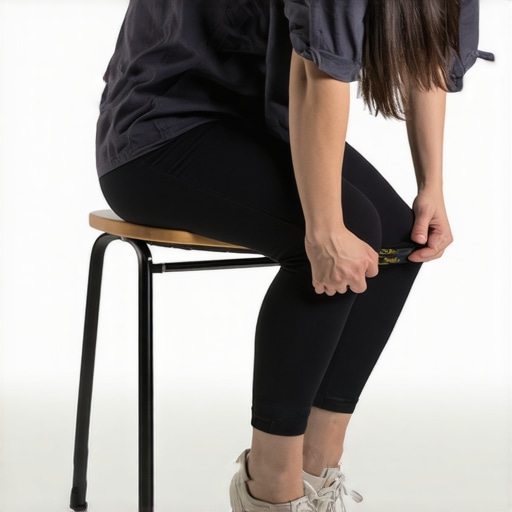
It was a chilly Tuesday morning, and I was running late. I bent straight over from my hips, knees locked, reaching down to tie my favorite running shoes. In an instant, a sharp, white-hot flash of pain shot through my lower lumbar region, leaving me gasping and clutching the bedroom dresser. I was stuck in a half-bent shape for what felt like hours. It is humiliating when a basic daily task like getting dressed feels like a high-stakes gamble with your spine. Over the years, through trial, error, and some desperate research, I realized that the way we approach this simple morning ritual is completely broken.
Your Spine Deserves a Better Morning Ritual
We do not think about tying our shoes as an athletic event, but for a compromised lower back, it absolutely is. Bending forward first thing in the morning is particularly risky because your spinal discs naturally hydrate and swell while you sleep, making them more vulnerable to pressure. When I first started struggling with this, I made the classic mistake of trying to push through the stiffness, thinking my body just needed to toughen up. That stubbornness only led to weeks of agony and a desperate search for swift relief for sciatica when the pain started radiating down my leg.
Today, we are going to fix this. I am going to share the exact structural modifications and physical shifts that allowed me to reclaim my mornings without fear of throwing my back out. You will learn how minor adjustments in your daily positioning can protect your lumbar spine, preserve your energy, and stop that dreaded micro-tweak before it even starts.
Is a task this simple really worth changing your whole routine for?
You might be thinking, “Come on, it takes five seconds to tie a shoe. Do I really need a whole strategy for this?” I used to think the exact same thing until my physical therapist pointed out that repetitive micro-stress is often what triggers major spasms. According to clinical research published by the National Institutes of Health, lumbar flexion under load—even the minor load of your own torso—increases intradiscal pressure by over 100% compared to standing straight. Every time you round your spine to reach your feet, you are slowly wearing down those protective cushions. Relearning this basic movement is not about being overly cautious; it is about building sustainable, lifelong joint health.
Early on, I tried to solve this by simply propping my foot up on a low stool, but I made the mistake of still rounding my upper back to reach down. That lazy compromise completely defeated the purpose and kept my spinal joints under intense shear force. True relief only came when I learned how to stabilize my core and hinge correctly. Have you ever felt that sudden, terrifying catch in your lower back while simply reaching down for your shoes? You are definitely not alone, and you do not have to live in fear of your own footwear anymore. Let us look at how we can transition from a risky bend to a perfectly supported, spine-friendly posture.
To set yourself up for success throughout the rest of your day, it helps to understand how your overall movement patterns fit together. If you are already dealing with morning stiffness, incorporating the morning routine that prevents lower back stiffness can make the entire process of getting dressed feel incredibly smooth and pain-free.
The Mechanics of a Pain-Free Morning Pivot
To safely tie your shoes, you must stop treating your lower back like a flexible fishing rod and start treating it like a sturdy crane. A crane does not bend its metal mast to lift a load; it relies on a robust pivot point at its base. In your body, that pivot point is your pelvis and hips, not your delicate lumbar spine. When you round your lower back to reach your shoes, you place immense shear force on your spinal discs. Instead, keeping your spine in a neutral position while hinging exclusively at your hips preserves the natural, shock-absorbing curve of your lower back.
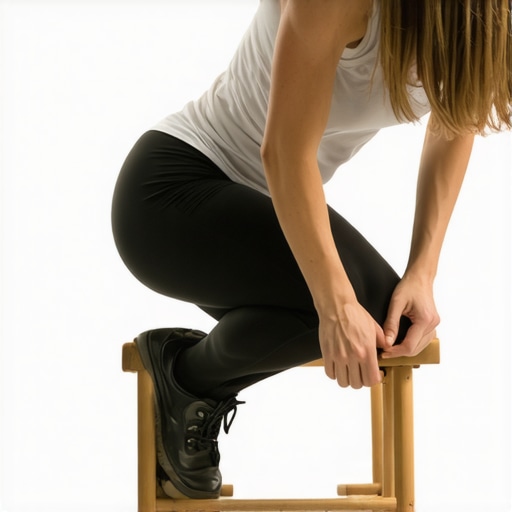
This structural change is especially critical if you already experience a tender or vulnerable lower lumbar region. By maintaining a flat back, you keep the pressure evenly distributed across your spinal column, which is essential to avoid a sudden spasm. If you are currently dealing with nagging discomfort that radiates down into your leg, implementing this hip-hinge pivot is a foundational step in unlocking sciatica relief. Rebuilding your daily mechanics prevents the microscopic wear and tear that leads to agonizing flare-ups.
Three Spine-Safe Methods for Getting Dressed
The Single-Leg Footstool Hinge
This is my personal go-to method. Find a sturdy chair, a step stool, or even use the bottom step of your staircase. Place one foot firmly on the elevated surface while keeping your other foot planted securely on the ground. Instead of reaching down by curving your shoulders toward your knee, keep your chest open and proud. Pull your shoulders back, brace your abdominal muscles as if you are about to be poked in the stomach, and hinge forward only from your hips. Keep your lower back completely flat as you reach down to tie your laces.
I remember a cold November morning when my back was so tight I could barely sit up to eat breakfast. I was terrified to put on my boots to walk the dog. Instead of risking a bend, I used a low wooden stool in my hallway, braced my core intensely, and kept my spine absolutely rigid while leaning forward from my hips. It felt incredibly robotic and awkward at first, but I tied both boots without a single twinge of pain. Applying these simple ergonomics is just as vital as understanding ergonomic tips for everyday comfort in other parts of your life, such as how you sit at your work desk.
The Half-Kneeling Gladiator Position
If you have decent balance, this position completely eliminates lower back flexion. Drop down onto one knee on a carpeted floor or a soft yoga mat, keeping your other foot flat on the floor in front of you. This is a half-kneeling stance. Rest your torso slightly against your front thigh to distribute your body weight, keeping your spine straight from your tailbone to the top of your head. In this position, your hands are already right next to your shoe, requiring almost zero reach. This technique is incredibly helpful for individuals recovering from acute episodes of back pain, as it keeps the pelvis locked in a stable, neutral alignment.
The Elevated Seated Cross
If kneeling is too difficult on your knees, sit upright on a firm chair or the edge of your bed. Avoid soft, deep couches that cause your pelvis to tilt backward. Lift one ankle and rest it gently across the opposite knee in a figure-four position. This brings your shoe up to you, rather than forcing your spine to go down to your shoe. Keep your chest up and gently lean forward from your waist to tie your laces. This method also serves as an excellent passive stretch for deep hip rotators like the piriformis muscle, which often gets incredibly tight and contributes to nerve irritation.
Bracing Your Core Before the Reach
No matter which position you choose, the secret weapon is intra-abdominal pressure. Before you even begin to move your hands toward your laces, take a deep breath in and expand your abdomen outward. Hold that gentle brace to create a natural corset of muscle around your spine. This simple act stabilizes your vertebrae and prevents the micro-shifts that cause sudden pinching. Mastering this basic stabilization technique is incredibly beneficial, especially if you are looking for ways to boost your back mobility and build a resilient body that resists daily injury.
When most people start experiencing that nagging lower back stiffness, their very first instinct is to stretch. They throw themselves into deep hamstring stretches or spend twenty minutes trying to touch their toes. In my experience, and contrary to what almost every generic fitness influencer tells you, aggressive stretching is often the exact mechanism that keeps your back locked in a state of chronic spasm. When your lower lumbar region is unstable, your nervous system intentionally tightens your surrounding muscles—like your hamstrings and glutes—to act as a protective splint. If you force those muscles to release through aggressive stretching, you strip away the only guardrails your spine has left, leaving your discs completely defenseless.
Why are your tight hamstrings actually a warning sign rather than the real problem?
To truly understand this protective mechanism, we have to look at how our joints communicate. A landmark study published in the Journal of Orthopaedic & Sports Physical Therapy demonstrated that hamstring tightness is frequently a secondary symptom of pelvic instability and neural tension, not a primary muscle length issue. When you repeatedly stretch a muscle that is tight due to nerve irritation, you are actually pulling on an already inflamed sciatic nerve. This is why many people find that their symptoms worsen after a yoga class. Instead of forcing flexibility, your priority should be building structural stability. Understanding why your hamstrings are not the real reason your back is tight is the ultimate game-changer for long-term comfort.
The biggest trap you can fall into during your recovery journey is what I call the “stretching loop of doom.” You stretch, which temporarily numbs the pain receptors for about thirty minutes; then, the nervous system panics because of the sudden lack of stability and clamps down even harder than before. You feel tight again, so you stretch again, compounding the micro-damage. If you want to break this cycle, you must stop stretching the lower back and start bracing it. Focus on building core endurance rather than flexibility. Have you ever fallen into this trap of stretching your back to find relief, only to have it seize up later? Let me know in the comments below.
Transitioning from a flexibility mindset to a stability mindset is the secret to protecting your spine during everyday activities. Once you stop over-stretching, you can focus on building a resilient core that supports your natural spinal curves. If you are ready to stop guessing and want a structured, evidence-based approach to reclaiming your daily life, exploring a comprehensive program like back pain breakthroughs navigating your path to restored mobility will give you the precise blueprint you need to heal permanently.
Shifting your physical habits is only the first part of the equation. To truly lock in these benefits and prevent future flare-ups, you need to think about long-term maintenance and the physical environment you interact with every single day. Over the years, I have discovered that relying on willpower alone to maintain perfect biomechanics is a losing battle, especially when you are tired or rushed in the morning. By integrating specific, low-cost tools and setting up your environment for success, you take the cognitive load off your brain and let your surroundings protect your spine automatically.
How do I maintain these spinal habits over time?
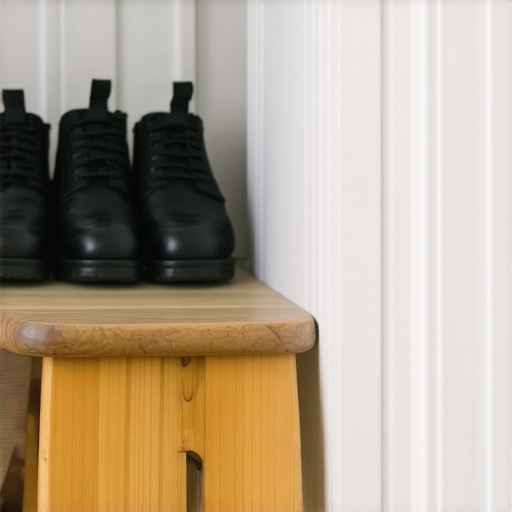
Consistency in spinal health relies heavily on automation. I personally use a firm, high-density foam roller and a simple wooden step stool placed permanently next to my entryway shoe bench. Having that physical stool right there serves as a visual trigger that immediately reminds me to use the Single-Leg Footstool Hinge rather than lazily bending over from the waist. Additionally, for my home office, I invested in a simple, highly adjustable chair. Ensuring your workspace supports your body is critical; for instance, learning how to adjust your office chair if you are under five foot four or finding your ideal lumbar support height can drastically reduce cumulative spinal fatigue by the time evening rolls around.
In the near future, I predict we will see a major shift toward smart home integration and wearable biofeedback devices that gently vibrate when your lumbar spine exceeds a safe degree of flexion. Until those technologies become mainstream, we must rely on our own environmental setups and high-quality physical therapy tools. Experts like Dr. Stuart McGill, a leading biomechanist at the University of Waterloo, emphasize that eliminating spine-creasing movement patterns from your daily routine is far more effective than any passive treatment. If you want to dive deeper into stabilizing your system, explore the strategic insights found in mobility mastery daily tips to keep your spine and joints healthy to build a bulletproof physical foundation.
My challenge for you tomorrow morning is simple: do not allow yourself to tie your shoes using your old, rounded-back posture even once. Choose one of the three spine-safe methods we discussed—such as the Half-Kneeling Gladiator Position—and actively brace your core before you reach down. Feel how different it keeps your lower back, and commit to this single change for the next seven days to experience a massive difference in your morning stiffness.
It took me years of throwing my back out on random Tuesday mornings to realize that the body doesn’t break down because of one sudden movement. It breaks down because of the hundreds of tiny, improper movements we perform without thinking. Relearning how to tie your shoes is not about admitting defeat to aging; it is about taking active control over your physical longevity.
The Shocking Truth About Morning Back Spasms
For the longest time, I believed my back went out because I was simply ‘tight’ or had bad luck. The real lightbulb moment came when I discovered how much my spinal discs change while I sleep. During the night, your discs absorb fluid and swell, which is why you actually wake up slightly taller. Bending straight over first thing in the morning forces those fully pressurized, hydrated discs to pinch forward under the weight of your torso, creating the perfect storm for a herniation or a severe spasm.
Another major realization was that my habit of sitting on a soft, sagging couch to pull on my boots was secretly keeping my pelvis locked in a backward tilt. This constant pelvic misalignment made it impossible to stand up straight later in the day. Once I replaced that habit with a solid, firm surface and started utilizing how to use a pillow between your knees to stop morning back stiffness, the cumulative stress on my lumbar spine began to vanish.
My Essential Spinal Health Arsenal
You do not need an expensive therapy clinic in your living room to protect your back. Over the years, I have narrowed down my daily routine to just three highly effective, low-cost tools that keep my joints moving smoothly:
- The Wooden Half-Step: I keep a sturdy six-inch wooden step right next to my front door. It serves as an instant visual cue to perform the Single-Leg Footstool Hinge and completely eliminates the temptation to round my spine.
- A Firm Yoga Block: If you travel frequently, a high-density foam yoga block fits easily into a suitcase and provides the perfect elevated platform for tying your shoes in hotel rooms.
- An Ergonomic Lumbar Roll: Keeping your spine supported during your morning drive or office hours is just as important as how you get dressed. Using a dedicated support cushion preserves your natural curves and prevents the slumping that leads to midday spasms. If you are struggling with sciatica, understanding overcoming sciatica top lifestyle changes for better quality of life can help you arrange your entire environment for long-term comfort.
Your Blueprint to Pain-Free Movement
Protecting your spine is a daily practice, not a quick fix. By shifting how you handle simple, repetitive tasks like tying your shoes, you are actively retraining your nervous system to move with strength and stability rather than vulnerability. Tomorrow morning, take your time, brace your core, and utilize one of our spine-safe positions to get dressed. If you are ready to take your recovery even further and reclaim your physical freedom, exploring a structured program like back pain breakthroughs navigating your path to restored mobility will give you the step-by-step guidance you need to build a truly resilient body.
Have you ever experienced a sudden, terrifying back tweak while simply reaching down for your shoes? Which of these three safe bending methods are you going to try tomorrow morning? Let me know in the comments below!