
How to Use a Tennis Ball to Release Deep Glute Tension
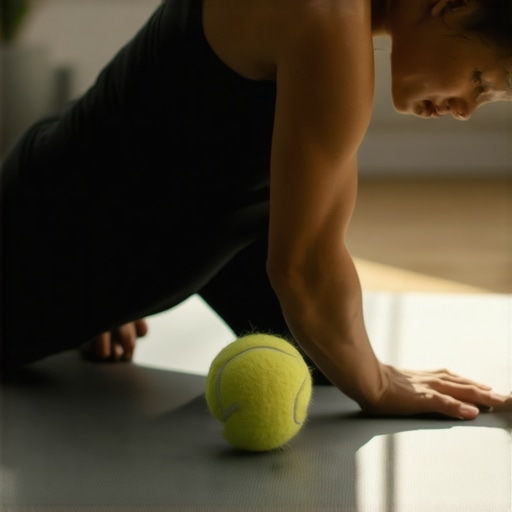
It was one of those evenings. I was exhausted after a long day, trying to stretch out the tension in my hips, only to find my muscles clenching even tighter. That frustrating ache in my buttock area wasn’t going away, no matter how much I rolled or stretched. Then, a lightbulb moment struck—why not use something as simple as a tennis ball?
If you’ve ever felt that dull, persistent deep glute tension that just won’t loosen up, you’re not alone. Many of us ignore the root cause, thinking it’s just another ache that will go away with time. But here’s the truth: ignoring deep-seated muscle tension can lead to longer-term issues like poor mobility, back pain, and even sciatica. I learned this firsthand early on, making the mistake of only focusing on superficial stretching and neglecting the deeper layers of muscle that hold the real tension.
Today, I promise to share a straightforward, effective technique—using a tennis ball to release deep glute tension—that transformed my recovery process. Whether you’re struggling with stubborn tightness or just want to improve your mobility, this method can be a game-changer.
Why Traditional Stretching Often Falls Short
Most of us are familiar with the classic stretches for hips and glutes—hip openers, pigeon pose, or lying stretches. They definitely have their place, but if the tension is deep within the muscle fibers, especially in the piriformis or the gluteus maximus, superficial stretching won’t cut it. In fact, applying pressure directly to these tight spots can be much more effective. Targeted pressure techniques can unlock knots that traditional stretching just can’t reach.
Early in my own journey, I made the mistake of relying solely on foam rollers. While helpful for surface-level tension, they often left me frustrated with little relief, thinking I just wasn’t doing it right. That’s when the tennis ball came into play. Its small size and firm, dense surface allowed me to pinpoint those stubborn knots precisely, delivering relief where it was needed most.
If you’ve faced similar frustrations—trying endless stretches with little progress—it might be time to consider a different approach. Ready to discover how this simple tennis ball can unlock your glutes and boost your mobility? Let’s dive into the why and how of this little-known technique.
Find the Perfect Spot for the Tennis Ball
Lie on your side and place the tennis ball underneath your buttock, targeting the tightest knot. I remember jamming the ball into a stubborn spot near my piriformis, which felt like pressing into a tiny, unyielding rock. Stay in this position for 20-30 seconds, allowing your muscles to relax around the pressure. Be patient; this small pressure can feel intense initially but gradually releases the tension, much like untangling a knot in a shoelace.
Apply Steady, Controlled Pressure
Press gently but firmly into the knot, avoiding any sharp pain. The goal is to trigger a release response, not to cause discomfort. During my first attempt, I used too much force, and the pain caused me to jump away. Learning to modulate pressure was key—think of it like slowly squeezing a sponge until it gives. Maintaining steady pressure ensures the knot starts to soften and decrease in size over time.
Use Your Body to Target Deep Muscles
Gently shift your weight onto the ball by adjusting your leg position—bending and straightening the knee can help target different angles. I found that slightly twisting my hips or crossing my top leg forward changed the angle of pressure, reaching deeper fibers. For example, crossing my top leg over the bottom helped hit a particularly stubborn knot. This movement is akin to turning a dial to fine-tune a tool, precise and deliberate.
Incorporate Gentle Movement During Pressure
While applying pressure, perform small, controlled movements—like tilting your pelvis or shifting your leg slightly— to help ‘massage’ the muscle from within. Once, I spent a minute gently rocking my pelvis back and forth over the ball, which helped facilitate muscle relaxation. Think of this as wringing out a soaked cloth—gentle wrings encourage further release and freedom from tension.
Hold and Breathe for Relaxation
Maintain the pressure for about 30 seconds, then exhale slowly to deepen the relaxation. Focus on breathing deeply and steadily, like inflating a balloon slowly. I learned that deep breaths during this hold amplified the effect, helping my muscles relax even more. This breathing acts as a signal to your nervous system that it’s safe to release stored tension, akin to telling your muscles, “Relax now, all is well.”
Move On to Adjacent Spots
After releasing one knot, shift the ball to a nearby area and repeat the process. Often, muscles have multiple interconnected knots. For example, after working on the piriformis, I moved slightly upward toward the gluteus maximus and found additional tight spots. Think of it like peeling layers of an onion—each spot you release allows the next to come into focus, leading to overall relief.
Finish with Gentle Stretching
Once knots are loosened, follow up with gentle stretches like the pigeon pose or hip openers. I noticed that after my tennis ball sessions, my stretches felt deeper and more effective—akin to loosening a tightened screw before turning the bolt. These movements help maintain the release and improve overall mobility.
Remember, consistency is key. Incorporating this method into your routine a few times a week can dramatically improve persistent glute tension, reduce discomfort, and enhance your mobility. If you’re battling stubborn muscle tightness, this targeted, mindful approach can be a game-changer, helping you regain control over your body’s comfort and movement.
Many people assume that all neck and back pain stems from simple muscle strains or poor posture, leading them to focus solely on stretching or ergonomic adjustments. However, this narrow view often misses the underlying complexity of chronic pain conditions. For instance, a widespread misconception is that pain always correlates directly with tissue damage, but in reality, pain is frequently a dysfunction of the nervous system’s pain processing rather than structural injury alone. This misunderstanding can lead individuals to pursue ineffective treatments while neglecting neural mechanisms that maintain or amplify discomfort. Additionally, many overlook the importance of addressing movement patterns and compensation habits that develop over time—these can lock the body into maladaptive positions, perpetuating pain cycles. In my experience, advanced approaches such as nerve gliding exercises or targeted neural resets, found in resources like neck pain solutions, often yield better results when integrated with traditional methods. One common trap is to rely solely on passive interventions like ice or medication, ignoring the active process of retraining movement and neural health. Experts in pain science emphasize that understanding and remediating these neuromuscular patterns can dramatically improve outcomes. So, rather than focusing only on superficial stretches or temporary fixes, consider exploring the deeper aspects of neural involvement and movement strategies. Have you ever fallen into this trap? Let me know in the comments.Maintaining your newfound mobility and managing pain is an ongoing process that requires effective tools and consistent effort. Over time, I’ve found that specific equipment and routines can make all the difference in ensuring long-term results. One of my top recommendations is investing in a high-quality foam roller, such as the TriggerPoint GRID, which offers firm, durable surface areas that allow targeted muscle release without causing nerve irritation. I personally use it daily after routines that focus on my lower back and hips, as it helps prevent buildup of tension that could lead to flare-ups.
Another essential tool is a set of soft, dense therapy balls, like the Sonicatural Massage Balls. These are perfect for pinpointing deep knots, especially in areas like the piriformis and thoracic spine. Unlike tennis balls, these therapy balls provide more consistent pressure and comfort, allowing me to work on my mobility with less fatigue and more precision. I use them weekly to complement my stretching routines, and they’ve become integral to my maintenance plan.
For tracking progress and ensuring consistency, I rely heavily on mobility and posture apps like Upright GO. This device sticks onto your upper back and provides real-time feedback on your posture, incentivizing proper alignment throughout the day. It’s subtle but powerful, serving as a digital reminder to avoid your old slumping habits that can exacerbate pain and stiffness.
In addition, I recommend incorporating neural mobilization tools like the ChiSoft Nerve Glide Kit. These therapeutic techniques are gaining popularity because they address neural restrictions that often accompany chronic pain conditions. For example, nerve gliding exercises can prevent or reduce sciatic nerve entrapment, leading to more sustained relief. Personally, I integrate Nerve Glide exercises into my routine twice a week, especially if I notice any tingling or numbness creeping in.
Looking ahead, I believe the trend in mobility maintenance will increasingly integrate smart technology—devices that can adapt to your specific movement patterns and provide personalized feedback. Wearables that monitor muscle fatigue or nerve tension will become smarter and more accessible, making self-care more interactive and effective.
The Hardest Lesson I Learned About neck pain,back pain,sciatica,mobility
One profound realization dawned on me: superficial fixes only scratch the surface. Deep-seated muscle tension or neural restrictions often lie beneath visible discomfort. The real breakthrough came when I understood that consistent, targeted self-care—like using a tennis ball to release stubborn knots—can unlock a new level of freedom I never thought possible.
This journey taught me that patience and awareness are your best allies. Immediate relief is tempting, but the lasting change happens when you commit to understanding your body and addressing the root causes. My lightbulb moment? Recognizing that embracing deeper techniques like neural mobilizations and mindful pressure techniques transformed my approach to mobility and pain management.
My Essential Toolkit for Lasting Relief and Flexibility
Over time, I’ve curated tools that truly make a difference. A high-quality foam roller like the TriggerPoint GRID helps prevent tension buildup; I use it regularly to maintain my mobility. Soft therapy balls, such as Sonicatural Massage Balls, offer pinpoint targeting of deep knots, allowing me to fine-tune my recovery. Digital posture trackers like Upright GO remind me to stay aligned amid daily activities. For neural health, tools like the ChiSoft Nerve Glide Kit are indispensable for maintaining nerve mobility and avoiding chronic discomfort. Trust in these resources has been vital in my ongoing journey toward pain-free movement.
Your Next Step Toward Freedom and Strength
Now is the moment to take charge of your mobility and discomfort. By integrating simple techniques and trusted tools into your routine—like the targeted use of a tennis ball or neural mobilizations—you set the stage for real, lasting change. Remember, progress isn’t instantaneous, but persistence will lead you to a more comfortable, vibrant life. Explore further strategies at this in-depth guide, and start your transformation today. Your body is worth it, and your future self will thank you.