
The best way to reach into the dryer without twinging your back

I was just reaching for a rogue sock. One of those tiny, ankle-length things that always ends up at the very back of the dryer drum, clinging to the side like a stubborn barnacle. I leaned in, feet planted firmly, and twisted just a hair to the left to snag it. *Snap.* It wasn’t a loud sound, but I felt it—a sharp, electric jolt that traveled from my tailbone up to my shoulder blades. I spent the next three days hobbling around my kitchen like a question mark, unable to even tie my own shoes without a groan. It is deeply humbling to be taken down by a damp load of towels, isn’t it? But that moment of sheer, localized agony was my wake-up call. I realized that the way I’d been doing laundry for twenty years was a slow-motion car crash for my spine. [image_placeholder]
Your Dryer is a Back Pain Trap
The truth is, most of us treat our laundry room like an amateur weightlifting arena without any of the proper coaching. We bend at the waist, round our shoulders into a C-shape, and reach deep into that dark metal cave. It feels like a small, insignificant movement, but the cumulative stress on your lumbar spine is immense. If you have ever felt that warning “twinge” while folding, you might already be wondering: is your back pain a sign of something more serious? More often than not, it is the result of these tiny, repeated mechanical failures. Just like learning how to load the dishwasher without straining your lower lumbar, mastering the dryer reach is about protecting your future self from a week of forced bed rest. Tell me, have you ever had a simple household chore leave you reaching for the ice pack and questioning your life choices?
Is it overkill to worry about how I grab my socks?
I used to think so. I figured my body was “tough enough” to handle a little bending. But here is the reality: according to the Global Burden of Disease Study, lower back pain is the single leading cause of disability worldwide, and it is rarely caused by one massive accident. Instead, it is the result of “micro-insults” to the intervertebral discs. When you reach into the dryer with a rounded back, you are essentially squeezing the front of your discs like a jelly donut, forcing the “jelly” toward your nerves. It isn’t overkill to fix your form; it’s the difference between staying active in your 60s and being sidelined in your 40s. I had to learn this lesson through a lot of ibuprofen and missed weekend hikes.
The Exact Moment My Back Decided to Quit
My biggest mistake in those early years was relying entirely on my “hinge.” I would keep my knees locked tight and just fold over at the hips, thinking I was being efficient. I wasn’t being efficient; I was being reckless. In fact, that specific combination of bending and reaching is the one movement to avoid when reaching for the bottom drawer or any low appliance. I didn’t realize that my lack of functional awareness was the culprit until I started to boost my back mobility through smarter, everyday habits. Today, I want to walk you through the “Golfers Reach” and the “Lunge Pivot”—two moves that changed my life. We are going to fix your technique so you can finish the laundry without the fear of a flare-up. It is time to stop treating your spine like a rusty crane and start moving like the well-oiled machine you were meant to be.
Adopt the Golfer’s Reach for Those Rogue Socks
When you are staring down that one tiny sock at the back of the machine, your instinct is to crane your neck and round your mid-back. This is a recipe for disaster. Instead, you need to use the Golfer’s Reach. Think of your body like a classic playground seesaw. As your upper body leans forward into the dryer, one leg should lift straight out behind you. This counterbalances your weight and, more importantly, keeps your spine in a perfectly neutral line. It turns a dangerous spinal bend into a safe hip hinge. I remember the first time I actually committed to this ‘seesaw’ move. I was reaching for a wet pair of jeans—heavy, sodden, and stuck to the back of the drum. Normally, I would have rounded my back and yanked. Instead, I kicked my left leg back, hinged at the hip, and felt… nothing. No twinge, no heat, just a smooth lift. It felt silly at first, like I was trying out for a ballet, but waking up the next day without stiffness was the only validation I needed. This technique is remarkably similar to how to pick up your pet without risking a sudden back spasm because it prioritizes the integrity of your lumbar discs over lazy mechanics.

Keep Your Spine Like a Steel Girder
The key to the Golfer’s Reach is tension. You aren’t just flopping forward; you are engaging your core to protect the ‘jelly’ inside your spinal discs. If you feel a sharp pull, you might need to boost your back mobility before this feels natural. Think of your spine as a steel girder that shouldn’t bend in the middle. When you maintain that straight line, you prevent the micro-tears that eventually lead to chronic issues. If you are already dealing with radiating discomfort, learning sciatica relief secrets can help you manage the existing inflammation while you retrain your brain to move this way.
Switch to the Lunge Pivot for the Deep Dryer Grabs
For those massive loads of towels that require more ‘oomph,’ the Golfer’s Reach might not provide enough stability. This is where the Lunge Pivot becomes your best friend. Instead of facing the dryer head-on with both feet parallel, step one foot forward into a shallow lunge. This lowers your center of gravity and brings your hips closer to the work zone. From this position, you can reach into the machine by shifting your weight from your back foot to your front foot, rather than reaching with your arms and shoulders alone. This is the same mechanical principle used when learning how to load the dishwasher without straining your lower lumbar. By using your legs as the primary engine, you take the pressure off the L5-S1 disc—the most common site for herniation.
The Seesaw Effect for Low Reach Success
If you find that even with a lunge, you are still feeling a ‘pull’ in your legs, it is crucial to determine the source. You should learn how to tell if your leg pain is sciatica or a deep muscle knot. Often, what we think is a ‘tight hamstring’ is actually a nerve being pinched by poor posture. If the pain is sharp or burning, you might need to incorporate the nerve glide exercise that calms burning leg pain into your post-laundry routine. The goal is to move like a well-oiled machine, where every joint shares the load, rather than forcing your lower back to do all the heavy lifting for the entire household.
Stop Stretching Your Hamstrings if You Have Sciatica
The common advice for back pain is almost always to just stretch it out. But here is my contrarian take: stop stretching your hamstrings if you have sciatica. I spent years trying to pull my toes toward my face, thinking I was loosening up my lower body. In reality, I was just yanking on an already inflamed sciatic nerve. When the nerve is the source of the problem, stretching the muscle it travels through is like pulling on both ends of a frayed electrical wire. This is precisely why stretching your hamstrings often makes your sciatica worse. Instead of relief, you get more fire and more irritation because the nerve needs slack, not tension.
The Rigid Posture Trap Can Be Dangerous
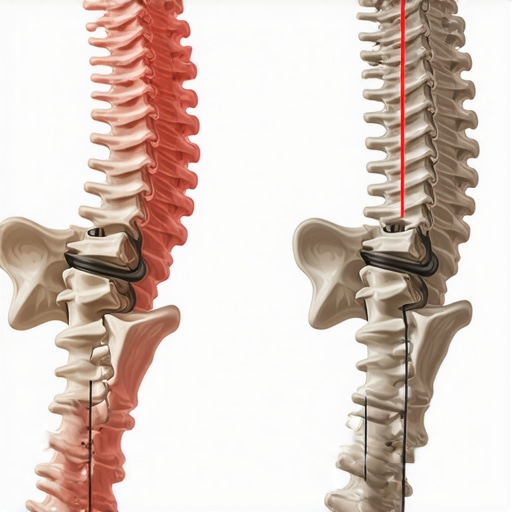
The biggest “Oops” factor I see people making in the laundry room is over-correcting. We are so afraid of bending our backs that we turn into human statues, locking our spines into a perfectly vertical line. External research, including the famous study by Wilke et al. on intradiscal pressure, reveals that sitting or standing with a rigid, 90-degree posture actually places more pressure on your intervertebral discs than a slightly reclined, relaxed position. When you are doing your reach-and-pivot, trying to keep your spine like a frozen rod can lead to a mechanical bottleneck. You need to allow for a natural, neutral curve rather than forced rigidity. If you have been over-perfecting your form but still feel a pinch, why sitting up straight might be giving you more back pain is likely due to this lack of functional fluidity.
Can you actually differentiate between a muscle knot and a disc bulge at home?
One of the most frequent questions from those who have mastered the basics is how to tell the difference between a localized muscle issue and a true spinal problem. This is a crucial distinction. If you feel a dull, localized ache that stays in the glute or hip, you might just have a tight piriformis. However, if that pain shoots down your leg like a lightning bolt when you cough, sneeze, or strain, you are likely dealing with a disc issue. Learning how to tell if your sciatica is a disc or muscle issue is the first step in choosing a recovery path that actually works. If you treat a disc bulge like a simple muscle knot by aggressive rolling, you risk further inflammation. For those moments when you need to calm the system down, implementing sciatica relief secrets like proper icing or unloading positions is far more effective than a high-intensity stretch.
Balance Movement Rather Than Choosing Sides
We often think a standing desk or standing while folding laundry is the ultimate cure-all. In reality, the truth about standing desks and prolonged standing is that they often just trade lower back pressure for hip and foot fatigue. It is not about standing versus sitting; it is about the frequency of your micro-breaks. If you have been struggling to stay mobile despite your best efforts, you might need to integrate conquering sciatica strategies that focus on blood flow and nerve desensitization. The real secret to a pain-free life isn’t a single ‘perfect’ movement, but a collection of smart, cumulative habits. Have you ever fallen into this trap of over-correcting your posture only to feel worse the next day? Let me know in the comments below.
The Gadgets That Actually Earned a Permanent Spot in My House
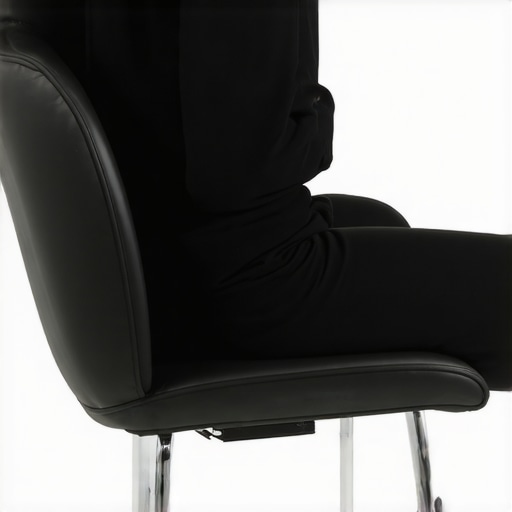
I have spent more money on Amazon ‘back solutions’ than I care to admit. Between the vibrating chairs and the weird inversion boots, my garage looks like a graveyard for orthopedic fads. But through all that trial and error, I found that the simplest tools are the ones that provide the most back pain breakthroughs. I personally swear by a firm lumbar roll for my office chair. Why? Because most ergonomic chairs, no matter how expensive, eventually lose their shape, leading to that dangerous ‘C-curve’ in your spine. A dedicated roll forces the lumbar spine into its natural lordosis, which is vital if you are trying to determine if is your back pain a sign of something more serious or just a result of poor sitting habits. If you don’t want to buy one, I often tell my friends that learning how to use a towel roll to support your neck while watching tv is the ultimate entry-level hack for instant relief.
My Secret Weapon for Car Rides and Movie Nights
Maintenance is not about a 2-hour gym session; it is about the equipment you use during the other 23 hours of the day. For me, that meant mastered the dead bug exercise. While it sounds strange, Dr. Stuart McGill, the world-renowned spine biomechanics expert from the University of Waterloo, highlights the ‘Big Three’ (the bird-dog, side-plank, and modified curl-up) as the gold standard for creating spinal stiffness. I use the dead bug exercise every single morning before I even have my coffee. It ‘wakes up’ the deep stabilizers that protect your discs during the day. This is how you transition from temporary relief to navigating your path to restored mobility. I have found that without this daily ‘primer,’ my back feels twice as vulnerable to the stresses of driving or heavy lifting.
How do I keep my spine resilient for the long haul?
The answer is consistency over intensity. People often ask me if they can just ‘fix’ their back and be done with it. The truth is, your spine is a living structure that requires ongoing care. This is why maintenance care is better than waiting for a spinal crisis. I recommend a ‘mobility audit’ every Sunday. Check your ranges of motion, look for new ‘tight spots,’ and double down on your mobility mastery. This proactive approach is the core of daily tips to keep your spine and joints healthy. If you wait for the ‘snap’ to happen, you are already three steps behind the healing curve.
The Future of Back Health and Wearable Tech
Looking ahead, I predict we are going to see a massive shift toward bio-feedback wearables. We already track our steps and heart rate, but soon we will have sensors that vibrate the second our lumbar spine rounds while we are unloading the dryer or sitting at a desk. This real-time data will take the guesswork out of posture. Until then, you have to be your own sensor. If you are stuck at a computer all day, I challenge you to try the one-minute thoracic bridge for people stuck at their desk right now. It is the single most effective way to reverse the ‘hunch’ and keep your discs hydrated and happy. Do not wait for the next flare-up to take action; your future self will thank you for the sixty seconds you spend on your spine today.
What a Single Rogue Sock Taught Me About Longevity
It took me years of trial and error to realize that my back wasn’t actually ‘weak’—it was just chronically mismanaged. One of the biggest shifts I made was understanding the sneaky way dehydration makes your spinal discs prone to injury. If those discs aren’t plump with fluid, all the ‘perfect’ movement in the world won’t save you from a pinch during a deep dryer reach. I also stopped viewing my stretches as a chore and started seeing them as ‘spinal hygiene.’ Just like you brush your teeth to prevent cavities, you hinge and lunge to prevent a disc crisis. I have found that why maintenance care is better than waiting for a spinal crisis is because it is much easier to keep a fire from starting than it is to put one out while your house is burning down. If you are currently in pain, do not lose heart; you are simply one habit away from a completely different outcome.
The Small Toolkit That Keeps Me Moving
If you want to upgrade your home environment, start with the height of your work surfaces. I learned how to adjust kitchen counters to save your spine while cooking, and the exact same logic applies to your laundry folding table or your dryer pedestal. If the surface is too low, your spine is forced to compensate. Beyond furniture, I personally trust a high-density foam roller and a firm lumbar support for my car seat. These aren’t just gadgets; they are the baseline for mobility mastery. I also keep a copy of Stuart McGill’s Back Mechanic on my nightstand to remind me that I am the primary architect of my own recovery.
Your Spine Deserves More Than Just Survival
You do not have to live in fear of the laundry room, the grocery store, or picking up your kids. By making these small adjustments to how you reach, pivot, and breathe, you are creating your own personal back pain breakthroughs. It is about reclaimed freedom and the confidence to move through your day without bracing for impact every time you bend over. You have the tools, you have the form, and now you have the plan. Have you ever tried the Golfer’s Reach, or do you have your own secret ‘dryer move’ to stay pain-free? Let me know in the comments below!