
Why your flip-flops are causing your morning heel and back pain
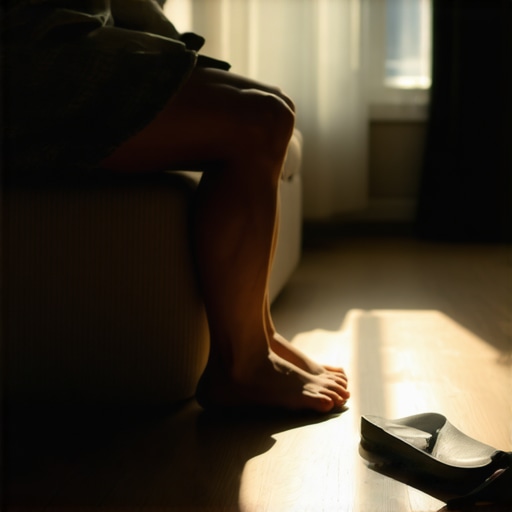
I remember the exact morning it happened. I swung my legs out of bed, ready to tackle the day, and the second my heels touched the hardwood, it felt like I’d stepped directly onto a bed of hot nails. My first instinct? I blamed the mattress. I even considered if I was just getting old at thirty-five. But the real culprit was sitting right by the back door: my favorite pair of thin, foam flip-flops. I’d spent the entire weekend wearing them at the lake, thinking I was giving my feet a breather. Instead, I was setting my spine up for a total meltdown.
The Sneaky Way Your Favorite Sandals Mess With Your Spine
We often think of back pain as something that starts in the back, but your body is more like a tower of blocks. When the foundation—your feet—is wobbly, everything above it has to compensate. Most flip-flops are essentially flat pieces of rubber with zero arch support. This forces your toes to scrunch just to keep the shoe on your foot. That tiny movement might seem minor, but it changes your entire gait, leading to that dreaded stiffness after a nap or a long night’s sleep. The lack of a heel cup means your heel strikes the ground with significantly more force than it would in a supportive shoe. Research from the American Podiatric Medical Association indicates that wearing flimsy flip-flops for extended periods can lead to plantar fasciitis and even stress fractures because they do not absorb the shock of your stride. That shock doesn’t just vanish; it travels straight up your legs into your lower back.
Can a Simple Pair of Shoes Really Cause This Much Trouble?
I used to be the biggest skeptic. I thought, people have walked barefoot for millennia, surely a little bit of foam cannot hurt! My mistake was forgetting that we are not walking on soft grass or sand; we are trekking across concrete and tile. I ignored the connection between flat feet and recurrent lower back pain until I could not stand up straight without a wince. Today, we are going to fix that. I am going to show you exactly why your footwear is betraying your morning comfort and how to reverse the damage without throwing away your summer style. Have you ever noticed your back feels worse after a weekend in sandals, or did you, like me, try to blame your mattress for losing support first? Let me know! Before you go out and buy a whole new wardrobe, let’s look at a few simple habits, like a daily foot massage habit, that can start undoing the tension right now.
Rebuild Your Foundation From the Ground Up
Think of your body like a heavy-duty truck. Your feet are the shock absorbers, and your spine is the frame. When you walk in flimsy flip-flops, it is like driving that truck with rusted-out springs; every tiny pebble and crack in the pavement sends a violent jolt straight into the chassis. To stop this, we have to transition from passive ‘holders’ of our shoes to active walkers. The first step is acknowledging that your feet have likely become ‘lazy’ from years of being compressed or unsupported. When your foot hits the ground, it should be a fluid motion, but flip-flops turn it into a flat-footed stomp. This repetitive impact is a fast track to needing expert strategies for lasting comfort because it irritates the nerves that run from your heels to your lumbar.
Wake Up Your Feet with a Simple Daily Habit
Before you even think about complex gym routines, you need to re-sensitize the nerves in your soles. I started a daily foot massage habit using a lacrosse ball after that painful morning I mentioned earlier. By rolling the ball under your arch for just two minutes per side, you break up the tight fascia that pulls on your calves and, eventually, your lower back. 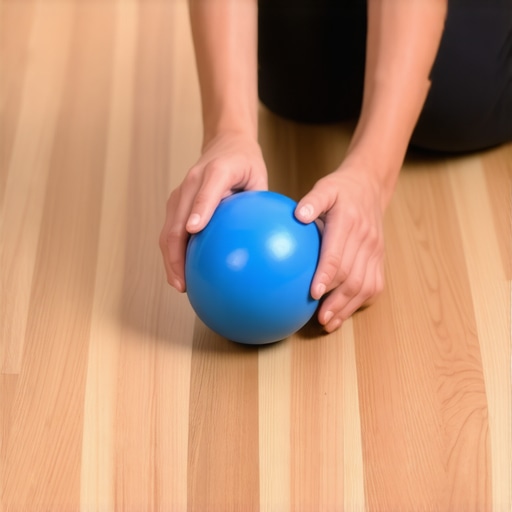 It felt incredibly intense at first—almost like a ‘good’ kind of hurt—but within a week, the sharp twinges in my hips started to dull. This simple movement signals your nervous system to let go of the protective guarding in your spine.
Give Your Toes Their Power Back
One of the biggest culprits of back tension is the ‘toe scrunch.’ When you wear sandals without a back strap, your toes claw downward to keep the shoe from flying off. This tiny, constant contraction shuts off your glutes and forces your lower back to do all the work of stabilizing your pelvis. You can see why your toes are the key to better balance once you realize that a flat, stable foot allows your core to engage naturally. Try walking around your house and consciously lifting your toes slightly—notice how your arch engages? That is the support your spine has been missing.
Don’t Fall for the Minimalist Shoe Hype Too Fast
I once made the mistake of jumping straight from foam flip-flops to ‘barefoot’ minimalist shoes, thinking it would solve everything instantly. It was a disaster. I spent three days barely able to move because my feet weren’t ready for that much shock. I ignored the warning about minimalist shoes and ended up with a flare-up that felt like a hot iron on my tailbone. The goal is a gradual transition. Start by choosing shoes with a wide toe box and a firm but flexible sole. If you are struggling to stay upright without pain, use the one-legged standing test to see if your ankles are wobbling; if they are, your spine is constantly overcorrecting for that instability. To calm the immediate ‘burning’ sensation that often follows a long day on your feet, incorporate a nerve glide exercise to help the sciatic nerve slide freely through the tissues of your leg instead of getting snagged on tight muscles.
The Stretching Myth That Actually Shreds Your Sciatic Nerve
We’ve all been told that if a muscle feels tight, we should stretch it until it yields. This is perhaps the most dangerous myth in the world of back health, especially when it comes to the hamstrings. If you are dealing with shooting leg pain, you might think touching your toes will help, but in my experience, this often does more harm than good. When your sciatic nerve is irritated, it isn’t ‘tight’ like a muscle; it is sensitive to tension. By cranking on your hamstrings, you are literally pulling on an inflamed nerve like a rubber band that is ready to snap. This is exactly why stretching your hamstrings often makes your sciatica worse. Instead of lengthening the muscle, you are provoking the protective guarding of the entire posterior chain. 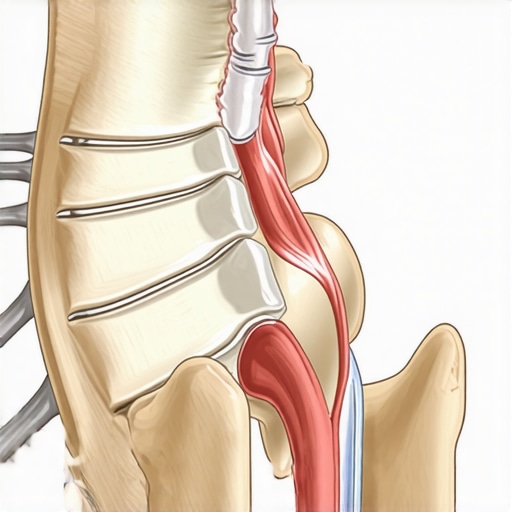
Stop Chasing Instant Relief with These Toxic Movements
The most common ‘trap’ people fall into is the knee-to-chest stretch. It feels incredible for about thirty seconds because it triggers a temporary stretch reflex that numbs the area, but it is a metabolic lie. If your pain is caused by a disc issue, rounding your lower back like that increases the internal pressure on the disc, potentially pushing it further toward the nerve. You must stop pulling your knees to your chest for back relief if you want to avoid a long-term flare-up. To really heal, you have to distinguish between a simple cramp and actual nerve impingement. Knowing how to tell if your sciatica is a disc or muscle issue is the difference between a one-week recovery and a six-month ordeal.
Why Does Your MRI Show Damage When You Feel No Pain?
This is the advanced nuance that many practitioners won’t tell you: your imaging is not your destiny. A landmark study published in the American Journal of Neuroradiology (Brinjikji et al., 2015) found that 37% of 20-year-olds and 80% of 50-year-olds with no back pain actually had disc degeneration on their MRIs. If you’ve seen a scary report, don’t panic. Often, the ‘damage’ seen on a screen is just a normal part of aging, like wrinkles on the inside. The real goal is functional mobility, not a ‘perfect’ picture. You should check if your back pain is a sign of something more serious or just the result of poor daily mechanics. Have you ever been told you have a ‘bad back’ because of an MRI, only to find that your pain fluctuated based on how you moved? Let me know in the comments—I’ve seen how much mental stress a diagnosis like that can cause. We need to stop looking at static images and start focusing on the link between poor posture and chronic back pain during our daily routines. Have you ever fallen into the trap of over-stretching a nerve?
Stop the Cycle of Recurring Flare-Ups
Maintaining the progress you’ve made isn’t about hour-long gym sessions; it’s about the small, boring habits that stop a flare-up before it starts. After my own struggle with constant stiffness, I realized that back pain breakthroughs often come from consistency rather than intensity. I personally swear by a high-density, 5-inch foam roller. Most people buy the soft, squishy ones, but those are useless for deep tissue. You need something that doesn’t yield under your weight to truly address the tension. I use it every night for five minutes to roll out my glutes and thoracic spine. This simple tool helps me achieve mobility mastery without needing a professional massage every week. Dr. Stuart McGill, a world-renowned expert on spine mechanics, emphasizes the ‘Big Three’ exercises in his book Back Mechanic to build ‘core stiffness’—which is essentially a biological brace for your spine. I’ve found that focusing on these stabilizers is more effective than any flashy yoga pose for conquering sciatica once and for all.
How can you keep your spine happy for the next twenty years?
The secret is scaling your activity while protecting your mechanics. It means learning lifestyle changes for better quality of life, like how to hinge at your hips instead of rounding your back when you pick up a laundry basket. If you keep moving in ways that irritate your discs, even the best tools won’t save you. 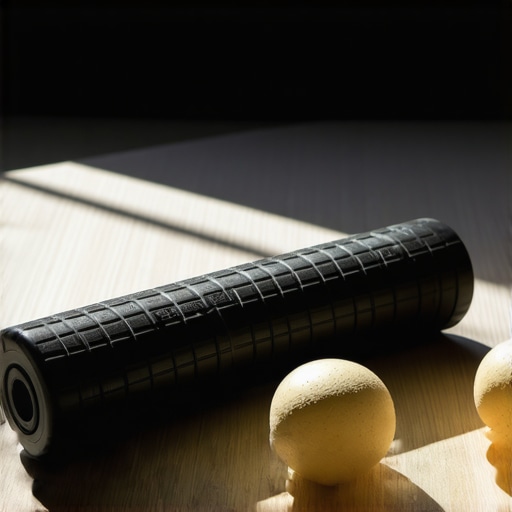
Why AI and Haptics are the Next Frontier for Your Back
I believe we are entering an era where ‘guessing’ if your posture is good will be a thing of the past. Within the next decade, we will likely see haptic sensors embedded in our shirts that provide a gentle buzz the moment we slip into a slumped position. This real-time biofeedback will revolutionize how we manage poor posture and chronic back pain. For now, we have to be our own sensors. I recommend using the ‘Bruegger’s position’—a simple posture reset—every twenty minutes if you work a desk job. It is one of those simple exercises that make a difference by opening up your chest and resetting your neck alignment. Try this advanced trick tonight: perform the McGill ‘Big Three’ stabilizers before you go to bed. It helps set your spine in a neutral position before a long night of sleep, often preventing that morning ‘hot nail’ sensation I used to dread.
What I Finally Realized About My Chronic Back Tension
After years of trial and error, I found that the source of the ache is rarely where the pain actually lives. Here are a few lightbulb moments that changed everything for me: The ‘Wait and See’ Approach Fails. Waiting for a flare-up to disappear on its own usually just gives your brain more time to wire in those pain pathways. Real progress started when I understood how chronic stress manifests as physical back tension. Movement is Medicine, but Only the Right Kind. I used to think any movement was good, but walking in the wrong shoes was actually undoing my gym progress and straining my lumbar. Consistency Trumps Intensity. Five minutes of rolling your feet is worth more than a two-hour massage once a month. I learned why your glutes are falling asleep and how to wake them up, which was the missing link for my spinal stability.
Gear That Actually Earned a Spot in My Daily Routine
I’ve wasted plenty of money on gimmicky ‘as seen on TV’ braces and vibrating gadgets. These are the only things I still use daily: The 5-Inch High-Density Foam Roller. This isn’t just for athletes. Learning how to use a foam roller on quads to relieve back pressure was a game-changer for my pelvic alignment. A Standard Lacrosse Ball. It’s better than any expensive massage gun for targeted relief. You can easily follow the steps on how to use a tennis ball to relieve glute tension to hit those stubborn spots in your hips. The ‘Back Mechanic’ Guide. Reading expert advice on spine hygiene taught me that my back needed stability and protection, not more aggressive stretching.
Take the First Step Toward a Pain-Free Morning
Healing your back isn’t a linear path, and there will be days when you feel like you’ve taken a step back. But by fixing your foundation—starting with your footwear and daily mechanics—you are giving your body the environment it needs to repair itself. Whether you are focused on conquering sciatica or just wanting to wake up without that ‘hot nail’ feeling in your heels, the power is in your small, daily habits. Every step you take in a supportive shoe is a vote for a healthier future. Don’t wait for the next big flare-up to take action. Have you ever noticed your back pain flares up after wearing a specific pair of shoes, or have you found a particular tool that finally gave you relief? Let me know in the comments below!