
Why your ‘perfect’ sitting posture is making you stiffer

I remember the exact moment my back decided it had finally had enough. I was sitting in my expensive, mesh-backed office chair, spine straight as a ruler, chin tucked perfectly, feet flat on the floor—the literal poster child for ‘proper ergonomics.’ I had spent a small fortune on gadgets because I thought the chair was the problem. But when I tried to stand up to grab a coffee, I was hit with a localized, searing tightness that made me feel like I was ninety years old instead of thirty-five. I was doing everything by the book, yet I was more miserable than my friend who spends his days hunched over a laptop on a beanbag chair. That was my lightbulb moment: I wasn’t sitting ‘well’; I was sitting rigid. In my quest for the perfect alignment, I had essentially turned my muscles into stone. Today, I want to help you break out of that frozen state. We’re going to look at why your obsession with ‘sitting up straight’ might be the very thing fueling your stiffness and how we can actually get you moving again without throwing your back out.
Your Muscles Aren’t Meant to Be Ornaments
Most of us were told in grade school that slumping is a sin. So, we spend our adult lives trying to maintain this military-grade posture. The mistake I made early on—and it was a painful one—was thinking that ‘good’ posture was a static position I had to hold with gritted teeth. I used to force myself into what I thought was the ideal shape, only to realize I was understanding the link between poor posture and chronic back pain the hard way. When you hold any position for too long, even a ‘perfect’ one, you are creating static load. According to research from the Cornell University Ergonomics Web, sitting in a strictly upright 90-degree position actually increases the pressure on your spinal discs significantly compared to a slightly reclined posture. By trying to be a statue, you’re starving your discs of the movement-based nutrients they need to stay supple. This is often why your desk chair height is wrecking your hips; it’s not just the height, it’s the lack of variety in how you use it. Have you ever felt like you’re fighting your own body just to stay upright at your desk?
Wait, isn’t slumping even worse for my spine?
This is the biggest fear people have. They think if they aren’t ‘perfect,’ they are crumbling. But the truth is, your ‘best’ posture is your *next* posture. Your body craves change. I used to be terrified of moving an inch out of alignment, fearing a disc flare-up, but that rigidity only led me toward needing sciatica relief secrets that I could have avoided with a little more wiggle room. We need to stop viewing our spine as a structural beam and start seeing it as a dynamic spring. If you’ve been feeling that burning sensation between your shoulder blades or a dull ache in your lower back, it’s a signal to move, not a signal to sit ‘straighter.’ You might even try the Bruegger position as a quick way to reset without being stuck in a permanent, painful freeze. We’re about to dive into how you can stop being a prisoner to your chair and start feeling loose again.
Give Your Spine a Breather Every 20 Minutes
Think of your spine like a garden hose. If you keep it bent in the exact same spot for hours, it’s going to develop a permanent kink. To avoid this, you need to implement a strategy that prioritizes movement over positioning. I used to be a ‘productivity martyr,’ someone who thought that leaving my desk for even five minutes was a sign of weakness. I would sit for three hours straight, laser-focused, only to find that my lower back felt like it had been welded together. It wasn’t until I learned why your body needs micro-breaks every 20 minutes to stay mobile that things shifted. Now, I set a silent timer. Every 20 minutes, I don’t necessarily do a full workout; I just change my shape. I stand up, reach for the ceiling, or simply shift my weight from one hip to the other. This prevents the ‘static loading’ that starves your spinal discs of hydration. 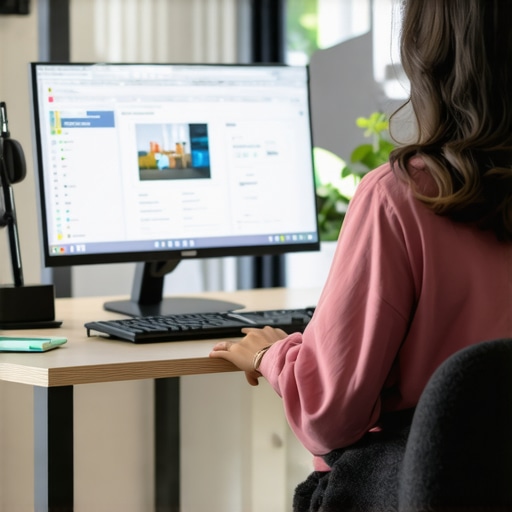
Your Monitor Height is the Secret to Ending Shoulder Burn
If you feel a searing sensation between your shoulder blades by 3 PM, your eyes are likely the culprit, not your muscles. Your head weighs about as much as a bowling ball, and for every inch it tilts forward to see your screen, you effectively double the weight your neck has to support. I once spent weeks wondering why my traps were on fire, only to realize I was leaning in because my laptop was too low. Learning how to adjust your monitor to stop that burning neck pain is often more effective than any massage. If you use bifocals or find why your reading glasses are forcing your neck into a painful crane position, you are fighting a losing battle against gravity. Propping your screen up so the top third is at eye level allows your skull to sit balanced over your ribcage, letting those overworked muscles finally relax.
Why Your Standing Desk Might Be Killing Your Hips
I fell into the ‘standing desk’ trap early on. I thought if sitting was the new smoking, standing must be the cure. I spent a whole week standing for eight hours a day on a hard floor. By Friday, my heels were throbbing and my lower back was screaming. I had just traded one static position for another. It turns out the truth about standing desks and why your hips ache is that standing still is just as taxing as sitting still. The key is the transition. Move between sitting and standing every 45 minutes. When you stand, keep your knees soft—don’t lock them out like a soldier on guard.
Calm the Nerve Before It Screams
If you are already feeling that familiar zing down your leg, you need to stop stretching your hamstrings. Most people react to tightness by pulling on the area, but if your sciatic nerve is irritated, stretching will only make it angrier. Instead, try a gentle ‘nerve glide.’ Think of it like pulling a thread through a needle; you want it to slide, not snap. Using the nerve glide exercise that calms burning leg pain allows the nerve to move freely within its sheath. You can even do a the 3-second pelvic reset you can do while waiting in line to keep your pelvis from tilting into a position that pinches those sensitive pathways.
Stop Stretching Your Hamstrings if You Have Nerve Pain
Most people reach for their toes the second they feel a twinge in their lower back. It’s a natural instinct: something feels tight, so we pull on it until it gives. But here is the nuance that usually gets missed: your hamstrings might feel tight because they are actually being pulled too far already. When you have an underlying disc issue, your nervous system often puts your hamstrings on a “short leash” to protect the sciatic nerve from further irritation. If you keep yanking on that leash, the nerve responds by becoming even more inflamed. I see so many people discover that why stretching your hamstrings often makes your sciatica worse is because they are treating a protective neurological guard as if it were just a stiff muscle. You aren’t lengthening a muscle; you’re agitating a wire.
Can Your Brain Trick You Into Feeling False Tightness?
The short answer is yes. This is where advanced recovery differs from beginner advice. According to research published in the Journal of Orthopaedic & Sports Physical Therapy, what we perceive as “muscle tightness” is frequently an increase in neural tension rather than a physical shortening of the muscle fibers. Your brain is essentially engaging the “parking brake” on your legs to prevent you from over-stretching a vulnerable or compressed nerve. If you’re trying to achieve mobility mastery daily tips to keep your spine and joints healthy, you have to stop fighting your brain’s safety mechanisms. Have you ever spent weeks stretching every morning only to feel even stiffer the next day? That’s the “Oops” factor in action. You aren’t getting more mobile; you’re just repeatedly tripping your body’s internal alarm system.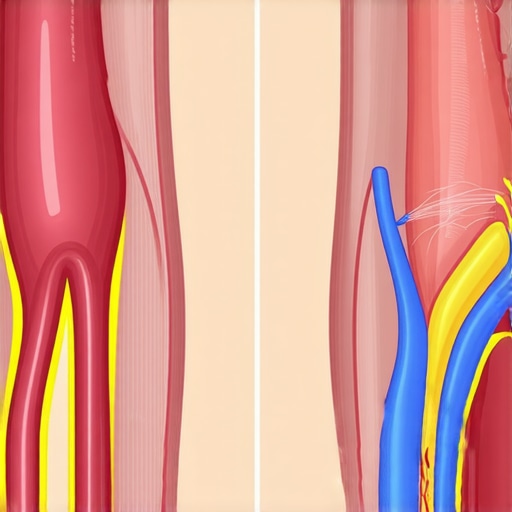
The Danger of the Classic Knees-to-Chest Move
We’ve all seen the generic advice to pull your knees to your chest to “release” the lower back. While this position often feels great for five minutes because it opens the facet joints, it can be a total disaster if your pain is coming from a posterior disc bulge. That specific rounded-back position can actually create a “tube of toothpaste” effect, pushing the disc material further toward the nerve root. It is vital to learn how to tell if your sciatica is a disc or muscle issue before you commit to these common floor stretches. Instead of blindly following a generic routine you found online, you should focus on neck pain solutions proven techniques to regain your range of motion and lumbar movements that maintain a neutral spine. You might find much faster results if you stop pulling your knees to your chest for back relief and try more stable, breath-focused movements instead. This shift from ‘aggression’ to ‘accommodation’ is what finally allowed my back to heal. Have you ever fallen into this trap? Let me know in the comments.I’ve spent thousands on fancy ergonomic chairs that didn’t do half as much for me as a twenty-dollar lumbar roll. The problem with high-end furniture is that it often tries to do the work for your body, letting your postural muscles effectively go on vacation. I now swear by what I call active support. This means using tools that remind my body where it should be, rather than propping it up like a mannequin. I always tell people that mobility mastery daily tips to keep your spine and joints healthy usually start with the simplest physical adjustments. For example, learning how to use a towel roll to support your neck while watching tv is a total game-changer for those late-night streaming sessions where we usually collapse our cervical spine into a C-shape. Dr. Stuart McGill, a world-renowned expert in spine biomechanics and author of Back Mechanic, emphasizes the concept of spine hygiene. This is the idea that your movements outside of the gym—how you brush your teeth, tie your shoes, and sit at your desk—dictate your pain levels more than any single corrective exercise ever could. If you aren’t practicing enhance your back mobility ergonomic tips for everyday comfort, you are essentially trying to out-train a lifestyle that is actively working against your recovery.
How do I maintain my mobility as I get older?
The secret isn’t found in higher intensity; it’s found in relentless consistency. You need a maintenance schedule for your joints just like you have for your car. I treat my spine like a high-performance engine and I don’t wait for a breakdown to check the vitals. Realizing why maintenance care is better than waiting for a spinal crisis was the single biggest turning point in my own journey away from chronic pain. Every morning, I perform the 10 second hip reset for relief after sitting to ensure my pelvis isn’t locked in a permanent tilt from the previous day’s office work. 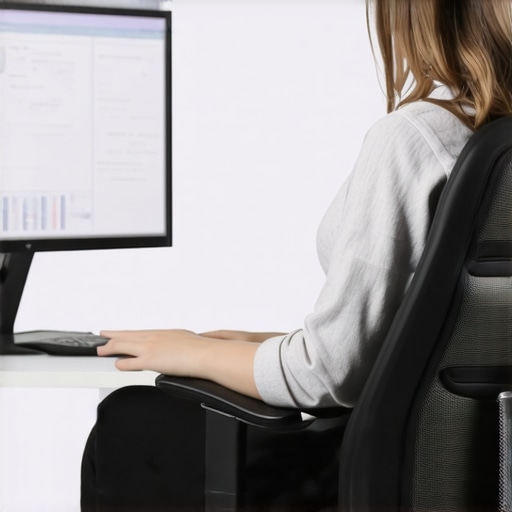 Looking ahead, I predict we are going to see a massive shift toward bio-dynamic workstations. Instead of just a desk that moves up and down, we will likely see workstations with integrated haptic feedback that gently vibrates when it detects your spine has remained static for too long. We are moving away from the quest for the perfect chair and toward environments that facilitate constant micro-movements. Even your choice of footwear is a major player in this equation; I’ve found that why your choice of work shoes matters more than your chair is a biological reality because your foundation dictates how your entire spinal column stacks. If you take one thing away from this, let it be the power of daily stabilization. Try using the single best exercise for stabilizing a wobbly lower spine—the Bird-Dog—every morning for the next two weeks. Don’t do it for flexibility; do it for the neurological control your spine is craving. I promise you’ll feel more solid and capable than you have in years.I remember the exact moment my back decided it had finally had enough. I was sitting in my expensive, mesh-backed office chair, spine straight as a ruler, chin tucked perfectly, feet flat on the floor—the literal poster child for ‘proper ergonomics.’ I had spent a small fortune on gadgets because I thought the chair was the problem. But when I tried to stand up to grab a coffee, I was hit with a localized, searing tightness that made me feel like I was ninety years old instead of thirty-five. I was doing everything by the book, yet I was more miserable than my friend who spends his days hunched over a laptop on a beanbag chair. That was my lightbulb moment: I wasn’t sitting ‘well’; I was sitting rigid. In my quest for the perfect alignment, I had essentially turned my muscles into stone. Today, I want to help you break out of that frozen state. We’re going to look at why your obsession with ‘sitting up straight’ might be the very thing fueling your stiffness and how we can actually get you moving again without throwing your back out.
Your Muscles Aren’t Meant to Be Ornaments
Most of us were told in grade school that slumping is a sin. So, we spend our adult lives trying to maintain this military-grade posture. The mistake I made early on—and it was a painful one—was thinking that ‘good’ posture was a static position I had to hold with gritted teeth. I used to force myself into what I thought was the ideal shape, only to realize I was understanding the link between poor posture and chronic back pain the hard way. When you hold any position for too long, even a ‘perfect’ one, you are creating static load. According to research from the Cornell University Ergonomics Web, sitting in a strictly upright 90-degree position actually increases the pressure on your spinal discs significantly compared to a slightly reclined posture. By trying to be a statue, you’re starving your discs of the movement-based nutrients they need to stay supple. This is often why your desk chair height is wrecking your hips; it’s not just the height, it’s the lack of variety in how you use it. Have you ever felt like you’re fighting your own body just to stay upright at your desk?
Wait, isn’t slumping even worse for my spine?
This is the biggest fear people have. They think if they aren’t ‘perfect,’ they are crumbling. But the truth is, your ‘best’ posture is your *next* posture. Your body craves change. I used to be terrified of moving an inch out of alignment, fearing a disc flare-up, but that rigidity only led me toward needing sciatica relief secrets that I could have avoided with a little more wiggle room. We need to stop viewing our spine as a structural beam and start seeing it as a dynamic spring. If you’ve been feeling that burning sensation between your shoulder blades or a dull ache in your lower back, it’s a signal to move, not a signal to sit ‘straighter.’ You might even try the Bruegger position as a quick way to reset without being stuck in a permanent, painful freeze. We’re about to dive into how you can stop being a prisoner to your chair and start feeling loose again.
Give Your Spine a Breather Every 20 Minutes
Think of your spine like a garden hose. If you keep it bent in the exact same spot for hours, it’s going to develop a permanent kink. To avoid this, you need to implement a strategy that prioritizes movement over positioning. I used to be a ‘productivity martyr,’ someone who thought that leaving my desk for even five minutes was a sign of weakness. I would sit for three hours straight, laser-focused, only to find that my lower back felt like it had been welded together. It wasn’t until I learned why your body needs micro-breaks every 20 minutes to stay mobile that things shifted. Now, I set a silent timer. Every 20 minutes, I don’t necessarily do a full workout; I just change my shape. I stand up, reach for the ceiling, or simply shift my weight from one hip to the other. This prevents the ‘static loading’ that starves your spinal discs of hydration.
Your Monitor Height is the Secret to Ending Shoulder Burn
If you feel a searing sensation between your shoulder blades by 3 PM, your eyes are likely the culprit, not your muscles. Your head weighs about as much as a bowling ball, and for every inch it tilts forward to see your screen, you effectively double the weight your neck has to support. I once spent weeks wondering why my traps were on fire, only to realize I was leaning in because my laptop was too low. Learning how to adjust your monitor to stop that burning neck pain is often more effective than any massage. If you use bifocals or find why your reading glasses are forcing your neck into a painful crane position, you are fighting a losing battle against gravity. Propping your screen up so the top third is at eye level allows your skull to sit balanced over your ribcage, letting those overworked muscles finally relax.
Why Your Standing Desk Might Be Killing Your Hips
I fell into the ‘standing desk’ trap early on. I thought if sitting was the new smoking, standing must be the cure. I spent a whole week standing for eight hours a day on a hard floor. By Friday, my heels were throbbing and my lower back was screaming. I had just traded one static position for another. It turns out the truth about standing desks and why your hips ache is that standing still is just as taxing as sitting still. The key is the transition. Move between sitting and standing every 45 minutes. When you stand, keep your knees soft—don’t lock them out like a soldier on guard.
Calm the Nerve Before It Screams
If you are already feeling that familiar zing down your leg, you need to stop stretching your hamstrings. Most people react to tightness by pulling on the area, but if your sciatic nerve is irritated, stretching will only make it angrier. Instead, try a gentle ‘nerve glide.’ Think of it like pulling a thread through a needle; you want it to slide, not snap. Using the nerve glide exercise that calms burning leg pain allows the nerve to move freely within its sheath. You can even do a the 3-second pelvic reset you can do while waiting in line to keep your pelvis from tilting into a position that pinches those sensitive pathways.
Stop Stretching Your Hamstrings if You Have Nerve Pain
Most people reach for their toes the second they feel a twinge in their lower back. It’s a natural instinct: something feels tight, so we pull on it until it gives. But here is the nuance that usually gets missed: your hamstrings might feel tight because they are actually being pulled too far already. When you have an underlying disc issue, your nervous system often puts your hamstrings on a “short leash” to protect the sciatic nerve from further irritation. If you keep yanking on that leash, the nerve responds by becoming even more inflamed. I see so many people discover that why stretching your hamstrings often makes your sciatica worse is because they are treating a protective neurological guard as if it were just a stiff muscle. You aren’t lengthening a muscle; you’re agitating a wire.
Can Your Brain Trick You Into Feeling False Tightness?
The short answer is yes. This is where advanced recovery differs from beginner advice. According to research published in the Journal of Orthopaedic & Sports Physical Therapy, what we perceive as “muscle tightness” is frequently an increase in neural tension rather than a physical shortening of the muscle fibers. Your brain is essentially engaging the “parking brake” on your legs to prevent you from over-stretching a vulnerable or compressed nerve. If you’re trying to achieve mobility mastery daily tips to keep your spine and joints healthy, you have to stop fighting your brain’s safety mechanisms. Have you ever spent weeks stretching every morning only to feel even stiffer the next day? That’s the “Oops” factor in action. You aren’t getting more mobile; you’re just repeatedly tripping your body’s internal alarm system.
The Danger of the Classic Knees-to-Chest Move
We’ve all seen the generic advice to pull your knees to your chest to “release” the lower back. While this position often feels great for five minutes because it opens the facet joints, it can be a total disaster if your pain is coming from a posterior disc bulge. That specific rounded-back position can actually create a “tube of toothpaste” effect, pushing the disc material further toward the nerve root. It is vital to learn how to tell if your sciatica is a disc or muscle issue before you commit to these common floor stretches. Instead of blindly following a generic routine you found online, you should focus on neck pain solutions proven techniques to regain your range of motion and lumbar movements that maintain a neutral spine. You might find much faster results if you stop pulling your knees to your chest for back relief and try more stable, breath-focused movements instead. This shift from ‘aggression’ to ‘accommodation’ is what finally allowed my back to heal. Have you ever fallen into this trap? Let me know in the comments.I’ve spent thousands on fancy ergonomic chairs that didn’t do half as much for me as a twenty-dollar lumbar roll. The problem with high-end furniture is that it often tries to do the work for your body, letting your postural muscles effectively go on vacation. I now swear by what I call active support. This means using tools that remind my body where it should be, rather than propping it up like a mannequin. I always tell people that mobility mastery daily tips to keep your spine and joints healthy usually start with the simplest physical adjustments. For example, learning how to use a towel roll to support your neck while watching tv is a total game-changer for those late-night streaming sessions where we usually collapse our cervical spine into a C-shape. Dr. Stuart McGill, a world-renowned expert in spine biomechanics and author of Back Mechanic, emphasizes the concept of spine hygiene. This is the idea that your movements outside of the gym—how you brush your teeth, tie your shoes, and sit at your desk—dictate your pain levels more than any single corrective exercise ever could. If you aren’t practicing enhance your back mobility ergonomic tips for everyday comfort, you are essentially trying to out-train a lifestyle that is actively working against your recovery.
How do I maintain my mobility as I get older?
The secret isn’t found in higher intensity; it’s found in relentless consistency. You need a maintenance schedule for your joints just like you have for your car. I treat my spine like a high-performance engine and I don’t wait for a breakdown to check the vitals. Realizing why maintenance care is better than waiting for a spinal crisis was the single biggest turning point in my own journey away from chronic pain. Every morning, I perform the 10 second hip reset for relief after sitting to ensure my pelvis isn’t locked in a permanent tilt from the previous day’s office work. Looking ahead, I predict we are going to see a massive shift toward bio-dynamic workstations. Instead of just a desk that moves up and down, we will likely see workstations with integrated haptic feedback that gently vibrates when it detects your spine has remained static for too long. We are moving away from the quest for the perfect chair and toward environments that facilitate constant micro-movements. Even your choice of footwear is a major player in this equation; I’ve found that why your choice of work shoes matters more than your chair is a biological reality because your foundation dictates how your entire spinal column stacks. If you take one thing away from this, let it be the power of daily stabilization. Try using the single best exercise for stabilizing a wobbly lower spine—the Bird-Dog—every morning for the next two weeks. Don’t do it for flexibility; do it for the neurological control your spine is craving. I promise you’ll feel more solid and capable than you have in years.
The One Truth About Your Spine That Most Gurus Forget
The biggest shift in my recovery happened when I stopped treating my body like a fragile antique. I spent years thinking every pop or twinge was a sign of impending disaster, but the reality is much more empowering. Here are the lightbulb moments that finally stuck:
- Pain is often a protective alarm, not a damage report. Just because it hurts doesn’t mean you have broken something. Often, your brain is just being an overprotective parent trying to prevent movement it perceives as risky.
- Stiffness is frequently neurological. When your muscles feel like iron, it is often your nervous system tightening the brakes. You cannot stretch your way out of a safety response; you have to move your way into a state of safety.
- Small wins lead to big changes. A simple the 30-second neck tuck to stop tension headaches at your desk can do more for your long-term comfort than a rare, aggressive massage.
The Minimalist Gear That Actually Saved My Back
I have realized that you do not need a thousand-dollar ergonomic setup to find relief. My daily toolkit is surprisingly low-tech but highly effective. I always keep a tennis ball nearby because learning how to use a tennis ball to relieve glute tension is a total game-changer for those long car rides or marathon zoom calls. I also swear by a simple lumbar roll for any chair that lacks support. If you are struggling with space, knowing how to stay mobile while working in a small home office is more about your movement habits than the size of your desk. I also highly recommend the work of Dr. Stuart McGill; his focus on spine hygiene is the foundation of everything I do to stay pain-free.
Your Spine Is a Spring Not a Concrete Beam
If you have been living in fear of your next flare-up, I want you to know that your body is incredibly resilient. You were not designed to be static; you were designed to adapt, flow, and bounce back. By incorporating small, frequent movements and prioritizing your consistent back mobility, you are giving your nervous system the green light to relax. Don’t wait for the perfect moment or the perfect chair to start feeling better. Just start by wiggling, shifting, and breathing right where you are. You have the tools now to take control of your comfort. Have you ever noticed that your back feels worse after a perfectly ergonomic day than after a day where you were constantly on the move? Let me know your experience in the comments below!