
Why your wallet belongs in your front pocket to save your hips
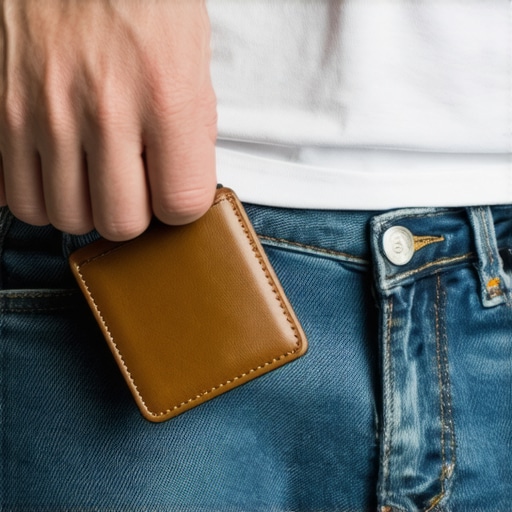
I remember sitting in my truck three years ago, trying to ignore a sharp, electric zing shooting down my right thigh. I figured I was just getting old or maybe I’d overdone it at the gym. I spent weeks understanding the link between poor posture and chronic back pain and bought every ergonomic cushion the internet could suggest. Nothing worked. Then, one afternoon at a red light, I shifted my weight and felt that familiar, thick lump of my leather wallet digging into my glute. In a moment of pure frustration, I tossed it onto the passenger seat. Within ten minutes, the zing was gone. It was a total face-palm moment. I’d been paying for specialized treatments when the solution was literally sitting right under me, tilting my pelvis like a broken seesaw.
Your Back Pocket is Shifting Your Entire Skeleton Out of Whack
When you shove a wallet in your back pocket and sit down, you aren’t just sitting on leather; you’re creating a structural imbalance that radiates upward. Think about it. Your pelvis is the foundation of your entire torso. If one side is hoisted up by a one-inch-thick wallet, your spine has to curve to keep your head level. This isn’t a small deal. This constant tilt puts massive pressure on the sciatic nerve and the piriformis muscle. Many people struggle to tell if their leg pain is sciatica or a muscle knot when the answer is simply “Wallet Sciatica.” It is a real medical term. According to Harvard Health, sitting on a wallet for long periods can compress the sciatic nerve so severely it mimics a herniated disc. I wasted so much time wondering if my back pain was a sign of something more serious, when I just needed to move my credit cards.
Is this tiny habit really responsible for your big pain?
I get the skepticism. It feels too simple to be true. You might be thinking your back pain is far more complex than a pocket change. I made the mistake of ignoring this advice for years because I thought I was tougher than a little bit of leather. I even fell into the trap where stretching my hamstrings actually made my sciatica worse because I was tugging on an already irritated nerve. But here is the promise: by simply moving that weight to your front pocket, you allow your sit-bones to hit the chair evenly, instantly decompressing your lower lumbar. We are going to dive into how this one habit can save your hips from years of wear and tear. Have you ever felt that weird numbness in your leg after a long drive and realized your wallet was the culprit? Drop a comment below, because once I realized it, I felt like I had found a secret health hack hidden in plain sight.
Move the Wallet and Level Your Foundation
The very first step is non-negotiable: clear your back pockets. Think of your pelvis like the chassis of a car. If one tire is significantly larger than the rest, the entire frame twists, and the suspension—your spine—wears out prematurely. By moving your wallet to your front pocket or using a slim cardholder, you allow both sit-bones to make contact with the chair. This simple act of leveling the playing field prevents your lower lumbar from being forced into a compensatory curve. If you’ve spent years sitting lopsided, incorporating ergonomic tips for everyday comfort will help reset your workspace and your posture.
Calm the Irritated Nerve with Gentle Glides
When the sciatic nerve has been compressed by a leather brick for hours, it gets inflamed and sensitive to tension. Traditional static stretching, like aggressively reaching for your toes, often creates more irritation by pulling on a nerve that is already on red-alert. Instead, you need “nerve flossing.” Imagine a piece of dental floss moving smoothly back and forth between your teeth; that’s what we want for your nerve through its surrounding tissue. I remember my first time trying this. I was desperate and had been pulling my knees to my chest for weeks, which only made my leg throb. Once I started a rhythmic nerve glide exercise, the electric sensation faded into a dull hum. It wasn’t about force; it was about gentle, consistent movement.
How to Tell if Your Wallet or a Disc is the Culprit
It is vital to distinguish between a structural issue in the spine and a compression issue in the glute. If your pain changes when you shift your sitting position but disappears almost entirely when you stand up and walk, you are likely dealing with piriformis syndrome or “Wallet Sciatica.” However, if the pain persists regardless of your pocket contents or gets worse when you cough, you need to learn how to tell if your sciatica is a disc or muscle issue. Wallet-induced pain usually responds almost instantly to pressure relief, whereas a disc bulge might require a more nuanced approach, such as the one hip stretch that relieves pressure on the L5-S1 disc.
Adjust Your Seat to Protect the Nerve
Even without the wallet, how you sit in your car or at your desk matters. Most people sink into their seats, which tucks the tailbone and puts the sciatic nerve on a constant stretch. You want your hips slightly higher than your knees. When I’m driving long distances, I pay close attention to the correct way to tilt your car seat. A slight forward tilt of the pelvis maintains the natural curve of the lower back and takes the “tug-of-war” tension off the nerve. If you find yourself slouching in a soft chair, you might be discovering why your soft couch is the worst place to sit during a flare-up.
The 10-Second Reset for Instant Relief
If you have been sitting for more than 20 minutes, your muscles begin to lose their ability to support your joints. You need a quick recalibration. Stand up and perform the 10-second hip reset. This isn’t a workout; it’s a neurological signal to your brain to remind your glutes and hip flexors how to function after being crushed. I use this every time I get out of my truck, and it prevents that stiff, painful shuffle I used to have for the first fifty yards of walking.
While moving your wallet is the easiest win you will ever get for your back health, there is a deeper layer to this that most people—and even some trainers—completely miss. We have been conditioned to think that if something feels tight, we should pull on it until it lets go. But here is the hard truth: nerves do not like to be stretched. In my years of dealing with this, I found that the biggest mistake people make is treating a sensitive nerve like a stubborn muscle. When you have that deep ache in your glute, your first instinct is to reach for your toes. However, stretching your hamstrings often makes your sciatica worse because you are essentially playing tug-of-war with an inflamed nerve that is already reaching its physical limit.
Stop Treating Your Nerves Like Rubber Bands
Common wisdom says ‘stretch it out,’ but science suggests otherwise. Research published in the Journal of Orthopaedic & Sports Physical Therapy highlights that nerves require ‘space, motion, and slack’ to heal, not tension. When you perform a traditional static stretch on a leg plagued by sciatica, you are increasing the mechanical tension on the nerve sheath. This is why you might feel better for five minutes but then find yourself hobbling an hour later. You have to understand the difference between muscle soreness and nerve irritation. Muscles are like rubber bands; they can take the pull. Nerves are like electrical cables; if you pull them too hard, you disrupt the signal and cause more inflammation. This is the nuance that separates those who get ‘temporary relief’ from those who find expert strategies for lasting comfort.
Could Your Footwear Choice Be Sabotaging Your Spinal Recovery?
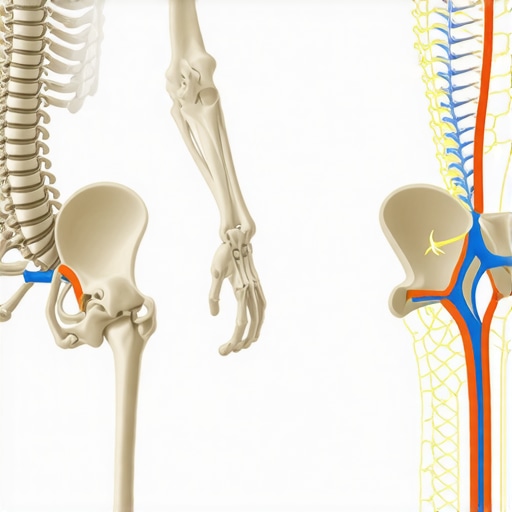
It sounds far-fetched, but the way your feet strike the ground dictates how your pelvis handles the load. If you have corrected your wallet habit but still feel that ‘zing’ while walking, look at your shoes. I’ve seen countless cases where your toes are the key to better balance and back health because they provide the stable base your pelvis needs to stay level. If your shoes are worn down on one side, you are essentially recreating the ‘wallet tilt’ from the ground up. This constant micro-oscillation keeps the piriformis muscle in a state of perpetual contraction, which then bites down on the sciatic nerve. If you are serious about mobility mastery and keeping your spine healthy, you have to look at the entire kinetic chain, not just the spot that hurts.
The Trap of the False Positive Relief
There is a specific trap I call ‘The Foam Roller Fallacy.’ People spend twenty minutes bruising their IT bands or glutes, thinking they are breaking up scar tissue. In reality, they are often just numbing the area through sheer force, which masks the underlying spinal instability. If you find yourself needing to ‘beat up’ your muscles every single day just to sit comfortably, you aren’t fixing the problem; you’re just silencing the alarm. Instead of force, try the gentle rocking move that calms down a pinched nerve. It’s about coaxing the body into safety, not demanding it. Have you ever fallen into this trap where you stretched or rolled a spot until it was bruised, only for the pain to come back twice as bad? Let me know in the comments, because I’ve been there, and breaking that cycle is the real key to navigating your path to restored mobility.
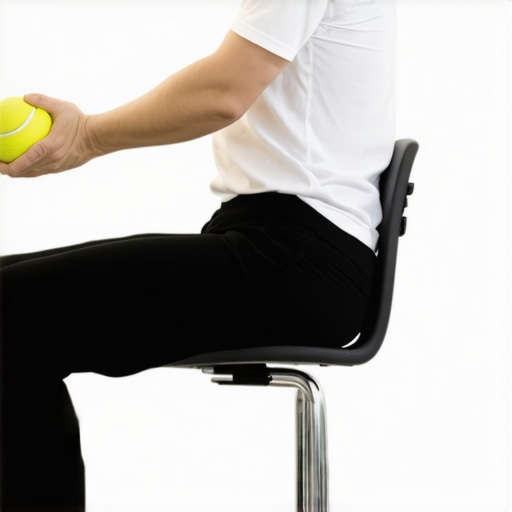
Once you have ditched the leather wallet and calmed the initial fire, the game shifts from temporary relief to long-term resilience. I have found that the most expensive ergonomic chairs in the world cannot compete with a simple, five-dollar tennis ball. I keep one in my truck’s center console and another in my gym bag at all times. When I feel my glutes starting to tighten up after a long commute, I use it for a targeted release. It is a surgical way to pinpoint the piriformis muscle before it starts squeezing the sciatic nerve again. If you have never tried this, you need to learn how to use a tennis ball to relieve glute tension without bruising the tissue. I also use this same tool for my upper back; releasing tension in your upper traps can actually take the mechanical pull off your lower spine by improving your overall posture.
Stop Waiting for a Spinal Crisis
We often wait until we can no longer walk or tie our shoes before we take our back health seriously. This is a losing strategy that leads to a cycle of flare-ups. Dr. Stuart McGill, a world-renowned expert on spine biomechanics and author of Back Mechanic, emphasizes that building ‘spine hygiene’ into your daily movement patterns is the only way to avoid long-term degeneration. This means choosing to move differently every day, not just when you are in pain. For me, understanding why maintenance care is better than waiting for a spinal crisis became a reality when I saw that my ‘good’ days were simply the result of small habits I practiced on my ‘bad’ days. Integrating mobility mastery daily tips ensures your joints stay lubricated and your nerves have the physical space they need to glide freely without snagging on scar tissue.
How can I keep my back healthy for the next decade?
Consistency is more important than intensity. You do not need a grueling 90-minute yoga session; you need a 10-second hip reset every single time you stand up from your desk. I also rely on a simple ‘digital’ tool: a 20-minute timer on my phone. Nerves are metabolic hogs; they require constant blood flow and oxygen to stay healthy. If you stay static for hours, you are essentially starving them. Implementing micro-breaks every 20 minutes is a non-negotiable part of my workflow now. Looking forward, I predict that in the next few years, we will see a massive shift toward bio-haptic feedback. We are already seeing prototypes of ‘smart clothing’ that gently vibrates when your pelvis tilts too far or your shoulders slump. Until those are mainstream, you have to be your own sensor. Start using expert tips on managing back pain in 2025 to stay ahead of the curve. The real breakthrough comes when you stop viewing your back as something to ‘fix’ and start seeing it as a system to maintain. Try the tennis ball trick during your next lunch break—it is the fastest way to wake up those dormant glutes and save your lower back from a mid-afternoon crash.
The One Realization That Finally Stopped the Zing
Looking back, my biggest mistake was thinking that intensity equalled progress. I spent years forcing my body through aggressive stretches, only to end up more inflamed and frustrated. The lightbulb moment came when I stopped treating my body like a machine to be fixed and started viewing it as a living system that needs room to breathe. I learned that nerves require slack, not tension, and that learning the difference between muscle soreness and nerve irritation was the key to finally quieting the fire in my leg. I also had to accept that ‘feeling better’ isn’t the same as ‘getting better.’ Real recovery happened when I understood why maintenance care is better than waiting for a spinal crisis. It is the small, daily habits you practice when you aren’t in pain that keep the flares from returning.
My Toolkit for Staying Supple and Pain-Free
I don’t rely on luck anymore; I rely on a few specific resources that I trust with my physical health. First, I always recommend looking into the work of Dr. Stuart McGill—his research is the gold standard for understanding how to move without wrecking your lumbar discs. On a physical level, my most used tool is a simple tennis ball. Knowing how to use a tennis ball to relieve glute tension allows me to perform self-maintenance in the car or at the office before a knot turns into a crisis. I also treat my calendar as a health tool, scheduling micro-breaks every 20 minutes to stay mobile and prevent my nerves from getting compressed. These aren’t just ‘tips’; they are the foundation of mobility mastery daily tips that keep me functional and pain-free.
Reclaim Your Movement Without the Burning Pain
You don’t have to live in a state of constant apprehension, wondering when the next electric zing will strike. By clearing out your back pockets and respecting your anatomy, you are giving your spine the physical space it needs to heal itself. The road to navigating your path to restored mobility isn’t always a straight line, but it is achievable when you use expert strategies for lasting comfort instead of temporary quick fixes. Start today by simply moving that wallet and performing a quick hip reset—your future self will thank you for the relief. Have you noticed a difference in your back pain after changing your sitting habits or clearing out your pockets? Let me know in the comments below!