
The Specific Hip Flexor Stretch That Stops Lower Back Arching

Picture this: I’m mid-sentence, explaining a client’s stubborn back pain, when suddenly I feel that all-too-familiar twinge in my own lower back. It’s like a little alarm bell going off, warning me that I’ve pushed too far or ignored a persistent issue. For years, I struggled to find relief, trying countless stretches and therapies that seemed to help temporarily but never addressed the root cause. That was until I discovered a surprisingly effective technique that focuses on a tiny but crucial muscle group—the hip flexors. Now, a simple, targeted stretch has become my go-to for preventing lower back arching and easing pain at the source.
The Hook: Why Your Lower Back Keeps Arcing—and How to Fix It
If you’ve ever felt that sharp, stabbing sensation when bending forward or noticed your lower back pinch or stretch painfully, you’re not alone. I used to think it was simply part of aging or a stubborn injury I just had to live with. But after months of frustration and some serious digging, I realized a small but vital piece of the puzzle was missing—hip flexor tightness. This muscle group, often overlooked, can wreak havoc on your spinal health, pulling your pelvis into an unstable tilt that causes your back to arch relentlessly.
That revelation changed everything. Instead of just stretching my hamstrings or relying on generic back exercises, I focused on releasing and strengthening my hip flexors. The results? Less back pain, better posture, and a more mobile, comfortable daily life. And I want to share this breakthrough with you.
What We’ll Cover Today
In this post, I’ll guide you through the specific hip flexor stretch that effectively stops your lower back from arching. You’ll learn how to identify if tight hip flexors are contributing to your discomfort and discover step-by-step instructions to incorporate this stretch into your routine. Plus, I’ll reveal common mistakes that can undermine your progress and how to avoid them so you can get lasting relief.
Is This Hip Flexor Stretch Actually Worth the Hype?
To be honest, I was skeptical at first. I’d made the mistake early on of blindly jumping into stretches without understanding the deeper mechanics, leading to minimal results or even more discomfort. But after experimenting and observing consistent improvements, I knew I’d found a game changer. This specific stretch targets the hip flexors precisely, addressing the root of the problem rather than just superficial symptoms.
Research supports this approach too. According to a study published in The Journal of Orthopaedic & Sports Physical Therapy, tight hip flexors are strongly linked to lower back pain due to altered pelvic positioning. By releasing this muscle, you can restore proper alignment, reduce strain, and improve mobility.
So, if you’ve faced persistent lower back arching or pain that won’t quit, you’re in the right place. I’ll show you how to make this simple adjustment in your routine and finally gain control over your back health. Ready to stop the cycle? Let’s dive into the exact stretch that makes the difference.
Have questions or need personalized guidance? Contact me here.
Finding Your Starting Point
Begin by assessing your hip flexor flexibility. Lie face down on a bed or mat, then gently pull one knee towards your chest. If you feel tightness or resistance, that’s your cue that this muscle needs release. I recall a time when I struggled with persistent back arching during morning stretches; realizing my hip flexors were tight helped me make a noticeable difference within days.
Executing the Hip Flexor Stretch Correctly
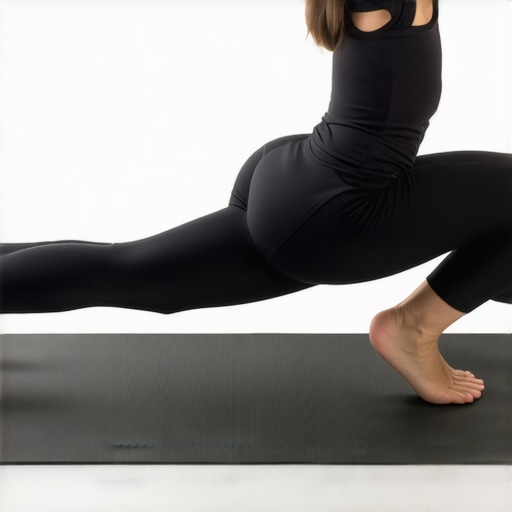
Step 1: Get into a Lunge Position
Start in a kneeling lunge with your right foot forward, knee bent at 90 degrees, and left knee on the ground. Keep your torso upright, engaging your core to maintain balance. It’s crucial to avoid leaning forward excessively, as this shifts the stretch away from the hip flexors.
Step 2: Engage Your Glutes and Tuck the Pelvis
Squeeze your glute of the front leg and tuck your pelvis under slightly. This action deepens the stretch directly into your hip flexors rather than your lower back. I once attempted this stretch without engaging my glutes, which resulted in minimal relief and a sore lower back afterward—highlighting the importance of proper form.
Step 3: Hold and Breathe
Maintain this position for 30 seconds to 1 minute, breathing deeply to relax into the stretch. Focus on feeling the tension in the front of your hip, not your lower back. Repeating this multiple times daily fosters flexibility over time.
Refining the Technique to Maximize Benefits
To prevent common mistakes, ensure your front knee stays aligned over your ankle, not collapsing inward or outward. Also, avoid overarching your lower back; keep your spine neutral. When I first started practicing, I noticed my pelvis tended to tilt forward, which I corrected by consciously engaging my core and adjusting posture. This precision prevents compensatory movements that reduce the stretch’s effectiveness.
Incorporate Dynamic Movements for Maintenance
After static holds, add gentle leg swings or hip circles to increase mobility. For example, leg swings—forward and backward—stimulate muscle activation and improve flexibility. I include these in my routine, especially after sitting for hours, to keep my hips loose and prevent back pain from stiffening muscles.
Regular Practice for Lasting Results
Consistency is key. Incorporate this stretch into your daily routine, ideally twice a day. Over time, you’ll notice less tension in your hips, which alleviates the pull on your pelvis and reduces back arching. For deeper insights on maintaining back health, check out this simple exercise guide. Remember, if chronic discomfort persists, seeking personalized guidance from a specialist can offer tailored solutions.
When it comes to managing sciatica, mobility, or chronic back and neck pain, many believe that stretching, strengthening, or taking over-the-counter remedies are the ultimate solutions. But in my experience working with patients and dissecting the latest research, there’s a subtle yet critical aspect that most overlook: the importance of integrating biomechanical nuance and addressing flawed assumptions underlying common treatments.
Debunking the Myth: Stretching Is Always the Answer
It’s often assumed that tight muscles are the root cause of pain, prompting experts and enthusiasts to prescribe endless stretches. While flexibility issues matter, this approach can be superficial or even counterproductive if done without understanding the underlying mechanics. For instance, some individuals stretch their hamstrings or hip flexors excessively without addressing joint alignment or neural tension, which may perpetuate discomfort instead of alleviating it.
Research from the Journal of Orthopaedic & Sports Physical Therapy highlights that neural tension and fascia restrictions often play a bigger role than muscle tightness alone. Over-stretching can irritate nerves or destabilize joints, leading to a cycle of pain and stiffness. So, the key isn’t just to stretch more, but to ensure that your mobility work targets the actual limiting factors—like nerve glide or joint stability—rather than just muscle length.
Beware the Trap of Overemphasizing Strength Only
Similarly, folk wisdom often promotes strengthening weak muscles—glutes, core, or spinal stabilizers—as the ultimate fix. However, this can backfire if the exercises are performed with incorrect form or without considering the body’s compensatory patterns. For example, trying to strengthen the wrong muscle groups or ignoring postural habits can reinforce faulty movement patterns, exacerbating issues like sciatica or neck tension.
In fact, a comprehensive assessment that pinpoints specific dysfunctional movement patterns through expert analysis is often overlooked. For example, inadequate scapular mobility or pelvic tilt imbalances can hinder even strong muscles from providing proper support. Incorporating stability exercises that are personalized and biomechanically sound is vital, and I often recommend refining posture and neural mobility first before heavy strengthening.
Advanced Question: How Do Neural Factors Contribute to Persistent Pain?
Many practitioners focus solely on muscles and joints, neglecting neural tension’s profound impact on pain. Neurodynamic tension or nerve adhesions can mimic or compound muscular issues, making pain stubborn and resistant to conventional therapy. Recognizing signs of neural involvement—like shooting pains, numbness, or tingling—and addressing them with nerve glide exercises can be transformative.
Studies, such as those published in Manual Therapy, support that nerve mobilization reduces chronic pain and improves mobility more effectively when neural tension is a contributing factor. So, I encourage patients to consider neural assessments as part of their recovery plan, rather than just muscle flexibility or strength.
In conclusion, the most overlooked nuance is that pain isn’t purely a muscular or joint problem; it’s often a symphony of biomechanical, neural, and postural factors that must be addressed holistically. Failing to recognize and integrate this complexity can lead to persistent symptoms despite endless stretching or strengthening routines. If you’re tired of temporary relief, explore expert-guided assessments that target the root causes—sometimes, a small adjustment in understanding makes all the difference. Want to learn more about personalized solutions? Contact me here.
Maintaining mobility and alleviating pain isn’t just about quick fixes; it requires the right tools, consistent practice, and smart approaches. As someone deeply engaged in physical therapy and biomechanics, I rely on specific equipment and methods that deliver reliable, long-term results. The key is choosing tools that foster proactive management rather than reactive relief.
One of my favorite implements is the foam roller, especially for neural mobilization of the sciatic nerve. Unlike traditional foam rollers that focus solely on muscle release, I prefer the softer, pliable types that allow gentle nerve glide exercises, which have proven effective in reducing persistent sciatica symptoms. Incorporating regular foam rolling sessions, about three to five minutes daily, can significantly improve neural mobility, preventing flare-ups before they start.
Another invaluable device is the tennis ball, which I often use to target small, hard-to-reach trigger points in the piriformis and hip flexors. The precision of a tennis ball allows me to self-massage areas that are otherwise difficult to address with larger tools. I suggest rolling these points for about 30 seconds, especially after long periods of sitting or after waking up, to maintain flexibility.
For tracking progress and tailoring routines, I recommend apps like ‘Mobility Mastery’—a software I personally use to monitor range of motion improvements over time. This digital tool helps set realistic goals, reminds me to perform daily mobility drills, and even guides me through customized stretches. Utilizing such technology ensures consistency and accountability, which are essential for sustainable improvement.
Looking into the future, I predict wearable neurofeedback devices will become mainstream for managing chronic pain. These devices will provide real-time feedback on neural activity, enabling users to adjust behavior or exercises immediately. Early prototypes are showing promising results in retraining neural pathways, reducing pain perception, and preventing degeneration.
But how do you keep your progress sustainable? The answer lies in integrating these tools into a holistic routine. For example, after foam rolling, I like to perform my favorite mobility drill, such as the 2-minute hip reset, which helps stabilize the pelvis and maintain neural gliding. Remember, consistency is paramount—use these tools daily and adapt your routine based on feedback from your body.
To reinforce your improvements, I recommend supplementing physical tools with ergonomic adjustments. Simple changes like elevating your monitor to eye level or using an ergonomic chair can diminish strain and reinforce healthy postures. For deeper insights on this, check out ergonomic tips for everyday comfort.
If persistent discomfort continues despite your efforts, consider consulting a specialist who can offer a tailored assessment. Personal guidance ensures you’re not just doing random exercises but addressing your unique biomechanics. Curious to take your routine further? Reach out to me anytime here.
Remember, the secret to long-term relief is regular, targeted intervention combined with smart adjustments. Start incorporating one of these tools today—your back and neck will thank you for it.
As I reflect on the journey of understanding pain, one thing stands out: the most profound lessons come from the moments you realize the limits of conventional wisdom and the importance of personalization. Over years of guiding clients through back and neck pain, I’ve discovered that subtle internal shifts—mindset, awareness, and biomechanics—play a pivotal role that often goes unnoticed. These insights aren’t just technical fixes; they’re transformative philosophies that empower lasting relief.
The Hardest Lesson I Learned About Back and Neck Pain
Early in my career, I believed that applying a set of standard stretches and strengthening routines would alleviate most cases. But I soon realized that each body is a unique story, with pain points rooted in complex interactions of neural, muscular, and even emotional factors. The hardest lesson? Learning to listen without judgment—accepting that some discomfort requires patience, precision, and a willingness to challenge my own assumptions. This taught me that true healing involves humility and openness to new perspectives.
Three Myths About Mobility and Pain That Held Me Back
- Muscles Are Always the Enemy: I learned that tight muscles often compensate for joint instability or neural tensions, making stretching counterproductive if not approached holistically.
- Getting Stronger Fixes Everything: I saw clients with impressive strength but poor mobility, highlighting that strength without flexibility can exacerbate pain.
- Pain Means Damage: Understanding neural sensitization and fascia restrictions revealed that pain doesn’t always equal injury, challenging me to rethink the benchmarks of recovery.
What I Wish I Knew When I Started
Looking back, I wish I had understood the importance of integrating neural mobility and posture awareness from the beginning. Simple awareness exercises and self-assessment tools could have accelerated progress and minimized frustration. Recognizing that the brain and nervous system are as much part of the puzzle as muscles and joints reshaped my entire approach, making it more compassionate and effective.
Curated Tools That Changed My Practice
- Functional Movement Screen: A comprehensive assessment that highlights dysfunctional patterns, allowing targeted interventions.
- Neural Gliding Protocols: Gentle nerve mobilizations that reduce neural tension and improve pain-free movement.
- Mindfulness and Body Scanning: Techniques to cultivate awareness and break the cycle of tension and reactivity in chronic pain.
- Educational Resources on Fascia and Connective Tissue: Deepening understanding of how fascial restrictions contribute to pain and how to address them safely.
Embrace the Path of Continuous Discovery
Healing from back and neck pain isn’t a straight line; it’s a lifelong conversation with your body. Every insight, every adjustment, adds up to a more resilient, aware, and balanced self. As I continue to learn and grow, I encourage you to stay curious, experiment with new approaches, and remember that sometimes, the most effective change begins with a shift in mindset. If you’re ready to explore personalized solutions and go beyond mere symptom management, reach out to me here.
What’s one preconceived idea about back or neck pain that you’re ready to challenge? Share your thoughts below—I’d love to hear your stories on this journey toward lasting relief.
,