
The Seated Glute Stretch That Calms Sciatica While You Work
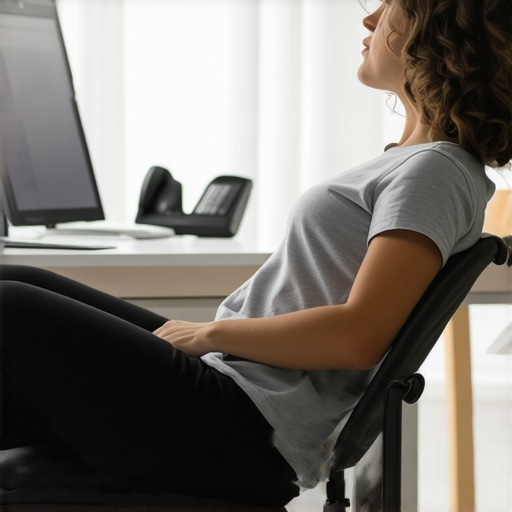
Have you ever been mid-sentence on a Zoom call when that familiar twinge shoots down your leg? Or felt that dull, nagging pain creep up your back, making even sitting at your desk feel like a challenge? I’ve been there—frustrated, fatigued, and desperate for relief during long work hours. One day, after yet another uncomfortable afternoon, I had a lightbulb moment. What if a simple movement, right from my chair, could soothe my sciatica and help me feel better without taking hours of my day?
Discovering the Power of Seated Glute Stretches to Ease Sciatica
Turns out, there’s a gentle, effective way to calm that persistent sciatic nerve pain while you’re working. It doesn’t require fancy equipment or expensive treatments. Just a few minutes of mindful movement, right where you sit, can make a world of difference. If you’re like me, struggling with discomfort that disrupts your focus and productivity, this technique might become your new best friend. Together, we’ll explore how to incorporate this stretch into your daily routine—making your workday more comfortable and keeping that dreaded nerve pain at bay.
Is This Seated Stretch Really Worth the Hype?
When I first heard about this stretch, I was skeptical. I’d made the mistake early on of pushing through pain, thinking it was just part of sitting too long, or that I needed a more aggressive approach. But that only worsened my discomfort. I learned that small, targeted movements are often the most powerful. According to a study published in Unlocking Sciatica Relief, gentle nerve glides combined with proper posture can significantly reduce nerve irritation over time. The key is consistency and understanding what your body needs—something I wish I’d known earlier. Now, I focus on simple, mindful stretches that guide my body back to balance, and I’ll share these with you soon. But first, let’s address some common fears about trying new movements.
Have you ever hesitated to try a stretch because you worried it might make things worse? Trust me, I’ve been there. Early on, I also feared that I’d aggravate my sciatic pain or hurt myself. That’s a normal concern, but the good news is, with the right technique and gentle approach, you can improve your discomfort without risking injury. And once you see how small adjustments can lead to big relief, you’ll wonder why you didn’t try this sooner. So, let’s get ready to reclaim your comfort and take the first step toward a more mobile, pain-free workday.
Start with Mindful Breathing
Before you dive into stretches, take a moment to focus on your breathing. Sit upright, breathe deeply through your nose, slowly filling your lungs, and exhale fully. This calms your nervous system and prepares your body for movement. I recall a morning when I was skeptical but tried this breathing technique, and within a few minutes, my tension eased enough to try gentle stretches—setting the tone for effective, pain-relieving actions.
Use Your Chair as a Stretch Tool
Sit back in your chair and position your right ankle over your left knee, creating a figure-four shape. Gently press your right knee downward, feeling the stretch through your hip and buttocks. Hold for 20 seconds, then switch sides. This move directly targets the piriformis muscle, which often irritates the sciatic nerve. During a late afternoon work session, I paused, performed this stretch, and noticed immediate relief — a simple yet powerful strategy.
Adjust Your Sitting Posture
Maintain your feet flat on the floor and sit with your pelvis tilted slightly forward, aligning your shoulders over hips. Think of your spine as a chain; if the base is misaligned, tension travels upward. I experimented with an ergonomic seat cushion and, after a week, experienced less numbness in my leg. Small posture adjustments can prevent nerve compression over time, making your desk setup work for your body.
Incorporate Nerve Glides with Movement
Lie on your back and lift your leg slightly, then slide your heel away from your body, extending your knee while keeping your foot flexed. Return to start. Repeat slowly 10 times. This mobilizes the sciatic nerve within its natural pathway, reducing irritation. I felt a noticeable decrease in shooting pain after just a few sessions, proving the effectiveness of mindful nerve gliding exercises during work breaks.
Utilize Micro-Movements Throughout Your Day
Instead of static sitting, set a timer to stand and move every 30 minutes. Incorporate gentle pelvic tilts by arching and flattening your lower back, like a wave passing through your spine. Once, I caught myself slouching and corrected my position, which immediately alleviated discomfort. These micro-movements restore circulation and prevent nerve pinching, essential for long-term relief.
Gradually Build Strength and Flexibility
Complement stretches with strength exercises targeting core stability, such as dead bugs or planks. A stronger core supports spinal alignment, reducing sciatic pressure. I started with brief, 1-minute planks and gradually increased as my strength improved, noticing better posture and less pain. Consistent activation of deep stabilizers acts as a protective brace for your back and hips, essential in the fight against sciatic discomfort.
Most people speed through their recovery journey with a simplified view: stretch more, strengthen the core, or just rest until it feels better. While these basics are important, there’s a subtle but crucial aspect that often gets ignored—**the complexity of how our body compensates and maladapts over time**. Many assume that specific muscles or joints are solely responsible, but in reality, pain often stems from a network of imbalances and neural adaptations that have developed beneath the surface.
For example, a common myth is that neck pain always originates from muscle strain or poor posture. However, research authored by Dr. Jeffrey Carr emphasizes that the neck’s muscular and joint issues often mask deeper, neural-driven dysfunctions that affect proprioception and movement patterns.https://bodyrenewtherapy.com/neck-pain-solutions-proven-techniques-to-regain-your-range-of-motion This means that an isolated stretch or release won’t necessarily resolve the root cause.
Another critical nuance is the misconception that pain diminishes solely with tissue healing. Pain is actually a complex neurophysiological phenomenon influenced by how your brain perceives threat and safety. In chronic cases, neuroplastic changes have entrenched pain pathways, making the sensation persist even when tissue healing has occurred. Addressing these requires an integrated approach involving both physical reprogramming and mind-body strategies.
Beware of the ‘Quick Fix’ Trap
Many fall into the trap of seeking rapid solutions—like aggressive stretching or instant symptom suppression—without understanding the underpinning neural or biomechanical patterns. This approach can reinforce compensation strategies, leading to more imbalance. For instance, over-reliance on passive modalities like heating pads or spinal manipulations, while temporarily soothing, might neglect the necessary active retraining the body needs for lasting change. Remember, real progress involves unraveling these compensation loops, which takes patience and nuanced intervention.
It’s also common to oversimplify mobility issues as just tight muscles. But often, mobility is limited by nervous system restrictions—your body’s protective guard, which reduces joint movement to prevent perceived threat. To genuinely restore mobility, you must address both the mechanical restrictions and the nervous system’s role, perhaps incorporating techniques like neural mobilizations as described in expert mobility tips.
Finally, an advanced question that troubles many practitioners is: *How can we differentiate between true mechanical blockages and neurophysiological restrictions?* In practice, this involves assessing movement variability, response to neural mobilizations, and the quality of tissue tension. Such distinctions inform whether to focus on manual therapy, movement retraining, or neuro-modulation strategies.
If you’re eager to explore these sophisticated strategies for addressing back, neck, or sciatic pain, check out resources that target these advanced concepts, like link between posture and chronic pain. Remember, the goal is to work smarter—recognizing and addressing the nuanced mechanisms that sustain pain—and avoid superficial fixes that only provide temporary relief. Have you ever fallen into this trap? Let me know in the comments and share your experiences with nuanced pain management.Maintaining your back, neck, and overall mobility isn’t a one-time effort—it’s an ongoing process that benefits greatly from investing in the right tools and methods. Over the years, I’ve found that certain equipment and strategies not only support recovery but also help in preventing setbacks, ensuring you stay active and pain-free. One of my personal staples is a high-quality foam roller, specifically the 36-inch diameter version. I use it daily to release fascia tightness and improve circulation, which helps maintain flexibility and reduces the risk of nerve irritation. For precise trigger point therapy, I rely on a double-point massage ball, which allows me to target stubborn knots in deep tissue areas like the piriformis or upper trapezius. These simple yet effective devices empower me to self-manage discomfort without depending entirely on external therapy sessions.
In addition to manual tools, incorporating mobility apps like ‘MobilityWOD’ has revolutionized my approach. These apps provide guided routines tailored for specific issues like sciatica or cervical stiffness, ensuring that my routines stay targeted and efficient. They also track progress, reinforcing consistency—an essential factor in long-term results. Personally, I prefer programs that combine dynamic stretches with neural mobilizations, aligning with evidence suggesting that neurophysiological techniques can profoundly influence persistent painhttps://bodyrenewtherapy.com/unlocking-mobility-expert-tips-on-managing-back-pain-in-2025. As technology advances, I predict that wearable sensors and biofeedback devices will become mainstream, offering real-time data to optimize our movement patterns and posture.
So, how do I keep my back and neck in top shape over time? The key is integrating these tools into a daily routine—doing quick self-myofascial releases in the morning, using apps for guided mobility sessions throughout the day, and periodically checking in with ergonomic and movement assessments. Regularly reviewing and adjusting your setup, whether that’s your chair, desk position, or sleep environment, ensures habits adapt as your body changes. Remember, consistent maintenance surpasses sporadic treatments for enduring relief.
Have you considered using a foam roller or mobility app to support your long-term back health? Give it a try—set a reminder to spend five minutes with your foam roller today, and notice the difference in your flexibility and comfort. Small daily actions compound over time, turning progress into lasting results.
Over the years, I’ve learned that genuine relief from back, neck, and sciatic discomfort requires more than quick fixes; it demands understanding the deeper rehabilitation truths that often go unnoticed. One major lesson was realizing that *the body’s compensation patterns* silently undermine our efforts. Small misalignments or neural protective barriers might seem insignificant but can perpetuate chronic pain. Recognizing these subtle signs allowed me to integrate targeted neural mobilizations, which proved transformative in my recovery journey. Additionally, I discovered that *mental and emotional factors*—stress, tension, and safety perception—play a substantial role in persistent pain, emphasizing the importance of a holistic approach that combines physical movement with mindful strategies. Lastly, embracing a mindset of patience and consistency, rather than rushing for instant results, has been the game-changer, reinforcing that long-term health is a marathon, not a sprint. These insights have reshaped my approach, and I hope they do the same for you in reclaiming mobility and comfort.