
How to load the dishwasher without hurting your lower back
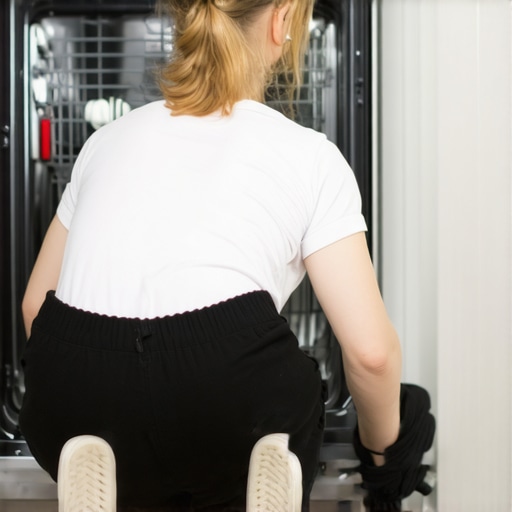
I will never forget the Tuesday night a simple ceramic cereal bowl almost ended my week. I was halfway through a mountain of dinner plates, leaning over the bottom rack with that classic C-shape spine we all default to when we are tired. I reached just an inch too far to clear a spot for a coffee mug, and—snap. It was not a loud noise, but the sensation was unmistakable. My lower back locked up tighter than a bank vault at midnight. For the next three days, I was shuffling around my house like I had aged forty years in a single second. It is funny, isn’t it? We worry about lifting heavy boxes or hitting the gym, but it is often the mundane, repetitive chores that actually sideline us. That moment was my personal wake-up call that I needed to master [mobility mastery](https://bodyrenewtherapy.com/mobility-mastery-daily-tips-to-keep-your-spine-and-joints-healthy) in the most boring room of the house: the kitchen. Today, I am going to show you exactly how to stop treating your dishwasher like a back-injury machine so you can stop fearing the cleanup.
Stop Treating Your Dishwasher Like a Torture Device
The real problem isn’t the dirty dishes; it is the geometry of your body. Most of us treat our spine like a flexible plastic straw, but when you add the weight of a heavy stoneware plate at the end of a long, forward reach, you are creating a massive amount of leverage against your L4 and L5 discs. For years, I made the amateur mistake of the reaching twist. I would plant my feet firmly facing the sink and then rotate my upper body ninety degrees to shove a heavy pan into the far corner of the rack. This shearing force is a primary reason for [understanding the link between poor posture and chronic back pain](https://bodyrenewtherapy.com/understanding-the-link-between-poor-posture-and-chronic-back-pain). According to the Bureau of Labor Statistics, over-exertion and repetitive bodily reactions remain a leading cause of musculoskeletal disorders in residential settings. If you have ever felt that [sharp pinch in your back when you sneeze](https://bodyrenewtherapy.com/why-you-feel-a-sharp-pinch-in-your-back-when-you-sneeze) or lean over the counter, you know exactly how high the stakes are for your daily comfort. We have to learn [how to load the dishwasher without straining your lower lumbar](https://bodyrenewtherapy.com/how-to-load-the-dishwasher-without-straining-your-lower-lumbar) by changing our footwork, not just our willpower. Have you ever felt your back seize up just by doing something as simple as clearing the table?
Is it even possible to load plates without pain?
I know what you are thinking because I thought it too: it is a dishwasher, not a heavy deadlift session at the local gym. Do I really need a tactical strategy for the silverware? The answer is a resounding yes because of the cumulative effect. If you load the machine twice a day, you are performing thousands of potentially harmful bends every single year. If you are already struggling with [sciatica relief secrets](https://bodyrenewtherapy.com/sciatica-relief-secrets-how-to-banish-pain-quickly-today), every single micro-movement counts toward your recovery or your next flare-up. It is time to stop the [one movement to avoid when reaching for the bottom drawer](https://bodyrenewtherapy.com/the-one-movement-to-avoid-when-reaching-for-the-bottom-drawer) and start using your legs as the shock absorbers they were meant to be.
Get Your Feet Moving Instead of Your Spine
The first rule of kitchen survival is to stop treating your feet like they are glued to the linoleum. Most people keep their toes pointed at the sink and twist their torso to reach the dishwasher. Think of your spine like a wet towel; when you wring it out through twisting, you are squeezing the life out of your intervertebral discs. Instead, you need to practice a strict ‘nose follows toes’ policy. If you are moving a plate from the sink to the rack, your entire body should pivot as one unit. This simple change is the cornerstone of mobility mastery. I remember hosting a Thanksgiving dinner where I forced myself to step and turn for every single one of the thirty-two plates. It felt slow and robotic at first, almost like I was doing a clumsy line dance in front of the GE Profile, but it was the first holiday in a decade where I didn’t wake up the next morning feeling like my lower lumbar was on fire.
Make Your Hips Do the Heavy Lifting
Your hips are the strongest engines in your body, yet we often let them sit idle while our lower back does all the work. To protect yourself, you must master the hip hinge. Imagine there is a horizontal bar running through your hips and you are simply folding over that bar like a piece of paper. This keeps your spine neutral and transfers the load to your glutes and hamstrings. This is essential for enhance your back mobility ergonomic tips for everyday comfort because it prevents the ‘C-curve’ that puts immense pressure on your nerves. If you find yourself rounding your shoulders, you have gone too far. 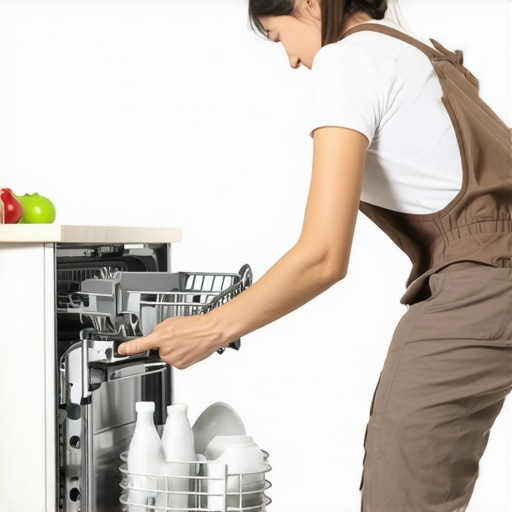
Spread Your Base for the Bottom Rack
The bottom rack is the danger zone. Reaching for it often requires a deep bend that can easily trigger a flare-up. To counter this, adopt a wide, ‘sumo’ stance. By spreading your feet wider than your shoulders, you bring your center of gravity closer to the floor without needing to round your back as much. This is a key part of unlocking mobility expert tips on managing back pain in 2025. When I started using this wide stance, I noticed I could reach the very back of the machine without that familiar ‘twinge.’ It might look a little ridiculous to anyone watching, but it is far better than the alternative of being stuck on the couch for a week. Remember to always avoid the one movement to avoid when reaching for the bottom drawer, which is reaching forward with locked knees.
Use the Golfers Lift for Silverware
For lighter items like forks and spoons, you don’t always need a full squat. Instead, use the ‘golfer’s lift.’ As you reach down with your right hand, let your left leg swing out behind you to act as a counter-balance. This keeps your back straight and prevents the shearing force that causes so much trouble. Learning how to load the dishwasher without straining your lower lumbar is really about these micro-adjustments. If you struggle with stability while doing this, you might find that the single best exercise for stabilizing a wobbly lower spine can help build the core strength needed for these daily chores. Because we do these tasks so often, why your body needs micro-breaks every 20 minutes to stay mobile becomes even more relevant when you have a mountain of dishes to tackle.Let’s dig deeper into why these kitchen movements are so treacherous, because the nuance is where most people lose the battle against chronic pain. A common mistake I see—and one I made for years—is thinking that because my back felt tight while loading the bottom rack, I needed to stretch my hamstrings more. You have probably heard the old adage that tight hamstrings cause back pain, but here is the contrarian truth: if you are dealing with nerve-related issues, why stretching your hamstrings often makes your sciatica worse is actually one of the most important lessons you can learn. When you bend over the dishwasher and feel that ‘pull’ in the back of your leg, you aren’t always feeling a tight muscle; you are often feeling a sensitized sciatic nerve being stretched to its limit. If you keep yanking on it, the nerve becomes more inflamed, not more flexible. 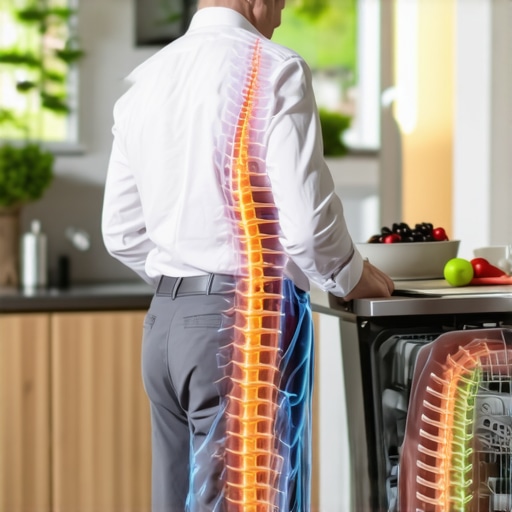
Why your favorite hamstring stretch is making your sciatica worse
The ‘Oops’ factor here is significant. Most people try to fix a flare-up by performing a traditional toe-touch or the classic ‘knees-to-chest’ move. However, you should stop pulling your knees to your chest for back relief if you suspect a disc issue. Dr. Stuart McGill, a world-renowned spine biomechanics expert at the University of Waterloo, has extensively documented how repeated spinal flexion—the exact movement of rounding your back to reach the silverware tray—can actually pump the disc material further toward the nerve. By stretching into that pain, you are essentially picking at a scab that is trying to heal. You need to distinguish between the two types of discomfort, which is why understanding the difference between muscle soreness and nerve irritation is vital for anyone over the age of thirty.
How do you tell if your pain is a muscle knot or a nerve scream?
This is the question that separates the amateurs from the experts. If your pain is dull, localized to the muscle belly, and responds well to heat, it is likely muscular. But if it is sharp, electric, or travels down the leg, you are dealing with a neural pathway issue. This is when you must ask: is your back pain a sign of something more serious? Ignoring these signals while trying to ‘power through’ the chores is a recipe for a multi-week bedrest sentence. I used to think I was being a ‘warrior’ by finishing the kitchen cleanup despite the burning in my hip, but I was actually just digging a deeper hole for my recovery.
The hidden trap of sitting up too straight
Believe it or not, our obsession with ‘perfect’ posture can also backfire. Many people, after hurting themselves, try to compensate by keeping their back as rigid and straight as a board. But why sitting up straight might be giving you more back pain is because this forced rigidity actually increases the intra-discal pressure. Your spine is designed to have natural curves; it is not a structural steel beam. In the kitchen, this looks like someone standing with a hyper-extended lower back while scrubbing pots, which pinches the facet joints and creates a whole new world of hurt. The goal is a ‘stacked’ spine—ears over shoulders, shoulders over hips—not a military-style stiffness. Have you ever fallen into this trap of over-correcting your posture only to feel even stiffer the next day? Let me know in the comments.If you want to move beyond just survival and start thriving in your kitchen, you need to look at your environment. I spent years fighting my kitchen’s layout before I realized that my environment was the primary antagonist in my back pain story. One of the best investments I ever made wasn’t a fancy blender, but a high-quality anti-fatigue mat. These mats work by creating ‘dynamic’ standing; the subtle instability forces your calves and glutes to make micro-adjustments, which prevents blood from pooling and keeps your lower back from ‘locking’ into a static, painful position. This is why why maintenance care is better than waiting for a spinal crisis; you are proactively managing the stress on your body before it hits a breaking point.
How do I keep my spine healthy while cooking every day?
The secret is minimizing the ‘danger zones’ through smart modifications. I eventually learned how to adjust kitchen counters to save your spine while cooking by using a thick, sturdy cutting board to raise my work surface by just two inches. That tiny change meant I wasn’t constantly in a slight forward lean. Additionally, I highly recommend a ‘reacher-grabber’ tool for the dishwasher silverware tray. According to the Cornell University Ergonomics Web (CUErgo), once you reach beyond your ‘neutral zone’—roughly 10 to 15 inches from your torso—the force on your L5-S1 disc increases by nearly 300%. By using a reacher, you stay in the safe zone. 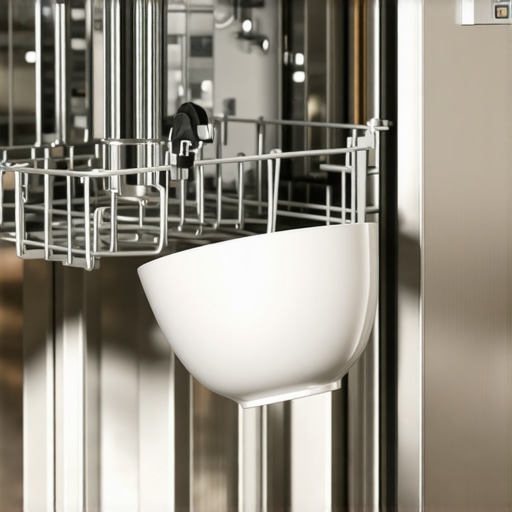 Beyond tools, I’ve found that how to organize your fridge to stop frequent bending and twisting is a game changer for long-term maintenance. Put the heavy milk cartons and frequently used items on the middle shelf, not the bottom drawer. Looking forward, I predict we’ll see ‘smart kitchens’ with AI-driven adjustable-height cabinetry becoming standard in the next decade to combat the rising tide of sedentary-related disc issues. For now, we have to be our own advocates. While some people swear by the ‘quick fix’ of hanging upside down, the truth about inversion tables who they help and who they hurt is that they don’t fix the functional movement patterns that caused the pain in the first place. I want you to try one thing tonight: buy a $15 reacher-grabber and use it for every single piece of silverware. It feels silly until you realize you’ve finished the dishes without a single ‘twinge.’ This kind of enhance your back mobility ergonomic tips for everyday comfort is what builds long-term resilience. If you’re still struggling with that deep leg pain, don’t ignore it; check out these sciatica relief secrets to get ahead of the inflammation.
Hard Truths from My Kitchen Floor Recovery
I’ve learned the hard way that ‘powering through’ is a debt your body always collects with interest. One of the biggest lightbulb moments for me was realizing that my back didn’t give out because I was weak; it gave out because I was asking a single joint to do the job of a whole kinetic chain. You must treat your spine as a secondary player and your hips as the main stars. I also realized that knowing how to tell if your leg pain is sciatica or a deep muscle knot is the most important diagnostic tool you can have in your kitchen. If you feel that sharp zap, stop immediately; the dishes can wait, but your nerve health cannot.
Another shift was the realization that chores don’t happen in a vacuum. If you’ve spent the whole day reaching awkwardly, you might want to learn the best way to reach into the dryer without twinging your back as well. Every domestic movement is a training session for your longevity. If you find yourself holding your breath while bending, you are likely creating internal pressure that your discs can’t handle.
The Three Tools That Saved My Spine
You don’t need a full kitchen remodel to find relief, but you do need the right gear. First, get a commercial-grade anti-fatigue mat; it keeps your joints ‘awake’ and micro-adjusting while you stand. Second, a 32-inch reacher-grabber changed my life. It allows me to grab silverware and small items from the bottom rack without that deep, dangerous hinge. Finally, I swear by a 2-inch thick butcher block. By raising the height of where I prep food, I’ve eliminated the constant micro-lean that leads to why you feel a sharp pinch in your back when you sneeze later in the evening. These tools are the physical manifestation of mobility mastery.
#IMAGE_PLACEHOLDER_E#
Reclaim Your Kitchen Without the Fear
You deserve a home that feels like a sanctuary, not a series of traps waiting to snap your lower lumbar. By shifting your footwork and respecting your body’s limits, you turn a chore into a practice of self-care. It might feel slow at first, but soon, these movements will be second nature. This is how you achieve mobility mastery in your everyday life. Go slow, move with intention, and remember that your health is worth more than a clean plate. Have you found a specific kitchen layout or tool that helps you avoid that late-night back ache? Let me know in the comments below!