
The 5-minute hip flexor release for desk workers
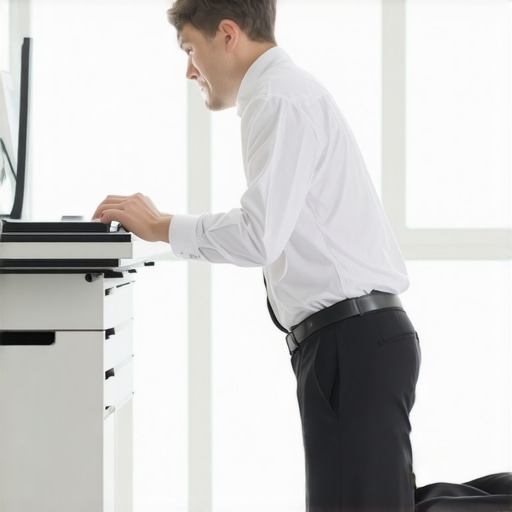
I remember the exact Tuesday afternoon my body finally decided to go on strike. I tried to stand up to grab a coffee after a three-hour deep dive into spreadsheets and realized I simply couldn’t unfold. I was stuck in a semi-permanent “C” shape, and my lower back felt like it was being squeezed in a heavy-duty vise. It is a terrifying, humbling feeling when your own joints decide they are no longer on speaking terms with you. For years, I ignored the whispers—the dull ache during my morning commute and that weird clicking when I walked—until the whispers became a scream. I made the classic rookie mistake of thinking I could just “tough it out” or that waiting for a spinal crisis was just part of getting older. Spoiler alert: it isn’t. Today, I want to show you the 5-minute routine that saved my mobility and finally stopped that deep, gnawing hip tension.
Stop Blaming Your Age for Your Tight Hips
The reality is that our bodies weren’t designed to be parked in a chair for eight hours a day. When we sit, our hip flexors—specifically the psoas muscle—stay in a shortened, cramped position. Over time, they basically “forget” how to lengthen back out. This isn’t just about feeling a bit stiff; it is a mechanical nightmare for your spine. Research published in the Journal of Anatomy highlights how the psoas is the only muscle that connects your spine directly to your legs, which means when it is tight, it literally yanks on your lower vertebrae. This is often how you tell if your hip tightness is actually a back issue in disguise. I spent way too much time focusing on my lower back when the real culprit was hiding right in the front of my pelvis. Have you ever felt that sharp, breath-snatching pinch when trying to stand up straight after lunch?
Is five minutes really enough to fix years of sitting?
I get it. You are skeptical. I was the person who thought I needed a 90-minute yoga class or a professional to “crack” me back into place every week just to function. But here is the secret I learned the hard way: consistency beats intensity every single time. You don’t need to reconstruct your entire lifestyle; you just need to interrupt the “sitting signal” your brain is constantly sending to your muscles. Using a 5-minute stretching routine for chronic desk workers isn’t about a total body overhaul; it is about a strategic reset. It is the difference between a door hinge that is rusted shut and one that gets a quick squirt of oil every morning. If you can find five minutes between meetings, you can change how your back feels by five o’clock.
The One Move You Are Probably Getting Wrong
Early on in my journey, I thought the answer was just stretching my hamstrings. I would reach for my toes until my face turned purple. Little did I know, stretching your hamstrings often makes your sciatica worse because it puts unnecessary, aggressive tension on the nerves. The real “lightbulb moment” for me was discovering the one hip stretch that relieves pressure on the L5-S1 disc. It is subtle, it is quick, and it doesn’t require you to get down on a dirty office floor. Once I stopped overcomplicating things and started focusing on these micro-adjustments, my “permanent” back pain started to vanish. If you have been struggling with that “rusting hinge” feeling every time you stand up, let’s get into the nitty-gritty of how to actually release those flexors without wasting your afternoon.
Stop Tucking Your Tailbone Like a Scared Dog
The biggest mistake I made for years was sitting with a ‘tucked’ pelvis. Think of your pelvis like a bowl of water; most of us sit so the water spills out the back, rounding our spine and crushing those sensitive lower discs. I remember being at a wedding, standing in the back of the chapel, and feeling that familiar, red-hot needle of pain shoot down my right leg. I couldn’t exactly drop into a downward dog in a suit, so I practiced the 3-second pelvic reset you can do while waiting in line. By simply rocking my pelvis forward to a neutral position, I felt the pressure on my L5-S1 let go almost instantly. It’s a stealthy move that shifts the load from your ligaments back onto your bones, where it belongs.
Your Pelvis Needs a Neutral Gear
To find this ‘neutral gear,’ stand up and place your hands on your hip bones. Tilt your pelvis as far forward as you can, then as far back as you can. The ‘sweet spot’ is right in the middle. When you find it, your core naturally engages without you having to squeeze your abs like you’re preparing for a punch. This simple alignment is the foundation of spinal hygiene. If you don’t fix the tilt, no amount of stretching will ever stick because you are essentially trying to straighten a bent nail while still hitting it with a hammer.
The Standing Hip Reset You Can Do Anywhere
Once you’ve found neutral, you need to address the psoas. This muscle is like a tight bungee cord pulling your spine toward your knees. To release it, take a small step forward with one foot. Keep your torso tall—no leaning! Squeeze the glute of your back leg firmly. This ‘wakes up’ the muscle on the back side, which forces the hip flexor on the front to relax through a process called reciprocal inhibition. I use the 10-second hip reset for relief after sitting every time I get up to grab water. It’s not about a massive, lunging stretch; it’s about a precise, muscular ‘off switch’ for your tension.

Nerves Don’t Like to Be Stretched
If you feel a burning sensation or a ‘zing’ down your leg, you might be dealing with nerve irritation rather than just a tight muscle. A common reflex is to pull your legs toward your chest, but you should stop pulling your knees to your chest for back relief if you have a suspected disc issue. Nerves are like delicate silk threads; if they are snagged, pulling on them only makes the snag tighter. Instead, I started using the nerve flossing technique that silences burning thigh pain. This involves gently moving your limb to slide the nerve through its pathway, rather than yanking it. It’s the difference between flossing a tooth and trying to pull the tooth out with a string.
Why Your Glutes Are Sleeping on the Job
Finally, you have to address ‘gluteal amnesia.’ When you sit all day, your brain literally forgets how to fire your butt muscles. I once tried to fix my back pain by doing 100 sit-ups a day, only to find my back felt worse. My core was ‘on,’ but my glutes were totally offline, leaving my lower back to do all the heavy lifting when I walked or stood. Learning why your glutes are falling asleep and how to wake them up changed everything. If you aren’t sure if your pain is coming from your muscles or your spine, you need to learn how to tell if your leg pain is sciatica or a deep muscle knot before you start any aggressive strengthening routine. A simple glute squeeze while standing can be the spark that restarts the engine of your posterior chain.
Your Perfect Posture is Actually a Problem
Here’s something the ergonomic experts rarely mention: there is no such thing as a perfect static posture. I spent years trying to sit like a statue, back straight as a board, thinking I was saving my spine. In reality, why your perfect sitting posture is making you stiffer is because your tissues crave blood flow, not a frozen position. The human spine is designed for movement variability. A study published in the European Spine Journal found that individuals who frequently shifted their posture while sitting reported significantly less discomfort than those who tried to remain aligned for long periods. If you aren’t moving, you’re stagnating. Movement is the lubricant your joints need to stay healthy, especially during a long workday.
Is your chair height actually the secret to hip relief?
Most of us focus on the lumbar support, but we ignore the angle of our thighs. If your seat is too low, your knees end up higher than your hips, keeping your hip flexors in a constant state of contraction. This is exactly why your desk chair height is wrecking your hips and causing that deep, phantom ache that stretching never seems to reach. It’s a subtle mechanical trap. You think you’re resting, but your psoas is essentially running a marathon. I had to raise my seat by just two inches to finally feel my lower back unclench. It’s a nuance that many professionals miss because it doesn’t involve expensive equipment.
Stop Attacking Your IT Band with a Foam Roller
We’ve all seen it: someone at the gym grimacing in pain as they roll their outer thigh. I used to be that person until I realized I was basically trying to tenderize a piece of leather. The IT band isn’t a muscle; it’s a thick, fibrous band of connective tissue. It doesn’t stretch or loosen because you’re rolling over it with a plastic cylinder. In fact, the truth about foam rolling your IT band for hip pain is that you’re likely just compressing the bursa and nerves underneath, making the inflammation worse. Instead of attacking the symptom, you need to look at how to fix your gait to reduce chronic hip clicking. It’s almost always a stability issue in the hip or foot, not a tightness issue in the thigh.
The Hidden Danger of Traditional Core Training
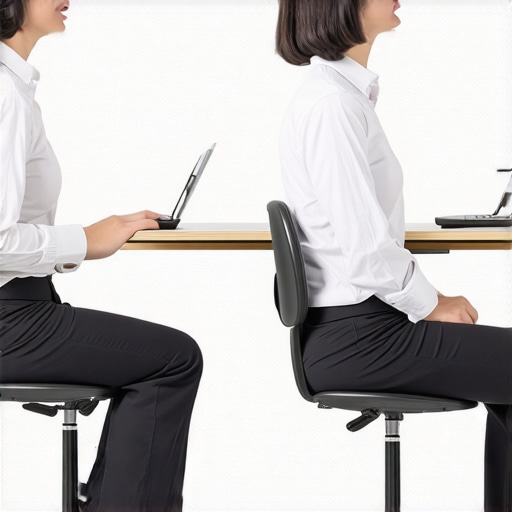
If you’re trying to strengthen your way out of pain with old-school crunches, you are playing with fire. Research from Dr. Stuart McGill, a leading expert in spinal mechanics, has shown that repetitive spinal flexion—the exact motion of a sit-up—places massive loads on the intervertebral discs. This is exactly why your core workout should not include traditional sit-ups if you have any history of disc bulge. You are essentially chewing on your discs. You need stability, not more bending. I’ve seen so many people—myself included—make their sciatica flare up because they thought they were getting fit. Have you ever fallen into this trap of doing exercises that actually made your pain worse? Let me know in the comments. We’re in this together, and sometimes the best thing you can do for your back is to simply stop doing the wrong things.
I used to think that once the sharp pain vanished, I was ‘cured.’ I’d throw my exercises out the window and go right back to my old habits, only to find myself horizontal on the living room floor three weeks later. Real recovery isn’t a destination; it is a maintenance schedule. If you want to stay out of the ‘crisis zone,’ you have to stop treating your body like an emergency and start treating it like a high-performance machine that needs regular oil changes. This is where why maintenance care is better than waiting for a spinal crisis becomes the foundation of your daily life. It’s not about doing more; it’s about doing the right things consistently.
Stop Treating Your Workstation Like a Secondary Thought
The single most effective tool I ever bought wasn’t a fancy massage chair—it was a $30 adjustable monitor arm. We spend hours leaning into our screens, creating a ‘tech neck’ that puts up to 60 pounds of pressure on our cervical spine. You need to learn how to adjust your monitor to stop that burning neck pain because if your eyes aren’t level with the top third of your screen, your neck will always be the sacrificial lamb. I even discovered that why your vision might be the cause of your neck leaning was a huge factor for me; I was squinting and pulling my head forward without even realizing it. According to the Occupational Safety and Health Administration (OSHA), proper monitor placement is the primary defense against musculoskeletal disorders in office environments.
The $20 Tool That Beat My $1,000 Chair
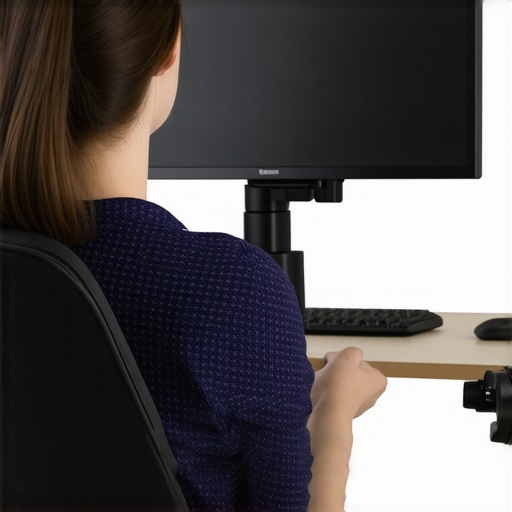
You don’t need a luxury office chair to save your back. In fact, most ergonomic chairs fail because they don’t account for your specific spinal curve. I started using a simple lumbar roll, and when I’m traveling, I’ve learned how to use a towel roll to support your neck while watching tv or sitting in a hotel chair. It’s about maintaining that natural inward curve of your lower back (lordosis) so your discs aren’t constantly being pushed backward. I also realized that why your choice of work shoes matters more than your chair because your foundation starts at the floor. If your shoes are dead, your back is dead.
How do I maintain spinal mobility over time?
The secret is ‘movement snacks.’ I set a timer on my phone because why your body needs micro-breaks every 20 minutes to stay mobile is backed by biological reality—your fascia begins to stiffen after just twenty minutes of stillness. I’ve adopted a set of mobility mastery daily tips to keep your spine and joints healthy that I can do while a pot of coffee brews. This isn’t about a workout; it’s about reminding your nervous system that you have a full range of motion. If you don’t use it, your brain literally ‘prunes’ those neural pathways to save energy.
Posture 2.0 and the Future of Spinal Health
Looking ahead, I predict we are going to see a massive shift toward wearable biofeedback. In the next few years, unlocking mobility expert tips on managing back pain in 2025 will likely involve haptic sensors that gently vibrate when your shoulders round too far. We are moving away from ‘fixing’ pain and toward ‘predicting’ it. But until that tech is perfected, you have to be your own sensor. I want you to try one thing today: use the Bruegger position as a fast way to reset your posture at work every time you hang up a phone call. It takes three seconds and reverses the ‘slouch’ instantly. It’s the most effective ‘reset button’ I’ve ever found for mid-day fatigue.
What Nobody Mentions About Recovering Your Natural Movement
The biggest hurdle I had to overcome wasn’t a physical stretch; it was the psychological shift of realizing that my pain was a messenger, not a life sentence. One thing that experts often gloss over is that your body creates tightness as a protective shield. When your brain senses instability, it ‘locks’ your hips to keep you from further injury. This is how to tell if your back pain is a sign of something more serious or just a temporary protective response. I learned that you cannot force a muscle to relax if the nervous system doesn’t feel safe. It is also vital to recognize that neck pain and stress go hand-in-hand, often pulling your entire spine out of whack from the top down. True mobility isn’t about being flexible enough to join the circus; it is about having the freedom to move through your day without that nagging, background hum of discomfort.
The Essential Tools for Your Spinal Toolkit
If you are serious about keeping your progress, you need a few non-negotiable items in your corner. First, stop overlooking your feet. I found that why your choice of work shoes matters more than your chair is because a collapsed arch sends a shockwave of misalignment straight to your L5-S1. Second, don’t underestimate the power of low-tech solutions. You can learn how to use a towel roll to support your neck while watching tv to maintain your cervical curve even during downtime. Finally, keep a simple tennis ball at your desk. It is the cheapest, most effective way to trigger a release in those deep glute muscles that refuse to wake up. These tools transform your environment from a ‘pain-trap’ into a support system.
#IMAGE_PLACEHOLDER_E#
Start Moving Toward a Pain-Free Life Today
It is easy to feel overwhelmed by all the ‘shoulds’ and ‘musts’ of spinal health, but you only need to focus on the next five minutes. Your body is incredibly resilient and ready to heal if you just give it the right signals. By implementing these small shifts, you are choosing a path of back pain breakthroughs and restored mobility instead of just managing a crisis. You don’t have to live in a “C” shape forever. Take that first standing break, find your neutral pelvis, and let your body remember what it feels like to be light and fluid. Have you noticed that your back feels tighter after a specific activity, like driving or sitting on the couch? Let me know in the comments below!