
The One Move to Stop That Sharp Pain Behind Your Shoulder Blade

Have you ever felt a sudden, stabbing pain right behind your shoulder blade during a routine stretch or while reaching for something? That flicker of sharp discomfort can feel like a punch, catching you off guard and making every movement feel uncertain. I remember the first time it happened to me—one moment I was stretching, and the next, a jolt shot through my back, leaving me frozen in place. It was a lightbulb moment where I realized I couldn’t just brush this off as a mere muscle tweak. It was a sign that something needed to change.
Why Those Sudden Sharp Pains Are More Common Than You Think
Is This Movement Really Worth the Hype?
Early on, I made the mistake of ignoring these pains, thinking they’d just go away on their own. Spoiler alert: they didn’t. Instead, they often worsened, disrupting my daily routine and making even small tasks like dressing or reaching for my coffee cup painful. I learned that the pain behind the shoulder blade isn’t just about muscle strain—it can be linked to improper movement patterns, poor posture, or muscle imbalances. According to recent studies, up to 70% of chronic back pain cases are related to tense muscles and poor alignment, which can be corrected with targeted movement and awareness (source). That’s why addressing this specific pain early can make all the difference.
My journey led me to discover a simple yet powerful move that transformed my mobility and drastically reduced those sharp episodes. Today, I want to share this move with you—because no one should have to endure that sudden, sharp pain without hope for relief. If you’ve faced this problem, keep reading. We’re going to explore a straightforward way to alleviate and even prevent that pain from sneaking up on you again.
Targeted Stretching for Immediate Relief
Incorporate the Doorway Stretch
Start by standing in a doorway with your arms bent at 90 degrees and forearms resting against the frame. Step forward slowly, feeling a gentle stretch across your chest and shoulders. I once tried this after a long day at my desk, and within minutes, my shoulder blade discomfort diminished significantly. This simple move helps open tight front muscles that pull the shoulders out of alignment, leading to less strain on the upper back.
Practice the Cat-Cow Pose Regularly
Get on all fours, aligning your wrists under shoulders and knees under hips. As you inhale, arch your back, lifting your tailbone and head—this is the cow. Exhale, round your spine towards the ceiling, tucking your chin and tailbone—this is the cat. I remember a busy morning when I committed to 10 reps of this sequence, and the tension behind my shoulder blade eased after just a few cycles. This dynamic stretch mobilizes the thoracic spine, improving movement and reducing pinching or sharp pains.
Strengthening Core and Upper Back Muscles
The Scapular Stabilization Exercise
Lie face down with arms outstretched in front of you. Lift your chest slightly, squeezing your shoulder blades together without shrugging. Hold for a few seconds, then relax. I often include this in my morning routine; once I felt my shoulder blades became more stable, and the episodes of sudden pain decreased. Strengthening these muscles supports your shoulders and prevents overstretching that causes sharp pain when reaching or stretching.
Implement the resisted band pull-apart
Hold a resistance band with arms extended in front of you. Keeping your elbows straight, pull the band apart by squeezing your shoulder blades together. Perform 3 sets of 10 reps. I used to struggle with rear shoulder tightness until I started this exercise, which created better support for my upper back and lessened the risk of acute stabbing pains.
Ergonomic Adjustments to Daily Habits
Optimize Your Workstation
Your desk setup plays a crucial role in preventing shoulder blade pain. Keep your monitor at eye level and your keyboard and mouse within easy reach—this minimizes overextension. I once ignored my workspace ergonomics until neck and shoulder pain became constant; after adjusting my chair height and monitor position, my discomfort reduced significantly. Regularly review your setup through resources like ergonomic tips to ensure proper alignment.
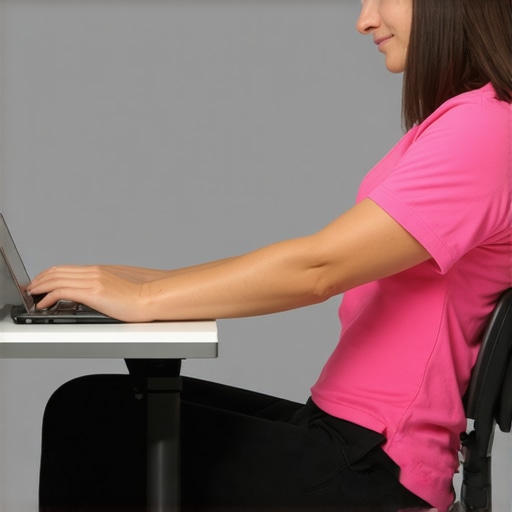
Visual guide showing proper desk ergonomics to reduce shoulder strain.
Take Breaks to Move
Avoid staying in one position for extended periods. Stand, stretch, and walk every 30 minutes. Like many, I found that brief movement breaks refreshed my muscles and prevented sharp episodes after long sitting hours. Consider setting reminders or using apps to prompt movement, improving your posture and circulation, decreasing the likelihood of sudden, stabbing pains.
Many individuals believe that back pain, sciatica, or neck discomfort are purely about muscle strains or simple misalignments. However, the real nuances go much deeper than common myths suggest. A widespread misconception is the idea that rest — simply laying off movement — is the best solution. In reality, prolonged inactivity can weaken stabilizing muscles and exacerbate pain, especially when the root cause is a lack of dynamic support from deep core and postural muscles. Studies highlight that maintaining gentle movement promotes blood flow and tissue health, which are crucial for recovery (source), yet many still avoid active strategies, opting instead for rest, mistakenly thinking it will heal faster.
Another common trap involves the belief that all back or neck pains originate from the spine alone. While structural issues like disc herniations are contributors, often the culprit is poor neuromuscular control or dysfunctional movement patterns. For example, improper breathing mechanics or neglecting pelvic alignment can place undue stress on the spine without any visible structural damage. Focusing solely on the area of pain without addressing global movement patterns can lead to recurrent episodes. Advanced practitioners understand the importance of holistic assessment — looking beyond symptomatic zones, considering how breathing, posture, and even foot mechanics influence spinal health (more here).
The myth that stretching always benefits back pain also warrants correction. While targeted stretches can offer immediate relief, overzealous or incorrect stretching may worsen the situation, especially when dealing with tight muscles that are compensating for instability elsewhere. For example, aggressively stretching a tight piriformis or hamstrings without strengthening the corresponding stabilizers can create a cycle where the tightness returns rapidly. In my experience, strengthening the deep spinal stabilizers and addressing movement inefficiencies yields better long-term outcomes than stretching alone.
Now, addressing advanced questions like: “Can nerve sensitization be the real driver behind persistent pain?” reveals the importance of neurophysiological factors in pain management. Chronic pain can involve hypersensitive nerve pathways that keep the nervous system in a state of alarm, even after tissue healing. Recognizing this, techniques like nerve glides or neuromuscular re-education are essential tools for a comprehensive approach (learn more). Simply focusing on joint or muscular issues without considering neuroplasticity may prevent patients from achieving lasting relief.
Have you ever fallen into this trap? Let me know in the comments. The key is to look beyond the surface, challenge assumptions, and embrace a nuanced, evidence-based perspective on back and neck health that truly empowers your mobility journey.
Keeping your back, neck, and overall mobility in top shape requires more than just occasional stretches or exercises. It involves utilizing the right tools and methods to support long-term health and facilitate consistent progress. One of my go-to tools is the **foam roller**—specifically, a dense, high-quality model. I’ve found that deploying a foam roller daily before and after workouts helps release my muscle tightness around the thoracic spine and hips, preventing that creeping stiffness that can escalate into sharper pains. Personally, I prefer a textured foam roller as it elicits deeper tissue release, aligning with techniques I discuss in this article for mobility mastery.
Another essential addition is a **resistance band**, especially for scapular stabilization and upper back engagement. I use a medium-resistance loop during my morning routines to perform specific pull-aparts and shoulder blade squeezes, reinforcing stability and reducing the risk of sudden pains. These bands are versatile and portable, making them ideal for maintaining your upper body support even when traveling, aligning with recommendations in latest mobility tips.
For those looking to refine their ergonomic setup, I highly recommend a **monitor arm**. Adjusting your screen to eye level, rather than craning your neck downward, can dramatically decrease neck strain and prevent issues like tech neck, as covered in this guide. I personally use an adjustable arm that allows me to switch positions throughout the day, supporting both comfort and posture correction.
In addition to physical tools, I utilize a **biofeedback app** that tracks my posture habits throughout the day. Regular feedback helps me develop awareness of my tendencies—like slouching or forward head posture—and makes me more conscious about maintaining proper alignment, which aligns with the future trend of integrating smart tech into daily health routines.
How do I maintain mobility and prevent flare-ups over time?
The key is consistency and proactive management. Incorporating tools like foam rollers and resistance bands into your daily routine creates a durable foundation. Regular ergonomic assessments, combined with tech aids, keep your posture in check. I also schedule periodic check-ins with practitioners through online platforms, ensuring my strategies stay effective. Remember, long-term results depend on your dedication to these small, consistent practices.
For advanced mobility maintenance, I recommend periodically trying a **myofascial release** routine, delving deeper into tissue health. According to a 2023 study by fascia expert Dr. Carla Stecco, targeted fascia releases can significantly improve tissue resilience and reduce pain recurrence (source). Giving this technique a try can be a game-changer in your longevity plan.
If you’re serious about maintaining your spinal health, start by selecting a quality foam roller today and incorporate it into your morning warm-up. Small, deliberate actions now will pave the way for lasting mobility and pain-free movement.
What I Wish I Knew About Pain and Progress
One of the most eye-opening lessons I learned is that quick fixes rarely lead to genuine healing. I used to believe that stretching alone could solve deep-seated back issues, but I realized that without addressing core stability and movement patterns, pain tends to return. Another insight was discovering that pain isn’t always about tissue damage—sometimes, it’s about how your nervous system perceives threat, which means neuroplasticity techniques can be game changers (more on this here). Additionally, I found that small daily habits, like ergonomic tweaks and consistent movement, create cumulative benefits that outshine one-off workouts or stretches.
My Must-Have Tools for Staying Pain-Free
Over time, I’ve curated a toolkit that supports my mobility and pain management. The foam roller, particularly textured ones, helps release fascial restrictions and maintain tissue resilience (see how to use it effectively). Resistance bands are versatile for strengthening stabilizers, preventing sharp episodes (my favorite routines). An adjustable monitor arm transforms your workspace into an ergonomic haven, reducing tech-induced neck and shoulder pains (tips here). Lastly, posture feedback apps keep me accountable and aware, making proactive health my priority every day.
Let Your Movements Ignite Change
Holding onto pain isn’t the path to healing. Incorporate simple, mindful movements daily—like the doorway stretch and cat-cow pose—to unlock your body’s potential (start your mobility journey here). Consistency in these movements builds resilience, prevents flare-ups, and empowers you to regain control over your health. Remember, even the smallest step—done regularly—can spark lasting transformation. Now, I challenge you: what daily habit will you change today to support your back or neck health? Share your plan below and let’s move towards better mobility together.