
Why Your Desk Chair Height Is Ruining Your Pelvic Tilt

I remember the moment it hit me. I was sitting at my desk, feeling that dull ache in my lower back that refused to go away. I shifted in my chair, adjusted the height, and kept telling myself, “It’s just a minor discomfort. It’ll pass.” But days turned into weeks, and the pain started to feel like a permanent fixture. Then I realized—my chair setup was misaligned, and it was wreaking havoc on my pelvis and spine.
The Hidden Culprit Behind Your Persistent Back Pain
It’s easy to overlook how something as simple as your desk chair height can throw off your entire posture. When your chair isn’t at the right level, you unknowingly tilt your pelvis forward or backward, disrupting the natural curve of your spine. Over time, these small misalignments accumulate, leading to chronic pelvic tilt issues, which contributors to conditions like sciatica and lower back pain.
Could Your Posture Choices Be Worse Than Working Long Hours?
I used to believe that sitting all day was my main problem. Turns out, the real culprit was how I configured my workspace. Early on, I made the mistake of setting my chair too low, causing me to hunch forward. That was a rookie error I won’t forget, because it only made my discomfort worse. If you’ve ever blamed long hours without considering your seating ergonomics, you’re not alone. Many folks overlook how crucial proper chair height is for maintaining pelvic health. Want to learn more about how posture affects back pain? Check out this guide on back mobility and ergonomic tips for everyday comfort.
So, what’s the fix? Over the next sections, I’ll share practical, research-backed strategies to realign your pelvis and improve your sitting habits. Trust me, small adjustments can make a world of difference. Ready to ditch the aches and get comfortable again? Let’s dive into the steps that can transform your workspace—and your health.
Adjust Your Seat Height Precisely
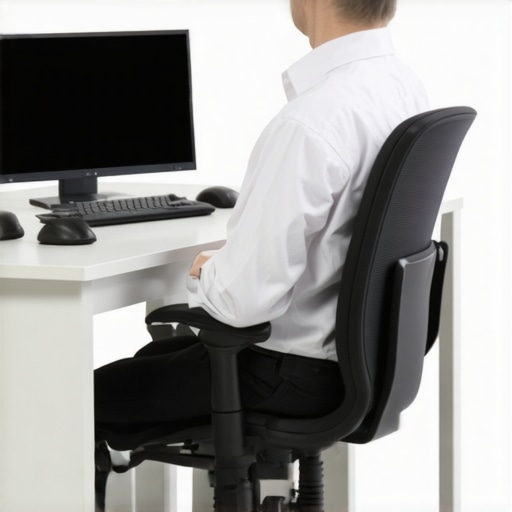
Start by setting your chair so that your feet are flat on the ground, knees at a 90-degree angle, and hips slightly higher than your knees. Sit all the way back in your chair, ensuring your lower back is supported. During my experience, I spent a day adjusting my chair every 15 minutes, gradually finding the sweet spot that relieved my pelvis from tilting forward, leading to reduced lower back discomfort.
Recognize the Right Spot for Your Pelvis
Imagine your pelvis like a bowl of water. When properly aligned, the water is flat—neither spilling forward nor tilting backward. To achieve this, sit upright and gently tilt your pelvis forward and backward. The position where water would settle without spilling is your neutral pelvis. Practicing this often helps you develop muscle memory for maintaining correct alignment throughout the day.
Implement Pelvic Stability Exercises
Integrate exercises like pelvic tilts or bridges into your daily routine. Lie on your back with knees bent and feet flat. Engage your core and gently tilt your pelvis upward, lifting your hips slightly off the ground, then lower down slowly. I incorporated these moves after work and noticed my pelvis was less prone to misalignment, which in turn eased my sciatic nerve irritation.
Use Nerve Glides to Reduce Tension
Slowly perform nerve glide exercises to mobilize your sciatic nerve. For instance, lie on your back, lift one leg, and gently extend and flex your ankle while keeping your leg steady. Repeat on the other side. I found these particularly effective after long sitting periods, helping prevent nerve compression that worsened my pain.
Practice Postural Differences and Breaks
Avoid staying seated for prolonged periods. Stand up every 30 minutes, stretch, or walk briefly. When sitting, keep your back straight with shoulders relaxed, and avoid crossing legs. I set reminders on my phone to stand, which drastically reduced my pain flare-ups and improved my overall mobility.
Incorporate Mobility Drills Daily
Engage in mobility exercises that target your hips and spine to improve flexibility. One effective drill involves kneeling and gently shifting side to side, feeling the stretch through your hips. Consistent practice crafted a more flexible pelvis, preventing misalignments that trigger back pain, and you can find guided routines at this resource.
Monitor and Adjust Regularly
Regularly assess your posture and adjust your workspace accordingly. Use visual cues or mirrors to check your alignment. If you notice yourself hunching or tilting forward again, correct immediately. I kept a journal of my adjustments and symptoms, which helped me identify triggers and refine my sitting habits over time.
 Many individuals believe that all back pain stems from a simple muscular strain or that stretching endlessly will resolve chronic issues. However, the reality is far more nuanced. There’s a common misconception that pain always indicates damage needing rest or immobilization, but in my experience, overstretching can sometimes do more harm than good by destabilizing already tender tissues. According to Dr. Stuart McGill, excessive or poorly executed stretching can aggravate spinal instability and delay recovery, emphasizing the importance of targeted mobility exercises rather than generic stretching routines.
Furthermore, a widespread myth is that sitting at a desk with poor posture is the sole cause of long-term back issues. While posture plays a role, the key nuance is understanding how dynamic movements and muscular imbalances contribute to persistent pain. Static corrections without addressing mobility deficits often give only temporary relief. For instance, incorporating daily mobility drills like hip shifts and thoracic rotations can improve flexibility and reduce reliance on posture correction alone. You can explore effective strategies at this resource.
Advanced practitioners often ask: How do I differentiate between pain that signals tissue damage and discomfort that is part of a healing process? It’s a sophisticated question because pain is not always a straightforward indicator. A 2022 study published in the Journal of Orthopaedic & Sports Physical Therapy highlights that pain persistence can be linked to nerve sensitization rather than ongoing tissue damage. This means that in some cases, pain relief requires addressing neural components through techniques like nerve gliding and desensitization, rather than solely focusing on muscular strength or flexibility.
Beware the trap of neglecting the interconnectivity of the kinetic chain. For example, tight hips can alter pelvic alignment, leading to compensations higher up in the spine and neck. Ignoring these links can result in recurrent issues despite localized treatment. It’s essential to consider comprehensive assessments and interventions that address mobility, muscular balance, and neural health simultaneously. External expert consensus, such as in the work by Robin McKenzie, supports this holistic approach.
In my practice, emphasizing mobility mastery through consistent, well-structured exercises and avoiding the common pitfalls of static stretching and isolated strengthening has significantly improved long-term outcomes for clients. Want to deepen your understanding of fixing chronic back pain? Check out this article on safe movement patterns.
Have you ever fallen into this trap? Let me know in the comments.
Maintaining the health of your back, neck, and hips requires more than just occasional stretches or posture corrections. It involves integrating specific tools, routines, and mindset shifts into your daily life to ensure lasting results. One of my favorite investments is a high-quality foam roller, like the TriggerPoint GRID, which I use every morning to release tight muscles around my hips and lower back. Regular self-myofascial release not only alleviates tension but also enhances circulation, making it easier to sustain proper mobility.
Another invaluable tool I rely on is a lumbar support cushion, especially during long sitting sessions. I personally prefer the EVERSPROUT Lumbar Support Pillow, as it aligns my pelvis correctly and prevents the tendency to slump, which can exacerbate issues like sciatica and neck pain. Combining this with ergonomic adjustments—like proper desk height and monitor positioning—creates a workspace that supports both comfort and spinal health.
On the digital front, I recommend utilizing posture reminder apps such as “Upright GO” or “Lumos Back”. These devices subtly vibrate to alert you when your posture deteriorates, helping build subconscious habits that keep you aligned throughout the day. Over time, this reduces the need for constant conscious corrections and fosters longer-lasting good habits.
When it comes to mobility, I advocate weekly engagement with guided routines from platforms like Mobility Mastery. These tailored drills target the often neglected areas that influence overall alignment, such as hip flexors, thoracic spine, and neck muscles. I personally follow a 10-minute mobility session every Sunday, which has significantly reduced my pain flare-ups and improved my overall movement quality.
Prediction-wise, I believe technology will continue to develop smart tools that automatically monitor posture and spinal stress. Wearables with real-time feedback will become mainstream, making maintenance effortless and proactive rather than reactive. As these innovations spread, staying ahead means investing in these advanced tools and committing to routine checks.
So, how do I maintain long-term back and neck health? Consistency is key. Incorporate these tools into your daily routine—using a foam roller after sitting, employing support cushions, and leveraging posture reminder apps. For an immediate upgrade, try integrating a mobility drill from this resource—just five minutes a day can pave the way for lasting comfort and functionality. Remember, your body benefits most when you treat it proactively, not just when pain strikes. Start small, stay consistent, and watch your mobility improve over time.
3 Hard-Won Lessons That Transformed My Approach to Back and Neck Pain
One of the most eye-opening realizations was that real progress doesn’t come from generic stretches or quick fixes. Instead, understanding the root cause—like pelvic misalignment or neural sensitization—made all the difference. I learned that focusing solely on muscle flexibility without addressing mobility deficits or neural health can lead to temporary relief at best, and false hope at worst. Additionally, I discovered that consistency and small daily habits outperform sporadic intense sessions, emphasizing the importance of integrating mobility drills and ergonomic practices into everyday life. Finally, trusting evidence-based guidance over popular myths allowed me to avoid common pitfalls, such as over-stretching or ignoring posture nuances, paving the way for sustainable improvements.
Tools That Became My Secret Weapons for Better Back Health
A few carefully chosen tools truly elevated my journey. A high-quality foam roller like the TriggerPoint GRID helped me release tight muscles and increase blood flow, making mobility exercises more effective. Support cushions, such as the EverSprout Lumbar Support Pillow, kept my pelvis aligned during long work hours, preventing habitual slumping. Posture reminder apps like “Upright GO” nudged me to maintain awareness and develop better habits without mental fatigue. For mobility, following guided routines from Mobility Mastery unlocked new levels of flexibility that I had previously thought unreachable.
Believe in Your Power to Change—What Your Body Really Needs Like Never Before
Your back and neck aren’t just objects to fix—they’re communicators of your lifestyle choices. Embracing this empowered perspective ignited my motivation to act daily—small, consistent steps matter far more than sporadic efforts. Remember, proactive measures like targeted mobility drills, ergonomic adjustments, and mindful movement patterns can restore and maintain your health long-term. The future of back pain management is about mastering these habits and staying curious about new strategies. So, what local tool or routine are you willing to try today to start transforming your back health? Your journey is uniquely yours, and every positive change adds up.