
The connection between flat feet and recurrent lower back pain
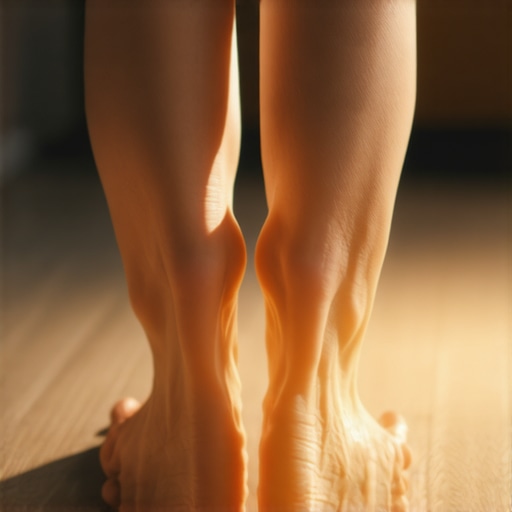
I remember the morning it finally clicked. I swung my legs out of bed, and the moment my bare feet hit the hardwood, a familiar, sharp electric shock shot straight up my spine. For years, I’d blamed my mattress, my ‘bad genes,’ and even my office chair. I spent thousands on ergonomic gadgets, yet the ache remained a permanent houseguest. But that morning, I looked down. My arches weren’t just low; they were non-existent, pancaked against the floor like two pieces of wet dough. That was my lightbulb moment: my recurring lower back pain wasn’t a back problem at all. It was a foundation problem. Today, I’m going to share how I stopped chasing symptoms and started looking at my feet to find a real solution. If you feel like you are stuck [navigating your path to restored mobility](https://bodyrenewtherapy.com/back-pain-breakthroughs-navigating-your-path-to-restored-mobility) without success, the answer might be under your toes.
Your Feet Are the Foundation of Your Entire Spine
I made a massive mistake early on by assuming the site of the pain was the source of the problem. I’d spend hours stretching my hamstrings and buying lumbar supports, totally unaware that [why your choice of work shoes matters more than your chair](https://bodyrenewtherapy.com/why-your-choice-of-work-shoes-matters-more-than-your-chair) was the missing piece of the puzzle. When your feet flatten—a condition known as overpronation—it forces your shins to rotate inward. This creates a domino effect that tilts your pelvis forward and puts an enormous, grinding strain on your lower lumbar discs. It’s like trying to build a house on a slanted foundation; eventually, the roof is going to crack. You might wonder if [is your back pain a sign of something more serious](https://bodyrenewtherapy.com/is-your-back-pain-a-sign-of-something-more-serious-key-symptoms-to-watch), but often, it’s just your kinetic chain screaming for better support. According to the American Podiatric Medical Association, about 70% of people overpronate to some degree, which significantly increases the risk of chronic musculoskeletal issues in the hips and back. This constant misalignment is why those expensive massages only feel good for an hour.
Can a Few Millimeters of Arch Height Actually Change My Life?
It sounds too simple to be true, doesn’t it? I was the biggest skeptic at first. I couldn’t believe that something as ‘minor’ as a fallen arch could cause the debilitating spasms that kept me off the golf course. But once I realized that [how a 5-minute walk barefoot can help your chronic back tension](https://bodyrenewtherapy.com/how-a-5-minute-walk-barefoot-can-help-your-chronic-back-tension) by strengthening those tiny intrinsic foot muscles, everything shifted. We aren’t just looking for a ‘quick fix’ here; we are looking to rebuild your body’s natural shock absorbers. Have you noticed that your sneakers always wear down faster on the inside edge than the outside? That’s a massive clue that your feet are the silent culprits behind your back misery. I’d love to hear if you’ve noticed a pattern between your foot comfort and your back flares—drop a comment or think about the last time you changed your footwear. Let’s get into the mechanics of how we can actually fix this.
Turn Your Feet into Shock Absorbers
To stop the structural collapse that’s wrecking your spine, you have to treat your feet like a functional tripod. The three points of contact—your heel, the base of your big toe, and the base of your pinky toe—must share your weight equally. When one side of that tripod fails, the shock of every step travels directly into your lower lumbar. The most effective way to rebuild this is through the ‘short foot’ exercise. Imagine there is a button directly under the ball of your foot and you are trying to pull it toward your heel without curling your toes. You’re essentially shortening the foot to create a literal dome. I remember trying this for the first time while standing in line at the DMV. It felt clunky and my feet actually cramped within thirty seconds, but that small lift in my arch immediately took the ‘pinch’ out of my tailbone. By focusing on mobility mastery through daily tips, you can turn these small activations into subconscious habits that protect your spine during every waking hour.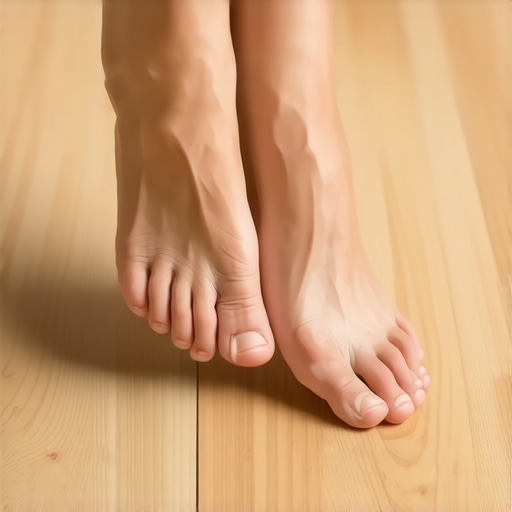
Stop the Toe Scrawl and Start Gripping
Most people with chronic back tension have ‘sleepy’ toes that do nothing but sit inside shoes. When your toes don’t engage, your calves overwork, your hamstrings tighten as a defense mechanism, and your pelvis tilts into a painful position. You need to wake them up. Try ‘toe yoga’: lift your big toe while keeping the other four on the ground, then swap. It sounds ridiculous, but why your toes are the key to better balance and back health becomes obvious once you feel the neurological connection between your pinky toe and your outer hip stability. If you can’t control your toes, you can’t control your pelvis. I used to struggle with a sharp hip pinch until I realized my big toe wasn’t pushing off the ground. Once I corrected my gait using the heel-to-toe walk drill for better balance and stability, that hip pain vanished within a week.
Why Your Shoes Might Be Sabotaging Your Progress
We often think more cushion equals more comfort, but excessive padding can actually dull the sensory feedback your brain needs to stabilize your back. If your shoe is too soft, your foot ‘hunts’ for stability, causing the micro-oscillations that lead to understanding the link between poor posture and chronic back pain. However, don’t rush into thin soles without a plan; check this minimalist shoes warning to see how they might negatively impact your spinal shock absorption if your arches aren’t ready. When I switched to a wider toe box that allowed my foot to splay naturally, my back mobility improved almost instantly because my foundation finally had enough surface area to support my weight. Every time you feel a flare-up starting, perform a 3-second pelvic reset while actively pressing your big toes into the floor. You’ll feel the tension in your lower back dissipate as your lower kinetic chain finally does the job it was designed to do.Once you stabilize your foundation, you have to address the mental traps and movement myths that keep most people in a cycle of ‘stretch, feel better for ten minutes, then seize up again.’ I spent years in this loop, and the most dangerous mistake I made was believing that ‘tight’ always means ‘needs stretching.’ In reality, for those of us dealing with lumbar issues, the hamstrings are often tight for a reason. They are acting as secondary stabilizers because the deep core and glutes have checked out. When you relentlessly stretch them, you’re actually pulling the emergency brake off a runaway car. This is why hamstring tightness is a defense mechanism for your back and not necessarily a flexibility problem.
Why Stretching Your Hamstrings Might Be Fueling Your Flare-ups
The common advice for back pain is almost always ‘stretch your hamstrings,’ but if your pain is coming from a disc or a nerve, this is the worst thing you can do. Every time you reach for your toes, you are putting the sciatic nerve under maximum tension. Think of the nerve like a guitar string; if it’s already irritated, pulling it tighter only makes it scream. In my experience, this is the biggest ‘oops’ factor in modern recovery. I used to think I was just ‘stiff,’ but I was actually aggravating my neural pathways. This is why stretching your hamstrings often makes your sciatica worse. Instead of aggressive static holds, I found that neural flossing—a way to gently glide the nerve through the tissue—was the only way to get real, lasting relief without the rebound pain.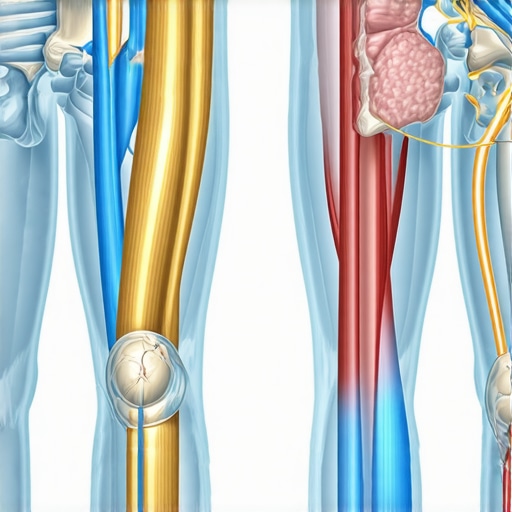
How to Tell if Your Leg Pain Is Sciatica or Just a Deep Muscle Knot?
This is the question that separates the beginners from those who actually find a cure. If you can’t tell the difference, you’ll likely treat the wrong thing. Sciatica is a ‘line’ of pain, often electric or burning, that follows a specific path down the leg. A muscle knot, like one in the piriformis, is usually a deep, dull ache localized to the glute that might refer pain slightly down the thigh but doesn’t have that ‘electric shock’ quality. Learning how to tell if your leg pain is sciatica or a deep muscle knot is vital. If it’s a nerve issue, you need space and decompression; if it’s a muscle issue, you need blood flow and trigger point release. Mixing these up is why so many people fail to see progress. Have you ever fallen into this trap? Let me know in the comments.
The One Movement That Actually Calms an Angry Nerve
If you want to move beyond the basics, you have to stop the ‘pulling’ and start the ‘gliding.’ Dr. Stuart McGill, a world-renowned expert in spine biomechanics, emphasizes that ‘knees-to-chest’ stretches actually create a high-stress environment for the spinal discs. Yet, it’s the first thing most people do when they wake up. I had to learn to stop pulling my knees to my chest for back relief and replace it with movements that maintain a neutral spine. The key is to find the nerve glide exercise that calms burning leg pain, which allows the nerve to move without being stretched to its limit. Understanding the difference between muscle soreness and nerve irritation changed my entire recovery timeline. Once I stopped treating my nerves like muscles, the ‘permanent’ ache finally began to fade. If you’re stuck in a loop of pain, it’s time to ask if you’re stretching a nerve that just wants to be left alone.
The Low-Tech Tools That Beat My High-End Gadgets
I used to think I needed a $2,000 massage chair to fix my back, but I eventually realized that a $3 tennis ball was more effective. I keep one in my car and one in my desk drawer. Why? Because it allows for pinpoint precision on the piriformis or the levator scapulae that a bulky machine just can’t reach. If you haven’t tried it, learning how to use a tennis ball to release tension in your upper traps is a game-changer for those late-afternoon shoulder knots. I also swear by a simple lacrosse ball for the glutes; it’s firmer and gets deeper into the tissue. Knowing how to use a tennis ball to relieve glute tension during a long conference call has saved me from more than one sciatica flare-up.
How do I maintain these mobility wins over the long haul?
Consistency isn’t about doing a 60-minute routine; it’s about the ‘micro-habit’ of movement. According to research published in the Journal of Bodywork and Movement Therapies, frequent, short-duration self-treatment is often more effective for chronic pain management than infrequent, long sessions. This is why maintenance care is better than waiting for a spinal crisis—you want to catch the ‘smolder’ before the ‘fire’ starts. In the coming years, I expect we will see a surge in AI-integrated wearables that provide real-time feedback on spinal loading, but until then, your best tool is your own awareness. This is where mobility mastery through daily tips becomes your best defense against gravity.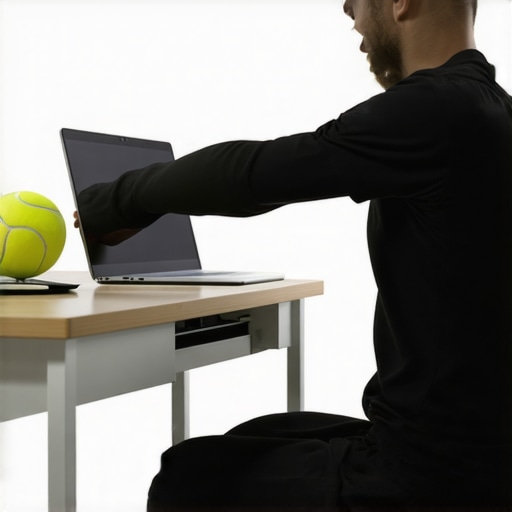
Small Tweaks to Your Daily Environment
I also had to look at my car. Most of us have our seats tilted back like we’re in a recliner, which rounds the lower back and strains the nerve. Learning the correct way to tilt your car seat to protect your sciatic nerve changed how I felt after my 40-minute commute. At the office, if you aren’t looking at your screen correctly, your neck is paying the price. You need to adjust your monitor to stop that burning neck pain by ensuring the top third of the screen is at eye level. Even your weekend hobbies need a biomechanical checkup; for instance, knowing how to set up your bike without agitating your sciatic nerve ensures your exercise doesn’t become a source of injury. If you’re currently feeling that sharp, electric zing, don’t wait for it to get worse. I want you to try the nerve flossing technique that silences burning thigh pain right now. It takes less than 60 seconds and provides more immediate relief than any ice pack I’ve ever used. Let’s make these small adjustments before the pain forces you to stop altogether.
The Hardest Lessons I Learned About Spinal Resilience
After years of chasing symptoms, I realized that my body wasn’t ‘broken’; it was simply compensating for a weak foundation. One of the biggest shifts came when I stopped looking for a magic pill and started respecting the signals my nerves were sending. I learned that symmetry is often a myth; our bodies are naturally asymmetrical, and forcing a ‘perfect’ posture can actually increase tension. For instance, understanding why you should never cross your legs at the knee while sitting was a small habit change that paid massive dividends for my hip alignment. I also learned that expert strategies for lasting comfort often involve doing less—allowing the inflammation to settle rather than poking the bear with aggressive stretches.
I also discovered the concept of a ‘nervous system budget.’ Every hour you spend in a poor position or wearing restrictive shoes drains that budget. Once I embraced mobility mastery through daily tips, I found that short, 30-second resets throughout the day were far more protective than a single hour at the gym once a week. The goal isn’t to never feel a twinge again, but to have the awareness to correct it before it becomes a crisis.
Finally, I realized that my mental approach to recovery was just as important as the physical exercises. When I viewed my back pain as a permanent disability, my body stayed in a state of high alert. Once I shifted to seeing it as a manageable structural puzzle, my muscles began to let go of that defensive guarding. This shift in perspective is what finally allowed my foundation to stabilize.
#IMAGE_PLACE_HOLDER_E#
The Low-Tech Recovery Kit I Take Everywhere
You don’t need expensive gadgets to maintain a healthy spine, but a few specific tools make the journey much smoother. I never travel without a standard lacrosse ball; it is the ultimate tool for relieving glute tension in a car or airplane seat. I also recommend keeping quick home remedies that work in your mental toolkit, such as using a simple rolled-up towel to maintain your lumbar curve on soft couches.
Another essential is a pair of wide-toe-box shoes that allow your ‘tripod’ foot to function correctly. If your toes are squished, your balance and back will suffer. Finally, if you also suffer from tension higher up the chain, knowing effective techniques for lasting neck relief can prevent that ‘top-down’ tension from migrating toward your lower back and causing a secondary flare-up.
Your Journey to a Pain-Free Foundation Starts Today
Reclaiming your life from chronic back pain isn’t a linear path, but you now have the tools to identify the cause rather than just fear the symptom. Whether it’s waking up your sleepy toes, choosing better footwear, or performing a pelvic reset, you are no longer a passive victim of your anatomy. Your body is incredibly resilient and capable of change at any age. By focusing on your foundation and protecting your nerves, you are building a future where movement feels like a gift rather than a chore. Let’s start the process of navigating your path to restored mobility right now, one intentional step at a time. Have you ever noticed your back pain flares up after wearing a specific pair of shoes? Let me know in the comments below!