
How to paint a room without straining your neck
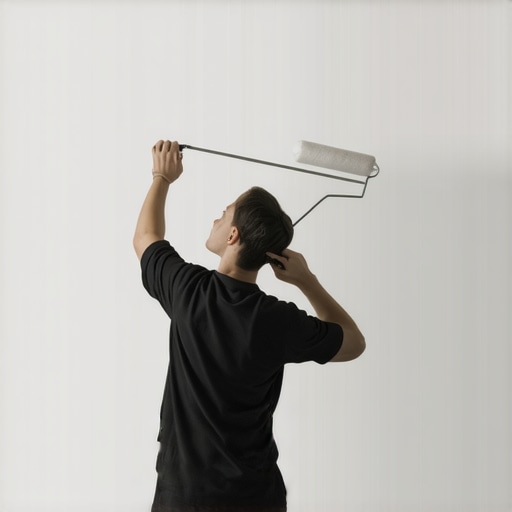
I stood in the middle of my guest bedroom three years ago, staring at a half-finished ceiling while my neck felt like it was being squeezed in a hot, rusty vice. I thought I was being “tough” by powering through. I wasn’t. I was being reckless. I had spent six hours looking straight up, my chin tilted toward the rafters, and by the time I reached for the light switch that evening, I couldn’t even turn my head to find it. It wasn’t just a simple ache; it was a full-blown mobility crisis that made me realize how much I had taken my spinal health for granted. I ended up hunting for revitalize your neck strategies just so I could drive to work the next morning. I’ve learned the hard way that a fresh coat of eggshell white shouldn’t cost you your ability to look left and right. Today, I am going to show you how to transform your space without the agonizing aftermath, using the exact setup changes that saved my spine. Have you ever started a home project and realized halfway through that your body was screaming at you to stop, but you kept going anyway? Let’s talk about why we do that and how to stop it.
Stop Torturing Your Neck with the Wrong Painting Technique
The biggest mistake I made early on—and I see neighbors do this all the time—was thinking my neck was a hinge designed for ninety-degree angles. It’s not. When you crane your head back to see the top of a wall, you are compressing the cervical spine in a way that would make a physical therapist cringe. According to a study published in the Journal of Occupational Health, prolonged overhead work significantly increases the risk of cervical disc strain and rapid muscular fatigue. This isn’t just about being out of shape; it is about mechanical disadvantage. A lot of people think the ache is right in their shoulders, but why your shoulder blade pain is often coming from your lower neck is a realization that usually hits around 2:00 AM. When I first started DIYing, I refused to buy an extension pole because I thought it would lead to less control. That was a lie. All it led to was a massive flare-up. If you’ve ever woken up the day after a project feeling like you’ve aged twenty years, you know that why your favorite sleeping position is causing morning neck stiffness is only half the battle when your joints are already inflamed from a day on the ladder. Realizing that the problem starts with your eyes and your feet, rather than just your neck, is the first step toward a pain-free home makeover.
Is a DIY paint job really worth three days of physical therapy?
It’s a fair question to ask yourself before you crack the lid on that gallon of paint. Most of us jump into home improvement with plenty of enthusiasm but zero ergonomic prep. We think about the color, the finish, and the cost of the rollers, but we rarely think about the cost of a pinched nerve. If you are already dealing with discomfort, checking out these neck pain solutions before you start can give you a baseline of safety. The skepticism is real: Can you actually paint a ceiling without looking up? Not entirely, but you can change how you look up and for how long. My goal is to get you through the living room, the hallway, and the kitchen without you ever needing to reach for a bottle of ibuprofen or a heating pad.
Equip Yourself to Keep the Paint Away From Your Face
The single most important tool in your arsenal isn’t the paint—it is an extension pole. Think of your spine like a crane. When you stand directly under the area you are painting, the crane has to fold back on itself, putting massive pressure on the hinge of your neck. By using a pole, you create a mechanical advantage that allows you to stand three or four feet back from the wall. This changes your line of sight from a vertical strain to a comfortable forty-five-degree angle. I learned this the hard way during a grueling weekend painting my garage. I spent the first four hours on a ladder, and by noon, I could feel that familiar heat building at the base of my skull. When I finally swapped the ladder for a six-foot fiberglass pole, I wasn’t just painting; I was walking. My legs took the load, and my neck stayed neutral. 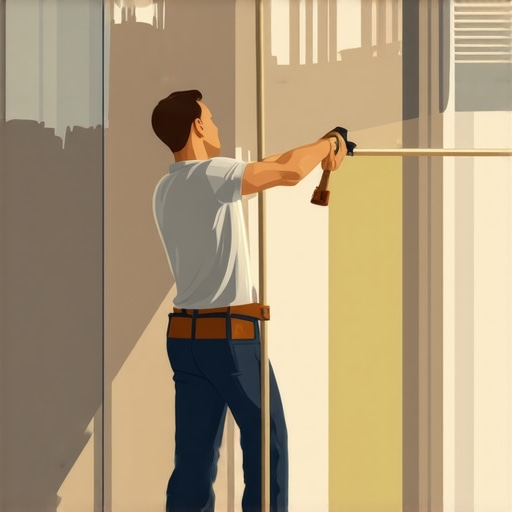
Ditch the Ladder for a Stable Platform
Ladders are essentially narrow balance beams that force your core into a constant state of panic to keep you upright. This tension radiates upward, leading to missed opportunities for ergonomic tips for everyday comfort that many DIYers ignore. If you can, rent or buy a small baker’s scaffold or a work platform. Having a wide, flat surface for your feet allows you to shift your weight laterally. I remember trying to cut in the edges of a navy blue accent wall while perched on the top step of a rickety A-frame. My nose was practically touching the drywall. By the time I finished that one wall, I felt a sharp pinch whenever I sneezed—a classic sign of why you feel a sharp pinch in your back when you sneeze. Now, I use a platform so I can move with the brush rather than reaching beyond my center of gravity.
Master the Micro-Break Before the Pain Starts
Most people wait until they hurt to take a break. That is like waiting for your car to overheat before checking the coolant. Your spinal discs are avascular, meaning they don’t have their own blood supply; they rely on movement to pump nutrients in and waste out. This is why your body needs micro-breaks every 20 minutes to stay mobile. Every twenty minutes, put the brush down and perform a 10-second chin tuck to combat tech neck or overhead strain. This resets your alignment and prevents the muscles from locking into a shortened, painful state.
Watch Your Feet to Save Your Lower Lumbar
Your neck is not the only victim of a ceiling project. If you are standing on your tiptoes or reaching too far, you are likely arching your lower back, which can trigger a flare-up. If you start feeling a dull ache in your glutes, it might be a sign that you need simple exercises that make a difference in your overall stability. Keep your weight in your heels and move the platform frequently so you are always working directly in front of your body, never reaching into the red zone beyond your comfortable arm’s length.I used to think that the secret to avoiding a flare-up was maintaining a rigid, military-style posture while I worked. We’ve all been told that ‘sitting up straight’ or ‘standing tall’ is the golden rule, but here is the contrarian truth: that rigidness is often why sitting up straight might be giving you more back pain than a slight, natural slouch. Your muscles weren’t designed to be static pillars; they are meant to be dynamic shock absorbers. When you lock your spine into what you think is ‘perfect’ alignment for hours while painting, you’re actually starving your discs of the movement they need to stay hydrated. A study published in the journal Spine suggests that static loading—even in an upright position—is a major contributor to disc degeneration and localized inflammation. Understanding the link between poor posture and chronic back pain isn’t about finding one fixed pose; it’s about constant, fluid micro-adjustments that prevent any single segment of your spine from bearing the full load.
Why Tight Hamstrings Might Actually Be Saving Your Spine
Let’s talk about the ‘Oops’ factor that catches almost every DIYer I know: the obsession with stretching ‘tight’ muscles. When your back starts to ache after a long day on the ladder, your first instinct is probably to reach for your toes. But here is the nuance most people miss: why hamstring tightness is a defense mechanism for your back. Your brain is incredibly smart. If it senses instability or a bulging disc in your lumbar spine, it will tighten your hamstrings to act as a physical brake, preventing you from moving into ranges of motion that could damage a nerve. If you force those muscles to relax through aggressive stretching, you are essentially removing the safety harness from a failing elevator. This is specifically why stretching your hamstrings often makes your sciatica worse; you’re tugging on a nerve that is already inflamed and screaming for slack, not a muscle that needs lengthening. 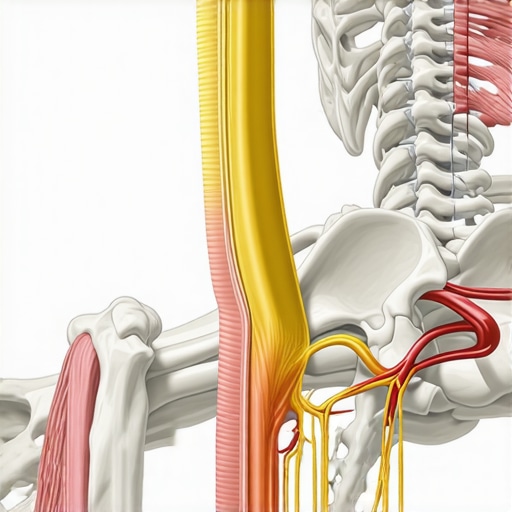
Is your muscle soreness hiding a pinched nerve?
This is where the line between a simple weekend ache and a chronic injury is drawn. You must learn the difference between muscle soreness and nerve irritation. One feels like a dull, satisfying ache in the meat of the muscle that dissipates with movement; the other feels like a zing, a sharp burn, or a weird cold sensation dripping down your leg. If you’re feeling the latter, is your back pain a sign of something more serious? It very well might be. Have you ever fallen into the trap of ‘working through’ a sharp pain only to find you couldn’t stand up straight the next morning? Let me know in the comments. I’ve been there, and I can tell you that the road back to mobility is much longer than the 10-minute break you should have taken three hours ago. We need to stop viewing our bodies as machines that just need more oil and start seeing them as complex systems that use tension as a language. If your body is speaking to you through tightness, don’t try to silence it with a stretch—try to understand what it’s trying to protect.
Upgrade Your Toolkit to Protect Your Vertebrae
I’ve realized that the ‘cheapest’ tool is often the most expensive for my health. My secret weapon now is the Purdy Power Lock extension pole paired with a high-quality angled sash brush. Most people think poles are only for ceilings, but I use a 2-4 foot mini-pole for everything. It allows me to keep my elbows tucked in and my shoulders down, which is the mobility mastery secret nobody tells you. By keeping the weight of the paint and tool close to my midline, I’m not asking my lower back to act as a counterweight for a heavy arm. 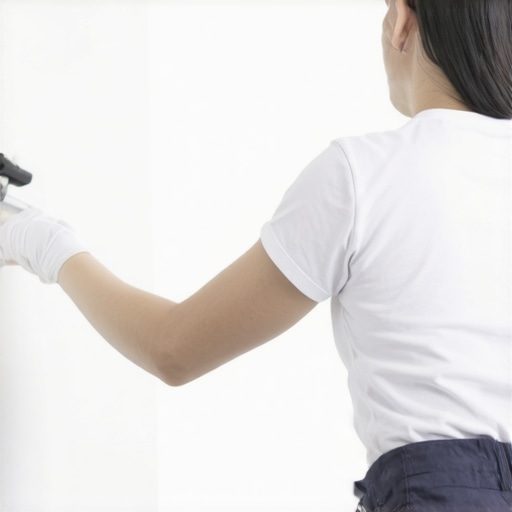 According to research published in the Applied Ergonomics Journal, increasing the moment arm of a load by just a few inches can double the force exerted on the L5-S1 disc. This is exactly why I’m so meticulous about my reach. When you’re done for the day, don’t just sit on the couch. I use the Bruegger position to open up my chest and counteract the hours spent hunched over a paint tray. It’s a 30-second investment that prevents a three-week flare-up.
How do I keep my spine resilient for the long haul?
Maintenance isn’t a one-time event; it’s a lifestyle shift. I’ve started viewing my DIY projects as athletic events that require a warm-up and a cool-down. I genuinely believe that why maintenance care is better than waiting for a spinal crisis is a lesson we all learn eventually—hopefully before the damage is permanent. Looking ahead, I predict we will soon see augmented reality (AR) glasses that not only show us where we missed a spot of paint but also flash a skeletal stress warning when our neck tilt exceeds thirty degrees. Until then, we have to be our own biofeedback sensors. If you feel that familiar buzzing in your neck, stop immediately. If you have already pushed too far, exploring these back pain breakthroughs can help you navigate the path back to comfort. My challenge to you for your next project: spend thirty dollars on a high-quality extension pole and commit to a mandatory micro-break every twenty minutes. Your spine is the only one you get; don’t trade its longevity for a finished accent wall.
Lessons the Ladder Taught Me About My Own Spine
First, I learned that ‘powering through’ is a debt you always pay back with interest. If you feel a slight hum in your nerves or a tightness in your shoulders, that’s not a badge of honor; it’s a warning light. I used to think I was saving time by skipping the setup, but is your back pain a sign of something more serious is a question you never want to answer at an urgent care clinic on a Sunday evening. Second, your eyes dictate your posture. If you aren’t positioning your body so you can see the work with a neutral chin, your cervical spine is paying the price. Lastly, I realized that the hardest part of any project isn’t the technical skill—it’s having the discipline to step down and move your platform so you’re always working in the ‘comfort zone’ directly in front of your chest.
The Gear That Actually Earned a Spot in My Workshop
I no longer step onto a ladder without a specific ergonomic plan. I rely on a high-quality telescoping extension pole to keep my feet on solid ground, which drastically reduces the need for constant overhead reaching. I also keep a mental checklist of neck pain solutions for post-project recovery. If you’re serious about your home, invest in a stable work platform rather than a rickety step-stool; the lateral mobility it provides is the difference between a fluid stroke and a pinched nerve. For those of us who tend to get lost in the flow of the work, I recommend setting a vibrating timer on your watch because why your body needs micro-breaks every 20 minutes to stay mobile is the most important rule of the job site.
Protect the Body That Builds Your Home
At the end of the day, that new color on the walls is meant to bring you joy, not a week of bed rest. You have the power to change your environment while honoring your physical limits. By applying these small, ergonomic shifts, you’re ensuring that your home remains a place of rest rather than a site of recovery. If you ever feel like you’ve pushed too far, remember that there are always back pain breakthroughs waiting to help you find your way back to full health. Your spine is the foundation of every project you’ll ever take on—treat it with the same care you’d give to a structural beam. Have you ever had a DIY project that left you sidelined for days? Let me know what you were working on in the comments below.