
The 20-20-20 rule for neck and eye strain relief

I remember one Tuesday afternoon when my laptop screen started to look like a watercolor painting. My vision was blurry, my temples were throbbing, and my neck felt like someone had replaced my muscles with rusted iron lead pipes. I tried to stand up, but a sharp pinch between my shoulder blades made me gasp. It wasn’t just tiredness; my body was physically protesting the six hours I’d spent glued to that chair. I had fallen into the trap of thinking "just five more minutes" wouldn’t hurt. It did.
Stop Letting Your Desk Job Destroy Your Vision
We’ve all heard that we should take breaks, but let’s be honest—we rarely do. I spent years buying fancy ergonomic gadgets, convinced they would save me. I even bought those expensive blue-light glasses, thinking they’d fix my headaches. But here is the secret I learned the hard way: no $500 chair can fix the damage caused by staying perfectly still.
Is this 20-20-20 thing actually worth your time?
You might be thinking that stopping every twenty minutes sounds like a massive productivity killer. I was terrified I’d lose my flow state. But then I realized that your body needs micro-breaks every 20 minutes to stay mobile and keep your joints from seizing up. According to the American Academy of Ophthalmology, the 20-20-20 rule—looking at something 20 feet away for 20 seconds every 20 minutes—is one of the most effective ways to prevent digital eye strain. It’s not just a suggestion; it’s a physiological necessity. One of my biggest early mistakes was focusing entirely on my eyes and ignoring my posture. I didn’t realize that your vision might be the cause of your neck leaning, which leads to that chronic, dull ache in your cervical spine. Today, I’m going to show you how to master this rule so it becomes second nature, ending the cycle of "tech neck" and blurry vision for good. Have you ever found yourself squinting at your screen while your neck feels like it’s in a vice?
How Three Simple Twenties Can Reset Your Entire System
When you stay locked in one position, your tissues literally start to adapt to that slouch. I used to think I could just revitalize my neck with a quick stretch at the end of the day. [IMAGE_PLACEHOLDER] It doesn’t work that way. You need consistent resets. If you don’t adjust your monitor to stop that burning neck pain right now, the 20-20-20 rule will be playing catch-up instead of preventing the problem.First, you need a trigger that isn’t reliant on your own willpower. I once tried to rely on my internal clock, but three hours later, my eyes were vibrating like a faulty neon sign and I hadn’t moved once. Now, I use a physical kitchen timer placed across the room. When it dings every twenty minutes, I’m forced to physically shift my weight to turn it off. This simple act of standing is the first step toward keeping your spine and joints healthy without needing a dedicated gym hour.
Look Much Further Than Your Office Walls
The ’20 feet’ part of the rule isn’t just a random number; it’s the specific distance at which your eye muscles can finally relax and stop overworking. Think of your eyes like a clenched fist. When you look at a screen, you’re holding that fist tight. Looking 20 feet away is like opening your hand and letting the blood flow back in. If you’re in a tiny apartment, staying mobile in a small space means looking out a window or even down a long hallway.
Ditch the Screen for a Distant Target
Don’t just glance at the wall. Pick a specific object—a leaf on a tree, a neighbor’s chimney, or even a picture at the end of the hall. This forces your lenses to change shape. If you skip this, you might find that your vision is why you’re leaning your neck forward, trying to force a focus that your tired eyes can’t handle anymore.
Wake Up Your Dormant Muscles While You Wait
While you’re staring at that distant tree for twenty seconds, don’t just stand there like a statue. This is the perfect window to perform the Bruegger position to reset your posture. Pull your shoulder blades back and down, turn your palms outward, and take a deep breath into your belly. It’s like hitting a ‘ctrl-alt-delete’ on your nervous system. 
Open Your Chest to Save Your Neck
Most of us type with our shoulders rolled forward like a defensive turtle. This collapses the chest and puts massive strain on the upper back. I spent months dealing with a localized fire under my right shoulder blade before I realized I was just stuck in a ‘typing curl.’ You can use a 30-second drill to open your chest during one of these breaks. It’s significantly more effective than trying to fix the damage with a massage later.
Combat the Creeping Shoulder Tension
One afternoon, I noticed my jaw was clenched so tight it felt like I’d been chewing rocks. I realized that my neck tension was traveling upward. If you don’t break the cycle, you’ll end up searching for proven techniques to regain your range of motion because you’ve let your muscles seize into a permanent knot. During your 20-second reset, consciously drop your shoulders away from your ears. Imagine they are heavy weights pulling down toward the floor.
Stop the Burning Between Your Blades
That specific, sharp heat between the shoulder blades is usually a sign that your mid-back has stopped moving. Use your break to perform the reach and rotate move for mid-back stiffness. It takes five seconds but acts like oil for a rusty hinge. If you feel a sharp pinch, it’s a signal you’ve waited too long between breaks. This isn’t just about comfort; it’s about navigating your path to restored mobility before a minor ache becomes a chronic crisis.Let’s go beyond the basics because there’s a common trap I see people fall into every single day. We’ve been sold this idea that there is a ‘perfect’ posture we need to maintain like a statue. But here’s the contrarian truth: static ‘perfection’ is a recipe for disaster. In my experience, your perfect sitting posture is making you stiffer because it lacks movement variability. Your muscles thrive on change, not rigidity. If you try to hold a military-straight back for eight hours, you’re just fatiguing different muscle groups until they seize. Your body wasn’t designed to be a still life painting; it was designed to oscillate. 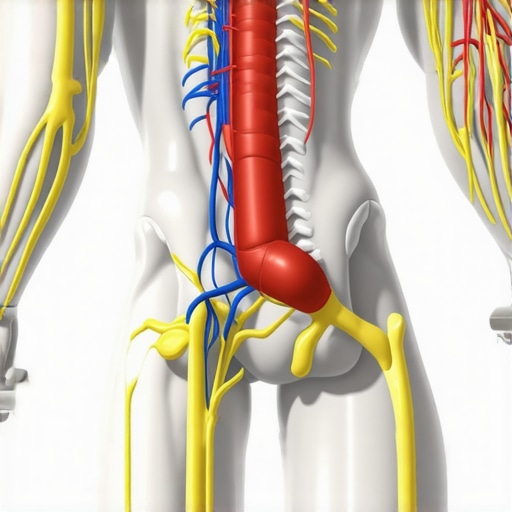
The Hamstring Stretch That’s Ruining Your Progress
Then there’s the ‘Oops’ factor that nearly everyone with lower back issues falls into: aggressively stretching the hamstrings. If you have shooting leg pain, you probably think your legs are just ‘tight.’ However, research in the Journal of Orthopaedic & Sports Physical Therapy highlights that what we often perceive as tightness is actually neural sensitivity. When you yank on that leg, you aren’t lengthening a muscle; you’re irritating an already inflamed nerve. This is why stretching your hamstrings often makes your sciatica worse instead of better. You aren’t ‘releasing’ anything; you’re essentially playing tug-of-war with your spinal cord.
Why does my leg pain get worse after a yoga class?
This often happens because many traditional poses involve deep ‘forward folding,’ which puts the sciatic nerve on a massive, unforgiving stretch. If you don’t know how to tell if your leg pain is sciatica or a deep muscle knot, you might be accidentally traumatizing your nervous system every time you hit the mat. You need to understand the difference between muscle soreness and nerve irritation before you try to ‘stretch it out.’ If it’s nerve-related, stretching is the last thing you want to do; you need nerve gliding or ‘flossing’ instead. Beyond just movement, most people ignore the physiological environment of their spinal health. If you’re drinking coffee all day and ignoring water, the sneaky way dehydration makes your spinal discs prone to injury is by reducing the shock-absorbing fluid in your vertebral cushions. These discs are like sponges; when they are dry, they become brittle and much more likely to bulge or herniate under simple loads. Have you ever fallen into the trap of trying to stretch away a nerve problem? Let me know in the comments.It took me three separate ‘blown out’ back episodes before I finally accepted that my body isn’t a machine that just keeps running without oil. I had to shift my mindset entirely. I started realizing that why maintenance care is better than waiting for a spinal crisis is the most important lesson because once you’re in the crisis phase, you’re just managing damage, not building resilience. One of the most effective tools in my arsenal isn’t a $1,000 laser—it’s a simple tennis ball. If I feel that familiar tightening in my upper back, I know how to use a tennis ball to release tension in your upper traps by leaning against a doorframe. It’s targeted, it’s cheap, and it works better than any ‘massage chair’ I’ve ever sat in.
How do I keep my spine healthy over the long haul?
The secret to long-term mobility isn’t a grueling hour-long gym session; it’s how you move when nobody is watching. I had to relearn basic chores. For instance, learning how to load the dishwasher without straining your lower lumbar changed the game for me. I stopped hinging at my waist and started using my hips. Similarly, I began practicing daily tips to keep your spine and joints healthy like a personal ritual. Even small things, like how to properly carry groceries to balance your spinal load, prevent those micro-tears that lead to big disasters later.  If you’re serious about this, you need to look at your environment. I found that ergonomic tips for everyday comfort often focus on the chair, but they ignore the car seat. I spent years driving with my wallet in my back pocket, unknowingly tilting my pelvis and irritating my sciatic nerve. Now, I make sure to understand the correct way to tilt your car seat to protect your sciatic nerve. According to research by Dr. Stuart McGill, author of ‘Low Back Disorders,’ repetitive micro-movements done poorly are more damaging than one single heavy lift. This is why I believe the future of spinal health is moving toward ‘bio-feedback’ wearables that track lumbar load in real-time. If you’ve been struggling, don’t just ‘hope’ it gets better. Take control of your daily mechanics. Start with one thing: Tonight, when you’re unloading the groceries, focus on your core. Use the correct way to use your core when lifting heavy groceries and feel the immediate difference in your lower back. It sounds small, but these tiny victories are exactly how you build a body that doesn’t break.
The Hard Lessons My Body Taught Me About Daily Movement
After years of battling chronic stiffness, I realized that my body wasn’t failing me; it was communicating with me. One major lightbulb moment was discovering that pain is a feedback loop, not a life sentence. If you listen to the whispers of a tight neck today, you won’t have to hear the screams of a disc injury tomorrow. I also learned that maintenance care is always better than waiting for a spinal crisis. Another big realization? Your eyes really are the ‘steering wheel’ for your spine; if they are strained, your neck will follow them into a slouch every single time. Finally, I stopped trying to be ‘perfect’ with my posture and started being ‘consistent’ with my breaks.
Gear That Fixed My Workspace Flow
[IMAGE_PLACEHOLDER] To make these habits stick, I curated a small kit that sits on my desk. First is a simple mechanical kitchen timer; it’s superior to a phone app because it requires a physical movement to turn off, breaking my static posture. Second, I keep a tennis ball nearby because I’ve mastered how to use a tennis ball to release tension in your upper traps during long calls. I also highly recommend the works of Dr. Stuart McGill for anyone wanting the deep science on lumbar health. Lastly, I never sit down without a full liter of water. It sounds basic, but dehydration makes your spinal discs prone to injury by robbing them of the fluid they need to stay resilient.
Your Path Back to Fluid Movement
You don’t need to overhaul your entire life today to see a difference. Recovery is a marathon of small, intentional choices. When you start integrating these micro-breaks, you aren’t just avoiding an ache; you are actively keeping your spine and joints healthy for the decades to come. Remember that neck pain and stress are often two sides of the same coin, and moving your body is the fastest way to signal to your nervous system that you are safe and capable. If things still feel ‘stuck,’ don’t hesitate to see a professional, as professional adjustments improve your balance and coordination and can provide the reset your system needs to start fresh. You are more resilient than your current ache—now go take that 20-second break. Which of these 20-second resets are you going to try first during your next work block? Let me know in the comments below!