
Why Your Gait Pattern is Causing Your Lower Back Aches
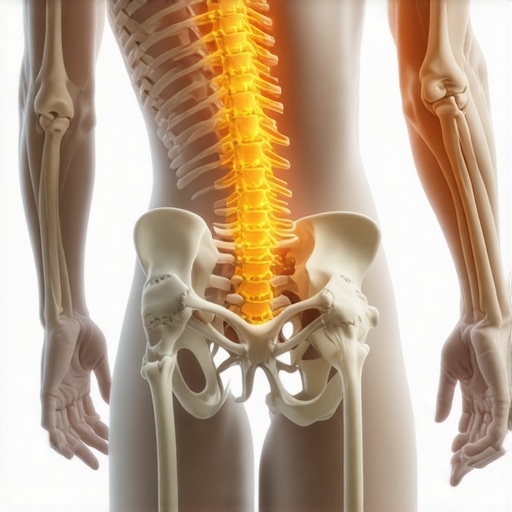
Every afternoon at 3 PM, my lower back would start screaming. I used to blame my office chair, my mattress, and even my genetics. But one evening, while dragging my sore body past a shop window, I caught a glimpse of my reflection walking. I was shuffling. My feet were barely leaving the ground, and my left hip was visibly dipping with every step. It was a visceral realization that the way my feet were interacting with the pavement was sending shockwaves straight up into my lumbar spine. I was literally walking myself into chronic pain.
Your Feet Are Writing Checks Your Back Can’t Cash
We take about ten thousand steps a day, yet we rarely think about how we do it. If your gait is slightly off, that tiny error gets compounded ten thousand times daily. I made the mistake early on of stretching my tight lower back for hours, completely ignoring the fact that my stiff ankles were forcing my lumbar spine to do all the heavy lifting. Once I realized that how a stiff big toe forces your lower back to overwork, my entire approach to recovery shifted. Today, we are going to unpack exactly how your walking mechanics are secretly overloading your spine and how you can fix it from the ground up.
Is a bad gait pattern actually causing my daily back aches?
It absolutely is. Your body is a kinetic chain, meaning what happens at your feet directly dictates the movement of your pelvis and spine. According to a study published in the Journal of Biomechanics, even minor asymmetries in foot pressure during walking can increase lateral shear forces on the lumbar vertebrae by up to 20%. When you lack proper ankle mobility, your body compensates by tilting your pelvis, forcing your lower back muscles to stay in a state of constant, exhausting contraction. Have you ever noticed that your lower back locks up after just twenty minutes of walking around a grocery store or a museum? If you have faced this frustrating mystery, you are definitely not alone. It is a classic sign that your gait—not your actual back—is the real problem that needs solving.
To truly understand this connection, you have to look at what happens when your muscles stop firing correctly during your stride. When you walk with a restricted gait, you often suffer from sleepy glutes. In fact, learning why your glutes turn off when you sit for over an hour can show you exactly how inactive hip muscles force your lower back to stabilize your entire lower body during every single step.
When my lower back was at its worst, I spent months treating it like an isolated island. I iced it, I heated it, and I stretched it. Nothing worked. Then, I decided to analyze my feet. I taped myself walking from behind on a treadmill. What I saw was shocking: my ankles were as rigid as concrete blocks, forcing my lower back to twist and absorb every single impact. It was a messy, eye-opening moment that made me realize I had to rebuild my movement patterns from the ground up.
Reclaim Your Stride to Free Your Spine
Your feet should act as natural shock absorbers, but when they stiffen up, your lower back pays the price. To stop this destructive cycle, you must restore the primary movement patterns that have gone dormant. We need to focus on how the joints in your lower body communicate. When your joints lack the ability to glide and bend, you lose the fluid motion required for a pain-free stride, which is why learning how to manage back pain by unlocking your mobility is your very first step to long-term physical freedom.
Unlock Your Ankles to Absorb the Impact
If your ankles cannot bend forward—a movement known as dorsiflexion—your body has to find that missing range of motion somewhere else. Usually, it steals it from your lower back by forcing a pelvic tilt. To fix this, you must actively train your ankles to bend correctly again. If you want to drop into a deeper squat or simply walk without a stiff, jarring impact, you must master the techniques to regain ankle dorsiflexion. I started doing simple wall-mobilization drills for two minutes before my daily walks, and the relief in my lumbar spine was almost instantaneous.
Wake Up Your Glutes to Stabilize Your Pelvis
When you walk, your glutes are supposed to fire to propel you forward. If they are asleep from hours of sitting, your lower back muscles have to work double-time to stabilize your pelvis. To wake these sleeping giants, try incorporating a simple bridge variation before you head out the door. Utilizing the bridge variation that targets deep spinal stabilizers will teach your body to support your weight through your hips rather than overloading your sensitive lumbar discs.
Stop Striding Too Far in Front of Your Body
Another massive mistake I caught myself making was overstriding. I was throwing my heel far out in front of my body with every step, which essentially slammed the brakes on my forward momentum and sent a harsh shockwave straight up my leg into my spine. Instead, focus on shorter, quicker steps where your foot lands directly under your hips. This simple mechanical shift instantly takes the pressure off your sciatic nerve. For those dealing with sharp, shooting leg pain, understanding how these mechanics tie into proven approaches to conquer sciatica can prevent future flare-ups and keep you moving comfortably.
When my lower back was at its worst, I fell into the classic trap of treating my spine as an isolated structure. Most of us are conditioned to believe that if your lower back hurts, the problem must reside solely in your lumbar vertebrae. However, after years of analyzing movement patterns, I have come to realize that this is a major misconception. In fact, many standard approaches to spinal rehab fail because they address the symptoms of pain rather than the structural movement patterns driving the irritation.
Why popular hamstring stretches might actually be making your back pain worse
Everyone tells you to stretch your hamstrings when your back feels stiff. It seems logical: tight hamstrings pull on your pelvis, right? But in my experience, static hamstring stretching is often a disguised trap. When your lower back is already unstable or hyper-mobile due to poor ankle mechanics, your hamstrings act as emergency stabilizers to prevent your pelvis from tilting too far out of alignment. If you force these protective muscles to relax without first stabilizing your hips, you strip away your body’s defensive shield, leaving your lumbar discs completely vulnerable. A landmark study from the Archives of Physical Medicine and Rehabilitation confirms that treating hamstring tightness as an isolated muscular issue, without addressing pelvic stability and gait mechanics, yields no long-term functional improvement for chronic lower back pain. Instead of forcing deep, passive stretches, you should focus on why your hamstrings are not the real reason your back is tight and shift your energy toward restoring active joint control.
Another dangerous trap is the obsession with hyper-mobility and aggressive stretching. People dealing with sharp, shooting leg discomfort often rush to perform aggressive piriformis stretches. However, if your pain is actually caused by a herniated disc compressing a nerve root, pulling your knee hard across your chest can pinch the nerve further. This is why learning why some sciatica stretches actually pinch the nerve further is crucial before you start any self-treatment routine. If you want to achieve lasting comfort, you need to step back from aggressive flexibility drills and focus on systematic stabilization. I highly recommend looking into targeted, research-backed movement protocols by exploring expert strategies for lasting sciatica relief to protect your nervous system while you heal.
Ultimately, your body functions as a single, integrated unit. You cannot separate the way your big toe bends, how your ankle flexes, or how your glutes stabilize from the physical health of your spine. Have you ever fallen into this trap of aggressively stretching a painful area only to find that it felt worse the next morning? Let me know in the comments below, and let’s discuss how you can start rebuilding your movement from the ground up.
I used to think that fixing my walking pattern was a one-time project. I assumed that once my lower back stopped throbbing, I could go back to autopilot. But the human body adapts to comfort quickly, and old habits are incredibly stubborn. If you do not actively maintain your alignment, you will slowly slide back into those same destructive compensation patterns that caused your initial pain. To keep your spine healthy for years to come, you need a structured strategy and a few key tools that keep your feet and hips communicating properly.
How do I maintain my corrected gait and spine health over time?
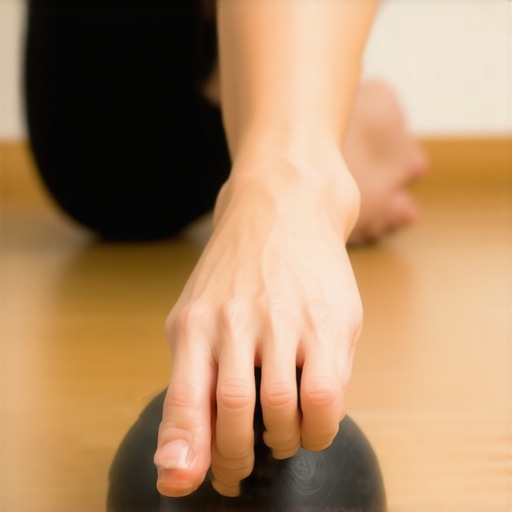
Consistent maintenance does not mean spending hours in a gym every day; it means integrating micro-habits into your normal routine. One tool I personally rely on is barefoot training shoes with a wide toe box, specifically from brands like Vivobarefoot. By wearing shoes that do not compress your toes, you allow your feet to splay naturally, which dynamically restores your foot arch strength with every single step you take. I also keep a simple lacrosse ball under my desk at all times. Rolling out the plantar fascia for just two minutes during afternoon meetings keeps the tissue under my foot supple, preventing tension from traveling up my calves and pulling on my pelvis. If you work from home, making these tiny adjustments is incredibly affordable and highly effective. In fact, learning how to set up your home office for less than fifty dollars can save you thousands in future physical therapy bills.
As we look to the future of biomechanics, the landscape of injury prevention is shifting rapidly. Dr. Irene Davis, a leading researcher in physical therapy at the University of South Florida, has long championed the concept of ‘gait retraining’ using real-time biofeedback. Within the next decade, we will likely see mainstream smart insoles that analyze our foot strike in real-time, sending haptic vibrations to our ankles when we start overstriding or shifting too much weight to one side. This level of technology will make maintaining perfect spinal alignment effortless. Until those advanced tools are widely available, you must be your own biofeedback system by tuning into your body’s subtle warnings. When you feel that familiar tightness creeping back into your hips, you can instantly hit the reset button by incorporating daily tips to keep your spine and joints healthy.
If you want to speed up your recovery and prevent future flare-ups, I highly recommend adopting a proactive approach to your daily movement. Do not wait for your back to lock up before you pay attention to your feet. Start tomorrow morning by spending just sixty seconds testing your big toe and ankle mobility. If you are currently dealing with acute lower back stiffness or sciatica, implementing targeted, structured routines like expert strategies for lasting sciatica relief will help stabilize your spine before you focus on rebuilding your walk. Pick just one tool—whether it is rolling your feet on a hard ball or taking shorter, more mindful steps on your next walk—and commit to it for one week. Your spine will thank you for it.
When my lower back was at its worst, I fell into the classic trap of treating my spine as an isolated structure. Most of us are conditioned to believe that if your lower back hurts, the problem must reside solely in your lumbar vertebrae. However, after years of analyzing movement patterns, I have come to realize that this is a major misconception. In fact, many standard approaches to spinal rehab fail because they address the symptoms of pain rather than the structural movement patterns driving the irritation.
What the Experts Won’t Tell You About How Your Feet Control Your Spine
For years, I was told that my core was weak and that I simply needed to do more planks. But the real breakthrough came when I realized my feet were essentially acting as stiff, wooden blocks. Here are the three counterintuitive truths that completely transformed my perspective on lower back rehabilitation:
- The Big Toe is the Master Switch: If your big toe cannot bend upward when you push off the ground, your body immediately compensates by rotating your knee inward and tilting your pelvis, which puts your lower back under constant sheer stress.
- Symmetrical Shoe Wear is a Lie: I used to think my shoes wore down evenly. When I actually looked, I realized my right heel was grinding down twice as fast. Examining what your shoe wear pattern reveals about your sciatica opened my eyes to how uneven structural stress was traveling up my leg.
- More Cushioning Isn’t Always Better: Pillowy, ultra-supportive running shoes often numb the sensory nerves in your feet, causing you to strike the ground much harder than you would barefoot, sending violent shockwaves straight into your lumbar discs.
My Essential Toolkit for Restoring Lifelong Movement
I do not believe in complicated, expensive physical therapy gadgets. Instead, I rely on a few simple, highly targeted tools that keep my lower extremities mobile and my spine completely unloaded:
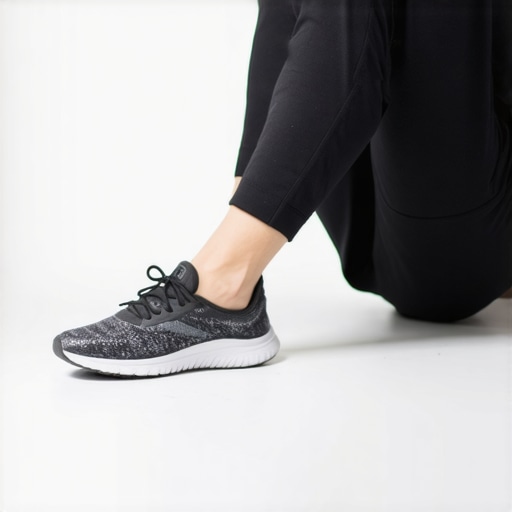
- Barefoot-Style Training Shoes: Transitioning to shoes with a wide toe box allowed my arches to naturally splay and absorb impact, which immediately took the daily pressure off my lower back.
- The Standard Lacrosse Ball: Rolling out the arches of my feet for two minutes every evening releases the tension in the plantar fascia, preventing tight calves from pulling down on my pelvis. If you find your entire lower chain is constantly stiff, identifying why your calves are tight and how it pulls on your lower back is a total game changer.
- An Active Morning Routine: Rather than static stretching, I spend five minutes performing active mobility drills to prep my joints before my feet even hit the pavement. Implementing the morning routine that prevents lower back stiffness is the most reliable way to start your day pain-free.
Step Into a Life Unburdened by Chronic Stiffness
Fixing your gait is not about achieving textbook-perfect posture overnight. It is about reclaiming the natural, fluid mechanics your body was designed to use. When you focus on how your feet and hips communicate, you stop fighting against your own skeleton and finally allow your spine to heal. By committing to just one small mechanical adjustment today, you can permanently break the cycle of chronic back pain and rediscover the joy of effortless, unrestricted movement.
Have you noticed that your shoes wear down faster on one side than the other? Let me know in the comments below, and let’s figure out what your feet are trying to tell you!