
How a stiff big toe forces your lower back to overwork
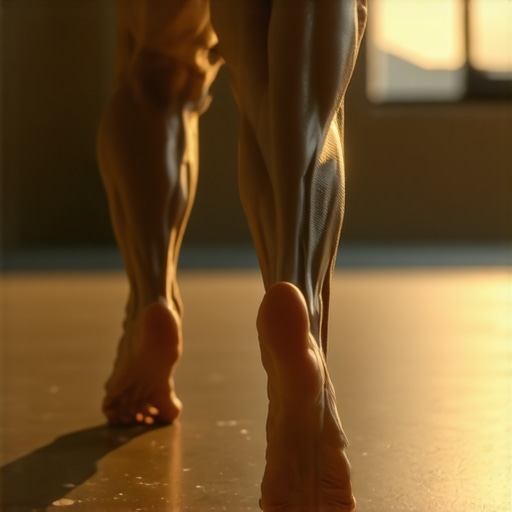
I remember the exact moment I realized I had been looking at my back pain all wrong. I was trying to reach for a dropped pen—something I have done a thousand times—and my lower back locked up like a rusty gate. It was embarrassing and, frankly, terrifying. I spent weeks foam rolling my glutes and stretching my hamstrings, thinking my spine was just naturally weak or that I was finally just getting old. But here is the kicker: the real culprit was my right big toe. It was stiff as a board. Every time I took a step, that lack of give in my foot was sending a shockwave straight up to my lumbar. I had spent years ignoring my feet, thinking they were just things to shove into boots, but my body was keeping score. [IMAGE_PLACEHOLDER]
The moment I realized my back pain started in my shoes
It sounds crazy, does it not? How could a tiny joint an arm’s length away from your spine be the reason you cannot stand up straight in the morning? For a long time, I made the mistake of treating the symptom instead of the source. I would do simple exercises that make a difference for my spine, but the relief only lasted an hour. That is because my gait was fundamentally broken. If your big toe does not bend, your foot cannot roll forward correctly. To compensate, your hip turns out, your pelvis tilts, and your lower back has to arch excessively just to keep you moving forward. You are essentially fighting your own skeleton with every step you take.
Is a toe really worth all this fuss?
You might be thinking that it is just a toe and surely your back pain is more serious than a stiff joint in your foot. Trust me, I felt the same way. I was convinced I had a slipped disc or something permanent. I even started wondering if my back pain was a sign of something more serious. But the body is a kinetic chain. When one link stops moving, the others have to work double time. According to research published in the Journal of Foot and Ankle Research, the hallux, or big toe, is responsible for carrying nearly 40% of the body weight during the push-off phase of your stride. When that 40% is not handled correctly by the foot, your lower back muscles are the first ones to get drafted into service to pick up the slack.
How your lower back pays for your frozen big toe
We often think we need more rest when we hurt, but sometimes resting on the couch actually makes things worse because it ignores the mechanics of how we move. If you have noticed your shoes wearing down unevenly or your feet feel like heavy bricks after a short walk, you are likely forcing your spine to overwork. I spent way too much time in stiff, narrow footwear, never realizing that thin shoes or improper support were the silent killers of my mobility. Today, we are going to fix that. I am going to show you how to wake up that toe and give your lower back the break it deserves. Have you ever noticed that your back pain flares up specifically after you have been walking or standing for a long time? If so, your feet are the first place we need to look.To get that hinge moving again, we have to treat the foot like a piece of equipment that has been sitting in the rain for a decade. It needs lubrication and deliberate movement.
Give your big toe the room to breathe
If you want to stop the compensatory patterns in your spine, you have to reclaim the space in your forefoot. When I first tried this, I could barely move my toe without my whole foot cramping up. It was a clear sign of how much my body had adapted to stiffness. I began using the 2-minute foot massage that helps your lower back relax every single night before bed. By breaking up the tension in the plantar fascia, I was finally allowing the joints in my toes to move without fighting through layers of tight, bound-up tissue.
The simple extension test
Sit in a chair and cross one ankle over the opposite knee. Grab your big toe and pull it back toward your shin. Does it move easily, or does it feel like you are trying to bend a piece of frozen rebar? You need at least sixty degrees of extension for a healthy walk. If you do not have it, your body is likely forced to use the simple movement that resets your SI joint just to survive a trip to the grocery store. 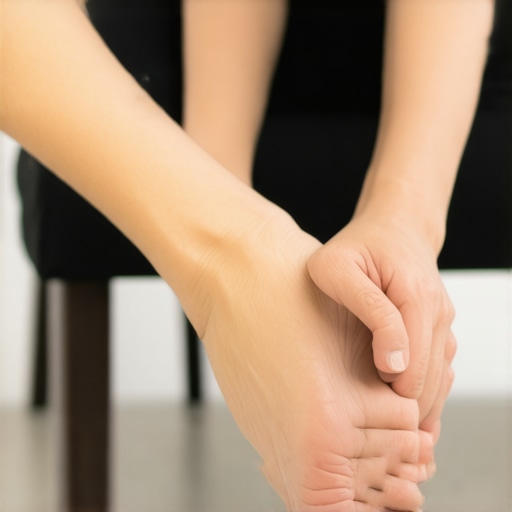
Wake up the nerves with active prying
Once you have the passive range, you need to own it. I remember standing in my kitchen, waiting for the coffee to brew, and I started doing these ‘toe lifts.’ I would keep my four small toes on the ground and try to lift only the big toe. At first, my brain could not even find the right muscle. My whole foot would shake from the effort. But within just three days, that neurological connection solidified. For the first time in years, my glutes actually fired when I walked across the room. I realized that simple exercises that make a difference are not just for the gym; they are for the small moments between tasks throughout your day.
Rebuild your stride from the ground up
The goal is to get to a point where your foot acts like a spring instead of a heavy brick. Every time your heel leaves the ground, that big toe should be the last thing to touch, pushing you forward with authority. If you have spent years in narrow footwear, you might have noticed how your high-heeled shoes are changing your spine’s natural curve by forcing your weight onto the ball of your foot prematurely. To fix this, you need to incorporate mobility mastery daily tips to keep your spine and joints healthy into your morning routine.
Add the ankle into the mix
You cannot talk about the toe without addressing the ankle. If your ankle is stiff, your toe has to work twice as hard to clear the ground. I started doing the 30-second ankle drill that reduces your risk of back injury right before my afternoon walks. By loosening the ‘gateway’ between my foot and my leg, I stopped the jarring impact that used to travel straight into my lumbar spine. It felt like I had replaced my old, worn-out shocks with a brand-new suspension system that actually protected my back.
While fixing my big toe was a massive breakthrough, I soon hit a plateau that many of you might recognize. I had the mobility, but the ache in my lower back would still creep back by mid-afternoon. This is where I had to confront the most common myth in the world of back health: the idea of ‘perfect posture.’ We are taught from childhood to pull our shoulders back and tuck our chins, but why your straight posture is actually straining your muscles becomes obvious once you realize that a healthy spine is meant to move, not act like a frozen pillar. When you force yourself into a rigid, ‘upright’ position, you are essentially asking your spinal extensors to stay in a state of constant contraction. This is a fast track to fatigue and chronic tightness.
The dangerous trap of stretching through the pain
The biggest ‘oops’ factor I see with my readers—and something I was guilty of for years—is the obsession with stretching the hamstrings to fix back pain. It feels logical: your back hurts, your legs feel tight, so you reach for your toes. However, why stretching your hamstrings won’t fix your tight legs is often because that ‘tightness’ isn’t in the muscle at all; it is neural tension. If you are dealing with a disc issue, cranking on your hamstrings actually pulls on the sciatic nerve, potentially making the inflammation worse. This is why some sciatica stretches actually pinch the nerve further instead of providing relief. You think you are doing ‘mobility work,’ but you are actually just irritating an already angry nerve. [IMAGE_PLACEHOLDER_C]
Why does the pain linger even after my movement improves?
This is a sophisticated question that gets to the heart of neural adaptation. Even if you have regained toe extension and ankle range, your brain may still be ‘guarding’ the area. According to research led by Dr. Stuart McGill, a leading expert in spine biomechanics, spinal stability is a result of coordinated muscle ‘stiffness’ rather than just raw flexibility. If your brain still perceives a threat, it will keep those back muscles locked down. You have to prove to your nervous system that it is safe to let go. Often, this requires moving away from the couch, as resting on the couch actually makes things worse by allowing the joints to settle into a collapsed, stagnant position. You need ‘spine hygiene’—the habit of moving well throughout the day rather than just doing one or two exercises.
Identify the hidden compensations in your pelvis
Once you stop the aggressive stretching, you can start looking at the subtle shifts in your alignment. For instance, if you have spent years walking with a stiff foot, your pelvis has likely developed a tilt to compensate for the lack of push-off. I recommend using the simple way to check your own spine for pelvic tilt to see if one side of your hip is doing more work than the other. This imbalance is often the ‘hidden nuance’ that explains why one side of your back always feels tighter than the other. If you ignore this, you are just putting a band-aid on a structural issue. Have you ever fallen into this trap of trying to ‘stretch away’ a pain that only seemed to get tighter? Let me know in the comments—I would love to hear what finally worked for you.
Once I stopped chasing the phantom of ‘perfect’ posture, I had to find a way to maintain my progress without spending two hours a day on a yoga mat. I realized that the best tools aren’t the most expensive ones; they are the ones that provide immediate biofeedback to your nervous system. For me, that meant looking at my gear. I eventually realized that why your current sneakers are causing your lower back to ache is often about the ‘heel-to-toe drop.’ Most modern shoes have a thick, cushioned heel that acts like a permanent ramp, shifting your center of gravity forward and forcing your lower back to stay in a state of high alert. I switched to footwear with a wider toe box and a flatter sole, allowing my big toe to actually engage with the ground again. It was like taking my spine off a constant, subtle tilt.
The simple gear that saved my sanity
I don’t believe in buying every gadget on the market, but there is one low-tech item I never travel without: a standard tennis ball. It sounds basic, but how a simple tennis ball can release your deep glute tension is a game-changer when you have been sitting in an airport or at a desk for too long. I place the ball against a wall and lean into the spot right where my gluteus medius meets my hip. This isn’t just about ‘massaging’ the muscle; it is about sending a signal to the brain that it is safe to release the guarding reflex. Dr. Kelly Starrett, author of Becoming a Supple Leopard, often emphasizes that targeted pressure like this helps restore sliding surfaces between tissues. If those tissues are glued together, all the stretching in the world won’t fix your mobility.

Use your car mirror as a posture police
Maintenance is mostly about building ‘fail-safes’ into your day so you don’t have to think about it. One of my favorite tricks involves your car’s rearview mirror. Sit up tall, find a comfortable, active position for your spine, and then how to adjust your rearview mirror to force better posture becomes your best friend. Every time you slump or your head drifts forward, you will lose the view out the back window. It is a gentle, silent reminder to reset your ribcage over your pelvis. I also apply a similar logic at my desk using the 15-degree rule for your computer monitor to save your neck. If your screen is too low, your cervical spine is essentially carrying a 40-pound bowling ball at an awkward angle all day long. Small, physical barriers to bad movement are much more effective than willpower alone.
How do I stay mobile as I get older?
The secret is consistency over intensity. You don’t need a grueling workout; you need mobility mastery daily tips to keep your spine and joints healthy integrated into your existing life. I predict that over the next few years, we will see a massive shift toward wearable biofeedback—think smart shirts or sensors that vibrate when your breathing becomes shallow or your shoulders round. But until then, the best ‘sensor’ is your own awareness. I want you to try this right now: the next time you are standing in line or brushing your teeth, do a five-second glute squeeze. It resets the pelvis and takes the pressure off the lumbar. If you want to dive deeper into these daily habits, I highly recommend checking out these expert tips on managing back pain in 2025 to stay ahead of the curve. Your future self will thank you for the small adjustments you make today.
I remember the exact moment I realized I had been looking at my back pain all wrong. I was trying to reach for a dropped pen—something I have done a thousand times—and my lower back locked up like a rusty gate. It was embarrassing and, frankly, terrifying. I spent weeks foam rolling my glutes and stretching my hamstrings, thinking my spine was just naturally weak or that I was finally just getting old. But here is the kicker: the real culprit was my right big toe. It was stiff as a board. Every time I took a step, that lack of give in my foot was sending a shockwave straight up to my lumbar. I had spent years ignoring my feet, thinking they were just things to shove into boots, but my body was keeping score. [IMAGE_PLACEHOLDER]
The moment I realized my back pain started in my shoes
It sounds crazy, does it not? How could a tiny joint an arm’s length away from your spine be the reason you cannot stand up straight in the morning? For a long time, I made the mistake of treating the symptom instead of the source. I would do simple exercises that make a difference for my spine, but the relief only lasted an hour. That is because my gait was fundamentally broken. If your big toe does not bend, your foot cannot roll forward correctly. To compensate, your hip turns out, your pelvis tilts, and your lower back has to arch excessively just to keep you moving forward. You are essentially fighting your own skeleton with every step you take.
Is a toe really worth all this fuss?
You might be thinking that it is just a toe and surely your back pain is more serious than a stiff joint in your foot. Trust me, I felt the same way. I was convinced I had a slipped disc or something permanent. I even started wondering if my back pain was a sign of something more serious. But the body is a kinetic chain. When one link stops moving, the others have to work double time. According to research published in the Journal of Foot and Ankle Research, the hallux, or big toe, is responsible for carrying nearly 40% of the body weight during the push-off phase of your stride. When that 40% is not handled correctly by the foot, your lower back muscles are the first ones to get drafted into service to pick up the slack.
How your lower back pays for your frozen big toe
We often think we need more rest when we hurt, but sometimes resting on the couch actually makes things worse because it ignores the mechanics of how we move. If you have noticed your shoes wearing down unevenly or your feet feel like heavy bricks after a short walk, you are likely forcing your spine to overwork. I spent way too much time in stiff, narrow footwear, never realizing that thin shoes or improper support were the silent killers of my mobility. Today, we are going to fix that. I am going to show you how to wake up that toe and give your lower back the break it deserves. Have you ever noticed that your back pain flares up specifically after you have been walking or standing for a long time? If so, your feet are the first place we need to look.To get that hinge moving again, we have to treat the foot like a piece of equipment that has been sitting in the rain for a decade. It needs lubrication and deliberate movement.
Give your big toe the room to breathe
If you want to stop the compensatory patterns in your spine, you have to reclaim the space in your forefoot. When I first tried this, I could barely move my toe without my whole foot cramping up. It was a clear sign of how much my body had adapted to stiffness. I began using the 2-minute foot massage that helps your lower back relax every single night before bed. By breaking up the tension in the plantar fascia, I was finally allowing the joints in my toes to move without fighting through layers of tight, bound-up tissue.
The simple extension test
Sit in a chair and cross one ankle over the opposite knee. Grab your big toe and pull it back toward your shin. Does it move easily, or does it feel like you are trying to bend a piece of frozen rebar? You need at least sixty degrees of extension for a healthy walk. If you do not have it, your body is likely forced to use the simple movement that resets your SI joint just to survive a trip to the grocery store.
Wake up the nerves with active prying
Once you have the passive range, you need to own it. I remember standing in my kitchen, waiting for the coffee to brew, and I started doing these ‘toe lifts.’ I would keep my four small toes on the ground and try to lift only the big toe. At first, my brain could not even find the right muscle. My whole foot would shake from the effort. But within just three days, that neurological connection solidified. For the first time in years, my glutes actually fired when I walked across the room. I realized that simple exercises that make a difference are not just for the gym; they are for the small moments between tasks throughout your day.
Rebuild your stride from the ground up
The goal is to get to a point where your foot acts like a spring instead of a heavy brick. Every time your heel leaves the ground, that big toe should be the last thing to touch, pushing you forward with authority. If you have spent years in narrow footwear, you might have noticed how your high-heeled shoes are changing your spine’s natural curve by forcing your weight onto the ball of your foot prematurely. To fix this, you need to incorporate mobility mastery daily tips to keep your spine and joints healthy into your morning routine.
Add the ankle into the mix
You cannot talk about the toe without addressing the ankle. If your ankle is stiff, your toe has to work twice as hard to clear the ground. I started doing the 30-second ankle drill that reduces your risk of back injury right before my afternoon walks. By loosening the ‘gateway’ between my foot and my leg, I stopped the jarring impact that used to travel straight into my lumbar spine. It felt like I had replaced my old, worn-out shocks with a brand-new suspension system that actually protected my back.
While fixing my big toe was a massive breakthrough, I soon hit a plateau that many of you might recognize. I had the mobility, but the ache in my lower back would still creep back by mid-afternoon. This is where I had to confront the most common myth in the world of back health: the idea of ‘perfect posture.’ We are taught from childhood to pull our shoulders back and tuck our chins, but why your straight posture is actually straining your muscles becomes obvious once you realize that a healthy spine is meant to move, not act like a frozen pillar. When you force yourself into a rigid, ‘upright’ position, you are essentially asking your spinal extensors to stay in a state of constant contraction. This is a fast track to fatigue and chronic tightness.
The dangerous trap of stretching through the pain
The biggest ‘oops’ factor I see with my readers—and something I was guilty of for years—is the obsession with stretching the hamstrings to fix back pain. It feels logical: your back hurts, your legs feel tight, so you reach for your toes. However, why stretching your hamstrings won’t fix your tight legs is often because that ‘tightness’ isn’t in the muscle at all; it is neural tension. If you are dealing with a disc issue, cranking on your hamstrings actually pulls on the sciatic nerve, potentially making the inflammation worse. This is why some sciatica stretches actually pinch the nerve further instead of providing relief. You think you are doing ‘mobility work,’ but you are actually just irritating an already angry nerve. [IMAGE_PLACEHOLDER_C]
Why does the pain linger even after my movement improves?
This is a sophisticated question that gets to the heart of neural adaptation. Even if you have regained toe extension and ankle range, your brain may still be ‘guarding’ the area. According to research led by Dr. Stuart McGill, a leading expert in spine biomechanics, spinal stability is a result of coordinated muscle ‘stiffness’ rather than just raw flexibility. If your brain still perceives a threat, it will keep those back muscles locked down. You have to prove to your nervous system that it is safe to let go. Often, this requires moving away from the couch, as resting on the couch actually makes things worse by allowing the joints to settle into a collapsed, stagnant position. You need ‘spine hygiene’—the habit of moving well throughout the day rather than just doing one or two exercises.
Identify the hidden compensations in your pelvis
Once you stop the aggressive stretching, you can start looking at the subtle shifts in your alignment. For instance, if you have spent years walking with a stiff foot, your pelvis has likely developed a tilt to compensate for the lack of push-off. I recommend using the simple way to check your own spine for pelvic tilt to see if one side of your hip is doing more work than the other. This imbalance is often the ‘hidden nuance’ that explains why one side of your back always feels tighter than the other. If you ignore this, you are just putting a band-aid on a structural issue. Have you ever fallen into this trap of trying to ‘stretch away’ a pain that only seemed to get tighter? Let me know in the comments—I would love to hear what finally worked for you.
Once I stopped chasing the phantom of ‘perfect’ posture, I had to find a way to maintain my progress without spending two hours a day on a yoga mat. I realized that the best tools aren’t the most expensive ones; they are the ones that provide immediate biofeedback to your nervous system. For me, that meant looking at my gear. I eventually realized that why your current sneakers are causing your lower back to ache is often about the ‘heel-to-toe drop.’ Most modern shoes have a thick, cushioned heel that acts like a permanent ramp, shifting your center of gravity forward and forcing your lower back to stay in a state of high alert. I switched to footwear with a wider toe box and a flatter sole, allowing my big toe to actually engage with the ground again. It was like taking my spine off a constant, subtle tilt.
The simple gear that saved my sanity
I don’t believe in buying every gadget on the market, but there is one low-tech item I never travel without: a standard tennis ball. It sounds basic, but how a simple tennis ball can release your deep glute tension is a game-changer when you have been sitting in an airport or at a desk for too long. I place the ball against a wall and lean into the spot right where my gluteus medius meets my hip. This isn’t just about ‘massaging’ the muscle; it is about sending a signal to the brain that it is safe to release the guarding reflex. Dr. Kelly Starrett, author of Becoming a Supple Leopard, often emphasizes that targeted pressure like this helps restore sliding surfaces between tissues. If those tissues are glued together, all the stretching in the world won’t fix your mobility.
#IMAGE_PLACE_HOLDER_D#
Use your car mirror as a posture police
Maintenance is mostly about building ‘fail-safes’ into your day so you don’t have to think about it. One of my favorite tricks involves your car’s rearview mirror. Sit up tall, find a comfortable, active position for your spine, and then how to adjust your rearview mirror to force better posture becomes your best friend. Every time you slump or your head drifts forward, you will lose the view out the back window. It is a gentle, silent reminder to reset your ribcage over your pelvis. I also apply a similar logic at my desk using the 15-degree rule for your computer monitor to save your neck. If your screen is too low, your cervical spine is essentially carrying a 40-pound bowling ball at an awkward angle all day long. Small, physical barriers to bad movement are much more effective than willpower alone.
How do I stay mobile as I get older?
The secret is consistency over intensity. You don’t need a grueling workout; you need mobility mastery daily tips to keep your spine and joints healthy integrated into your existing life. I predict that over the next few years, we will see a massive shift toward wearable biofeedback—think smart shirts or sensors that vibrate when your breathing becomes shallow or your shoulders round. But until then, the best ‘sensor’ is your own awareness. I want you to try this right now: the next time you are standing in line or brushing your teeth, do a five-second glute squeeze. It resets the pelvis and takes the pressure off the lumbar. If you want to dive deeper into these daily habits, I highly recommend checking out these expert tips on managing back pain in 2025 to stay ahead of the curve. Your future self will thank you for the small adjustments you make today.
The Truth About Why My Spine Refused to Heal
The hardest lesson I learned through this entire journey is that pain is often just a smoke signal for a fire happening somewhere else. For years, I treated my lower back like a broken machine part, never realizing it was simply the victim of my ‘quiet’ feet. When your big toe stops moving, your body doesn’t just stop walking; it finds a workaround. My lightbulb moment came when I stopped asking ‘why does my back hurt?’ and started asking ‘what is my back doing that it shouldn’t have to?’ I discovered that my lumbar was acting as a primary mover for my legs because my feet were functionally dead. Once I reclaimed my foot health, my spine finally felt safe enough to let go of that chronic, protective tension. [IMAGE_PLACEHOLDER_E]
My Daily Essentials for a Resilient Spine
If you are tired of chasing symptoms, I recommend building a toolkit that focuses on structural freedom. First, reconsider your footwear; switching to options with a wider toe box changed my life, as I finally understood why your current sneakers are causing your lower back to ache. Second, keep a tennis ball nearby to release hip tension whenever you have been sitting too long. Finally, stay informed on evolving movement science. I constantly revisit expert tips on managing back pain in 2025 to ensure my habits are aligned with the latest biomechanical research. These aren’t just ‘fixes’; they are investments in how you will feel ten years from now.
Reclaim Your Freedom to Move
You don’t have to accept a stiff, painful back as a permanent part of your identity. Your body is remarkably resilient and capable of rewriting its movement patterns at any age. By paying attention to the foundation—your feet—and integrating simple exercises that make a difference into your day, you can break the cycle of chronic discomfort. Start small, stay consistent, and listen to the subtle signals your joints are sending you. Have you checked your big toe mobility recently, and were you surprised by how stiff it felt? Let me know in the comments below!