
The bridge variation that targets deep spinal stabilizers
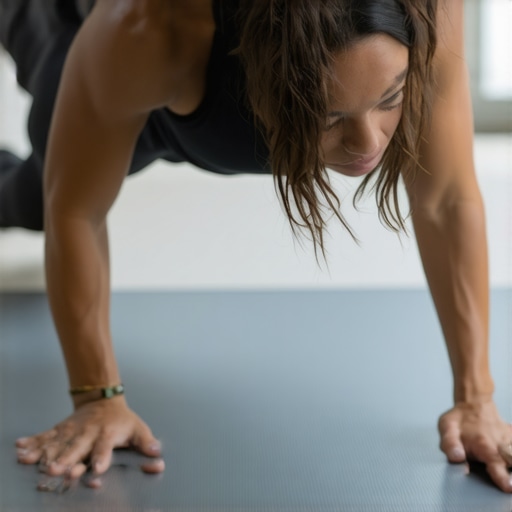
I remember standing in my kitchen, paralyzed over a spilled bag of flour. It wasn’t because I’m a neat freak, but because I knew that if I bent over to clean it up, my lower back would stage a full-scale revolt. I had spent months doing all the standard exercises—planks, squats, and hundreds of basic glute bridges—yet my spine still felt like a loose stack of Jenga blocks. I was strong on the outside, but completely hollow on the inside. That moment was my wake-up call. I realized that my [morning routine that prevents lower back stiffness](https://bodyrenewtherapy.com/the-morning-routine-that-prevents-lower-back-stiffness) was missing the most important piece of the puzzle: the deep spinal stabilizers. Today, I am going to share the exact bridge variation that changed everything for me, moving past the big ‘show’ muscles and waking up the tiny muscles that actually keep your vertebrae in place.
Stop Training the Mirror Muscles and Start Protecting Your Spine
The biggest mistake I made early on—and I see neighbors and friends make this constantly—is assuming that a strong butt equals a safe back. I used to crank out bridges until my glutes burned, thinking I was bulletproofing my body. In reality, I was just bypassing the multifidus, those tiny, finger-like muscles that hug your spine. When these stabilizers are ‘off,’ your larger muscles have to overwork, leading to that familiar, nagging tightness. This is why you might find that you still need to learn [how to pick up your toddler without a lower back tweak](https://bodyrenewtherapy.com/how-to-pick-up-your-toddler-without-a-lower-back-tweak) even if you can deadlift a decent amount of weight. To fix this, we have to stop thinking about height and start thinking about control. By making one tiny adjustment to your pelvic tilt during a bridge, you can force those deep stabilizers to do their job. Have you ever felt like your back was ‘fragile’ despite being physically active? It’s a frustrating loop to be in, but it usually means your internal corset is just sleeping on the job.
Does focusing on deep stabilizers really change the game?
It sounds like a lot of effort for such a small movement, but the science is hard to argue with. According to a study published in the *Journal of Physical Therapy Science*, targeted activation of the lumbar multifidus is one of the most effective ways to reduce chronic low back pain and prevent future injury. When I finally swallowed my pride and stopped trying to lift my hips as high as possible, the results were almost immediate. I went from feeling a ‘pinch’ every time I moved to feeling a sense of internal ‘grip’ that held me together. If you want to truly [boost your back mobility](https://bodyrenewtherapy.com/boost-your-back-mobility-simple-exercises-that-make-a-difference), you have to master this internal bracing first. We aren’t just trying to get a workout in; we are trying to recalibrate how your brain talks to your spine. Many [back pain breakthroughs](https://bodyrenewtherapy.com/back-pain-breakthroughs-navigating-your-path-to-restored-mobility) start with this exact realization: less is often much, much more when it comes to long-term spinal health.
Get Your Pelvis in the Right Neighborhood First
To start, lay flat on your back with your knees bent and feet flat on the floor. This isn’t about the explosive power you’d use for a heavy gym session; instead, think of your pelvis as a shallow bowl of water. Before you even think about lifting your hips, I want you to gently tilt that bowl toward your face until your lower back is flush against the floor. This is where most people fail because they rush. You need to master the simple way to check your own spine for pelvic tilt before moving an inch higher. If you can’t feel that flatten-and-tilt motion, you are just going to use your hip flexors to cheat, which only tightens the very areas we are trying to release. This foundational move ensures that when you do lift, you are pulling from your core, not yanking on your lumbar vertebrae. 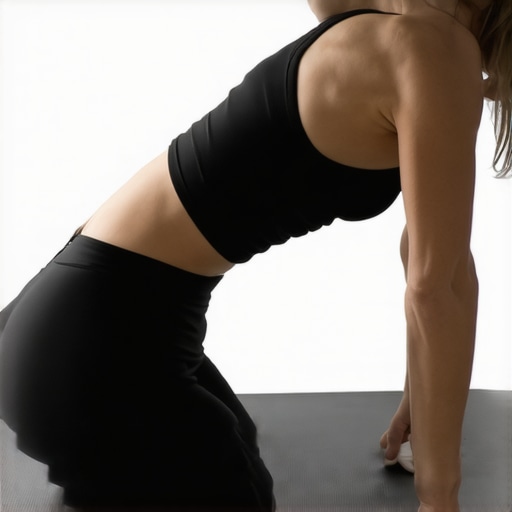
The One-Inch Lift That Actually Works
I remember being in a hotel gym once, surrounded by people doing massive hip thrusts with heavy barbells. I felt self-conscious, so I tried to ‘big up’ my movement by arching my back as high as I could. Within two reps, a sharp, familiar spark of electricity shot down my leg. I had to stop, swallow my ego, and go back to a lift that was literally one inch off the ground. It looked like I was doing nothing to any onlooker, but for the first time in years, that ‘hollow’ feeling in my spine disappeared. By only lifting your tailbone slightly off the mat, you force the multifidus to fire. I was finally conquering sciatica by doing less, not more. This tiny gap between your body and the floor is where the real stability is built.
Don’t Let Your Glutes Take Over the Job
The common issue is that the big ‘mirror’ muscles want to be the hero of the story. Often, why your glutes turn off when you sit for over an hour is exactly why they try to overcompensate during exercise. To fix this, as you perform your tiny bridge, keep your glutes soft for the first half of the move. If they are clenching like a vice immediately, you’ve bypassed the deep stabilizers. Imagine your spine is like a high-performance shock absorber. If the internal springs are rusty, the whole car rattles. We are greasing those springs by keeping the movement focused on the deep abdomen. If you feel a ‘pinch’ in your lower back, you have gone too high. Lower down until the pinch disappears and you feel a ‘wrapping’ sensation around your midsection instead.
Breathing Is the Secret Sauce for Stability
If you find yourself holding your breath, you’ve already lost the battle. You have to understand how your breathing pattern affects your core stability to keep the pressure from blowing out your discs. As you initiate the pelvic tilt, exhale slowly through pursed lips, as if you are blowing through a straw. This naturally draws your navel toward your spine and engages the transverse abdominis. To deepen the effect, learn how to breathe into your lower back to release deep muscle tension while you hold that one-inch lift. This creates an internal pressure that supports the spine from the inside out. Try combining this sequence with the dead bug exercise variation that actually protects your spine for a complete internal armor-building session that makes daily tasks like unloading the dishwasher feel effortless again.Most people think the answer to back pain is ‘better posture,’ but I’ve found that the more my clients try to force themselves into a rigid, military-style stance, the worse they feel. This is one of the biggest hidden nuances in modern rehab: why standing up straight is actually making your back pain worse. When you force a ‘perfect’ curve by pulling your shoulders back and puffing your chest, you’re often creating a state of constant, high-threshold muscle tension. Your spine isn’t a steel rod; it’s a dynamic spring. Rigidly holding it in one place is like keeping a car engine at redline while parked. Eventually, why your straight posture is actually straining your muscles becomes the very reason you can’t find relief. 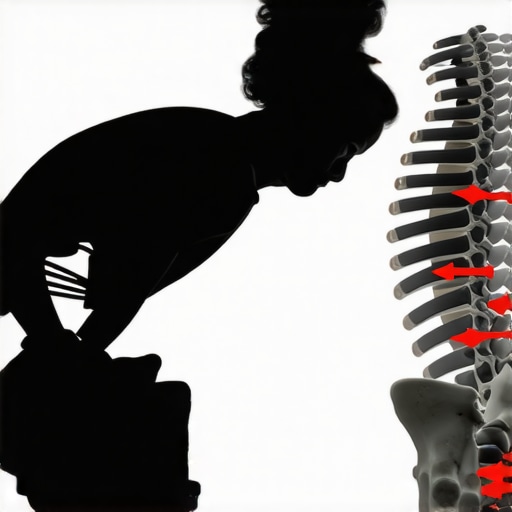
The Hamstring Stretch Trap You Need to Avoid
The most common ‘oops’ factor I see in the clinic is the hamstring obsession. People feel tightness in the back of their legs and spend twenty minutes a day reaching for their toes, only to find the tightness returns by lunchtime. The reality is that why stretching your hamsatrings won’t fix your tight legs is usually because that ‘tightness’ is actually protective tension from a nervous system that feels unstable. If your brain thinks your spine is at risk—perhaps due to a lack of deep stabilizer engagement—it will lock down your legs to act as secondary kickstands. Stretching them out is like cutting the safety ropes on a bridge. You aren’t fixing the problem; you’re removing a necessary (albeit annoying) compensation. To get real results, you should be unlocking sciatica relief by addressing the pelvic instability rather than just pulling on the wires.
Does your diaphragm hold the key to chronic stiffness?
It’s a question that catches many advanced trainees off guard. We talk about the ‘core’ as if it’s just the six-pack muscles, but the top of your internal pressure system is the diaphragm. Research published in the *Archives of Physical Medicine and Rehabilitation* suggests that individuals with chronic low back pain often have altered diaphragm mechanics, which directly impacts spinal stability regardless of muscular strength. If you are a ‘chest breather,’ you are missing out on the natural brace that comes from intra-abdominal pressure. This is precisely how your breathing pattern affects your core stability. Without that top-down pressure, your lower back muscles have to work double shifts just to keep you upright. You might even find that why your current sneakers are causing your lower back to ache is secondary to the fact that you aren’t using your internal breath to support your weight properly. Have you ever fallen into the trap of over-stretching or forcing ‘perfect’ posture? Let me know in the comments.
The Gear That Actually Earned a Spot in My Living Room
After years of trying every gadget on the market, I have realized that the best tools are often the simplest ones that bridge the gap between focused rehab time and real life. For me, the journey toward permanent relief started with a basic lumbar roll. I used to think they were just for elderly people until I realized that the specific way to use a lumbar roll for maximum relief is less about cushioning and more about maintaining that internal pressure we talked about earlier. If I am sitting for more than twenty minutes, that roll is behind my back. It is a non-negotiable part of my day now. It provides a tactile cue that keeps me from slumping into the very positions that irritate my discs. I have found that mobility mastery daily tips to keep your spine and joints healthy often come down to these small, physical reminders rather than hours of complex stretching.
Why Your Fancy Office Chair Might Still Be Failing You
I see so many people spending a fortune on high-end ergonomic chairs only to end up staring down at a laptop placed flat on their desk. I made this exact mistake for years until my neck felt like it was made of dry wood. I eventually learned that why your laptop stand might be making your neck knots worse usually boils down to the height relative to your gaze. According to Dr. Stuart McGill, a leading expert in spine biomechanics and author of Low Back Disorders, maintaining a neutral spine during prolonged sitting is crucial for preventing disc creep, a process where tissues slowly deform under constant, static pressure. This is why how to set up your home office for less than fifty dollars is actually more effective than buying expensive gear without a plan. You do not need a thousand-dollar desk; you need to understand the 15-degree rule for your computer monitor to save your neck. This one tiny change—getting the top third of my screen at eye level—stopped the 3 PM headaches that used to ruin my productivity. 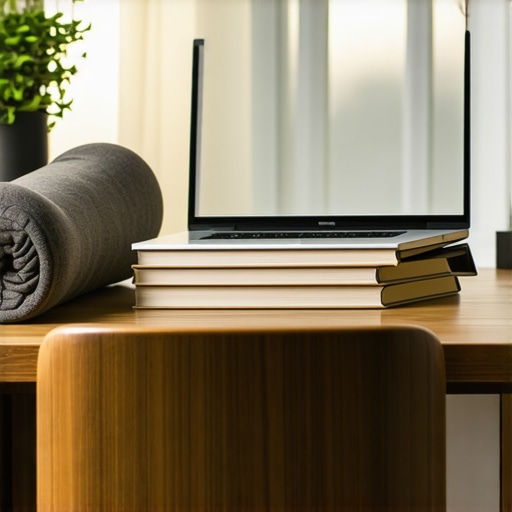
How do I keep these results without becoming a gym rat?
The secret to long-term success is not adding a grueling sixty-minute workout to your schedule every morning. It is about micro-dosing movement throughout the day. I keep a tennis ball under my desk to roll my feet while I am on calls, and I have integrated the simple towel roll trick for better sleep with neck pain because recovery happens while you sleep, not just when you are awake and mindful. Looking ahead, I predict we will see a huge shift toward biofeedback wearables that alert us when our deep stabilizers go to sleep. But until those are perfected, we have to be our own sensors. My challenge to you today: go adjust your monitor height right now. Use a stack of books or a sturdy box if you have to. Follow the 15-degree rule for your computer monitor to save your neck and see if those knots in your upper back do not start to melt away by tomorrow morning.
The Reality Check Most Doctors Miss About Spine Rehab
The most humbling part of my journey was admitting that my “gym strength” was actually masking a “hollow” spine. I had to learn that stability is a conversation, not a competition. One lightbulb moment was realizing that whether is your back pain a sign of something more serious often depends on whether you can control these tiny movements rather than how much weight you can move. Another big shift? Realizing that if I didn’t address the morning habit that prevents your sciatica from flaring up, I was fighting an uphill battle against my own biology all day long. Lastly, I learned that pain isn’t always the enemy; sometimes it’s just a dashboard light telling you that your internal corset is unplugged and needs a reset.
What I Keep Within Arm’s Reach for Daily Relief
You don’t need a medical-grade gym to stay healthy. My personal “spine survival kit” includes a firm lumbar roll, which is essential if you want to know the specific way to use a lumbar roll for maximum relief. I also swear by a simple tennis ball for foot releases and, surprisingly, a second pillow for my legs—though you should check the truth about using two pillows for side sleeping to make sure you aren’t actually twisting your pelvis further. These tools work because they provide the consistent, gentle tactile feedback that your nervous system craves to feel safe. #IMAGE_PLACEHOLDER_E#
Turning Your New Knowledge Into a Pain-Free Reality
Recovery isn’t a straight line, but it is a choice you make every time you sit down or pick something up. By focusing on these mobility mastery daily tips to keep your spine and joints healthy, you are slowly teaching your body that it is safe to move again. Don’t wait for the perfect moment to start; adjust your monitor today and try that one-inch bridge tonight. You deserve to move without that constant “fragile” feeling in your lower back. Have you ever felt like your gym workouts were actually making your back feel more vulnerable instead of stronger? Let me know in the comments below!