
How Chronic Stress Manifests as Physical Back Tension

It was a rainy Tuesday afternoon, and I was hunched over my laptop, trying to ignore the creeping fire in my shoulder blades. I thought I just needed to “sit up straighter.” I even spent a small fortune on one of those ergonomic chairs that looks like a spaceship, thinking it would solve everything. Spoiler alert: it didn’t. I was still waking up with a neck so stiff I had to turn my whole body just to look at the toaster. The “lightbulb moment” finally hit when I realized that every time my inbox pinged, my shoulders hiked up toward my ears like they were trying to hide. My back wasn’t failing me; my stress was physically remodeling my muscles. [image_placeholder_1]
My body was screaming because my mind wouldn’t shut up
I used to think that “stress” was just a vague feeling of being overwhelmed. I didn’t realize it was a physical chemical reaction that creates a “guarding” response in our muscles. When we are under pressure, our sympathetic nervous system kicks into high gear, releasing cortisol and adrenaline. According to the American Psychological Association, chronic stress causes the muscles in the body to stay in a state of constant guardedness. That “guardedness” is why you feel like you’ve been hit by a truck after a long week of meetings. I made the mistake of treating my symptoms with heating pads and ignoring the source, but breaking the cycle of neck pain and stress requires a totally different approach. We aren’t just dealing with weak muscles; we’re dealing with a nervous system that forgot how to hit the “relax” button. Today, we are going to look at how to identify these “stress-tension” points and, more importantly, how to talk your nervous system down from the ledge. Have you ever noticed that your back pain flares up the exact same day you have a big deadline or a difficult conversation?
Is stress-induced pain actually real or just in my head?
It is easy to feel skeptical. We like to think of back pain as something purely mechanical—like a car with a bad alignment. But your body isn’t a machine; it’s an ecosystem. If you’ve been struggling with poor posture and chronic back pain, you know that standing up straight often feels impossible when you’re exhausted. This isn’t a lack of willpower. Your jaw tension might even be the culprit; I’ve found that jaw tension quietly causes upper back knots because the fascia in your face and neck is connected to your spine. The pain is very real, and the inflammation it causes is tangible, even if the “injury” started with a stressful email.
The high cost of ignoring your body’s alarm system
When I first started dealing with this, I tried to “power through.” That was my second big mistake. I assumed that if I just kept moving, the tension would eventually dissipate. Instead, my body started overcompensating. My hips got tight, and I began to wonder if my back pain was a sign of something more serious. The truth is, chronic tension leads to reduced blood flow to the tissues, which makes your spinal discs more vulnerable to injury. If we don’t address the stress, we’re just putting a band-aid on a dam that’s about to burst.To stop that metaphorical dam from bursting, you have to realize that you can’t out-stretch a nervous system that thinks it’s under attack. It’s like trying to reboot a computer while someone is still pounding on the keyboard. I remember trying to ‘stretch out’ a knot in my neck during a particularly stressful Zoom call by pulling my head like I was trying to rip a weed out of the garden. I ended up with a migraine that lasted two days. The lesson? Gentleness is a prerequisite for progress, not an afterthought.
The manual override for your panicked nervous system
The very first thing I had to learn was how to breathe from my belly, not my chest. When we are stressed, we breathe shallowly into our upper lungs, which forces the ‘accessory’ muscles in our neck and shoulders to do work they weren’t designed for. Think of these muscles like small, delicate springs being used to tow a heavy trailer; eventually, they’re going to snap or seize up. I started practicing a simple reset: inhale for four seconds, hold for two, and exhale for six. This longer exhale tells your brain the ‘threat’ has passed. Once that internal alarm stops blaring, your muscles can finally receive the signal to let go.
Why you need to unlock your jaw to save your back
I once spent an entire month wondering why my upper traps felt like concrete. I was doing all the right ‘neck’ exercises, but nothing worked. One morning, I realized I was clenching my teeth so hard my temples throbbed. Since jaw tension is quietly causing upper back knots, you have to address the face to help the spine. Try this: place your tongue on the roof of your mouth and let your teeth hang slightly apart. It feels silly, but it physically prevents your neck muscles from engaging in that ‘guarding’ reflex. To follow up, I highly recommend the 10-second chin tuck to combat tech neck instantly. This isn’t a deep stretch; it’s a subtle realignment that takes the pressure off the nerves at the base of your skull. 
Fix your posture in three seconds flat
We’ve all been told to ‘stand up straight,’ but that usually leads to people puffing out their chests and arching their backs—which actually causes more pain. Instead, I use the Bruegger position to reset my posture. You sit at the edge of your chair, turn your palms outward, and take a deep breath. It’s an ‘open’ posture that reverses the ‘closed’ fetal position we adopt when we’re stressed or stuck at a desk.
Move every twenty minutes or pay the price later
Your body is a hydraulic system, and fluid needs to move to keep the parts lubricated. If you stay static, those tissues start to ‘glue’ together. This is why your body needs micro-breaks every 20 minutes to stay mobile. I used to think I could compensate for eight hours of sitting with one hour at the gym. I was wrong. It’s the frequent, small movements that prevent the chronic stiffness. Integrating mobility mastery tips to keep your spine healthy throughout the day is far more effective than a once-a-week massage. For immediate relief when a meeting runs long, try the 30-second ear-to-shoulder stretch to dump the tension before it travels down into your shoulder blades.But here is where things get tricky. While a quick stretch feels good in the moment, I’ve seen so many people—myself included—fall into the ‘more is better’ trap. We assume that if a little movement helps, then aggressive stretching must be the cure. This is often where the real damage starts. In my experience, the biggest mistake people make is treating their body like a piece of stiff leather that needs to be pulled and yanked, when it is actually more like a sensitive instrument that needs fine-tuning.
Why your hamstrings are lying to you
For years, I was convinced my hamstrings were the problem. They felt like tight guitar strings, so I stretched them every single morning. I didn’t realize that my brain was keeping them tight on purpose to protect a vulnerable lower back. This is a classic ‘defense mechanism.’ When your spine lacks stability, your hamstrings lock up to act as secondary stabilizers. If you force them to relax without addressing the spine, you’re taking away your body’s last line of defense. This is precisely why stretching your hamstrings often makes your sciatica worse. Instead of relief, you end up tugging on the sciatic nerve itself, which is already irritated and inflamed.
Ditch the military-style posture for good
We’ve been conditioned to think that ‘sitting up straight’ means pulling our shoulders back and puffing our chest out. I used to do this during long drives, thinking I was being ‘good’ to my spine. In reality, I was forcing my lower back into an aggressive arch that crushed my facet joints. Research from back biomechanics expert Dr. Stuart McGill shows that maintaining a ‘stiff’ or forced posture actually increases the load on your discs. In many cases, why sitting up straight might be giving you more back pain is because you’re preventing the natural, subtle movements your spine needs to stay lubricated.
Why does my back still hurt even though I am getting stronger?
This is the question that haunts most ‘gym rats’ and fitness enthusiasts. You might be hitting the weights, but you’re likely using the wrong muscles for the job. Many people over-train their outer abdominal muscles while their deep stabilizers remain dormant. If you’re still doing traditional crunches, stop. Why your core strength workout is actually destroying your lower back is often due to the massive repetitive compression those moves put on your lumbar discs. You need a stable pillar, not a bendy straw.
Stop treating your nerves like rubber bands
The final ‘oops’ factor I see constantly is confusing muscle tension with nerve irritation. If you feel a burning or tingling sensation that travels down your leg or arm, you are dealing with a nerve, and nerves hate to be stretched. They prefer to be ‘flossed’ or ‘glided.’ Think of a nerve like a silk thread inside a straw; if it gets stuck, you don’t want to pull the thread—you want to slide it back and forth to clear the debris. Using the nerve-glide exercise that calms burning leg pain is a much more sophisticated approach than a standard hamstring stretch. 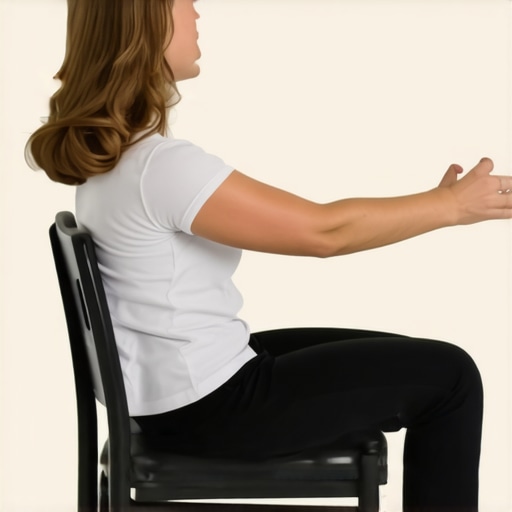 Have you ever fallen into this trap of over-stretching a painful spot only to have it flare up the next day? Let me know in the comments.
Moving beyond those initial mistakes is where the real transformation happens. I spent years thinking I needed a professional to fix me every week, but the game changed when I started building a toolkit for home. You don’t need a thousand-dollar gadget; you need a few targeted strategies. I personally swear by a simple tennis ball. It’s dense enough to provide targeted pressure without the bruising intensity of some high-end massage guns. Learning how to use a tennis ball to release tension in your upper traps saved me from countless tension headaches during my busiest work months. I place it against a wall and lean into the ‘sweet spots’ between my shoulder blades, letting the pressure melt the knots that my keyboard habit creates. This isn’t just about feel-good relief; it is about manual desensitization of the nervous system.
Your bedroom environment is either healing or hurting you
If you are doing everything right during the day but waking up like a folded piece of cardboard, your sleep setup is the culprit. I realized that my expensive ‘luxury’ pillow was actually keeping my cervical spine in a permanent state of flexion. Finding the best pillow height for side sleepers with chronic neck pain was a revelation. It should keep your nose in line with your sternum—not tilted toward the ceiling or tucked into your shoulder. As physical therapist Dr. Kelly Starrett emphasizes in his work on tissue mobilization, our goal isn’t just to stretch, but to improve ‘sliding surfaces’ between tissues. If you’re pinned in a bad position for eight hours, those surfaces get ‘glued’ together.
How do I keep my spine healthy for the next decade?
Maintenance is the secret sauce that most people skip because it isn’t as exciting as a quick fix. Think of your spine like a high-performance engine; you don’t wait for the smoke to start billowing before you check the oil. This is why maintenance care is better than waiting for a spinal crisis. For me, this means a non-negotiable morning routine of ‘spinal hygiene.’ I start with the dead bug exercise to wake up my deep core without straining my lower back. I’m not looking for a six-pack; I’m looking for a bracing system that stays active even when I’m just walking to the kitchen. Consistency beats intensity every single time.

The future of back health is sitting in your pocket
I predict we are heading toward a world where haptic feedback and wearable tech will replace the traditional ‘posture corrector’ braces that don’t actually work. We will have sensors that give a tiny vibration not just when we slouch, but when our muscle activation patterns shift toward ‘guarding.’ Until then, we have to be our own biofeedback loops. Integrating mobility mastery daily tips to keep your spine healthy involves setting a timer on your phone to check in with your body every hour. Is your jaw clenched? Are your shoulders up? Fix it now before it becomes a knot that requires a professional to untangle later. I challenge you to try the tennis ball trick on your traps tonight for just two minutes—you will be shocked at how much lighter your head feels tomorrow. If you’re ready to stop the guessing game and start the healing, let’s keep going.
The Shift That Finally Silenced My Chronic Pain
One thing I wish I’d known years ago is that pain isn’t always an ‘injury’ in the traditional sense. Sometimes, it is just your nervous system sounding a fire alarm because your daily life feels like a burning building. I had to stop looking for a magical therapist to ‘fix’ me and start looking at how I lived. Another lightbulb moment hit when I realized that back pain breakthroughs often happen when you stop fighting your body and start negotiating with it. Instead of forcing a stretch that felt like pulling a rusted chain, I started asking my muscles why they felt the need to protect me in the first place. Lastly, the biggest myth I busted was that I needed hours of exercise. In reality, mobility mastery is built during the two-minute resets you do while the coffee is brewing, not the hour you spend sweating once a week.
Tools That Keep My Spine Happy Every Single Day
You do not need an expensive gym membership or a room full of gadgets to reclaim your life. My personal toolkit is surprisingly simple. First, a firm tennis ball remains the only thing that consistently reaches those deep knots in my traps and glutes. Second, a properly fitted pillow is non-negotiable. I cannot overstate how much neck pain solutions depend on the support you have during your eight hours of sleep. I also rely on ‘nerve flossing’ whenever I feel that familiar zing. If you are dealing with radiating discomfort, finding sciatica relief through expert strategies often involves these gentle neural glides rather than aggressive yoga poses or heavy lifting. I trust these methods because they work with the body’s natural anatomy rather than trying to force it into submission.
Your Body is Waiting for You to Listen
Moving from chronic tension to fluid movement is rarely a linear path. There will be days when you feel stiff again, and that is perfectly okay. The goal isn’t perfection; it is awareness. Every time you choose to take a deep belly breath, unclenching your jaw, or perform a quick chin tuck, you are voting for a future where you move with ease. You deserve to feel at home in your own skin again, free from the weight of constant aches and the exhaustion of ‘powering through.’ Start small, stay consistent, and watch how your body rewards you for finally listening to its alarm. Have you ever noticed your back pain getting significantly worse during a particularly stressful week at work? Let me know your experience in the comments below!