
How to pick a chair that actually supports your lumbar curve
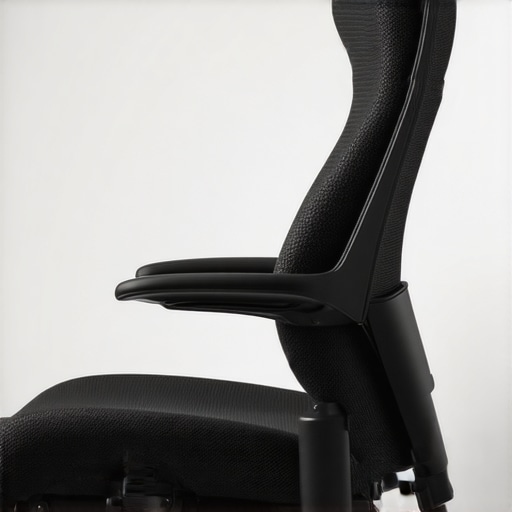
I will never forget the Tuesday afternoon I finally snapped. I was sitting in what I thought was the ‘holy grail’ of office chairs—a sleek, mesh-backed beast that cost more than my first car—and yet, my lower back felt like it was being squeezed in a hot vice. Every time I stood up, I had to do this awkward, half-bent shuffle just to get my legs moving again. It was a wake-up call. I realized that all the fancy features in the world do not mean a thing if they are not hitting your spine where it counts. If you have ever felt that familiar, dull ache creep up your spine after just twenty minutes at your desk, you know exactly what I am talking about. Today, I am going to show you how to cut through the marketing fluff and find a chair that actually respects your natural anatomy, because poor posture is a direct ticket to chronic back pain.
Stop Letting Your Office Chair Crush Your Spine
When I first started focusing on ergonomics, I made the classic rookie mistake: I assumed more ‘bells and whistles’ meant better support. I bought a chair with eighteen different levers, but the seat pan was so deep that it cut off the circulation in my legs and forced my lower back to round out like a C-curve. It was a disaster. According to a study published in the Journal of Physical Therapy Science, sitting for prolonged periods increases the intradiscal pressure in your lumbar spine by up to 40% compared to standing, which is why your desk chair height is likely wrecking your hips and your lower back simultaneously. We are going to fix that. We will look at how to measure your own body to ensure the chair fits you, rather than you trying to fit the chair.
Is an Expensive Gaming Chair Actually Worth the Hype?
You see them everywhere—those bright, bucket-style seats that look like they belong in a race car. But let us be real: are they actually doing your lumbar curve any favors? Most of them are designed for aesthetics over anatomy. If you are already dealing with a flare-up, you might even be wondering if your sciatica is a disc or a muscle issue caused by that very seat. Have you ever bought a chair that looked great but left you feeling like you needed a week-long massage after one workday? I want to hear about your most regrettable furniture purchase in the comments. By the time we are done, you will know exactly how to test a chair’s lumbar support to ensure it provides the daily support your spine and joints need to stay healthy.
Measure the Seat Pan to Save Your Hamstrings
Most people do not realize that the depth of their seat is just as critical as the height. If the seat pan is too long, the edge of the chair will press against the back of your knees, compressing the popliteal artery and nerves. This is a primary reason why your desk chair height is wrecking your hips and causing that restless leg feeling by 3 PM. To find your ideal fit, use the two-finger rule: Sit all the way back against the lumbar support and see if you can fit at least two fingers between the front edge of the seat and the back of your calf. If you can’t, the chair is too big for you. I remember trying to force myself to love a high-end executive chair that was simply too deep for my frame; within a week, my right hip felt like it was being poked with a hot needle every time I stood up. I actually had to use 3 simple moves to stop that sharp pinch in your right hip just to regain my normal walking gait.
Find the Sweet Spot for Your Lumbar Support
Finding the right lumbar placement is like tuning a guitar; if it is slightly off, the whole thing sounds—and feels—wrong. Your lumbar support should fit snugly into the natural inward curve of your lower back, right above your belt line. If it is too low, it pushes your pelvis forward into a slouch; if it is too high, it forces your spine into an unnatural arch. 
Height and Tension: The Dual Keys to Lower Back Relief
Once the height is set, you need to adjust the tension. The chair should offer enough resistance that you can lean back without feeling like you are falling, but it should not be so stiff that you are fighting the chair to stay upright. Think of it as a firm handshake for your spine. Proper tensioning is one of the most overlooked ergonomic tips for everyday comfort. When I finally dialed in the tension on my current setup, the dull throb in my L5-S1 region vanished almost overnight. If you find yourself constantly leaning away from the backrest, your tension is likely too high, and you are missing out on the daily support your spine and joints need to stay healthy.
Align Your Shoulders and Monitor to Kill the Neck Burn
Your chair does not exist in a vacuum; its relationship with your desk determines your neck health. Your armrests should be positioned so your elbows are at a 90-degree angle and your shoulders are completely relaxed—not shrugged up toward your ears. If you feel a burning sensation between your shoulder blades, your armrests are likely too low, forcing your traps to do all the heavy lifting. I spent three months ignoring this, and it resulted in brutal migraines. I had to implement the 30-second neck tuck to stop tension headaches at your desk every hour just to keep my focus. Use how to adjust your monitor to stop that burning neck pain as your secondary checklist: your eyes should hit the top third of the screen when you are looking straight ahead. This prevents the ‘crane neck’ that causes long-term structural issues. Keep moving, because even the best chair cannot replace a 5-minute stretching routine for chronic desk workers.I used to think that if I could just maintain a perfect 90-90-90 angle—knees, hips, and elbows all perfectly square—my pain would vanish. I was wrong. The biggest myth in the ergonomic world is that there is a single ‘perfect’ static posture. In reality, your best posture is your next posture. When we try to hold a rigid position, we actually create more tension. This is exactly why your perfect sitting posture is making you stiffer over time. Your muscles are designed to move, not to act as frozen pillars. Even in a high-end chair, if you do not shift your weight every fifteen minutes, your spinal discs begin to lose their hydration. This is what experts call ‘postural fatigue.’
Why does your back still throb despite the fancy gear?
It usually comes down to the lack of ‘micro-movements.’ A study from Cornell University’s Ergonomics Research Lab suggests that workers should change their position or stand up at least every 20 minutes to maintain spinal health. If you are sitting like a statue, you are effectively starving your discs of oxygen and nutrients. I have seen people invest in the most expensive setups only to find themselves searching for back pain breakthroughs because they forgot the golden rule: movement is medicine. 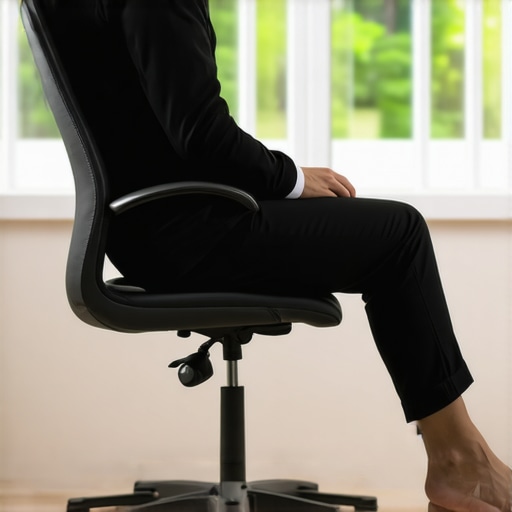
Don’t Fall for the Hamstring Stretching Trap
Here is a specific ‘oops’ factor I see all the time: stretching the hamstrings when you feel a sciatic flare-up. It feels like the right thing to do because your legs feel tight, but if your pain is coming from a disc, you are likely just tugging on an already irritated nerve. This is one of the main reasons why stretching your hamstrings often makes your sciatica worse. Instead of relief, you get more inflammation. If you are confused about the source of that leg pain, it is vital to learn how to tell if your sciatica is a disc or muscle issue before you start cranking on your limbs.
Wake Up Your Glutes to Protect Your Lumbar
Another nuance people miss is ‘dead butt’ syndrome, or gluteal amnesia. When you sit for hours, your glutes essentially go on vacation. Since your glutes are supposed to stabilize your pelvis and support your lower back, their absence forces your lumbar spine to do double the work. This is the primary reason why your glutes are falling asleep and why learning how to wake them up becomes a critical part of your daily routine. If you do not engage those muscles, you will find yourself needing the 10-second hip reset for relief after sitting every single time you stand up. Have you ever fallen into the trap of trying to ‘sit perfectly’ only to end up in more pain? Let me know in the comments below.
I have spent thousands of dollars trying to buy my way out of pain, but the real breakthrough came when I stopped looking for a magic chair and started looking at my maintenance routine. To keep my progress from slipping, I rely on a few specific tools that address the structural imbalances I developed over a decade of desk work. My absolute go-to is a simple, high-density lacrosse ball. Unlike a soft foam roller, which provides a broad massage, a lacrosse ball allows you to pin down the exact trigger points in your piriformis that cause radiating leg pain. This is one of the most effective ways how to use a tennis ball to relieve glute tension and keep your sciatic nerve from becoming compressed by tight muscle tissue. I make it a point to spend five minutes every evening on the floor, specifically targeting the glutes and upper traps, because I know that why maintenance care is better than waiting for a spinal crisis is a lesson you only want to learn the hard way once.
How do I maintain my spinal health over time?
Consistency beats intensity every single time. You cannot sit like a pretzel for eight hours and expect a thirty-minute gym session to undo the damage. I use a software-based timer called Stretchly that forces me to take a twenty-second ‘micro-break’ every twenty minutes. During these breaks, I perform the Bruegger relief position, which was popularized by the late neurologist Dr. Vladimir Janda to combat ‘Upper Crossed Syndrome.’ It is a fast way to reset your posture at work by opening up the chest and activating the deep neck flexors. By integrating these micro-habits, I have found that my ‘end-of-day’ stiffness has dropped by nearly 70%. If you are still struggling, I highly recommend checking out these daily tips to keep your spine and joints healthy to build your own sustainable routine.

Don’t Let Your Standing Desk Become Your Next Problem
About two years ago, I fell into the trap of thinking that if sitting was the ‘new smoking,’ then standing must be the cure. I bought a high-end standing desk and spent six hours a day on my feet. Within a month, my lower back was screaming and my feet were swollen. I learned the hard way why your hips ache after two hours of static standing. The key is to transition slowly and always use an anti-fatigue mat. If you are making the switch, you need to follow a guide on how to transition to a standing desk without leg pain or you will likely trade one type of chronic pain for another. Looking ahead, I predict that we will see a shift toward ‘dynamic workstations’ in 2025 and beyond—desks that use haptic feedback and AI sensors to gently nudge you when your posture begins to collapse. Until those become affordable, we have to be our own advocates for movement. If you want to see a real change today, try the advanced ‘Bruegger Reset’ every time you finish a Zoom call. It is the single most effective way to manage back pain in 2025 while staying productive.
What I Finally Figured Out About Posture Stress
For years, I looked for a miracle in a high-end mesh backrest, but I missed the subtle biological nuances that matter more than a price tag. I realized that sitting for eight hours—even in a ergonomic throne—is still a heavy tax on your nervous system. I had to learn that if I did not address the underlying tension in my tissues, I would always be chasing temporary relief. If you are currently struggling and are not sure where your discomfort is coming from, it is crucial to determine if your back pain is a sign of something more serious or just a side effect of a poor setup. Another huge ‘aha’ moment for me was my wallet; it seems like a small detail, but discovering why your wallet belongs in your front pocket to save your hips was a game-changer for my seated pelvic alignment. Finally, I stopped obsessing over being perfectly ‘straight’ and started obsessing over being ‘fluid’ and adaptable throughout the day.
The Toolkit That Saved My Spine
If you are ready to build your own ergonomic sanctuary, these are the non-negotiable tools I use to keep my body functional. I swear by a high-density tennis ball or lacrosse ball to work out the knots in my glutes; it is far more precise than any broad foam roller for deep tissue release. I also completely overhauled my footwear because why your choice of work shoes matters more than your chair is a fundamental truth of structural support that most office workers ignore. To complement my chair, I added an anti-fatigue mat for my standing intervals to keep the blood flowing in my lower limbs. Lastly, do not underestimate the power of simple grounding at the end of a shift; I have found that how a 5-minute walk barefoot can help your chronic back tension is the perfect way to reset your gait after a long day of intense computer work.
Start Rewiring Your Work Habits Today
Taking control of your workspace is not about achieving static perfection on day one; it is about the small, consistent adjustments that add up to a pain-free life. You do not have to accept a constant throb in your lumbar as a normal part of your career. By prioritizing frequent movement and proper anatomical support, you can finally break the cycle of chronic back pain. Start with just one change today—perhaps it is applying the two-finger rule to your seat pan or performing a Bruegger reset every hour—and build your momentum from there. Your spine is incredibly resilient when you provide it with the right environment to thrive. Which part of your chair setup has been the biggest headache for you lately—the lumbar support placement or the seat depth? Let me know in the comments below.