
How to use a lumbar roll to prevent mid-day back fatigue
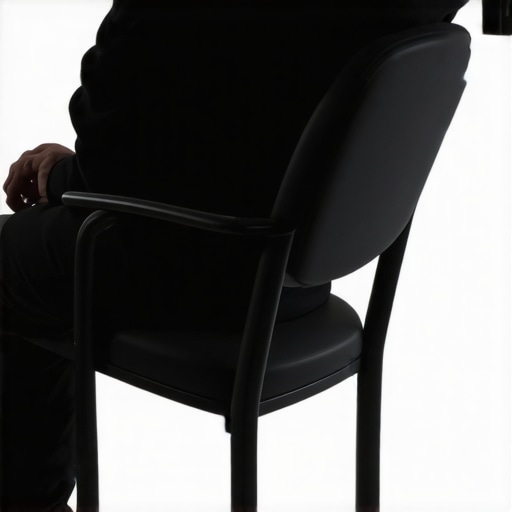
I was three hours into a deep-work session, staring at my monitor, when the familiar, gnawing ache in my lower back started to flare. It wasn’t a sharp pain, but a heavy, draining fatigue that made my brain feel like it was running through mud. I tried the usual tricks: I stood up, I stretched, and I drank another coffee. Nothing worked. For years, I believed that if I just spent enough money on a high-end setup, my problems would vanish. I even obsessively researched how to pick a chair that actually supports your lumbar curve, thinking a thousand-dollar seat was the silver bullet. It wasn’t. The real breakthrough came when I realized that my spine wasn’t failing me; I was failing to support its natural shape during the long haul of the workday. Today, I want to show you how a simple, low-cost lumbar roll can fundamentally change how your back feels by lunchtime. [image]
Why Your Expensive Office Chair Isn’t Saving Your Back
Most of us are taught that sitting up straight is the goal, but why your perfect sitting posture is making you stiffer is a lesson I learned the hard way. I used to sit like a statue, thinking I was doing my body a favor. In reality, I was fatiguing my muscles by forcing them to hold a position they weren’t meant to maintain for eight hours. When we sit, our lumbar spine naturally wants to flatten out or even curve backward into a ‘C’ shape. This puts massive pressure on the discs. According to research published in the journal Spine, intradiscal pressure can increase by up to 40 percent when transitioning from standing to a slumped sitting position. This constant strain is what leads to that deep, mid-day exhaustion. I made the classic mistake of placing my support way too high, right under my ribs, which actually increased my discomfort. By understanding the link between poor posture and chronic back pain, I finally grasped that the support needs to be lower, nestled right in the small of the back to maintain that natural inward curve. Have you ever spent your entire afternoon fidgeting and shifting in your seat because your lower back felt like it was made of lead?
Is This Foam Tube Actually Worth the Hype?
You might be skeptical. I certainly was. It looks like a glorified pool noodle, and it’s hard to believe something so simple can outperform complex ergonomic machinery. But the magic isn’t in the material; it’s in the mechanical advantage it gives your spine. When you use a lumbar roll correctly, it takes the workload off your back muscles and lets the roll do the heavy lifting. This prevents the ‘creep’—that slow stretching of ligaments that happens when you slouch. Integrating this with enhance your back mobility ergonomic tips for everyday comfort is the fastest way I’ve found to reclaim energy you didn’t even know you were losing. We are going to dive into the exact placement and the common traps to avoid so you can finally finish your workday without feeling like you need a week-long nap.
Locate the Sweet Spot in Your Spine
To get this right, you need to find the apex of your lower back’s curve. Think of your spine like a suspension bridge; if the main cables are sagging, the whole structure suffers. The lumbar roll acts as a temporary pillar that holds those cables at the correct height. Most people miss the mark because they place the roll against the chair first and then sit down. This almost always results in the roll ending up too low, pushing on your tailbone, or too high, arching your mid-back. If you’re wondering is your back pain a sign of something more serious, the first thing to check is if this simple mechanical support changes your symptoms. If a roll provides instant relief, your issue is likely postural rather than structural.
The Sit-Back-and-Slide Method
Here is the exact sequence I use every morning to lock in comfort. First, scoot your hips all the way to the back of the chair. You want your glutes touching the backrest. Lean forward slightly, creating a gap between your lower back and the chair. Slide the roll into that gap, positioning it just above your belt line—specifically around the L3 to L5 vertebrae. Now, lean back firmly into the roll. It should feel like a gentle nudge pushing your belly button forward. I remember a grueling four-hour drive through the mountains where I forgot my professional roll. I was desperate and used a rolled-up hoodie instead. It was lumpy and far from ‘ergonomic,’ but by jamming it exactly into that lumbar void, I made it home without the usual leg heaviness. This taught me that the ‘where’ is far more important than the ‘what.’ This concept applies everywhere; for example, you can learn how to use a towel roll to support your neck while watching tv using the same logic.
Don’t Let the Support Drift Up Your Ribs
A common mistake is letting the roll migrate toward your mid-back during the day. When the pressure is on your ribs, you’re not supporting the lumbar curve; you’re actually creating a ‘hinge’ point that can worsen the very issues sciatica relief secrets how to banish pain quickly today aims to fix. If you feel your chest flaring out or your breathing becoming shallow, the roll is likely too high. It should feel nestled, not intrusive. Proper placement helps maintain the space between your vertebrae, preventing the discs from being squished like a jelly donut under a heavy boot.
Combine Support with Active Resets
Even the best lumbar roll isn’t a license to sit for six hours straight. You have to break the static load to keep your tissues hydrated. Every 45 minutes, I perform a quick reset while still using the roll for feedback. I’ll transition into the bruegger position fast way to reset your posture at work. I pull my shoulder blades back and down, turn my palms outward, and take three deep belly breaths. This combo—passive support from the roll and active engagement from the reset—is the secret sauce. This is how you enhance your back mobility ergonomic tips for everyday comfort without having to leave your desk for a full workout. It turns your workstation from a source of strain into a tool for recovery.
Stop Obsessing Over Your Hamstrings
Everyone tells you to stretch your hamstrings when your back feels tight, but in my experience, why stretching your hamstrings often makes your sciatica worse is one of the most overlooked principles in spinal health. We’ve been conditioned to think ‘tightness’ always equals a ‘short muscle.’ However, if your lower back is irritated, your brain might be keeping your hamstrings tight as a protective mechanism to guard the sciatic nerve. When you force a deep stretch in this state, you aren’t lengthening a muscle; you are literally yanking on an inflamed nerve. This is the ultimate ‘oops’ factor for DIY ergonomics. Instead of relief, you trigger more inflammation. This is why I always tell people to focus on the nerve glide exercise that calms burning leg pain, which treats the nerve like a sliding silk thread rather than a guitar string.
Why Does Your Pain Return Even With a Great Ergonomic Setup?
You can have the most expensive lumbar roll and a top-tier chair, yet still feel like your spine is collapsing by 3 PM. This happens because mobility is a full-body chain reaction. A major nuance most people miss is that your back health starts at your feet. I realized that my recurring lumbar tension was actually tied to my footwear. Research in the Journal of Orthopaedic & Sports Physical Therapy (JOSPT) suggests that foot mechanics and ankle stability directly influence the load distribution in the lumbar spine. If your foundation is off, your back has to overcompensate. I started incorporating the daily foot massage habit that relaxes your entire back and noticed that my lumbar roll suddenly became twice as effective. You must mobility mastery daily tips to keep your spine and joints healthy by looking beyond just the spot that hurts.
Don’t Let Your Core Muscles Fall Asleep
Another sophisticated trap is the ‘passive support’ plateau. If you rely 100% on a lumbar roll, your deep stabilizing muscles—like the multifidus and transverse abdominis—simply stop working. This leads to what I call ‘ergonomic atrophy.’ The roll should be a guide, not a replacement for muscle engagement. To combat this, I use the bruegger position fast way to reset your posture at work every hour to wake up those stabilizers. This prevents the ‘creep’ that happens when your ligaments take over the job of your muscles. By unlocking mobility expert tips on managing back pain in 2025, you learn that the best posture is your next posture. Movement is the only true fix for static load. Have you ever fallen into this trap of relying too much on gear and forgetting to move? Let me know in the comments. If you’re struggling to figure out where your specific pain is coming from, you can always contact us for a more personalized strategy.I’ve realized that the tools I use are only as good as the habits they support. For a long time, I thought a standing desk was the ultimate fix. But I quickly learned that standing still for four hours is just as taxing as sitting still. To make it work, I follow a strict 20-8-2 schedule—a method pioneered by the Cornell University Ergonomics Research Lab—where I sit for 20 minutes, stand for 8, and move for 2. This cycle prevents the static load that causes my neck to seize up. If you’re considering the switch, make sure you know how to transition to a standing desk without leg pain, because jumping in too fast will just trade your back pain for sore heels.
Equip Your Workspace to Stay Pain Free for Good
Beyond the lumbar roll, I have invested in a few key pieces of ‘low-tech’ gear that yield high-value results. A footrest is a non-negotiable for me now; it allows me to shift my weight and keep my hips in a neutral position while I work. I also keep a tennis ball under my desk. It sounds crazy, but rolling my feet for sixty seconds while on a call does more for my lower back than most stretches. It’s all part of finding neck pain solutions innovative strategies for fast recovery that fit into a busy life, rather than fighting against it.
How do I maintain my spinal health over time?
Consistency is the hardest part of any recovery journey. I use a simple browser extension called ‘Stretchly’ that forces me to take micro-breaks every 20 minutes. During these breaks, I’m not just checking my phone; I’m performing a quick postural reset or using a foam roller if I’m at home. Learning how to use a foam roller on your neck without injury changed the game for me during those high-stress weeks when my traps felt like rocks. This proactive approach is exactly why maintenance care is better than waiting for a spinal crisis. You want to fix the small leaks before the whole dam breaks. If you’re also dealing with digital fatigue, I highly recommend adopting the 20-20-20 rule for neck and eye strain relief to keep your vision from pulling your head forward into a painful crane position.
Brace Yourself for the AI Posture Revolution
Looking ahead, I predict we will see a massive shift toward AI-integrated clothing and office furniture that provides real-time haptic feedback. Imagine a shirt that gently vibrates the moment your shoulders start to round or your lumbar curve starts to flatten. We won’t have to guess if we’re sitting correctly; our environment will become an active participant in our health. Until that technology is affordable for everyone, we have to be our own sensors. I challenge you to try the Cornell 20-8-2 rule for just one morning tomorrow. It’s the single most effective way to keep your energy high and your spine happy without buying a single piece of new equipment.
What No One Tells You About Sitting for the Long Haul
Reflecting on my journey from chronic stiffness to daily comfort, I realized that hardware is only a small piece of the puzzle. The first big lesson was that my body isn’t a machine; it thrives on variety. Relying solely on a chair—no matter how ergonomic—is like expecting a new mattress to fix a broken leg. You have to participate in your own recovery. I also discovered how chronic stress manifests as physical back tension, making me realize that my tight back was often just a physical shadow of my busy mind. Finally, I stopped waiting for things to get unbearable because I learned why maintenance care is better than waiting for a spinal crisis. Small, daily resets are the only way to stay ahead of the curve.
Gear That Actually Earned a Permanent Spot in My Office
I have tested dozens of gadgets, but only a few stay on my desk year-round. First, a high-density foam lumbar roll is non-negotiable for its consistent support. Second, I keep a simple tennis ball nearby; the daily foot massage habit that relaxes your entire back is my secret weapon for staying loose during long conference calls. I also rely on a foam roller for end-of-day resets, ensuring I know how to use a foam roller on your neck without injury to avoid adding more strain to my upper back. These tools aren’t fancy, but they are effective because they address the root cause of my stiffness.
Take the First Step Toward a Pain-Free Workday
You don’t need a complete office overhaul to start feeling better today. By implementing unlocking mobility expert tips on managing back pain in 2025, you are taking control of your physical well-being. Your spine is incredibly resilient if you just give it the tools it needs to succeed. Don’t let back pain dictate how much work you can get done or how you feel when you finally log off. Have you ever found a DIY fix for your desk setup that worked better than the expensive gear? Let me know in the comments!