
The hidden reason your hamstrings always feel tight
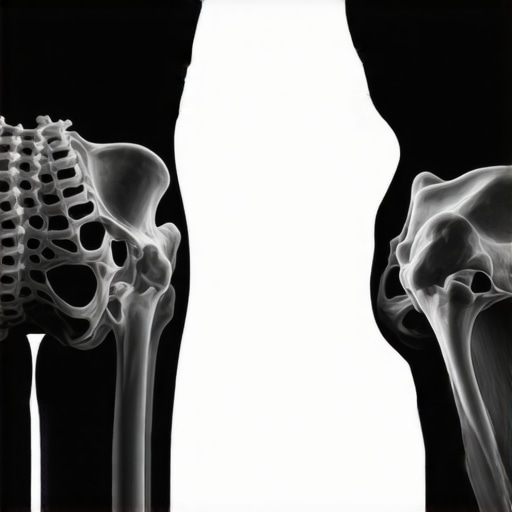
I remember standing in my living room last month, trying to touch my toes after a supposedly relaxing yoga session, and feeling like my legs were made of cured concrete. I had spent years pulling, prodding, and hanging like a piece of laundry, yet the moment I stood up, that familiar, iron-clad grip returned to the back of my thighs. It was a visceral realization: I was fighting a battle I could not win with a yoga strap. Most of us treat our hamstrings like tight rubber bands that just need a good yank, but what if I told you that constant pulling is actually what is keeping them locked up? Today, I am going to show you why your body is hitting the emergency brake and how to finally convince your nervous system to let go.
Your Nervous System is Pulling the Emergency Brake
For years, I made the classic mistake of thinking tight meant short. I would spend thirty minutes a day in deep stretches, only to find that why stretching your hamstrings often makes your sciatica worse became my reality because I was actually irritating my sciatic nerve. You see, your brain is incredibly protective. If it senses instability in your pelvis or spine, it will command your hamstrings to tighten up to act as makeshift cables to hold everything together. It is not a flexibility issue; it is a security issue. Research from the Journal of Manual & Manipulative Therapy suggests that what we perceive as muscle stiffness is often neural tension, where the nerve is not sliding freely through the muscle tissue. When you stretch aggressively, you are not lengthening the muscle; you are just alarming the nerve even further.
Does more stretching actually lead to more flexibility?
I used to believe the hype that more was always better, but it turns out that how to tell if your hip tightness is actually a back issue is the question we should be asking first. If your lower back is struggling, your hamstrings will stay tight to compensate. Have you ever felt like you were doing everything right—drinking water, stretching, using the foam roller—only to wake up the next day feeling like you have regressed?
Why Your Core and Hips are the Real Culprits
We often look at the site of the pain rather than the source of the problem. I wasted so much time focusing on my legs when the real issue was that my hips were completely locked out of their normal range. I learned the hard way that why your core strength wont fix your back if your hips are locked is a fundamental truth of body mechanics. If your pelvis is not moving correctly, your hamstrings are forced to do a job they were not designed for. Instead of just another stretch, we need to look at how to boost your back mobility to give those leg muscles permission to relax. It is about creating a safe environment for your body to move, rather than forcing it into submission. Let us dive into how we can stop the cycle of endless stretching and start addressing the root cause.
Turn Down the Volume on Nerve Irritation
To stop the cycle of constant tightness, you first need to recognize the difference between muscle soreness and nerve irritation. Think of your sciatic nerve like a delicate silk thread running through a narrow tube. If that thread gets snagged, pulling on it only makes the knot tighter. Most people try to ‘stretch’ the knot out, which is why they never get permanent relief. Instead, we use a technique called nerve gliding. This isn’t about length; it is about movement. I remember a time when I was so stiff I couldn’t even put on my socks without a wince. I spent twenty minutes doing intense floor stretches, and by the time I stood up, I was actually more restricted. It wasn’t until I replaced those aggressive pulls with the nerve glide exercise that calms burning leg pain that my body finally stopped fighting me.
How to Floss Your Nerves for Instant Slack
Sit on the edge of a firm chair and slump your shoulders forward. Slowly straighten your right knee while simultaneously looking up at the ceiling. Then, as you bend your knee back down, tuck your chin to your chest. You are effectively sliding the nerve back and forth through the muscle tissue without ever putting it under tension. It feels almost too easy—like you aren’t doing ‘real’ work—but that is exactly the point. You are whispering to your nervous system instead of screaming at it. 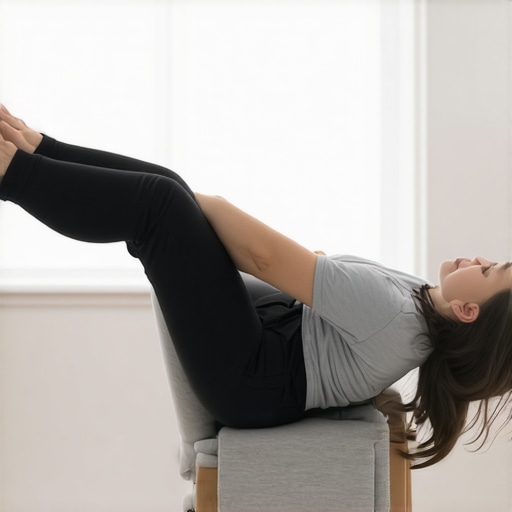
Stop the Pelvic Tug-of-War
Your hamstrings are often tight because they are physically being pulled from the top. If your pelvis is tilted too far forward, it acts like a winch, cranking your hamstrings into a state of permanent tension. No amount of stretching will fix a bone that is out of position. You need to identify how to tell if your leg pain is sciatica or a deep muscle knot before you can properly address this alignment. When I finally focused on my pelvic position rather than my leg length, the ‘tightness’ disappeared in days.
The 10-Second Reset for Better Alignment
One of the most effective tools in my kit is the 10-second hip reset for relief after sitting. Stand with your feet hip-width apart, soften your knees, and tuck your tailbone under slightly while squeezing your glutes. This ‘shuts off’ the overactive hip flexors and allows the hamstrings to finally let go of the rope. I used to do this secretly while standing in line at the grocery store. It looks subtle, but the internal shift is massive. By changing the environment of the muscle, you provide expert strategies for lasting comfort that actually stick long after you leave the gym.Let’s dig deeper into the one thing almost everyone gets wrong: the myth of the “perfect” posture. We are told from grade school to sit up straight, shoulders back, and chin tucked. But in my years of helping people move better, I’ve noticed a disturbing trend. Those who try the hardest to maintain a military-grade posture are often the ones with the most chronic tension. When you force your spine into a static, “ideal” position, you’re essentially asking your muscles to perform an isometric hold for eight hours a day. It’s no wonder why your perfect sitting posture is making you stiffer. Real mobility isn’t about finding a single “right” spot and staying there; it’s about having the freedom to move through all of them.
Does holding a ‘perfect’ posture actually protect your spinal discs?
The short answer is no. A landmark study published in the British Journal of Sports Medicine found that there is no “gold standard” for posture that correlates with a lack of pain. In fact, people who vary their positions frequently—even if they “slump” occasionally—often have healthier spines than those who remain rigidly upright. This is where understanding the link between poor posture and chronic back pain gets nuanced. The problem isn’t the “slouch”; the problem is being “stuck” in any single position for too long. 
The Movement Paradox and the Danger of Pushing Through
One major trap I see advanced movers fall into is the “Oops” factor of stretching into a sharp pinch. I’ve had many clients tell me they were trying to “open up” their hips, only to feel a sharp, electric jolt. They assumed it was just a “good” deep stretch, but that sensation is actually your body’s warning signal that a nerve is being compressed or a joint is at its limit. If you ignore it and “work through the pain,” you’re likely headed toward a disc flare-up or chronic inflammation. You need to know is your back pain a sign of something more serious before you keep pushing your limits.
Why Your Shoulder Pain is a Neck Problem in Disguise
Another common oversight is localized thinking. If your neck hurts, you massage your neck. But often, why your shoulder blade pain is often coming from your lower neck is the real anatomical puzzle. We have to stop treating the body like a collection of separate parts and start seeing it as a single, connected web of fascia and nerves. For instance, back pain breakthroughs often come from surprising places, like releasing your jaw or changing how you carry your bags. The “hidden nuance” is that the site of the pain is rarely the source. Have you ever fallen into this trap? Let me know in the comments.Moving from the crisis phase of back pain into the maintenance phase is where most people drop the ball. We get a little relief, feel a bit of slack in our hamstrings, and immediately return to the same habits that broke us in the first place. I have learned that your environment is much more powerful than your willpower. Instead of relying on your memory to ‘sit up straight,’ you need to curate your space so that movement becomes the path of least resistance. One of the most underrated tools in my personal kit is the simple lumbar roll. I’ve found that learning how to use a lumbar roll to prevent mid-day back fatigue is the easiest way to keep my lower back from flattening out during long hours of deep work. It is not about a fancy chair; it is about maintaining that natural curve without having to think about it.
The Cheap Support Tool You Are Ignoring
We often think we need expensive gadgets, but a rolled-up towel or a fifteen-dollar foam cushion can be the difference between a flare-up and a productive afternoon. If you are a traveler like I am, you know the struggle of economy seats. I always make sure I know how to sit on a plane without triggering a sciatica flare by using my jacket as a makeshift support for my lower back. This tiny shift in ‘spine hygiene’—a term coined by world-renowned spine expert Dr. Stuart McGill in his technical manual Back Mechanic—is what prevents the cumulative micro-trauma that leads to a blown disc. McGill argues that it is the small, repetitive movements we do a thousand times a day that dictate our long-term health, not just our time at the gym. 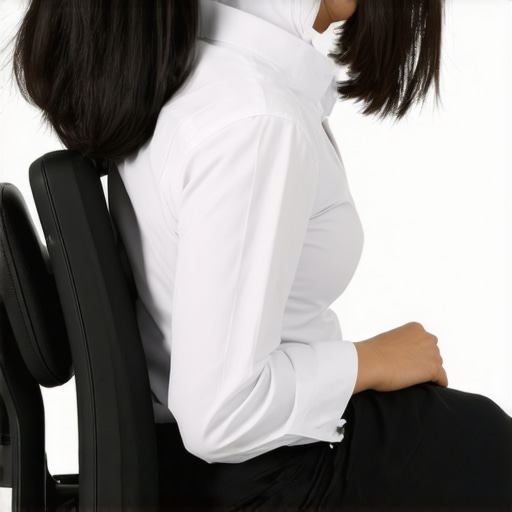
How do I stay pain-free after the initial relief wears off?
Consistency wins over intensity every single time. You cannot undo sixteen hours of stillness with twenty minutes of stretching. I recommend implementing mobility mastery daily tips to keep your spine and joints healthy, which focus on micro-breaks rather than long sessions. I personally use a timer that goes off every forty minutes. When it dings, I do one quick pelvic reset or a chest opener. This keeps the nervous system from entering that ‘protective freeze’ I mentioned earlier.
How to Outsmart Your Environment Every Day
Long-term success also means knowing when to use passive vs. active recovery. For example, knowing how to use heat and ice correctly for a sudden back flare-up can stop a minor twinge from becoming a week-long ordeal. Ice is for the ‘fire’ of new inflammation; heat is for the ‘rust’ of chronic stiffness. In the coming years, I predict we will see a massive shift toward wearable biofeedback devices that vibrate when your pelvis tilts out of neutral or your neck cranes forward too far. We are moving away from ‘fixing’ pain and toward real-time prevention. I want you to try one thing today: next time you are sitting for more than thirty minutes, place a small roll behind your lower back and see how much lighter your legs feel. It’s a game changer for realizing why maintenance care is better than waiting for a spinal crisis.
What My Body Taught Me on the Living Room Floor
Looking back at my years of frustration, there are a few lightbulb moments that changed everything for me. First, I realized that my body wasn’t tight because it was weak; it was tight because it was terrified. Safety is the precursor to flexibility. If your brain doesn’t feel stable, it will never let your muscles relax. Second, I learned that how to tell if your sciatica is a disc or muscle issue is the most important piece of data you can have; without it, you are just guessing. Finally, I stopped chasing perfect and started chasing variety. The best posture is always your next posture.
The Daily Toolkit That Keeps Me Moving
I don’t believe in magic pills, but I do believe in the right tools. I always keep a copy of Stuart McGill’s Back Mechanic nearby; it is the definitive guide for anyone serious about back pain breakthroughs. For my daily desk setup, I never work without a simple lumbar roll, and I have found that the simple reach and rotate move for mid back stiffness is the quickest way to reset my spine between meetings. I also carry a tennis ball in my bag for those moments when my glutes start to lock up after a long drive. These are not just gadgets; they are my insurance policy against a relapse. #IMAGE_PLACEHOLDER_E#
You Are Not Broken You Are Just Adapting
It is easy to feel like your body is failing you when you are in pain, but the truth is your body is incredibly smart. It is simply adapting to the environment you have given it. By shifting your focus from fixing a muscle to calming a nervous system, you open the door to unlocking sciatica relief that actually stays. You do not need to be an elite athlete to move well; you just need to start listening to the whispers before they become screams. If you ever feel overwhelmed or need a customized plan, do not hesitate to contact us to get back on the right track. Your journey to better mobility starts with a single, gentle shift.
Have you ever tried a nerve glide before, or are you still stuck in the aggressive stretching phase? Let me know your experience below!