
Why your core strength won’t fix your back if your hips are locked
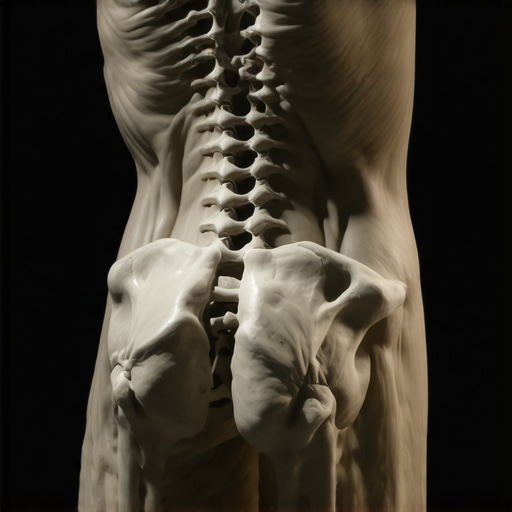
I was three sets into a grueling plank routine, sweat dripping off my nose, thinking I was doing everything right. My abs felt like granite. Yet, the moment I stood up to reach for my water bottle, a familiar, biting pinch shot across my lower lumbar. It was a humiliating realization. I had the ‘strength,’ but I still couldn’t move like a normal human being. For years, I made the mistake of over-bracing my midsection, thinking that more tension was the answer to my chronic back pain. I was wrong. If your hips are locked up tighter than a bank vault, that core strength you’re building is just adding pressure to a spine that has nowhere to go. Today, we’re going to look at the mechanical ‘why’ behind this frustration and how to actually free your spine by addressing the foundation first.
Your Abs Can’t Help a Frozen Foundation
The human body is a masterpiece of compensation. When one joint doesn’t do its job, the next one in line tries to be the hero. Your hips are designed to be mobile, swinging and rotating to absorb the impact of every step you take. But if they are glued shut from years of sitting at a desk, your lower back is forced to do the moving instead. I spent so much time trying to ‘stabilize’ a spine that was already overworking because my hips were completely offline. You can do all the dead bugs in the world, but if you don’t address how to tell if your hip tightness is actually a back issue, you’re just bracing a bridge that’s built on shifting sand. According to research published in the Journal of Physical Therapy Science, limited hip range of motion is a primary contributor to lumbar spine dysfunction because it alters the way the pelvis tilts during basic movements. This creates a ‘tug-of-war’ where your spine always loses. Have you ever felt like your back was getting tighter the more you focused on your core?
Is core strength just a marketing myth for back relief?
It’s not a myth, but it is half the story. The ‘core’ isn’t just your six-pack; it includes the muscles that connect your legs to your torso. When I finally stopped obsessing over planks and started using the 10-second hip reset, the pressure in my spine finally started to dissipate. We often confuse ‘stiffness’ with ‘stability.’ True stability requires the ability to move through a full range of motion without the body panicking. If you’re constantly feeling a burning leg pain or a dull ache in your sacrum, your core isn’t failing you—your hips are simply holding your spine hostage. We need to stop trying to strengthen our way out of a mobility problem. Let’s dive into how these two areas interact and why your current routine might be the very thing keeping you stiff.
Stop Bracing and Start Rotating
To fix the mechanical tug-of-war in your body, you have to stop treating your spine like a rigid pillar and start treating your hips like a well-oiled hinge. Think of your pelvis as a bowl of water. If that bowl is tilted too far forward because of tight hip flexors, the water spills out the front, and your lower back arches into a painful crunch. Most people try to fix this by ‘squeezing’ their abs, which just traps the spine in a compressed state. Instead, you need to address the muscular ‘guy wires’ pulling the bowl out of alignment. I remember a Tuesday afternoon when I tried to ‘power through’ a series of deep lunges, thinking I was helping my back. Instead, I felt a sharp, familiar zing down my leg. It happened because I was stretching my hip but letting my lower back take all the extension. I wasn’t actually moving my hip; I was just bending my spine at a dangerous angle. When I finally implemented the 5-minute hip flexor release for desk workers, I realized that I didn’t need more ‘strength’—I needed to stop my psoas from pulling my vertebrae into the basement. 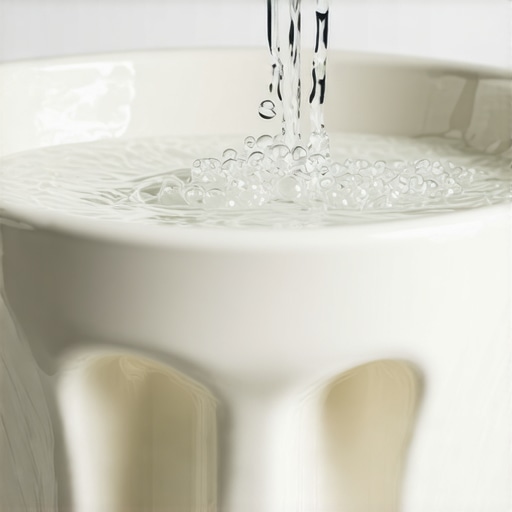
Why your hamstrings aren’t actually tight
We’ve all been there: reaching for our toes, feeling that pull, and assuming our hamstrings are the problem. But often, those muscles are just screaming because they are being stretched thin by a pelvis that is tilted too far forward. If you keep stretching them without fixing your pelvic position, you’re just making the nerve irritation worse. In fact, why stretching your hamstrings often makes your sciatica worse is a lesson I learned the hard way after weeks of ‘rehab’ that only left my legs feeling like they were on fire. The hamstrings are trying to stabilize your pelvis because your glutes have ‘turned off’ from too much sitting.
Find your neutral pelvis without a mirror
You don’t need a physical therapist standing over you to find a safe position for your spine. Try the 3-second pelvic reset you can do while waiting in line. It’s about a subtle shift in weight, moving from your toes to your heels and tucking your ‘tail’ just enough to feel the tension leave your lumbar. When you find that sweet spot, you’ll notice that you can breathe deeper into your belly. If you’re constantly ‘bracing’ for impact, you’re likely holding your breath, which increases internal pressure and can lead to a disc flare-up.
Move like a hinge not a folding chair
When you pick up something from the floor—even something light like a laundry basket—your spine should stay relatively still while your hips do the heavy lifting. Most of us bend at the waist like a cheap folding chair, putting the entire load on the L5-S1 disc. To protect yourself, focus on the one hip stretch that relieves pressure on the l5-s1 disc to regain the range of motion needed to hinge properly. By shifting the work to the glutes and hamstrings, you allow the core to act as a stabilizer rather than a primary mover. Stop the habit of pulling your knees to your chest for back relief, as this often just creates more flexion-based instability in the long run.
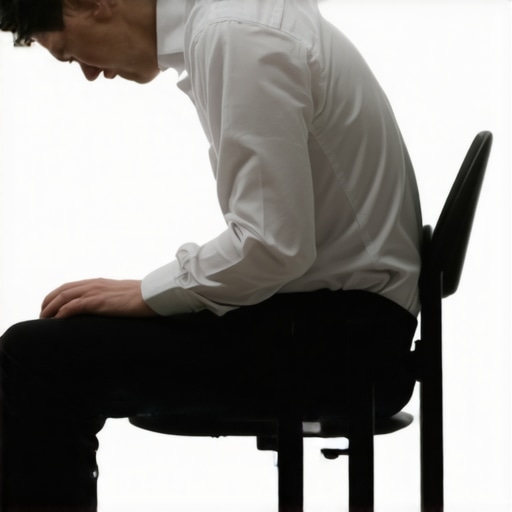
The biggest lie we’ve been sold is that there is a ‘perfect’ posture you can maintain for eight hours straight. We’ve all seen the ergonomic diagrams—back at 90 degrees, knees at 90 degrees, chin tucked—but in reality, why your perfect sitting posture is making you stiffer is because the human spine is designed for movement, not fossilization. When you try to hold a ‘perfect’ position, you’re just engaging in a low-level isometric contraction that starves your discs of oxygen and blood flow. True back pain breakthroughs happen when you realize that your ‘best’ posture is actually your next posture.
Sitting up straight is actually exhausting your spine
In my years of troubleshooting spinal issues, I’ve found that people who try the hardest to sit ‘right’ often have the most sensitive nervous systems. They are constantly bracing, which creates a massive amount of internal pressure. A study published in the Journal of Biomechanics found that static loading—even in an ‘optimal’ alignment—leads to faster disc dehydration compared to dynamic, varying movements. If you’re not shifting your weight every fifteen minutes, you’re essentially slowly squeezing the water out of your spinal sponges. The trap is thinking that a better chair will solve a lack of movement. It won’t. You need to break the cycle of rigidity to find lasting relief.
Stop stretching your sciatica until you know the source
Here is a hard truth: you cannot stretch a nerve. Nerves do not have the elastic properties of muscles; they are more like silk threads. If your leg pain is coming from a disc bulge, common ‘glute stretches’ or hamstring pulls are actually just yanking on an already inflamed nerve root. This is why stretching your hamstrings often makes your sciatica worse—you’re basically rubbing a raw nerve against a bone. I’ve seen countless patients enter a ‘rehab loop’ where they feel a temporary relief from the endorphin rush of a stretch, only to wake up the next morning in a full-blown flare-up. You must differentiate between a muscle that is short and a nerve that is irritated before you reach for your toes. If you are experiencing numbness or weakness, it is vital to know is your back pain a sign of something more serious before continuing any home exercise routine.
Can your vision be the real reason your neck hurts?
We rarely look above the shoulders when troubleshooting the spine, but the body is an integrated system. If your eyes are struggling to focus or if you have an unaddressed astigmatism, your suboccipital muscles at the base of your skull will overwork to ‘steady’ your head for your eyes. This creates a cascade of tension that travels all the way down to your sacrum. Similarly, the connection between your jaw tension and your constant headaches cannot be overstated. If you clench your teeth because of stress, your neck muscles never get a chance to relax, which pulls your entire upper cross into a state of dysfunction. When we look at neck pain and stress, we have to address these ‘upper’ inputs to free the lower spine. Have you ever fallen into this trap of over-focusing on the spot that hurts while ignoring the eyes or jaw? Let me know in the comments. Let’s look deeper into how these micro-tensions dictate your macro-movements.
I’ve wasted thousands on ergonomic chairs that promised a miracle but only delivered a slightly more comfortable way to be stiff. Real maintenance happens with simple, intentional tools, not fancy upholstery. I personally swear by a standard lacrosse ball for myofascial work. It’s much denser than a tennis ball, allowing you to pin down the exact origin of a muscle knot without it collapsing. When you’re trying to figure out how to tell if your leg pain is sciatica or a deep muscle knot, this $5 ball is your best diagnostic tool. If the pressure on the muscle releases the leg pain, you’ve found a trigger point; if it makes the pain zing like an electric shock, you’re on the nerve and need to back off immediately.
The Low-Tech Tools That Beat High-End Chairs
The secret to staying mobile isn’t in a single session but in the tools you keep within arm’s reach. I keep a firm roller by my desk specifically to use how to use a foam roller on quads to relieve back pressure. Most people roll their lower back, which is a mistake; rolling the quads and hip flexors is what actually releases the tension pulling on your lumbar. For the upper body, I rely on how to use a tennis ball to release tension in your upper traps. It’s about creating a ‘spinal hygiene’ routine that fits into your life rather than disrupting it. According to the Journal of Bodywork and Movement Therapies, self-myofascial release can significantly increase joint range of motion without decreasing muscle force, making it an essential pre-work ritual for anyone at a desk.

How do I maintain my mobility results for years?
Long-term success is built on why maintenance care is better than waiting for a spinal crisis. You wouldn’t wait for your car engine to seize before changing the oil, yet we do this with our spines constantly. To keep your results, you must integrate mobility mastery daily tips to keep your spine and joints healthy into your subconscious habits. This means using how to use a lumbar roll to prevent mid-day back fatigue every time you sit for more than twenty minutes. In the coming years, I predict we will see a massive shift toward wearable biofeedback sensors that vibrate when your pelvis tilts out of a safe range, but until that technology is perfected, you are your own best monitor.
You have to be proactive about your environment. I modified my kitchen because I realized I was twisting my spine dozens of times a day just to reach the dishwasher. Learning how to use a step stool to save your lower back in the kitchen sounds trivial, but it eliminates the micro-traumas that lead to a massive flare-up. If you want to scale your progress and really bulletproof your back, start using the wall sit modification that strengthens your lower spine. This specific move builds the endurance your postural muscles need to hold you up when you get tired at the end of a long day. Don’t wait for the next ‘pinch’ to take action—grab a lacrosse ball and spend five minutes on your glutes today using how to use a tennis ball to relieve glute tension to feel the difference immediately.
The Missing Link in My Personal Recovery Journey
For a long time, I believed that if I just worked hard enough, my body would eventually comply. I treated my spine like a mechanical project rather than a living system. One of the biggest realizations I had was that chasing the site of pain is a fool’s errand. If your knee hurts, look at the hip; if your back hurts, look at the feet. My own back pain breakthroughs didn’t come from a gym; they came from learning how to relax. I had to realize that ‘trying’ to have good posture was actually my biggest obstacle. You can’t force a nervous system to feel safe through sheer willpower.
- Bracing is not stability; true stability is the ability to adapt to change.
- Your breath is the best diagnostic tool you own—if you can’t breathe deeply, you’re likely over-compressed.
- Small, daily shifts in how you move are 100x more effective than one long session at the end of the week.
My Personal Toolkit for Spine Resilience
You don’t need a thousand-dollar chair to fix a movement problem. I rely on a few high-value items that have earned their place in my daily life. First, the lacrosse ball is non-negotiable for targeting deep knots that a foam roller simply can’t reach. It’s the fastest way to achieve lasting comfort from sciatica by releasing the piriformis. Second, I recommend a simple firm lumbar roll; it’s a low-cost way to ensure you’re not slouching during those long Zoom calls. Finally, I always suggest using the 30-second ear-to-shoulder stretch throughout the day to prevent upper body tension from migrating down. These tools aren’t just gadgets; they are reminders to stay conscious of your alignment.
#IMAGE_PLACEHOLDER_E#
Start Reclaiming Your Freedom Today
The journey back to a pain-free life isn’t a straight line, but it is entirely possible. You don’t have to live with the fear that a single wrong move will put you on the floor. By focusing on mobility first and layering in proven techniques to regain your range of motion, you are building a body that can handle the demands of real life. Remember, your spine is a bridge, and your hips are the foundation. Treat the foundation well, and the bridge will stand strong for decades. Have you ever felt that your back pain actually started somewhere else, like your hips or even your neck? Let me know in the comments below!