
The Kitchen Hack That Stops Lower Back Aches While Prepping Dinner
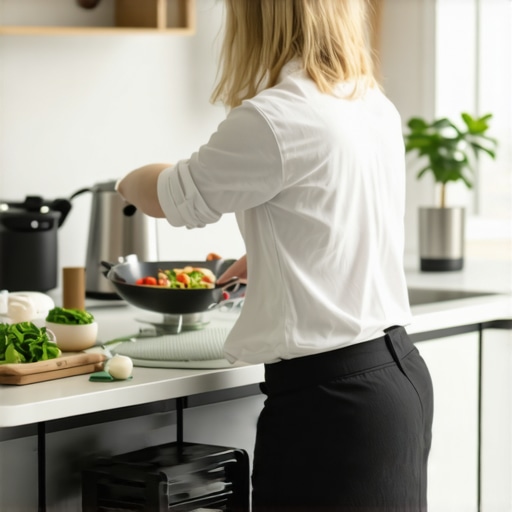
It’s frustrating, isn’t it? Standing in the kitchen, chopping vegetables or stirring sauces, and suddenly, that familiar dull ache in my lower back surfaces—sometimes sharp enough to make me rethink whether I should just sit down and give up. I used to dismiss it as part of aging or the price I paid for loving to cook. But one day, during a particularly intense meal prep, I realized this discomfort wasn’t going away—it was getting worse. That lightbulb moment made me question: Could there be a way to cook without that relentless back pain?
Discovering a Game-Changer: Pain-Free Dinner Preparation
After countless trials and errors, I finally stumbled upon a simple yet effective hack that transformed my cooking experience. It wasn’t about expensive lumbar supports or drastic lifestyle changes; it was a small adjustment to my stance and the way I approached my kitchen routine. This change not only alleviated my pain but also made meal prep more enjoyable and pain-free.
Is Your Back Pain Just Normal, or Is Something Else Going On?
Early on, I made the mistake of ignoring the signs—thinking pain was inevitable when standing for extended periods. That was a mistake. Medical studies have shown that persistent lower back discomfort could be an early sign of underlying issues like poor posture or muscle imbalances, which can worsen if unchecked. If you’ve faced similar struggles, it’s worth exploring solutions tailored to your needs. A simple change in your kitchen posture can be a first step towards lasting relief, and I’ll show you exactly how in the next sections.
Adjust Your Standing Posture During Cooking
Start by aligning your feet shoulder-width apart, distributing your weight evenly. Think of your body as a sturdy tree; roots (your feet) are firmly planted, preventing wobbling. I recall a day when I finally consciously spread my weight before chopping; the relief was immediate. Keep your knees slightly bent, not locked, to reduce pressure on your lower back.
Use Kitchen Supports to Ease Strain
Leverage tools like a sturdy kitchen stool or anti-fatigue mat to avoid prolonged standing. I placed a cushion on a step stool, allowing me to switch between sitting and standing. This micro-adjustment reduced my back fatigue significantly, especially during long meal prep sessions.
Position Your Work Surface Correctly
Ensure your countertop height allows your elbows to be at a 90-degree angle. Think of your body as a puppet: the arms should move freely without elevating or drooping. I set my prep area to waist level, which eliminated the constant hunching that caused my neck and back discomfort.
Incorporate Movement Breaks
Pause every 15-20 minutes to stretch or walk around. For example, I did a quick shoulder roll or gentle torso twist—these mini-movements prevent muscle stiffening and improve circulation. Remember, holding a static position for too long is like a rubber band stretched to its limit—eventually, it weakens or snaps.
Practice Proper Lifting Techniques
When lifting heavy pots or ingredients, squat down with your hips back, rather than bending at the waist. Visualize picking up a heavy box: brace your core, keep your back straight, and lift with your legs. One messy day, I tried to lift a heavy bag without bending my knees; the resulting sharp pain taught me to prioritize my posture.
Strengthen Supporting Muscles Regularly
Engage in exercises that target your core, glutes, and back muscles. Think of these muscles as the scaffolding supporting your spine. Regularly, I included gentle planks and hip bridges in my routine, which built resilience and reduced recurring pain episodes. Better still, you can incorporate simple daily movements to reinforce this support.
Be Mindful of Ergonomic Adjustments
Use ergonomic tools like supportive shoe insoles, lumbar cushions, or adjustable chairs when possible. I experimented with a lumbar roll on my kitchen stool, which maintained my spine’s natural curve. This small tweak provided comfort that lasted through hours of cooking.
Manage Stress to Reduce Muscle Tension
Incorporate breathing exercises or brief meditation breaks to relax muscles that tend to tense up. During a particularly stressful cooking marathon, I practiced deep diaphragmatic breathing, which helped release tension and prevented my back from tightening up.
Implementing these concrete steps can significantly change your cooking experience by reducing back discomfort. Remember, every body is different; if your pain persists,consult a specialist for tailored guidance.
Many people believe that targeting just one aspect, like stretching or strength training, will fully resolve their mobility issues or pain. However, this oversimplification ignores the complex interplay of factors such as posture, muscle imbalances, and nerve health. For instance, a common myth is that “sciatica” always stems from a herniated disc, when in reality, nerve compression can result from tight muscles or joint restrictions elsewhere along the nerve pathway. Recognizing this nuance can prevent unnecessary surgeries or treatments that address only symptoms, not root causes. Additionally, many fall into the trap of believing pain is always a sign of damage; in fact, pain can be due to inflammation, nerve sensitivity, or subtle misalignments, which often require advanced assessment. An often-overlooked detail is the importance of proper load management: over time, repetitive micro-stresses on your spine can compound, leading to chronic pain even without acute injury. Studies, such as those referenced in expert research, show that a holistic approach focusing on movement variability and muscle balance outperforms isolated stretching or strengthening.
Be cautious of the common trap where people solely focus on strengthening muscles without addressing mobility restrictions or joint limitations. This mismatch can lead to compensations that exacerbate pain or cause new issues. For example, strengthening the core without improving thoracic mobility might increase lumbar stress during daily activities. It’s also a mistake to neglect the importance of nerve health; nerves require proper hydration, gliding mobility, and load distribution, as discussed in comprehensive guides.
For advanced insights, considering biomechanical analysis can reveal hidden causes of recurring pain. Sometimes, structural asymmetries or habitual postures create long-term stress patterns that aren’t obvious without detailed evaluation. Moreover, emerging research emphasizes the role of neuroplasticity—the nervous system’s ability to adapt—to retrain pain responses through targeted movement therapy. These advanced strategies can significantly improve outcomes, especially when combined with ergonomic modifications and load management techniques.
Remember, effective pain management isn’t purely about quick fixes; it’s about understanding the intricate and often surprising nuances of your body. Take the time to explore these deeper factors, and you might unlock lasting relief. Have you ever fallen into this trap? Let me know in the comments.Maintaining mobility and managing pain over the long term requires reliable tools and intentional routines. I personally swear by a few key pieces of equipment that have transformed my daily habits and helped me sustain results. For example, a high-quality foam roller has become an indispensable part of my recovery arsenal. I use the 36-inch PVC foam roller because of its firmness and durability, which allows me to target deep tissue trigger points effectively. It’s especially useful for relieving sciatic nerve irritation and tightening muscles that pull on my lower back. You might want to explore this approach in detail through these insights. Additionally, I rely on resistance bands for mobility drills that strengthen supporting muscles without overloading my joints. Bands with light resistance (around 10-15 pounds) are perfect for gentle but effective exercises that prevent chronic stiffness. Pairing resistance bands with guided routines from apps like ‘ROMWOD’ has allowed me to track progress and stay consistent. Looking ahead, I predict that personalized, app-driven mobility programs integrated with wearable sensors will become more common, providing real-time feedback and tailored adjustments.
So, how do I maintain my mobility tools over time? Regularly cleaning and inspecting my foam roller prevents dirt buildup and maintains firmness. I also keep my resistance bands from snapping by replacing them every 6-12 months or sooner if signs of wear appear. Setting a weekly routine—using the foam roller after workouts and resistance bands during my morning mobility stretch—ensures these tools are part of my ongoing maintenance. Integrating these simple but effective tools can dramatically reduce the risk of setbacks and long-term discomfort.
If you’re looking to take your routine up a notch, I highly recommend incorporating a guided self-massage using a tennis ball. This technique targets hard-to-reach knots, especially along your sciatic pathway, and can be easily done during breaks. An excellent resource detailing this method is this guide. Regularly using tools like foam rollers, resistance bands, and self-massage balls can support your body’s resilience and adaptability. Remember, consistent maintenance is key to preventing pain from becoming a chronic obstacle. By committing to these tools and routines, you’ll keep your back, neck, and hips functioning smoothly for years to come. Ready to troubleshoot lingering discomfort or improve mobility? Try the tennis ball self-massage today and notice the immediate relief it brings.Throughout my journey to conquer persistent back pain, I uncovered some surprising lessons that many overlook. One of the most powerful insights was realizing that quick fixes often mask deeper issues, and true relief requires addressing the root causes like muscle imbalances and posture habits. I learned that compartmentalizing solutions—focusing solely on stretching or strengthening—can be counterproductive. Instead, integrating mobility, stability, and nerve health strategies creates a harmonious approach. Also, understanding that pain isn’t always a sign of damage, but often a signal of imbalance or inflammation, changed how I responded to discomfort, shifting from avoidance to proactive management. These lessons transformed my perspective and ultimately led me toward a sustainable, pain-free lifestyle.