
Why your shoulder blade pain might be a rib out of place
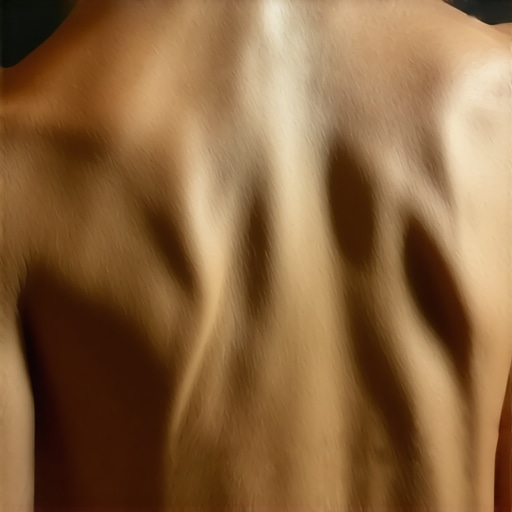
I remember the morning it happened. I reached for my morning coffee, and—bam—a sharp, electric jolt shot right under my right shoulder blade. I froze. It felt like someone had driven a tent stake through my back. For years, I’d dealt with tight shoulders, but this was different. I spent the next three days trying every stretch for mid-back stiffness I knew, yet the pain only got angrier. I thought it was a simple muscle knot. I was wrong. What I didn’t realize back then was that my ribs—those 24 curved bones meant to protect my lungs—can actually get ‘stuck’ or slightly displaced where they meet the spine. If you’ve ever felt like you can’t take a deep breath without a stabbing sensation, you’re likely dealing with a rib issue. Today, I’m going to help you identify if your pain is structural or muscular so you can finally stop the guessing game.
That Nagging Knife in Your Shoulder Blade Isn’t Just a Knot
Early in my journey, I made a massive mistake: I thought more pressure was always the answer. I laid on a hard lacrosse ball and tried to ‘mash’ the pain away. If you’ve ever tried to use a tennis ball to release tension, you might have noticed that sometimes it works, but other times it leaves you feeling bruised and inflamed. That’s because you can’t roll out a joint that isn’t sitting right. When a rib isn’t gliding correctly, the surrounding muscles go into a protective spasm. It’s your body’s way of keeping things from getting worse, but it feels like a constant, throbbing misery. Often, this burning sensation between your shoulder blades is just the symptom, not the cause.
Is it possible for a bone to just ‘pop’ out like that?
Skepticism is healthy. You might think that if a rib were out of place, you’d be in the emergency room. However, we aren’t talking about a full dislocation like a shoulder popping out of its socket. We’re talking about a minor misalignment or a ‘subluxation.’ According to researchers in the Journal of the American Osteopathic Association, rib cage restrictions often mimic more serious issues, including pleuritic chest pain, because of how closely they are tied to our breathing mechanics. It’s a mechanical glitch, not a medical catastrophe, but it requires a mechanical fix.
Why You Can’t Just Stretch Your Way Out of This
If the rib is slightly misaligned at the costovertebral joint, your muscles will ‘guard’ the area. You can stretch your rhomboids until you’re blue in the face, but if the rib isn’t seated properly, the muscle will stay tight to protect you. Sometimes, shoulder blade pain comes from your lower neck, but when it’s a rib, the pain is usually localized and sharp during movement. Have you ever felt a sharp pinch when you sneeze or cough? That’s the hallmark sign. Instead of aggressive stretching, we need to focus on mobility. For instance, a 30-second wall slide can sometimes provide more relief than an hour of deep tissue massage because it encourages the joint to move through its natural range. Have you been told you just have bad posture when it feels more like a structural emergency? I’d love to hear if you’ve experienced that sharp, ‘stuck’ feeling before.
How to Tell if Your Ribs are Truly Stuck
If you want to stop guessing, you need to test the mechanics of your rib cage. Take a deep, diaphragmatic breath. Does the pain sharpen at the very top of the inhale? Now, gently rotate your torso to the left and right. If one side feels like it hits a literal wall while the other moves freely, you aren’t just dealing with a tight muscle. You are experiencing a mechanical block. When this happens, your brain interprets the movement as a threat, which is why you feel a sharp pinch in your back when you sneeze or cough—the sudden pressure is too much for the restricted joint to handle.
Stop Attacking the Knot
Most people go straight for the foam roller, but that’s like trying to fix a jammed door by sanding down the wood. The door is crooked on its hinges; sanding it won’t help. Instead of aggressive rolling, try to boost your back mobility through controlled, gentle movement. #IMAGE_PLACE_HOLDER_B#
Why Your Chest is Actually Pulling Your Back Out of Place
We often focus on where it hurts, but the culprit is usually on the opposite side. If you spend your day hunched over a laptop, your pectoral muscles become short and tight. This creates a forward pull that stresses the costovertebral joints where the ribs attach to your spine. There is a direct link between tight pecs and constant shoulder aches that many people overlook. To fix the back, you often have to release the front.
My Failed Attempt at Self-Correction
I’ll never forget the time I tried to ‘self-adjust’ by throwing myself over the back of a wooden kitchen chair. I heard a loud pop and thought I’d fixed it. Within an hour, my entire mid-back had seized up so badly I couldn’t drive. I had forced a joint that was already irritated, causing a massive inflammatory response. That was the day I realized that how chronic stress manifests as physical back tension can’t be solved with brute force. I had to learn to coax the rib back into its rhythm rather than demanding it.
The Gentler Way to Unstick Your Mid-Back
To get that rib gliding again, you need to combine breath with rotation. Start with the simple reach and rotate move for mid-back stiffness. This isn’t about how far you can go; it’s about feeling the ribs expand and contract like an accordion. As you rotate, inhale into the tight spot. This internal pressure from your lungs acts like a gentle ‘reset’ from the inside out. If you’re stuck at a desk, you can also use the Bruegger position to periodically open your chest and take the strain off those posterior joints.
Re-patterning Your Movement
Once the sharp pain subsides, you have to address the underlying cause: understanding the link between poor posture and chronic back pain is vital. If you go right back to slouching, that rib will pop right back out. Try incorporating the thoracic bridge move that fixes slouching into your morning routine. It builds the functional strength required to keep your rib cage open and resilient, ensuring that a simple morning coffee reach doesn’t turn into another week of misery.We’ve all been told that if something is tight, we should stretch it. But here is the professional secret: “Tightness” is often a neurological brake, not a physical limitation. When I see clients who have been struggling with a “stuck” rib or a persistent ache, they’ve usually spent months trying to boost your back mobility with traditional static holds. The truth is, why your perfect sitting posture is making you stiffer is because it lacks variability. Your spine doesn’t want to be a rigid pillar; it wants to be a dynamic spring. If you’re constantly forcing yourself into a “military straight” position, you’re actually starving your spinal discs of the movement-based nutrition they need.
Can your nervous system actually “learn” to stay in pain?
The answer is a resounding yes. A study published in the Journal of Orthopaedic & Sports Physical Therapy (JOSPT) highlights that chronic pain often involves “central sensitization,” where the nervous system remains in a high-alert state long after the initial rib or disc injury has healed. This is why how chronic stress manifests as physical back tension is so difficult to shake—your brain is literally guarding a “threat” that isn’t there anymore. You don’t need more force; you need to convince your brain that movement is safe.
Stop stretching your hamstrings if you have sciatica
This is the biggest “oops” factor I see in the clinic. When people feel that burning line down the back of their leg, they immediately start reaching for their toes. However, why stretching your hamstrings often makes your sciatica worse is simple: nerves do not like to be stretched. They like to be “slid” or “glided.” If you have a disc issue, yanking on that nerve just increases the inflammation. Instead, you should be using the nerve glide exercise that calms burning leg pain. It’s about taking the tension off one end while adding it to the other, like a pulley system, which improves blood flow to the nerve without aggravating the root. #IMAGE_PLACE_HOLDER_C#
The “mobility trap” you’re probably falling into
More range of motion isn’t always the goal. If you have “hypermobility” in your lower back but your mid-back is like a brick wall, you’re going to experience a “shearing” effect. This is a common advanced mistake: trying to keep your spine and joints healthy by doing deep yoga poses that actually bypass the stiff areas and over-stress the already loose ones. Before you try to “fix” your back, you need to know if your back pain is a sign of something more serious or just a localized mechanical issue. If you’ve been doing the same three stretches for a month with no change, you aren’t lacking discipline—you’re using the wrong tool. Have you ever fallen into this trap of over-stretching only to feel worse the next day? Let me know in the comments.
Once you stop the immediate ‘fire’ of a rib flare or a sciatic jolt, the real work begins. I’ve realized that I don’t need a $5,000 ergonomic chair to stay healthy; in fact, why your choice of work shoes matters more than your chair is a hill I will die on. If your foundation is unstable, everything upstream—your knees, hips, and lower back—has to compensate. I personally swear by a firm lacrosse ball and a simple lumbar roll. I use the roll every single time I’m in the car because why your car seat is actually pushing your head forward is a design flaw most of us ignore until the tension headaches start. Unlike those bulky ‘massager’ chairs, these simple tools allow you to address the specific mechanical block rather than just vibrating the surface of the skin.
The gear I actually keep in my travel bag
When I’m on the road, my ‘spine kit’ is surprisingly tiny. I focus on the tools that offer the most leverage for the least amount of space. For example, the best pillow height for side sleepers with chronic neck pain isn’t a fixed number; it’s about maintaining a neutral spinal canal. If my hotel pillow is too soft, I’ll actually roll up a bath towel to create that necessary cervical support. It’s about being adaptable rather than being a victim of your environment. I’ve found that even small, intentional adjustments to your sleeping setup can prevent that 3 AM wake-up call of a stiff neck.
How do I maintain my mobility as I get older?
Maintenance isn’t a 60-minute gym session; it’s the 30 seconds you spend doing the 3-second pelvic reset you can do while waiting in line. According to Dr. Stuart McGill, a world-renowned expert in spine biomechanics from the University of Waterloo, ‘spine hygiene’—the way we move during everyday tasks—is more predictive of long-term health than how much we can deadlift in the gym. I’ve integrated the daily foot massage habit that relaxes your entire back into my evening routine because your feet are the primary sensory input for your entire posterior chain. If your feet are locked up, your back will never truly feel free. 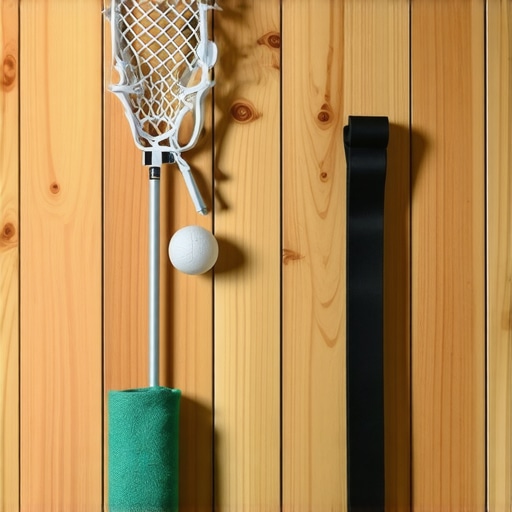
Why the future of back health is in your pocket
We are moving rapidly toward an era of ‘smart’ posture. I predict that within the next five years, we’ll see a massive shift toward bio-feedback wearables—tiny sensors embedded in our clothing that monitor spinal shear in real-time and provide a gentle haptic buzz when we lose integrity. Until then, you have to be your own sensor. You need to know how to tell if your hip tightness is actually a back issue before it turns into a structural crisis. My biggest advice for anyone reading this is to start small. Don’t try to overhaul your life in one day. Instead, try the specific type of walking that actually helps a bulging disc tomorrow morning. It’s a rhythmic, brisk pace that naturally pumps the discs, rather than a slow, lumbering stroll that increases static loading on your L5-S1. If you’re ready to stop the cycle of flare-ups, commit to just one ‘nerve glide’ or one ‘pelvic reset’ today and see how your body responds to the change.
The Hardest Lessons I Learned While Chasing the Wrong Pain
For years, I treated my body like a machine that needed to be hammered back into place. My biggest realization was that the site of the pain is rarely the source of the problem. If you’ve been focused on the ‘knot’ in your back, you might be missing the fact that your nervous system is simply trying to protect you. I had to learn that mobility is a conversation with your brain, not a battle with your muscles. Another huge breakthrough was realizing that why your choice of work shoes matters more than your chair because the foundation of your spine starts at your feet. Finally, I stopped aiming for ‘perfect posture’ and started aiming for frequent movement.
My Essential Toolkit for Lasting Relief
I don’t believe in expensive gadgets. My personal recovery was built on a few reliable tools and habits. I swear by a simple firm ball for targeted release and a lumbar support for any drive longer than twenty minutes. I also never miss the daily foot massage habit that relaxes your entire back because it resets my nervous system after a long day on my feet. If you are dealing with radiating discomfort, don’t forget that the nerve glide exercise that calms burning leg pain is far more effective than aggressive stretching. These tools work because they address the underlying mechanics, not just the surface symptoms.
#IMAGE_PLACE_HOLDER_E#
Start Small for a Future Without Flare-Ups
The road to a pain-free life isn’t paved with 90-minute gym sessions; it is paved with the tiny decisions you make throughout the day. Whether it is performing the 3-second pelvic reset you can do while waiting in line or just choosing to breathe into your ribs while you work, these moments add up. You have the power to change your body’s narrative from one of restriction to one of freedom. Don’t let a temporary ‘stuck’ feeling define your long-term mobility. Your spine is designed to move, and with the right approach, it will feel like a resilient spring again. Which of these rib-release tips are you going to try first? Let me know in the comments below!