
How to do a proper squat to protect your knees and back
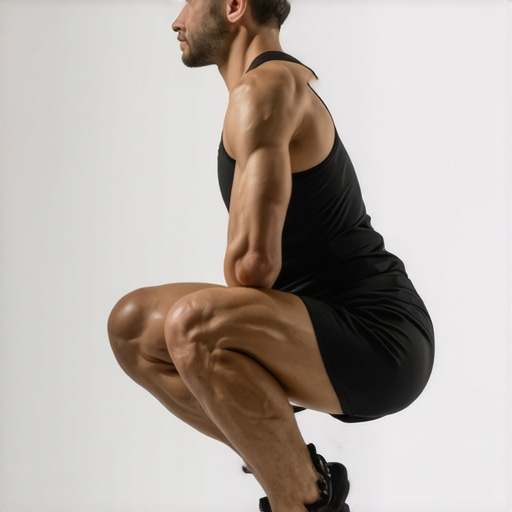
I still remember the sharp, hot flash of panic that shot through my lower spine three years ago while I was simply reaching into the dryer. It wasn’t a heavy barbell that did me in; it was a simple, poorly executed squat. For weeks, I lived in fear of any movement that required bending my knees. I felt like I was eighty years old at thirty-five. I realized then that I hadn’t just thrown my back out—I had spent years ignoring the fundamental mechanics of how my body was designed to move. We treat squats like a gym-only activity, but the truth is we squat every time we sit in a chair or reach for the bottom cupboard. If you are struggling with a lingering ache, you might be wondering is your back pain a sign of something more serious, or if it is just a result of these daily repetitions gone wrong. Today, I am going to show you exactly how to fix your form so you can move with confidence again.
Stop Hurting Your Back Every Time You Sit Down
Squatting isn’t just an exercise for people in spandex; it is a primal movement we perform dozens of times a day. Whether you are learning how to pick up a toddler without risking a disc flare-up or just getting off the couch, your form dictates whether you are building strength or inviting injury. My biggest mistake early on was trying to keep my chest too upright while my heels peeled off the floor, which shifted all the pressure onto my lumbar spine. I thought I was being proper, but I was actually grinding my joints down. We can learn a lot from the deep squat habit of healthy cultures where back issues are far less common because they maintain this mobility throughout their lives. Have you ever felt that terrifying pinch in your back while just trying to sit down? If so, you’re exactly who I wrote this for.
Will My Knees Actually Survive This?
You might be thinking that your knees already crunch like a bag of chips and that squatting is the worst thing you could do. It is a valid fear. Many people stop pulling their knees to their chest or avoid bending altogether because they think they are saving their joints. In reality, avoiding the movement makes the supporting muscles weaker, which eventually leads to even more instability. According to experts at Harvard Health Publishing, proper squatting actually strengthens the connective tissues around the knee, provided you keep your weight distributed through your heels and avoid letting your knees cave inward. It is about mechanics, not just muscle. By the end of this, you will understand how to use your hips as the main engine so your knees and back can finally stop doing all the heavy lifting.To stop the cycle of injury, you have to think of your hips as a hinge and your spine as a rigid bridge. Most people lead with their knees. If your knees move forward first, your center of gravity shifts and your lower back has to act like a crane to pull you back up. Instead, imagine you are trying to close a heavy car door with your glutes because your hands are full of groceries. This simple shift—initiating the movement by pushing the hips back—immediately offloads the lumbar discs. I remember trying to apply this while learning how to load the dishwasher without straining your lower lumbar. At first, I felt ridiculous sticking my butt out so far in the kitchen, but for the first time in months, I didn’t feel that familiar electricity in my L5-S1 region.
The Secret of the Biological Weight Belt
You don’t need a leather belt from a powerlifting gym to protect your spine; you already have one built-in. It’s your transverse abdominis. Before you even begin to descend, you need to ‘set’ your core. Think of it like preparing for someone to poke you in the stomach. You aren’t sucking your belly in; you are bracing it outward. This creates intra-abdominal pressure that stabilizes your vertebrae from the inside out. This is exactly the correct way to use your core when lifting heavy groceries or even just getting out of a low car seat. If you find this difficult, you might need a quick 3-second pelvic reset to ensure your pelvis isn’t tilted too far forward or backward before you start.#IMAGE_PLACE_HOLDER_B#
Keep Your Heels Glued to the Earth
The moment your heels lift, your back loses its anchor. Floating heels force the weight into the balls of your feet, which sends a shockwave of tension straight up to your knees and lower back. This is often where people start to wonder how to tell if your leg pain is sciatica or a deep muscle knot because the referred pain can be so sharp. If your heels won’t stay down, it is usually a sign of tight calves or poor ankle mobility. You can test this by trying the heel-to-toe walk drill. If you can’t balance there, your squat will always be compromised. The connection between flat feet and recurrent lower back pain is also a major factor here, as your foundation determines the health of everything above it.
The Wall Trick for Perfect Form
If you are still struggling to find the right depth without your back rounding, use a wall. Stand about six inches away from a wall, facing it, and try to squat. The wall prevents your knees from tracking too far forward and forces your hips to do the work. It is a frustrating drill at first—I bumped my forehead more than once—but it is the fastest way to hardwire the mechanics into your brain. This kind of mobility mastery is what separates those who stay active into their eighties from those who end up stuck on the couch. Every time you find yourself reaching for the floor, remember that your hips are the engine and your back is just along for the ride.Most people assume that if their back hurts, they need to stretch it. I see it every day: someone feels a twinge and immediately tries to touch their toes. In my experience, this is the quickest way to turn a minor ache into a multi-week flare-up. You are likely wondering why stretching your hamstrings often makes your sciatica worse. The reality is that if your pain is coming from a disc, that ‘C-shape’ stretch is basically a nutcracker for your vertebrae. You’re not lengthening the muscle; you’re tugging on a sensitive nerve that is already under duress.
The Core Strength Myth
The common belief is that a ‘weak core’ is the root of all evil. While stability is vital, I’ve worked with plenty of athletes with six-packs who still can’t tie their shoes without a wince. The nuance they’re missing? Why your core strength won’t fix your back if your hips are locked. If your hip sockets are glued shut from sitting, your lower back is forced to become mobile to compensate. Your back isn’t weak; it’s exhausted from doing the hips’ job. According to research published in the Journal of Biomechanics, limited hip internal rotation is significantly correlated with chronic lower back pain because it alters the way the spine absorbs force during daily activities. 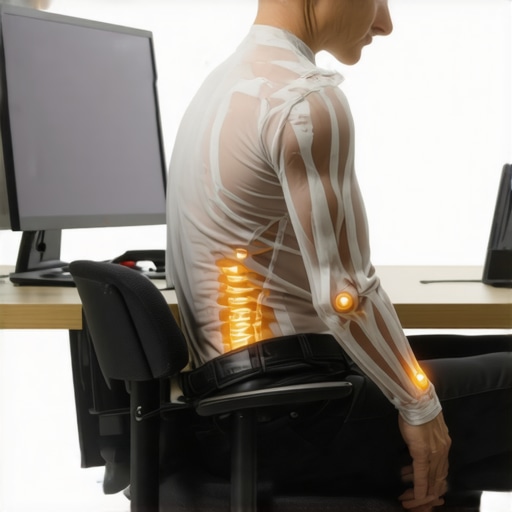
Why Does Stretching Feel Good if It’s Actually Hurting Me?
This is the ultimate ‘oops’ factor. Stretching releases endorphins and provides a temporary ‘stretch reflex’ that masks the pain for about twenty minutes. It’s a neurological trick. You feel better, so you do it more, but you’re actually destabilizing the joint. This is why why cracking your back at home is a temporary fix that often leads to a cycle of hypermobility. Instead of chasing that temporary relief, you should be focused on mobility mastery through controlled, joint-specific movements. Have you ever fallen into this trap of stretching a ‘tight’ muscle only to have it feel even tighter an hour later? Let me know in the comments.
Your Perfect Posture is Actually a Problem
One of the biggest mistakes I see is the ‘perfect posture’ trap. We’ve been told to sit up straight like a soldier, but why your perfect sitting posture is making you stiffer is actually quite simple: static loading. Even ‘good’ posture is bad if you hold it for four hours. Your spine craves micro-movements. This is where enhancing your back mobility with ergonomic tips comes in—not by being a statue, but by changing your environment to encourage subtle shifts in weight. If you’re unsure where to start, you need to learn how to tell if your sciatica is a disc or muscle issue before you apply any more self-treatment. If symptoms persist or include weakness, it is vital to check is your back pain a sign of something more serious to protect your long-term health.
Stop Guessing and Start Using These Tools Instead
Once I moved past the initial panic of my disc flare-up, I realized that surviving the workday required more than just willpower; it required a physical environment that supported my recovery. I stopped relying on expensive, over-engineered chairs and started focusing on tactile feedback. One of the best investments I ever made was a simple lumbar roll. Learning how to use a lumbar roll to prevent mid-day back fatigue changed the way my spine felt after an eight-hour shift. It’s not about cushioning; it’s about maintaining that natural curve so your muscles don’t have to work overtime. I also kept a tennis ball in my desk drawer. It sounds primitive, but knowing how to use a tennis ball to relieve glute tension allowed me to break up the ‘dormant butt’ syndrome that usually leads to a tight lower back. This kind of self-care isn’t a luxury; it’s a necessity for anyone sitting more than four hours a day.
How Can I Maintain My Spinal Mobility Over Time?
The key to long-term success isn’t a 90-minute gym session once a week; it’s the high-frequency, low-intensity movements you do every single day. I followed the advice of Dr. Stuart McGill, a world-renowned spine biomechanist from the University of Waterloo, who emphasizes the ‘Big Three’ exercises for core stability. He argues that spinal health is built on endurance, not just raw strength. This is why I advocate for mobility mastery through small, consistent wins. For instance, I started using the 20-20-20 rule for neck and eye strain relief to prevent that forward-head lean that eventually causes cervicogenic headaches. We are also seeing a massive shift toward wearable biofeedback technology. In the near future, I predict we will all be wearing small sensors that vibrate the second our lumbar spine rounds too far, hardwiring better habits through real-time data. 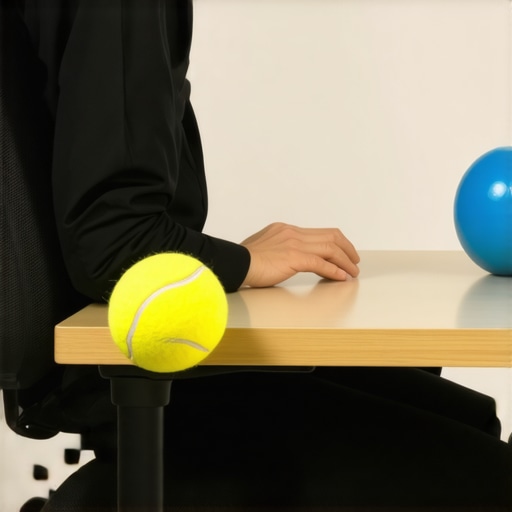
The Professional Maintenance Mindset
Eventually, you have to accept that your body is a high-performance machine that needs regular tuning. You wouldn’t drive a car for 100,000 miles without an oil change, yet we expect our backs to handle decades of stress without help. I finally understood why maintenance care is better than waiting for a spinal crisis. Regular check-ins with a professional can catch a pelvic tilt or a rib misalignment before it becomes a debilitating spasm. If you’ve ever felt that localized ache, you might need to investigate why your shoulder blade pain might be a rib out of place before it leads to chronic neck tension. My challenge to you today is this: don’t wait for the ‘big one’ to happen. Grab a towel, roll it up, and use it as a lumbar support for the rest of the day. You’ll be surprised at how much energy you have left when your spine isn’t fighting gravity alone. If you’re still feeling stuck, it might be time for back pain breakthroughs that address your specific movement patterns.
The Hardest Lesson I Learned About Chronic Stiffness
The most profound shift in my recovery wasn’t a specific exercise, but a total change in how I perceived my spine. I stopped looking at my back as a ‘problem to be fixed’ and started seeing it as a partner that needed better communication. One major lightbulb moment was realizing that consistency beats intensity every single time. It is much more effective to perform a 3-second pelvic reset throughout the day than to force an hour of aggressive stretching once a week. I also learned to stop fearing movement; fear creates bracing, and bracing leads to more pain. By slowly reintegrating squats with proper mechanics, I regained the trust in my body that I thought was permanently lost. Finally, remember that your environment is either supporting you or sabotaging you—simple habits like using a lumbar roll to prevent mid-day back fatigue are the silent heroes of long-term spinal health.
The Gear That Actually Makes a Difference
If you want to maintain your progress, you need a toolkit that fits into your actual life, not just your gym bag. I personally rely on a few specific tools to keep my joints fluid. First, a standard tennis ball is indispensable for targeting deep tissue—learning how a simple tennis ball can fix deep glute tension is a game-changer when you’ve been stuck in a chair for hours. I also recommend following the principles of spinal hygiene found in the work of Dr. Stuart McGill. For those moments when you feel the first signs of a ‘pinch,’ I always return to the 10-second hip reset for relief after sitting. These aren’t just quick fixes; they are essential maintenance protocols for anyone navigating a sedentary modern world. #IMAGE_PLACEHOLDER_E#
Reclaim Your Freedom of Movement
You don’t have to live in constant anticipation of your next ‘twinge.’ By applying these mechanics and embracing mobility mastery, you are taking full control of your physical future. Real back pain breakthroughs don’t happen during a single appointment; they happen in the small, intentional choices you make every time you sit down, stand up, or reach for a heavy bag. You have the mechanics now—it’s time to move with the confidence you deserve. Have you ever felt that sharp pinch while doing something as simple as tying your shoes? Let me know in the comments below!