
How a simple tennis ball can fix deep glute tension
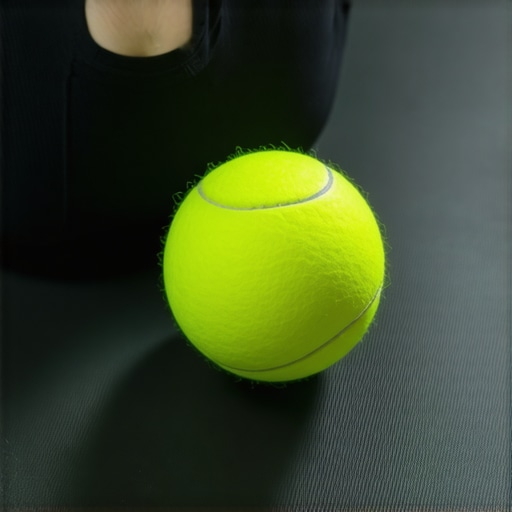
I remember sitting at my home office desk three years ago, feeling like someone had driven a hot spike right into the center of my right glute. Every time I stood up, a lightning bolt of pain sizzled down my leg, making me walk like I’d aged forty years in a single afternoon. I tried the expensive foam rollers. I tried the vibrating massage guns that cost more than my first car. But they all felt like using a sledgehammer for a jewelry repair—too big, too blunt, and completely unable to reach that one specific, agonizing knot. Then, I found a dusty, yellow tennis ball in the back of my garage, and everything changed.
The $1 tool that finally silenced my sciatic nerve
Today, I want to show you why that humble piece of sporting equipment is the most underrated weapon in your mobility arsenal. We are going to solve that nagging, deep-seated ache that makes sitting through a movie or driving to the grocery store feel like a marathon of endurance. If you’ve been searching for swift relief for sciatica, you’ve probably realized that sometimes the most high-tech solutions aren’t the ones that actually work. I spent months making the classic mistake of thinking ‘more is better.’ I would press into those knots so hard I’d literally bruise myself, thinking I was ‘winning’ the battle against my muscles. In reality, I was just making the tissue guard even harder. Once I learned how to use a tennis ball to relieve glute tension properly, the results were almost immediate. Have you ever felt that sharp, localized pinch that just won’t go away no matter how much you stretch?
Wait, won’t sitting on a tennis ball cause more damage?
It’s a valid fear. Many people worry that poking around in their muscles with a firm object might aggravate a disc or a nerve. However, a study published in the Journal of Bodywork and Movement Therapies suggests that targeted trigger point therapy—which is exactly what the tennis ball provides—can significantly reduce localized myofascial pain by improving blood flow and breaking the cycle of muscle guarding. The key isn’t brute force; it’s precision. When you finally learn how to tell if your leg pain is sciatica or a deep muscle knot, you can apply this pressure exactly where it’s needed. I also learned the hard way that why your wallet belongs in your front pocket is a lesson your hips wish you’d learned years ago. By the time we’re done today, you’ll have a clear, step-by-step plan to release that tension without ever having to leave your living room.
Master the pressure sandwich
Imagine your glute muscle is a dry, stiff sponge. To get it soft again, you can’t just rub the surface; you have to compress it until the water—or in our case, blood and oxygen—can rush back in. The first time I tried this, I was so desperate for relief I just plopped the ball down and sat on it with my full weight. Big mistake. I hit a nerve and felt a zap that nearly sent me through the ceiling. What I learned was that you need to ease into it like you’re testing the temperature of a hot bath. You are looking for a ‘hurts-so-good’ sensation, not ‘get-me-to-the-ER’ pain. If you overdo it, your brain sends a panic signal to the muscle to tighten up even more, defeating the purpose of how to use a tennis ball to relieve glute tension correctly.
Don’t just sit on the bone
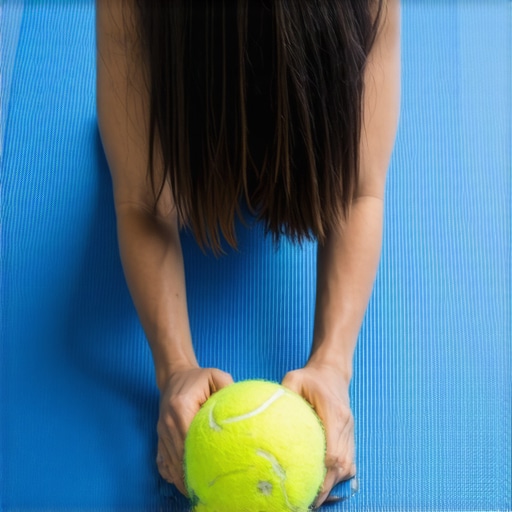
The most common error is placing the ball too close to your tailbone or your hip bone. You want the ball in the ‘meat’ of the glute, slightly to the side. I find that a lean-to-the-side approach works best. Lie on your back on a firm surface—not a soft mattress—and bend your knees. Lift your hip and slide the ball under the outer edge of your glute. Slowly lower your weight. If you hit a spot that feels like a concentrated knot, stay there. You don’t need to roll around like a maniac; you just need to breathe. Sometimes, why your glutes are falling asleep and how to wake them up is simply a matter of clearing out these ‘dead zones’ in the tissue.
Move like a slow-motion clock
Once you’ve found a trigger point and held it for about 30 seconds, the tissue should start to ‘yield.’ This is when you introduce micro-movements. Think of the ball as the center of a clock face. Gently shift your hips so the ball moves toward 12 o’clock, then 6, then 3. We are talking about movements less than an inch in size. If the pain starts to radiate further down your leg, stop immediately and shift the ball. This is a sign you might be compressing the sciatic nerve directly rather than the muscle on top of it. In those cases, switching to the nerve flossing technique that silences burning thigh pain is often a safer bet to calm the system down. I remember one Tuesday afternoon after a long drive when I spent ten minutes just doing these tiny circles on my right side. By the time I stood up, the ‘tight’ feeling that usually made me limp was gone, replaced by a warmth that signaled the blood was finally moving again.
Balance the tension across your hips
Even if only one side hurts, you must work on both. Your body is a master of compensation. When my right glute was screaming, my left hip was working double time to carry the load, leading to a secondary ache. By treating both sides, you prevent the cycle from starting all over again. While you’re at it, pairing this ball work with the 30-second stretch that relieves pressure on your sciatic nerve creates a powerful one-two punch for recovery. This isn’t just about quick fixes; it’s about sciatica relief secrets how to banish pain quickly today while building a foundation for a back that doesn’t seize up every time you tie your shoes.
I’ve spent years talking to people who do everything ‘right’—they go to the gym, they do their planks, and they stretch religiously—yet they are still in agony. Here is the contrarian truth that most general advice ignores: stretching a nerve is not the same as stretching a muscle. If you have true sciatica, your nerve is likely inflamed and sensitive. When you pull on it, you aren’t ‘loosening’ it; you are irritating it further. This is precisely why stretching your hamstrings often makes your sciatica worse. It’s like pulling on both ends of a frayed electrical cord and wondering why the lights are flickering.
What if the ‘tightness’ you feel isn’t actually in the muscle?
A study published in the journal Spine highlights that many patients diagnosed with chronic muscle tightness actually suffer from ‘neural tension.’ In these cases, the muscle is staying tight to protect the nerve from being overextended. If you force that muscle to relax with a tennis ball or a heavy stretch without addressing the nerve’s irritation, the muscle will just snap back into a protective spasm ten minutes later. This is the hidden reason your hamstrings always feel tight despite your best efforts. Instead of brute-force stretching, you should be looking into the nerve glide exercise that calms burning leg pain, which gently flosses the nerve through the tissue without adding extra tension.
Avoid pulling your knees to your chest for relief
We’ve all seen the classic advice: lie on your back and pull your knees to your chest to ‘open up’ the spine. For many with a disc-related issue, this is a dangerous trap. This motion can actually increase the pressure on the back of your spinal discs, potentially pushing a bulge further toward the nerve. This is one of the biggest reasons I tell people to stop pulling your knees to your chest for back relief until they know exactly what’s causing the pain. You might be getting a momentary relief from the stretch, but you’re actually paying for it with increased inflammation an hour later.
Why a rock-solid core might be failing your spine
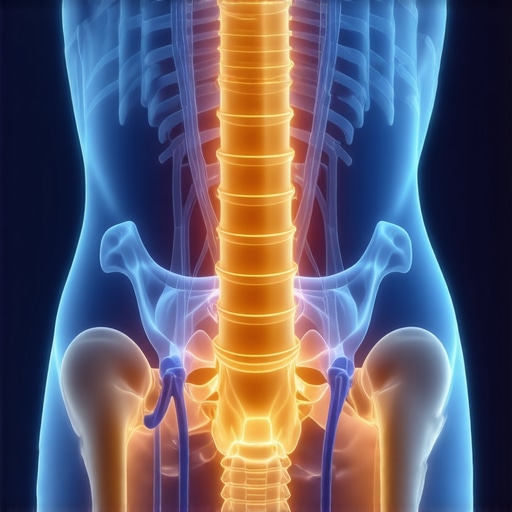
Another common myth is that a ‘strong core’ is a shield against back pain. But if you are bracing your abs like you’re about to take a punch all day long, you are creating massive internal pressure that actually compresses your spine. Furthermore, why your core strength won’t fix your back if your hips are locked is a concept most personal trainers miss. If your hips can’t move, your lower back has to move to compensate, no matter how many sit-ups you do. Real relief comes from unlocking sciatica relief expert strategies for lasting comfort that focus on mobility balance rather than just raw strength. Have you ever fallen into the trap of ‘over-strengthening’ only to feel stiffer than before? Let me know in the comments below.
It took me a long time to realize that living without pain isn’t about one giant ‘fix’—it’s about the small, boring things you do when you feel fine. I used to stop all my exercises the moment the lightning bolt in my leg vanished, only to have it roar back two weeks later. Now, I treat my spine like I treat my teeth: daily maintenance is non-negotiable. One tool I never leave home without is my lumbar roll. I realized that why your car seat is actually pushing your head forward and flattening your lower back was a recipe for disaster on my morning commute. By learning how to use a lumbar roll to prevent mid-day back fatigue, I’ve managed to turn my car and office chair into supportive environments rather than pain traps.
What I actually keep in my bag to stop flares before they start
Beyond the lower back, I’ve started keeping that same tennis ball in my desk drawer. When the afternoon stress hits and my shoulders start creeping up toward my ears, I follow the steps for how to use a tennis ball to release tension in your upper traps. It’s a 2-minute reset that stops a tension headache before it can even start. Dr. Stuart McGill, a world-renowned spine biomechanics expert and author of Back Mechanic, emphasizes that we all have a specific ‘load tolerance.’ If you exceed it, you break. My goal now is to keep my capacity high through mobility mastery daily tips to keep your spine and joints healthy so I never hit that breaking point again.
How do I stay pain-free for the next ten years?
The secret is consistency over intensity. I’ve seen people go hard at the gym for a month and then spend three months on the couch because they overdid it. I prefer the slow burn. I’ve integrated the the 20-20-20 rule for neck and eye strain relief into my workday, which forces me to look away from the screen and reset my posture every twenty minutes. I also learned how to transition to a standing desk without leg pain, making sure I wasn’t just trading back pain for sore feet. This long-term mindset is why I believe why maintenance care is better than waiting for a spinal crisis. You wouldn’t wait for your engine to explode before changing the oil, right?
Biofeedback and the future of back health
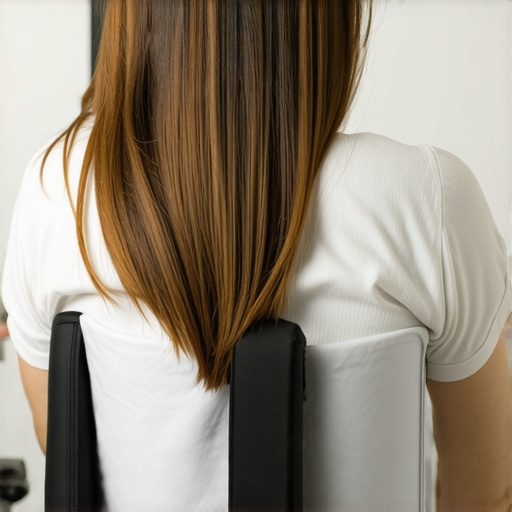
Looking ahead toward 2025 and beyond, I predict we’re going to see a massive shift toward wearable biofeedback. We won’t just ‘guess’ if our posture is off; small, unobtrusive sensors will likely vibrate to tell us exactly when our L5-S1 disc is under too much pressure or when our pelvic tilt is becoming excessive. Until that tech is mainstream, we have to be our own sensors. If you have a known disc issue, mastering the best way to transition from sitting to standing with a disc bulge is an essential skill to prevent daily micro-trauma. My challenge for you today: try the 20-20-20 rule for just one afternoon. Set a timer, look 20 feet away for 20 seconds every 20 minutes, and feel the tension melt out of your neck and upper back. You’ll be surprised how much more ‘available’ your body feels by 5 PM.
3 Hard Truths My Glutes Had to Teach Me
Looking back, I realize I spent years fighting my own body because I didn’t understand the rules of the game. First, I learned that ‘no pain, no gain’ is a lie when it comes to nerves; if it zaps, you must back off. Second, I discovered that the truth about yoga for sciatica sufferers is that many standard poses, like downward dog, can actually overstretch an already irritated nerve. Finally, the biggest lightbulb moment was realizing that symptoms in the leg often have nothing to do with the leg itself. Learning how to tell if your sciatica is a disc or muscle issue is the only way to choose the right weapon for the fight.
The Tiny Toolkit That Saved My Spine
You don’t need a thousand-dollar gym membership to stay mobile. My ‘survival bag’ is simple: a high-altitude tennis ball (they are firmer), a lumbar roll for my car, and a dedicated workspace. I’ve found that even the best exercises won’t help if you don’t pick a chair that actually supports your lumbar curve for those eight hours at the office. I also swear by the daily foot massage habit that relaxes your entire back; it sounds crazy, but releasing the fascia in your soles can actually take the tugging sensation out of your lower spine. These tools are my non-negotiables for a pain-free life.
Start Reclaiming Your Freedom Today
Recovery isn’t a straight line, and there will be days when you feel a bit of that old tightness creeping back in. The difference now is that you have the tools to stop a flare before it becomes a crisis. By applying these sciatica relief secrets how to banish pain quickly today, you are taking back control from the ‘lightning bolts’ that used to dictate your schedule. If you find yourself stuck or if the pain feels too complex to handle alone, don’t hesitate to reach out to us at our contact page. We are moving toward a new era of managing back pain in 2025 where movement is the primary medicine. Have you ever tried the tennis ball trick and felt that ‘good’ kind of pain? Let me know your results in the comments below!