
How to sit in a car for hours without triggering sciatica

I was three hours into a cross-country drive to visit family when that all-too-familiar lightning bolt struck. It started as a dull ache in my right glute, but within twenty minutes, it became a searing, white-hot wire stretching all the way to my toes. I tried the ‘highway wiggle.’ I tried sitting on my left hip. I even tried screaming at the dashboard. Nothing helped. By the time I arrived, I was basically dragging my leg behind me like a character in a horror movie. It was humiliating, and honestly, it was completely avoidable.
My long-distance driving disaster taught me that car seats are lying to us
We are led to believe that modern car seats are the pinnacle of comfort, but for those of us with a cranky lower back, they can be a total nightmare. I spent years thinking my car was the problem, when really, it was my lack of a strategy. I made the classic mistake of shoving a massive, fluffy pillow behind my back, which only pushed my hips further out of alignment. I didn’t realize that why your car seat is actually pushing your head forward and causing a chain reaction of tension all the way down to my sacrum. Now, I approach every trip with a specific ergonomic setup that protects my spine from that crushing pressure.
The good news is that you do not need to trade in your SUV for a luxury sedan with expensive massage seats. You just need to understand how to neutralize the ‘bucket seat’ effect that most vehicles have. Today, I am going to show you how to position your pelvis, explain why you must keep your wallet in your front pocket, and how to create a sitting environment that lets your nerves breathe. If you have been searching for sciatica relief secrets specifically for travel, you are in exactly the right place.
Can you really drive for hours without that burning leg pain?
It sounds like a pipe dream, right? Especially when every bump in the road feels like a direct hit to your L5-S1 disc. But here is a surprising fact: according to the Mayo Clinic, physical compression from prolonged sitting is one of the primary drivers of sciatic symptoms. Car seats are notorious for creating a ‘hammock’ shape that rounds your lower back and puts your nerve on a stretch it simply cannot handle. One of my biggest blunders early on was thinking I could just ‘stretch it out’ while driving. In reality, why stretching your hamstrings often makes your sciatica worse is a lesson I learned the hard way on a six-hour trek through the mountains. I want to hear from you—have you ever found yourself dreading a holiday or a work trip simply because you knew your leg would be on fire by the second gas station stop? I have been there, and it is a lonely place to be when everyone else is excited for the destination. Let’s talk about the specific adjustments that changed the game for me.
Stop the Bucket Seat Slump Before It Starts
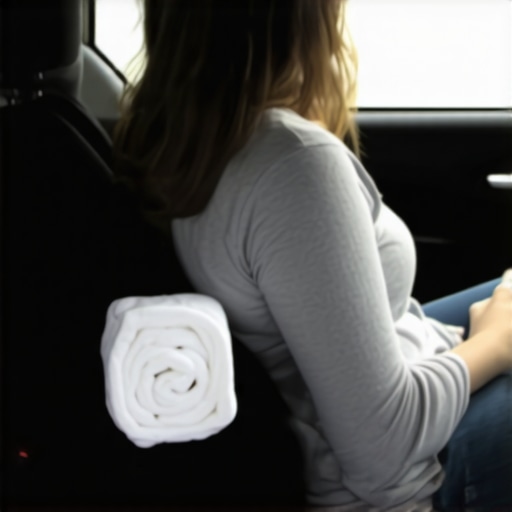
The first thing I had to change wasn’t the seat, but how my pelvis interacted with it. Most car seats are bucket-shaped, which forces your tailbone to tuck under. This is a disaster for your L5-S1 disc because it stretches the nerve like a rubber band reaching its breaking point. To counter this, you need to find neutral. Imagine your pelvis is a bowl of water; if you are slumped, the water spills out the back. You want that bowl level. I remember a trip to Tahoe last summer where I forgot my ergonomic cushion. About forty miles in, the familiar zing started. I pulled over at a rest stop, took off my thick flannel shirt, rolled it into a firm cylinder, and shoved it right at the belt line. It was not pretty, but that makeshift support saved the next four hours. It is about creating a shelf for your spine rather than letting it collapse into the foam.
Build a support shelf with a lumbar roll
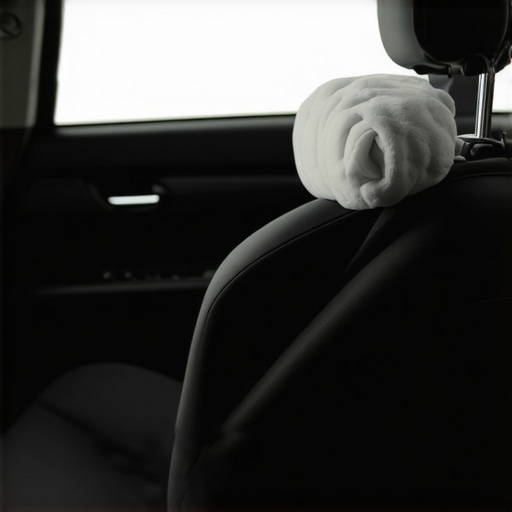
If your car has built-in lumbar support, it is often too low or too soft. You need something firm enough to maintain the inward curve of your lower back. When you learn how to use a lumbar roll to prevent mid-day back fatigue, you realize that the placement should be just above your belt line, not down in the ‘well’ of the seat. This prevents the posterior pelvic tilt that triggers the sciatic nerve. If you don’t have a professional roll, a tightly rolled bath towel works wonders. This small change stops the vertebrae from pinching the nerve roots as you hit bumps in the road.
Empty your pockets to save your nerves
This sounds like a minor detail, but it is actually a non-negotiable rule. I used to keep my wallet in my back right pocket—exactly where my pain was. Think of your wallet as a shim used to level a table. If you sit on it, you are intentionally tilting your pelvis to one side. Over hundreds of miles, this creates a massive imbalance in the piriformis muscle. You must keep your wallet in your front pocket or the center console. Even a slim wallet can shift your spine enough to cause a flare-up. When I finally made this a habit, the ‘phantom’ ache in my right hip disappeared within a week.
Use micro-movements to keep the nerve gliding
Static positions are the enemy. Nerves hate being held in one place under tension. While you are driving, you can perform subtle movements that keep the nerve moving through the soft tissue. Try gently pushing your heels into the floorboard (if you are the passenger or using cruise control) to engage the glutes. You can also perform the nerve glide exercise that calms burning leg pain by very slightly pumping your ankle when stopped at a red light. This ‘flossing’ action prevents the nerve from getting stuck in inflamed tissue. Additionally, learning how to relax your shoulders while driving in heavy traffic prevents tension from migrating down your spine. If you feel a flare coming on, the the 30-second stretch that relieves pressure on your sciatic nerve can be done the moment you step out of the car to reset your system. Every time you stop for gas, perform the 10-second hip reset for relief after sitting to ensure your joints don’t lock up for the next leg of the journey.
But here is the thing that almost no one tells you about ‘staying active’ on the road: most of the advice you hear about ‘strengthening your core’ to fix back pain is actually making your sciatica worse when you are stuck in a car for hours. We have been conditioned to believe that a rigid, tight core is a safe core. In reality, if your hips are locked from a long drive, an over-tensed core just creates a pincer effect on your lower discs. I used to spend my rest stops doing aggressive abdominal bracing, thinking I was building a shield. Instead, I was just compressing my already irritated L5-S1 disc. This is where learning why your core strength won’t fix your back if your hips are locked becomes the most important lesson you will ever learn for long-distance travel.
Is your core strength actually strangling your spine?
Research by Dr. Stuart McGill, a leading expert in spine biomechanics, suggests that ‘stiffness’ is only beneficial if it is functional and timed correctly. Constant, static tension is just another word for compression. When you are driving, your spine needs micro-adjustments and ‘dissociation’ between the hips and the lower back, not a muscular straightjacket. The biggest ‘oops’ factor I see with my fellow road-warriors is the tendency to lean forward and round the back to ‘stretch’ the pain away during a flare-up. You must why you should stop stretching your back into a C-shape immediately. That rounded posture actually pushes the disc material further toward the nerve roots. It feels like a temporary relief because you are numbing the receptors, but you are actually fueling the inflammation for the next fifty miles.
#IMAGE_PLACE_HOLDER_C#
Look at your feet to save your back
The nuance often missed by beginners is the ‘bottom-up’ effect of your driving posture. If you have been struggling with a recurring flare-up that seems to defy all the usual stretches, you have to consider the connection between flat feet and recurrent lower back pain. If your foot is collapsing or poorly supported while working the gas pedal, it rotates your entire leg inward, pulling on the piriformis muscle and tugging at the sciatic nerve. I eventually realized that my choice of driving shoes was just as critical as my lumbar roll. By focusing on mobility mastery: daily tips to keep your spine and joints healthy, I started treating my body as a connected chain rather than just a painful leg. Another hidden trap is the car seat itself; while we crave soft surfaces, why your soft couch is the worst place to sit during a flare applies to car seats too. You need firm support to maintain that neutral curve. Have you ever fallen into the trap of over-stretching or over-bracing only to feel worse the next day? Let me know in the comments. We need to stop the ‘more is better’ approach and start using unlocking sciatica relief: expert strategies for lasting comfort that actually respect the anatomy of the nerve. Learning how to pick a chair that actually supports your lumbar curve can be adapted to your vehicle to ensure you arrive at your destination ready to enjoy yourself, not ready for a heating pad.
My two-item survival kit for every road trip
After thousands of miles and way too many flare-ups, I have narrowed my travel gear down to two essentials that never leave my car. The first is a high-density McKenzie lumbar roll. I stopped using those soft, decorative pillows because they provide zero structural support. You need something firm enough to actively push back against your spine and maintain that crucial lordotic curve. I also keep a pair of minimalist, wide-toe-box shoes in the passenger footwell. This might sound strange, but the connection between flat feet and recurrent lower back pain is real; if your shoes are too narrow, they limit your foot’s ability to stabilize your pelvis while you are working the pedals. By prioritizing mobility mastery: daily tips to keep your spine and joints healthy, I have transformed my car from a torture chamber into a space where my back actually feels supported rather than crushed.
How do I maintain my progress during a busy travel season?
Consistency is the secret sauce that separates people who ‘used to have back pain’ from those who are still struggling through their commute. Maintenance is not about doing a two-hour workout every weekend; it is about the small, daily choices that prevent cumulative damage. I have found that why maintenance care is better than waiting for a spinal crisis is the mindset shift that saved my career. Every night after a long drive, I perform the 2-minute hip reset for better sleep tonight. This prevents the cumulative stiffness from the day’s drive from hardening into a full-blown flare-up by morning. According to the McKenzie Institute International, the mechanical loading of the spine is cumulative; you aren’t just sitting for one hour, you are adding to the total stress load of your entire week. If you aren’t actively unloading that pressure using mechanical tools, you are just waiting for the dam to break.
The future of car seats is more than just padding
Looking ahead to unlocking mobility: expert tips on managing back pain in 2025, I expect we will see a massive surge in smart-seat technology. We are already seeing high-end vehicles with sensors that monitor driver fatigue, but the next step is real-time ergonomic adjustment. Imagine a seat that detects your pelvic tilt shifting into a slump and automatically inflates a lumbar support bladder to correct it before your brain even registers the discomfort. Until then, we have to be our own advocates. Integrating overcoming sciatica: top lifestyle changes for better quality of life means taking control of your environment today rather than waiting for automotive technology to catch up. I challenge you to try this one tip: the next time you are in the car for more than thirty minutes, use a firm rolled-up towel at your belt line and see how much lighter your legs feel when you step out. It is a small mechanical change with a massive neurological payoff.
Hard Truths About Driving With a Pinched Nerve
One of the biggest lightbulb moments for me was realizing that ‘trying harder’ to sit straight was actually making the pressure worse. When you obsess over perfect posture, you often create more muscle tension. Instead, focus on mechanical support and let your muscles relax into the curves. Also, remember that the seat heater feels great, but if your nerve is already inflamed, too much heat can actually increase the local swelling. Use it for ten minutes to loosen up, then turn it off. Lastly, I learned the hard way that stopping every two hours is a requirement, not a suggestion. If you wait until it hurts to get out of the car, you have already lost the battle.
My Minimalist Toolkit for Pain-Free Travels
#IMAGE_PLACEHOLDER_E#
If you are planning more travel, check out how to sit on a plane without triggering a sciatica flare because the mechanics are surprisingly similar to car seats. For those seeking swift relief for sciatica: quick home remedies that work, I always suggest keeping a small, firm ball in the glove box for a quick glute release at rest stops. My absolute favorite resource for deeper understanding is the work of Dr. Stuart McGill; his books changed how I viewed spinal stability and compression. If your pain persists or changes, always know the warning signs your sciatica needs professional help so you do not push through something serious.
Enjoy the Journey Again Without Leg Pain
You do not have to be a prisoner to your car seat anymore. By making these mechanical adjustments and respecting your body’s need for movement, you can actually enjoy the journey again. Achieving lasting back pain breakthroughs is about these small, consistent wins. Don’t be afraid to pull over and reset; your spine will thank you for the extra five minutes. What is the longest drive you have ever attempted with sciatica, and what was your ‘secret weapon’ for survival? Let me know in the comments below!