
Why you should stop stretching your back into a ‘C’ shape

I remember the exact moment my lower back decided it had finally had enough of my ‘help.’ I was lying on the living room floor, gritting my teeth, and pulling my knees as tight as I could toward my chest. I thought I was being smart. I thought I was ‘opening up’ my spine to fix that nagging ache. Instead, I heard a dull *pop*, followed by a white-hot flash of lightning that shot straight down my left leg. It turns out that my favorite morning ritual of curling into a ball was actually the very thing keeping me in a cycle of pain. For years, I believed the lie that more flexion was the answer to stiffness, but I was just repeatedly aggravating my discs. Today, I want to show you why that ‘C’ shape you’re forcing your spine into might be your biggest enemy and how you can actually find lasting comfort without the crunch.
Flexion might be the reason you’re still hurting
For a long time, I was convinced that if my back felt tight, I just needed to stretch it more. I’d spend ten minutes every morning in a deep forward fold or a child’s pose, thinking I was a master of mobility mastery. But here’s the reality: when we force our spine into a rounded ‘C’ shape, especially if we already have a bulging disc or nerve irritation, we are essentially squeezing a jelly donut from the front and hoping the filling doesn’t squirt out the back. It’s one of the most common mistakes I made early on, and it’s a trap many of us fall into when we feel stiff after a nap. Research published by the Journal of Biomechanics has shown that repeated spinal flexion significantly increases intradiscal pressure, which is exactly what you want to avoid if you’re already dealing with inflammation. By constantly rounding over, you’re not just stretching muscles; you’re stressing the structural integrity of your spine.
Is this ‘C-shape’ stretch actually worth the hype?
You might be thinking, ‘But it feels so good in the moment!’ I get it. I used to feel that temporary relief too. It feels like a release because you’re desensitizing the nerve endings for a split second, but you’re often paying for it ten minutes later when you try to stand up straight and realize you’re even tighter than before. You have to stop pulling your knees to your chest for relief if you want to break the cycle. The ‘feel-good’ sensation is a trick your nervous system plays on you while the actual mechanical stress on your lower lumbar continues to climb. Have you ever felt that strange contradiction where a stretch feels great while you’re doing it, but makes you feel like an old man or woman the second you stand up?
Why we need to rethink our daily movements
Most of us don’t even realize we are in a ‘C’ shape for eight hours a day. Whether you’re at a desk or on the couch, poor posture and chronic back pain are usually two sides of the same coin. We spend all day in flexion, and then we go to the gym or lay on the floor and try to ‘fix’ it with—you guessed it—more flexion. It’s a recipe for disaster. We need to stop treating our spine like a wet noodle and start respecting its natural curves. In the next section, I’m going to break down the specific moves that saved my back and kept me from needing more aggressive interventions.
Trade the crunch for the hip hinge
The most transformative change I made wasn’t adding a new exercise; it was changing how I moved through space. Instead of rounding my back to pick up a pencil or tie my shoes, I learned to ‘hinge.’ Think of your hips like the heavy-duty hinges on a front door. They are designed to take the weight. Your spine, on the other hand, is more like a stack of delicate china. When you hinge, you keep your back straight and push your hips back, letting your glutes and hamstrings do the heavy lifting. I used to treat a laundry basket like a ticking time bomb. One Tuesday, instead of my usual ‘reach and grab’—which usually resulted in a sharp twinge—I focused on keeping my spine straight and used my hips as the pivot point. I pushed my glutes back as if I were trying to close a car door with my rear end while my hands were full. For the first time in months, I stood back up without that familiar, sickening ‘catch’ in my lumbar. This is the exact same logic you need when learning how to load the dishwasher without hurting your lower back. 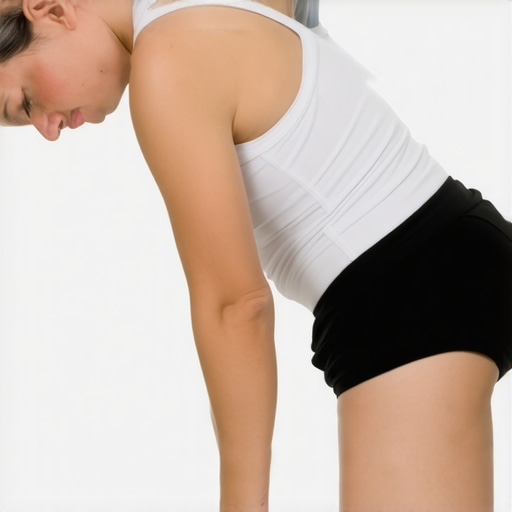
Find your neutral with a pelvic reset
Most of us are stuck in either a ‘slump’ or an over-arched ‘duck butt’ position. Neither is great for your discs. To find the middle ground where your spine is happiest, you can try the 3-second pelvic reset you can do while waiting in line. Simply stand with your feet shoulder-width apart, tuck your tailbone under slightly as if you’re a dog hiding its tail, and then gently release it until your weight feels perfectly balanced over your heels. This ‘neutral’ position creates the maximum amount of space for your nerves to breathe. When I started doing this throughout the day, the constant ‘hum’ of ache in my lower back finally started to dim.
Calm the nerves without the tug-of-war
If you’re feeling that classic burning sensation down the leg, your instinct is probably to stretch the hamstring. Don’t do it. Nerves are not like muscles; they don’t like to be pulled tight. If a nerve is irritated, stretching it is like pulling on a raw, inflamed rope. Instead, you need to ‘floss’ it. This involves moving the nerve back and forth through the soft tissue without putting it under tension. It is essential to learn the nerve glide exercise that calms burning leg pain without the friction of a deep stretch. When I first tried nerve flossing, I thought I was doing it wrong because it didn’t ‘hurt’ or feel like a deep pull. But that’s the point. Within three days of flossing instead of stretching, the zing in my calf had vanished. This is a cornerstone for unlocking sciatica relief.
Your core is a brace, not a vacuum
We’ve been told to ‘suck in our belly’ to protect our backs, but that actually thins out your support. Instead, imagine someone is about to poke you in the stomach and you stiffen up to resist them. That 360-degree expansion is true bracing. It creates an internal ‘airbag’ that supports the spine from the inside out. Practice the correct way to use your core when lifting heavy groceries by breathing into your sides and back, not just your chest. This pressure stabilizes the lumbar vertebrae, preventing the micro-shifts that cause those sharp, stabbing pains during sudden movements.It’s time we addressed the elephant in the room: the ‘core strength’ obsession. I see people at the gym doing hundreds of crunches or holding planks until they turn purple, thinking they are building a bulletproof spine. But here’s the contrarian truth: why your core strength won’t fix your back if your hips are locked is the real secret most trainers miss. If your hips are as stiff as a frozen steak, that core stability has nowhere to go. Your lower back ends up ‘compensating’ for the lack of movement in your pelvis, leading to that chronic, dull ache that never seems to go away. Have you ever fallen into this trap? Let me know in the comments.
The core strength trap you’re probably falling for
Most people think a stronger core is the answer to everything, but a common ‘oops’ factor is over-bracing. If you keep your core perpetually ‘on’ while doing simple tasks, you’re actually compressing your spine and limiting its natural, healthy micro-movements. This is why why your perfect sitting posture is making you stiffer; you are essentially turning your torso into a rigid pillar that can’t absorb shock. A study published in the Journal of Orthopaedic & Sports Physical Therapy (JOSPT) found that patients who focused solely on core bracing without addressing global mobility often reported higher levels of perceived stiffness compared to those who focused on dynamic movement. 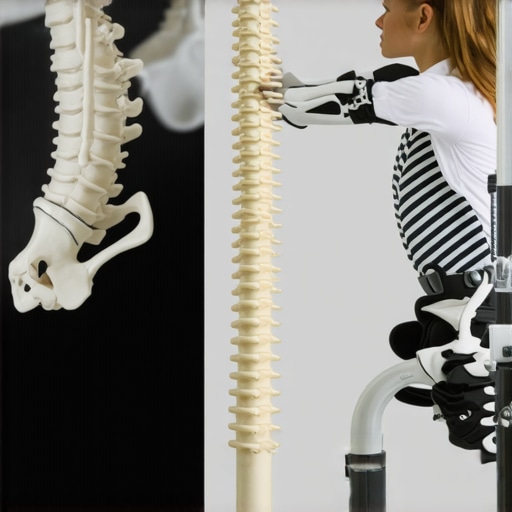
Why your hamstrings might be lying to you
This is the part that usually shocks my clients: that ‘tight’ feeling in the back of your legs isn’t always a short muscle. It’s often protective tension from a nerve. This is the hidden reason your hamstrings always feel tight. If you keep stretching them, you’re just pulling on an already irritated sciatic nerve, which explains why stretching your hamstrings often makes your sciatica worse. You think you’re helping, but you’re actually performing a ‘nerve tension test’ on yourself over and over again. Stop the tug-of-war and start looking at how your hips are actually functioning.
How do you distinguish a disc issue from a simple muscle knot?
For the advanced reader, the nuance lies in the behavior of the pain. If you find that how to tell if your hip tightness is actually a back issue depends on whether the pain stays in the glute or travels, you’re on the right track. True muscle knots (trigger points) usually stay localized and ‘melt’ with direct pressure, whereas disc-related pain often reacts to changes in spinal position—like that ‘C’ shape we discussed earlier. If your ‘hip pain’ gets worse when you sneeze or cough, it’s almost certainly a spinal pressure issue, not just a tight muscle. This is one of those key symptoms to watch that could save you months of the wrong treatment. We need to stop guessing and start testing. Have you ever noticed your jaw clenching when your back flares up? It sounds crazy, but the connection between your jaw tension and your constant headaches can often be traced back to the same postural chain that’s wrecking your lower back. Everything is connected, and treating the site of the pain is rarely the solution to the source of the problem.
Tools that actually live in my gym bag
I used to think I needed a thousand-dollar recovery machine to find relief, but the most effective tool I own cost me about two dollars at a sporting goods store. I’m talking about a simple tennis ball. When my glutes feel like they’re turning into concrete from a long day of driving, I use it to hunt down trigger points that are tugging on my lower back. You can learn how to use a tennis ball to relieve glute tension to pinpoint those deep knots that a foam roller just can’t reach. I also never leave the house without a small lumbar roll. If I’m sitting in a car or a theater, that roll maintains my natural curve so I don’t slip back into that dangerous ‘C’ shape. It’s a simple case of ergonomic tips for everyday comfort becoming second nature. Dr. Stuart McGill, a world-renowned spine biomechanist, often discusses the concept of ‘spinal hygiene’ in his book Back Mechanic, arguing that the way we move during the 23 hours we aren’t exercising determines our long-term success. This shift from ‘fixing’ to ‘maintaining’ was the turning point for me. 
Make your workspace work for your discs
If you’re working from home, your setup is likely your biggest silent saboteur. I spent years leaning into my screen, which is why I had to learn how to adjust your monitor to stop that burning neck pain. Your eyes should hit the top third of the screen so your chin stays tucked and your neck stays neutral. I eventually made the jump to a standing desk, but I did it wrong at first and ended up with throbbing hips. You have to know how to transition to a standing desk without leg pain by using an anti-fatigue mat and shifting your weight frequently. In the future, I predict we will see more ‘dynamic workstations’ that use AI to nudge us into different postural positions every twenty minutes, moving beyond the static sitting vs. standing debate. For now, we have to be our own advocates for mobility mastery.
How do I keep my spine healthy for the long haul?
Maintenance is a mindset, not a chore. I’ve realized that why maintenance care is better than waiting for a spinal crisis is simply because it’s much easier to keep a door on its hinges than it is to repair a shattered frame after it falls. I schedule ‘movement snacks’ throughout my day. Every time I finish a phone call, I do the 3-second pelvic reset you can do while waiting in line or at your desk. It’s about creating a lifestyle where your spine isn’t an afterthought. If you start feeling that familiar twinge, don’t ignore it. My best advice? Try the pelvic reset right now, regardless of where you are. It’s the smallest habit that yields the biggest long-term dividend for your path to restored mobility.
The truth about why your body keeps hitting the panic button
The biggest lesson I learned throughout my recovery is that pain is rarely just about a single ‘bad’ movement; it is about the accumulation of safety signals your brain is sending. I used to think my back was ‘broken,’ but I realized it was just highly sensitized. When I finally learned how to tell if your leg pain is sciatica or a deep muscle knot, the fear started to dissipate. Fear causes us to brace and stiffen, which only fuels the fire of chronic pain. I also had to look at my environment with fresh eyes—specifically my commute. I didn’t realize why your car seat is actually pushing your head forward and creating a chain reaction that ended in my lower lumbar. Breaking these subtle patterns is what finally allowed my nervous system to calm down.
What I actually keep in my recovery bag
You don’t need a gym full of equipment to maintain a healthy spine, but you do need a few intentional tools. My first essential is a simple tennis ball. It is the most effective way I’ve found to release those stubborn knots that pull on the pelvis; you should definitely learn how to use a tennis ball to relieve glute tension for a quick reset. My second must-have is a lumbar roll that travels with me everywhere. Knowing how to use a lumbar roll to prevent mid-day back fatigue has saved me during long flights and office days alike. Lastly, I always keep a mental list of swift relief for sciatica options so I can act immediately if I feel a flare coming on, rather than spiraling into worry.
Take your first pain-free step today
The journey back to full mobility isn’t about doing one big thing right; it’s about doing the small things better every single day. Whether it’s choosing to hinge when you pick up your laundry or performing a pelvic reset while you wait for your coffee to brew, these moments add up. Your path to restored mobility is paved with these tiny, intentional choices. Don’t wait for the ‘perfect’ time to start caring for your spine—that time is right now. Which movement are you planning to swap out first—the morning forward fold or the slumped couch sit? Let me know in the comments below!