
The 2-minute hip reset for better sleep tonight

I spent three years staring at my bedroom ceiling at 3 AM because my hips felt like they were being squeezed in a literal vice. Every time I tried to roll over, a sharp pinch would shoot through my lower back, making me feel twice my actual age. I tried every expensive mattress topper and ‘ergonomic’ pillow on the market, but the truth was, my body was holding onto the stress of the day long after I had turned off the lights. This wasn’t just ‘getting older’; it was a mechanical failure in my daily reset. If you have ever felt like your body simply will not let you rest, I am here to tell you that there is a way out that does not involve a cabinet full of ibuprofen.
Stop Fighting Your Mattress and Start Resetting Your Pelvis
For the longest time, I was convinced that if I just found the perfect position, the pain would disappear. I would obsess over the side sleeping fix for constant hip bursitis and swap pillows like I was running a linen shop. But I was ignoring the reality: my hips were locked into a protective ‘guarding’ state from hours of sitting. Whether you realize it or not, your body carries the tension of your commute and your desk chair right into your sheets. Today, I am going to show you how to break that cycle. We are going to solve that nagging restlessness by targeting the exact point where your spine meets your pelvis. It is quick, it is low-effort, and it is the only thing that actually worked for me after years of failure.
Is a Simple Two-Minute Routine Actually Enough?
I will admit, I was the biggest skeptic when I first heard about ‘resets.’ I thought if a problem was chronic, the solution had to be complicated and intense. Early on, I made the massive mistake of trying to ‘beat’ my hips into submission with aggressive, painful stretches. I learned the hard way that the 5-minute hip flexor release for desk workers is far more effective when you use breath and subtle movement rather than brute force. Pushing too hard actually triggers a stretch reflex that makes your muscles even tighter. According to experts at Harvard Health, gentle pre-sleep movement is vastly superior to intense static stretching for calming the nervous system and preparing the body for rest. Have you ever found yourself propped up on three pillows at midnight just trying to find a spot that doesn’t pinch? If so, you are likely overworking the wrong muscles.
Why This Specific Reset Changes Everything
Most of us spend our days in a state of constant hip flexion. This shortens the tissues and puts a silent, constant strain on the lower lumbar discs. It is no wonder that you might feel like your favorite sleeping position is causing morning neck stiffness—it is all connected in one long kinetic chain. When your hips are tilted or locked, your entire spine has to compensate just to keep you upright. This 2-minute reset is not about flexibility in the traditional sense; it is about decompression and neurological ‘safety.’ It is the difference between trying to sleep in a cramped car and finally stretching out in a king-sized bed. By the time we are done, your hips will feel ‘quiet’ for the first time in years, setting the stage for the deep, restorative sleep your body is craving.
Find Your Neutral Zone on the Floor
To begin, stop trying to do this in your soft, sinky bed. The first time I actually found relief was on a cold hotel carpet in Chicago at 2 AM, desperate and exhausted. You need a firm surface to give your nervous system feedback. Lie on your back with your knees bent and feet flat on the ground. This position immediately starts to neutralize the pull your hip flexors have on your lower spine. If you feel a massive gap between your lower back and the floor, that is the physical manifestation of your daily stress. You are seeing firsthand how understanding the link between poor posture and chronic back pain is about more than just standing up straight; it is about how your muscles refuse to let go even when you are horizontal. Imagine your pelvis is a bowl filled to the brim with water. In our daily lives, we usually tip that bowl forward, spilling water over our toes. Right now, your only job is to level that bowl. 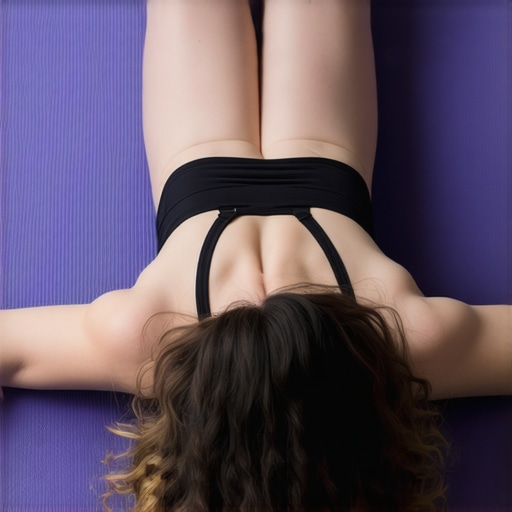
Breathe Like You Are Blowing Out a Candle
Most people skip the breathing because it feels too ‘woo-woo,’ but this is pure mechanics. When you take a deep, diaphragmatic breath and exhale fully, you are physically pushing your ribs down and allowing your psoas to slacken. I remember the specific night I stopped trying to ‘stretch’ my back and started breathing into it instead. Within three exhales, that sharp ‘vice’ feeling in my SI joint just… evaporated. This is because how a simple breath reset can calm a back spasm works by toggling your nervous system from ‘fight’ to ‘rest.’ Inhale through your nose for four seconds, then exhale through pursed lips for eight, feeling your lower back melt toward the floor with every count.
The Subtle Shift That Releases the L5-S1
Now for the actual reset. While staying in that relaxed, floor-flat position, perform the 10-second hip reset for relief after sitting by gently tucking your tailbone toward your heels. This is not a bridge; your butt should barely leave the floor. It is a micro-movement. Think of it like unkinking a garden hose. By lengthening the space between your tailbone and your mid-back, you are performing the one hip stretch that relieves pressure on the L5-S1 disc without actually straining the joint. I used to think I needed to pull my knees to my chest, but that only made my sciatica flare up like a lightning strike. This subtle tuck is far more effective.
Seal the Progress Before You Get Into Bed
Once you feel that ‘clunk’ or release in your hips, move slowly. The biggest mistake is jumping up and twisting to get into bed, which immediately re-tensions the muscles. Roll to your side, use your arms to push up, and once you are in bed, ensure you know how to sleep with a pillow between your knees for back relief. This maintains the pelvic neutrality you just fought for on the floor. Remember, why your core strength won’t fix your back if your hips are locked is because a strong muscle that is stuck in the ‘on’ position is just a tight muscle. You have to teach it to turn off first.For years, I believed that if I just sat up straight enough, my back pain would vanish. But here is the contrarian truth: obsessing over a ‘military’ posture is one of the fastest ways to exhaust your spinal stabilizers. You see, why your perfect sitting posture is making you stiffer is because muscles aren’t meant to be held in static, rigid positions for hours on end. This ‘statue’ approach creates micro-fatigue in the multifidus muscles, leading to that deep, gnawing ache that hits by 2 PM. Real mobility isn’t about holding a pose; it is about having the capacity to move through many poses without pain. When we lock ourselves into what we think is ‘correct,’ we actually stop the natural fluid exchange in our spinal discs that keeps them healthy and hydrated.
The Dangerous Trap of Stretching Through Nerve Pain
The most dangerous ‘trap’ I see—and one I fell into for a decade—is the standard hamstring stretch. When your lower back hurts, your hamstrings often feel like steel cables. Naturally, you try to touch your toes or do deep forward folds to ‘loosen’ them. But if your pain is coming from the sciatic nerve, you are actually ‘bowstringing’ the nerve across the hip joint. In many cases, why stretching your hamstrings often makes your sciatica worse is because that ‘tightness’ is actually a protective signal from your brain. Your nervous system is keeping those muscles tight to protect the nerve from further irritation. If you force the stretch, the brain simply turns up the pain signal to make you stop, which can lead to a vicious cycle of increasing inflammation.
What if my core is already strong but my back still hurts?
This is the ultimate frustration for the ‘fit’ back pain sufferer. We are told to do planks and bridges until we are blue in the face. However, a study published in the Journal of Biomechanics suggests that excessive ‘bracing’ or ‘stiffening’ of the core can actually increase the compressive load on the lumbar discs. If your pelvis is out of alignment, all that core strength is just clamping down on a crooked foundation. This is exactly why your core strength won’t fix your back if your hips are locked—you are essentially trying to build a skyscraper on a swamp. You need to address the pelvic positioning and joint neutrality before that core strength can actually do its job of protection. 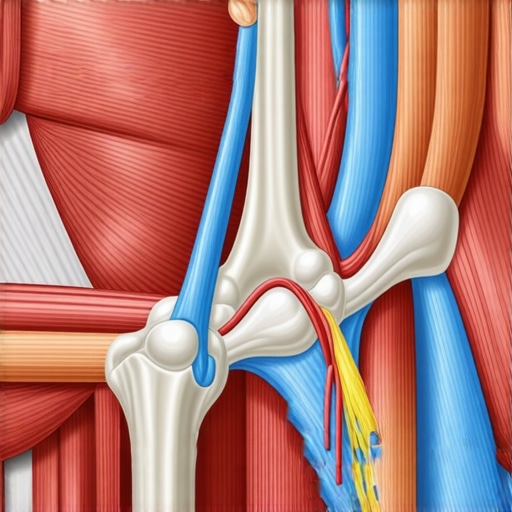
Addressing the Software Instead of the Hardware
The ‘hidden nuance’ here is that most chronic pain is a software problem, not just a hardware problem. Your brain has ‘mapped’ your back as a danger zone, and any movement can trigger a defensive response. To break the cycle, we have to use ‘neural flossing’ or gliding techniques that move the nerve without stretching it to its limit. This is where the nerve flossing technique that silences burning thigh pain becomes a game changer. It’s about gliding the nerve through the surrounding tissue rather than pulling it tight. If you aren’t sure whether your issue is mechanical or neurological, learning how to tell if your sciatica is a disc or muscle issue is the first step toward a real solution. Have you ever fallen into the trap of ‘stretching through the pain’ only to wake up the next day feeling twice as stiff? Let me know in the comments. If you’re ready to stop guessing and start healing with a professional perspective, feel free to reach out to us for a personalized assessment.Once you have moved past the acute emergency phase of a flare-up, the game changes. You are no longer just putting out fires; you are fireproofing the house. I have found that my biggest setbacks happened when I got too comfortable and stopped the small habits that kept my L5-S1 happy. To stay mobile, I rely on a few non-negotiable tools that live in my office and my car. I am not talking about five-thousand-dollar massage chairs. For me, it is about a simple, firm lumbar roll. I use it because how to use a lumbar roll to prevent mid-day back fatigue is the only way I can survive six-hour writing marathons without my pelvis tilting into that dangerous slump position. I also keep a tennis ball in my desk drawer. It sounds primitive, but how a simple tennis ball can fix deep glute tension is my secret weapon for releasing the piriformis before it can start strangling my sciatic nerve again. 
How do I keep my mobility from backsliding during a busy week?
The key is to stop thinking about mobility as a sixty-minute gym session and start seeing it as a series of micro-doses throughout the day. Dr. Stuart McGill, a renowned spine biomechanics expert at the University of Waterloo, emphasizes that there is no such thing as a perfect posture—only the next posture. His research suggests that movement variability is the real secret to disc longevity. This is why I advocate for mobility mastery daily tips to keep your spine and joints healthy that focus on changing positions every thirty minutes. If I am stuck in a meeting, I perform a subtle glute squeeze or a seated pelvic tilt. These small movements keep the synovial fluid circulating in the joints, preventing that end-of-day stiffness that feels like your spine has been glued together. This proactive approach is exactly why maintenance care is better than waiting for a spinal crisis.
The Next Frontier of Spinal Maintenance
Looking ahead, I predict that we are moving away from generic stretching and toward high-tech bio-feedback. In the next few years, we will likely see wearable sensors that track spinal shear forces in real-time, alerting us when our hip flexors have reached a critical tightness threshold before the pain even starts. Until that tech is mainstream, you have to be your own sensor. You need to implement enhance your back mobility ergonomic tips for everyday comfort by auditing your environment. For instance, I recently swapped my standard office chair for a stool that encourages active sitting. It forced my core to wake up and stopped my hips from locking into that ninety-degree death grip. If you want to take your recovery to the next level, I highly recommend trying the tennis ball release on your glutes for just two minutes before bed tonight. You will be amazed at how much lighter your legs feel in the morning. For those who need a more structured plan to stay on track, don’t hesitate to reach out to us for a tailored maintenance strategy.
Lessons My Stiff Hips Taught Me After a Decade of Trial and Error
Reflecting on those years of 3 AM ceiling-staring, I have realized that the most profound shifts did not come from a new gadget, but from a complete change in perspective. First, I learned that pain is a conversation, not a combatant. When my back flared, I used to treat it like an enemy to be silenced; now, I see it as a vital signal that my pelvic alignment needs a simple check-in. Second, the biggest breakthroughs often come from doing less, not more. We are conditioned to think that ‘harder’ equals ‘better,’ but for a sensitive nervous system, a two-minute floor reset beats an hour of aggressive yoga every single time. Finally, I discovered that back pain breakthroughs happen in the small, boring moments—how you stand at the kitchen sink or how you breathe while stuck in heavy traffic.
The Daily Gear That Keeps My Lower Back Quiet
You do not need a full home gym to maintain your mobility progress, but you do need a few reliable allies. These are the tools that actually made the cut for my daily life because they solve specific mechanical problems without taking up space. #IMAGE_PLACEHOLDER_E# My absolute favorite is the simple firm floor; it provides the consistent feedback my brain needs to level my pelvis. For those long days at the computer, I swear by enhance your back mobility ergonomic tips for everyday comfort, which includes using a portable lumbar roll to maintain that natural curve. I also recommend keeping a physical journal—not for your feelings, but to track which specific movements trigger relief. This data is pure gold when you are trying to determine is your back pain a sign of something more serious or if it is just a simple case of postural fatigue.
Start Your Journey Toward a Morning Without Stiffness
Beginning this path can feel overwhelming when you are currently in the middle of a painful flare-up. But remember, your body has an incredible capacity for healing if you stop getting in its own way with aggressive stretching. You now have the tools to reset your pelvis, breathe through the tension, and protect your spine during the day. This is not about being a perfect athlete; it is about being consistent with the tiny, intentional shifts that add up over time. To help you stay on track without the guesswork, I have compiled my favorite mobility mastery daily tips to keep your spine and joints healthy so you can integrate these wins into your life seamlessly. You deserve to wake up feeling refreshed rather than restricted. You have the knowledge now—all that is left is to take that first step. Have you ever noticed your back pain gets significantly worse during particularly stressful weeks at work? Let me know in the comments below.