
Why you should never reach into the backseat from the driver’s seat
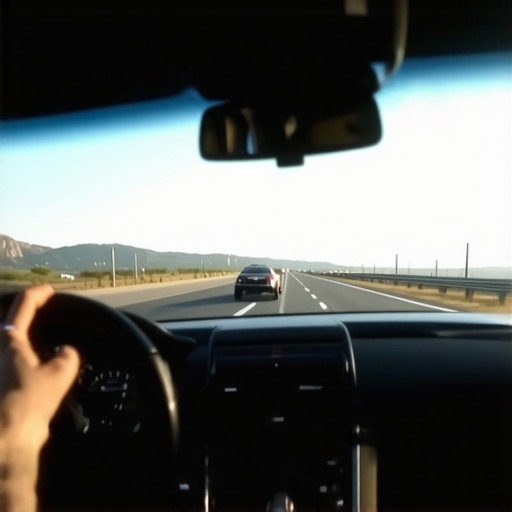
I was sitting at a red light on 5th and Main when I heard it—a sickening pop right between my shoulder blades. I wasn’t in a car accident. I hadn’t even moved the car. I was just reaching for a fallen grocery bag on the floor behind the passenger seat. That split second of thinking “I can reach it” turned into three weeks of sleeping on the floor and a permanent fear of my own upholstery. It is a classic mistake I see neighbors and friends make every single day. We treat our car seats like swivel chairs, but the human spine was never meant to handle that kind of twisting under tension. Today, I want to pull back the curtain on why this specific move is a total disaster for your discs and how you can stop the cycle of car-induced agony before it starts.
Your Spine Hates This Common Driving Habit
If you have ever felt a sharp jab in your lower back while grabbing a jacket from the rear, you are not alone. When you are strapped into a seat, your hips are locked in place, which means any rotation you do has to come almost entirely from your lumbar and thoracic spine. It is the perfect recipe for a herniated disc or a nasty bout of sciatica. I made the mistake of thinking my core was strong enough to handle it, but the truth is that reaching for the back seat is dangerous for your shoulder and your spine because it puts your joints at their absolute end-range of motion. According to the Journal of Biomechanics, spinal loading increases significantly when the trunk is rotated and flexed simultaneously, making even a light object feel like a hundred pounds to your sensitive nerve endings. If you have been struggling with a persistent ache, it is worth asking: is your back pain a sign of something more serious or just a result of these micro-strains?
Does a Simple Reach Really Warrant All This Worry?
Many of my neighbors ask me if I am just being overprotective. They have been reaching for their kid’s diaper bag or a fallen phone for years without an issue. But here is the reality: it only takes one time. That “one time” for me involved a month of physical therapy because I didn’t want to just unbuckle and get out of the car. We often overlook how to relax your shoulders while driving, and when we add a violent twist to an already tense body, something has to give. Learning how to sit in a car for hours is one thing, but knowing when to stop moving is another. Have you ever felt that terrifying “zing” of electricity down your arm or leg while reaching behind you? Tell me I’m not the only one who has learned this lesson the hard way. The goal here isn’t to scare you out of driving, but to help you realize that your mobility is worth more than the five seconds you save by not opening the back door.
Ditch the Backseat Reach Before You Pop a Disc
Think of your spine as a high-tension cable. When you are seated in your car, that cable is already under a significant load because your hips are trapped in a flexed position. Adding a violent twist to grab a bag is like taking a pair of shears to the cable strands. To avoid a disaster, you have to prioritize enhancing your back mobility by simply refusing to rotate under tension. Last month, I was at the grocery store and my phone slipped into the rear footwell. I felt that old “just reach for it” itch. I literally had to talk to myself out loud: “Is this phone worth a month of physical therapy?” I put the car in park, stepped out, and walked around to the back door. It took exactly six seconds, and for the first time in years, I didn’t feel that familiar warning twinge in my lumbar. If you want to achieve real back pain breakthroughs, you have to start with these small, intentional choices that protect your discs from unnecessary torque.
Make the Walk of Pride Around the Car
The most effective way to stop the cycle of car-induced injury is to adopt the “Park and Pivot” rule. If an item is not within a comfortable arm’s reach while you are facing forward, it doesn’t exist until the car is parked and you are standing on two feet. Reaching behind the passenger seat forces your shoulder into an internally rotated position while your spine is in a state of “loaded flexion.” This combination is why reaching for the back seat is dangerous for your shoulder and your lower back. By getting out of the car, you allow your joints to move in their natural planes. 
Try the Ten Second Reset for Your Hips
If you have been sitting for more than twenty minutes, your hip flexors have already started to tighten, which pulls on your lower back. Before you even think about lifting groceries out of the trunk, you need to perform a quick hip reset for relief. Stand next to your car door, take a small step forward with one leg, and gently tuck your tailbone under. This tiny adjustment turns off the “emergency brake” in your pelvis and prepares your spine for movement. Without this reset, you are much more likely to experience a flare-up that sends you searching for swift relief for sciatica later that evening. I used to ignore this step until I realized that my “stiff” back was actually just my hips refusing to let go of the seated position.
Set Your Mirrors for Better Range of Motion
Your neck is often the silent victim of poor car ergonomics. If your mirrors are tilted just a few degrees too low, you will subconsciously pull your head forward, creating a “forward head carriage” that strains the delicate muscles at the base of your skull. You can find several neck pain solutions by simply adjusting your rearview mirror while sitting up perfectly straight. If the mirror looks “wrong” later in your commute, it is a sign that you have started to slouch. This visual cue forces you to maintain better alignment and prevents the cumulative strain that leads to chronic stiffness. When you combine better mirror placement with ergonomic tips for everyday comfort, you turn your daily commute into a session of spinal preservation rather than a slow-motion injury.
Once you have your mirrors dialed in, you might think you’ve won the battle against car-induced back pain. But here is the secret most ergonomic experts won’t tell you: there is no such thing as a perfect static posture. We have been told for decades to sit like statues with our shoulders pinned back, but why your perfect sitting posture is making you stiffer is down to a fundamental lack of movement variability. Your intervertebral discs don’t have their own dedicated blood supply; they rely on a process called imbibition, which essentially means they need movement to pump nutrients in and squeeze waste out. If you are holding a rigid, ideal pose for a two-hour commute, you are essentially starving your spine of the hydration it needs to stay resilient. A study published in the British Journal of Sports Medicine suggests that ‘the best posture is the next posture,’ emphasizing that regular micro-movements and shifting your weight are far superior to one frozen, upright position.
The Myth of the Perfectly Rigid Spine
In my years of obsessing over spinal health and restorative movement, I have seen so many people make the ‘Oops’ mistake of over-correcting their slump. They pull their shoulders back so aggressively that they create a rib flare, which actually shuts down the deep core and places immense pressure on the thoracic-lumbar junction. This is one of those back pain breakthroughs that changes the way you drive: your spine needs to be a willow tree that can sway, not an oak that stands brittle. If your torso is too stiff, you will experience a micro-trauma every time you hit a pothole or reach for a parking ticket.
Is My Persistent Sciatica Actually a Hidden Nerve Tension Issue?
This is the advanced question I get from people who have tried every stretch in the book without success. Often, they believe their hamstrings are ‘short’ or ‘tight’ and spend twenty minutes a day stretching them. However, the hidden reason your hamstrings always feel tight might actually be your nervous system creating protective tension to shield an already sensitized sciatic nerve. If you keep pulling on that ‘tight’ muscle, you are essentially tugging on an inflamed nerve like a rubber band. This is exactly why stretching your hamstrings often makes your sciatica worse rather than better. True mobility mastery involves calming the nervous system through gentle movement and nerve glides rather than aggressive static holds that keep the nerve in a state of high alert.
Avoid the C-Shape Stretching Trap
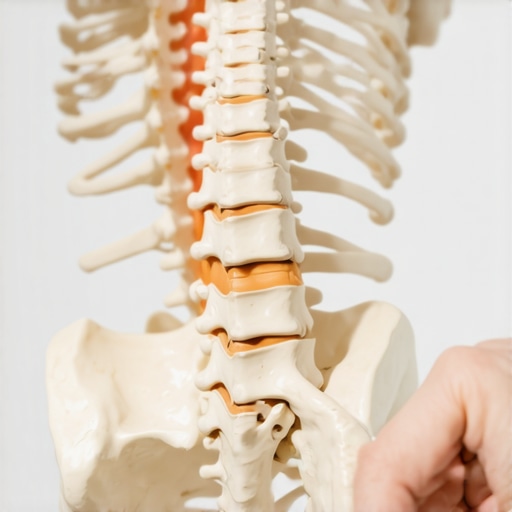
When your back feels like it is about to explode after a long drive, the immediate instinct is to lean forward and pull your knees to your chest. Please, I am begging you to stop pulling your knees to your chest for instant relief. While it feels wonderful for thirty seconds because it temporarily stretches the paraspinal muscles, it is also forcing your lower discs into a ‘C-shape’ flexion. If you have a hidden bulge, this move can push that disc material closer to the nerve root. It is a temporary mask for a potential long-term disaster. If you are unsure if your daily ache is just stiffness or something structural, you must ask: is your back pain a sign of something more serious before you continue these deep flexion stretches. Have you ever fallen into this trap of stretching a pain that just won’t go away? Let me know in the comments.
I used to think that once the sharp pain stopped, I was ‘cured.’ I would go back to my old habits until the next ‘pop’ sent me crawling back to my therapist. It took me three years to realize that why maintenance care is better than waiting for a spinal crisis isn’t just a marketing slogan; it is the only way to stay out of the emergency room. If you want to stop the cycle of car-induced agony, you need to transition from reactive stretching to proactive preservation. This means looking at your car not as a transport vessel, but as a piece of equipment that needs a custom fit.
The Five Dollar Tool That Saved My Commute
One of the most life-changing shifts I made was adding a simple lumbar roll to my driver’s seat. Most car seats, even in luxury vehicles, have ‘built-in’ support that is either too low or too soft. By learning how to use a lumbar roll to prevent mid-day back fatigue, you effectively lock your pelvis into a neutral position. This makes it much harder to slump into that dangerous C-shape we talked about earlier. When you aren’t on the road, you should apply the same logic to your home office and how to pick a chair that actually supports your lumbar curve. I personally use a firm D-shaped roll because it doesn’t shift around when I turn corners. It is a low-tech solution for a high-tension problem.
If you already feel that deep, gnawing ache in your glutes after a long drive, don’t reach for the painkillers just yet. I keep a tennis ball in my glove box for what I call ‘traffic light therapy.’ Understanding how a tennis ball can relieve deep glute and sciatic pain allows you to perform targeted trigger point release while you are standing outside the car or even sitting in a stationary chair. Just be careful not to overdo it; knowing how to use a foam roller for sciatica without making it worse is key because pressing too hard on an active nerve flare can actually increase inflammation.
How do I keep my spine healthy over time?
Consistency is the secret sauce. You don’t need an hour-long routine; you need thirty seconds of mindfulness every time you open the car door. According to Shirley Sahrmann in her seminal work Diagnosis and Treatment of Movement Impairment Syndromes, the cumulative effect of small, repetitive movements—like that twisting reach—is often more damaging than a single heavy lift. She argues that we must train our bodies to maintain ‘relative stiffness’ in the spine while the hips and shoulders do the heavy moving. This is the heart of mobility mastery. By integrating these back pain breakthroughs into your daily routine, you stop the micro-trauma before it reaches a breaking point.
Smart Sensors and the Future of Driving
As we look toward managing back pain in 2025 and beyond, I predict we will see cars equipped with biometric spinal sensors. Imagine your steering wheel vibrating or your seat adjusting automatically the moment it detects your posture beginning to fail. We are moving toward a world where our environments actively protect our health rather than just accommodating our bad habits. Until then, the responsibility sits with us. I want you to try the ‘Park and Pivot’ rule for just 48 hours. Seriously, leave your phone in the backseat if you have to, but force yourself to get out and walk around to grab it. See if that nagging ‘zing’ in your lower back starts to fade when you stop asking your spine to be a swivel chair.
What 500 Hours of Driving Taught Me About Spinal Survival
Looking back at my recovery journey, the most profound realization wasn’t a specific stretch, but the understanding that my body is constantly adapting to my environment. If my environment is a bucket seat that encourages a slump, my fascia will eventually mold into that shape. This is why many people find that why your perfect sitting posture is making you stiffer is down to the lack of variability; you are forcing a shape rather than allowing for natural, fluid movement. I learned that pain isn’t an enemy to be silenced with ibuprofen, but a messenger telling me that my mechanics are failing. The ‘pop’ I felt wasn’t a freak accident; it was the final straw after years of micro-trauma.
- The 1% Rule: Small changes in how you exit the car matter more than a single hour of yoga once a week.
- Habit over Gear: Even the most expensive orthopedic car seat won’t save you if you still twist aggressively to reach the rear floorboards.
- Trust the Warning: That slight tightness in your neck is a signal to pull over and reset before it turns into a full-blown crisis.
#IMAGE_PLACEHOLDER_E#
Tools I Keep in My Glove Box for Spine Protection
I don’t leave the driveway without a few specific items that have earned my trust through years of trial and error. First, knowing how to use a lumbar roll to prevent mid-day back fatigue is the single best investment you can make for under twenty dollars. I also keep a dense tennis ball for quick glute releases during rest stops. For those who want a deeper dive into the science of movement, I highly recommend looking into movement impairment syndromes—it completely shifted how I view back pain breakthroughs and long-term joint health.
Why Your Next Drive Can Be Entirely Pain-Free
Your journey to a life without back pain doesn’t require a total lifestyle overhaul; it just requires you to stop compromising your safety for the sake of convenience. When you respect your body’s limits, you open the door to a level of mobility you might have thought was gone forever. It is time to stop wondering is your back pain a sign of something more serious and start taking the proactive steps that ensure your spine remains resilient for decades to come. You deserve to arrive at your destination feeling better than when you left. Have you ever felt that terrifying ‘zing’ while reaching for something in the car, and what did you do to fix it? Let me know in the comments below!