
Why reaching for the back seat is dangerous for your shoulder

I was sitting in my driveway, the engine still humming, when I saw my water bottle rolling toward the floorboards behind the passenger seat. I didn’t think twice. I twisted my torso, extended my arm at a weird angle, and reached. Tweak. That tiny, sharp sensation in the front of my shoulder was the start of a six-month saga of ice packs and frustration. It’s funny how we think our bodies are invincible until a simple three-pound object proves us wrong. Today, I’m going to show you exactly why that specific “reach and grab” motion is a fast track to a rotator cuff tear and how you can reorganize your car life to stay out of the physical therapist’s office.
Stop Using Your Arm Like a Hook
The shoulder is the most mobile joint in your body, but that mobility comes with a massive trade-off: stability. When you reach into the back seat while sitting in the front, you are putting your shoulder in a position called “end-range internal rotation and extension.” In plain English? You’re asking your tiny rotator cuff muscles to act like a heavy-duty crane while they are completely stretched thin. I learned this the hard way. Early on, I thought I could just “stretch out” the pain, but why your shoulder blade pain is often coming from your lower neck taught me that the issue was way more complex than just a tight muscle. I was actually shearing the joint capsule every time I reached back for my laptop bag. Research published in the Journal of Orthopaedic & Sports Physical Therapy notes that the shoulder’s mechanical advantage drops significantly at these extreme angles, making even light loads potentially injurious.
Is my shoulder just naturally weak?
It’s easy to blame your gym routine or simply “getting old,” but the truth is often found in your daily habits. If you’re constantly fighting the link between tight pecs and constant shoulder aches, your shoulder is already pulled forward before you even start the reach. When you add the twist of a car seat into the mix, you’re basically asking for a pinch. I spent years thinking my bench press numbers meant I had strong shoulders, but I had zero functional stability in those weird, transitional angles. Have you ever felt that sharp, hot electric zap when reaching for something in the car? It’s a sign your body is screaming for a change. Learning how to relax your shoulders while driving in heavy traffic is a great start, but we need to talk about why we need to stop reaching back altogether.
Pivot Your Body Instead of Stretching Your Limits
Think of your shoulder like a small household hinge on a massive vault door. When you stay facing forward and reach into the back seat, you are asking that tiny hinge to bear the full weight of the door at the worst possible angle. The first rule of car ergonomics is simple: if you can’t reach it with your elbow slightly bent and your torso square, you shouldn’t be reaching for it at all. I remember a rainy Tuesday when my gym bag, containing my keys, slid into the rear footwell. Old me would have performed a mid-air contortionist act to grab it. Instead, I forced myself to unbuckle, shift my entire weight toward the passenger side, and use my legs to rotate my hips. It took four extra seconds, but I felt zero strain. To truly enhance your back mobility, you must stop treating your spine like a twist-tie. 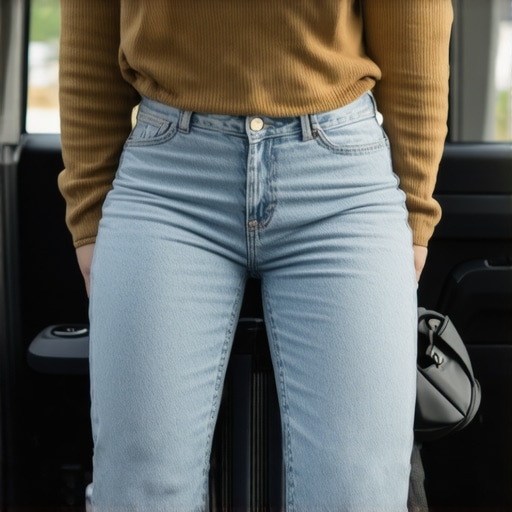
Turn your whole trunk as one unit
If you absolutely must reach back while seated, you have to eliminate the ‘shear’ force. This means unbuckling your seatbelt first. If you stay buckled, the strap pins your shoulder back while your arm tries to move forward, creating a literal vice-grip on your tendons. By unbuckling, you allow your ribcage to rotate. Use your opposite hand on the passenger headrest to pull your body around so you are facing the back seat before your arm ever leaves your side. This movement pattern is a core part of neck pain solutions because it prevents the cervical spine from taking the brunt of a forced rotation.
Keep the weight close to your center of gravity
Physics doesn’t care if you’re in a hurry. A two-pound water bottle feels like twenty pounds to your rotator cuff when your arm is fully extended. When you do grab something from the back, pull it toward your chest immediately. Do not lift it up and over the center console while your arm is straight. This is exactly how poor posture and chronic back pain become a permanent part of your life; you create a massive lever arm that puts hundreds of pounds of pressure on your lumbar discs and shoulder capsule.
Rearrange Your Cabin for Minimal Movement
The best way to fix a bad habit is to make it impossible to perform. I started placing my laptop bag and lunch box on the front passenger floorboard. If someone is sitting there, the items go behind my seat, forcing me to actually get out of the car to retrieve them. This ‘forced’ movement is actually a blessing. It breaks up the static loading of driving. You might also consider how using a lumbar roll can keep your pelvis in a neutral position, making it much harder (and more uncomfortable) to attempt those dangerous, slouchy reaches in the first place.
The ‘Stop and Step’ Method
If an item is out of reach, the ‘Stop and Step’ method is your only safe play. Put the car in park, step out, and open the back door. We often convince ourselves that we are saving time by reaching, but the six months of rehab for a torn labrum will cost you a lot more than those ten seconds in the driveway. I’ve found that even when I’m exhausted after a long shift, taking that extra step helps reset my nervous system and prevents the ‘electric zap’ of a pinched nerve. It’s a small price to pay for a shoulder that actually works when you need it at the gym or at home.I used to think that the stiffer I felt, the more I needed to stretch. It’s the most common mistake I see. You feel a pull in your lower back or a zing down your leg, and your first instinct is to reach for your toes. But here is the contrarian truth: for many people, stretching is exactly what is keeping the pain alive. If you are dealing with nerve irritation, you aren’t dealing with a ‘short’ muscle; you’re dealing with a sensitized nerve that hates being tensioned. This is specifically why stretching your hamstrings often makes your sciatica worse. You are literally tugging on a raw wire, and your body responds by tightening up even more to protect itself.
Stop Trying to Sit Perfectly Straight
We’ve been conditioned to think that slouching is the ultimate sin, but the real enemy is actually stasis. The obsession with “perfect” upright posture often leads to a different kind of disaster. In my experience, why your perfect sitting posture is making you stiffer is because you are over-taxing your small stabilizer muscles without giving them a break. A study published in The Lancet recently highlighted that movement variability—simply moving around more—is significantly more important for spinal health than maintaining a rigid, “correct” position. Your best posture is always your next posture. 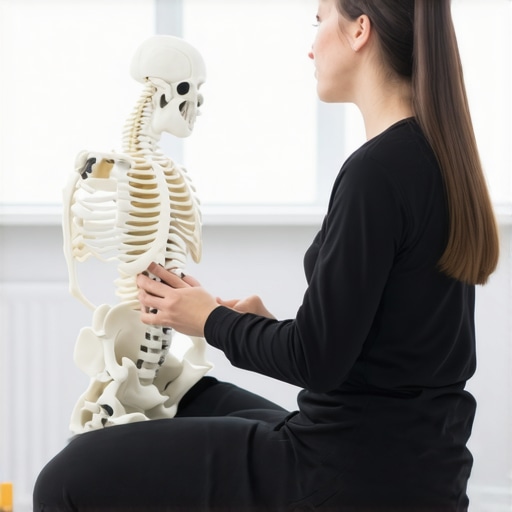
Why does my back still hurt if my core is strong?
Most people believe that “core strength” is a magical shield. You’ve probably heard it a thousand times: “Just do more planks.” However, the nuance that most miss is that core stability is useless if your surrounding joints are immobile. This is exactly why your core strength won’t fix your back if your hips are locked. If your hips are frozen, every time you take a step or reach for a coffee, your lower back has to move to compensate. Your core can be as strong as steel, but if it’s the only part of your trunk doing the work, it’s going to wear out and flame up.
The Warning Signs You Are Overdoing It
The biggest “trap” I see is the “no pain, no gain” mentality applied to mobility. If you feel a sharp, electric sensation, that is not a muscle being stretched—it’s a nerve being pinched. It is vital to recognize is your back pain a sign of something more serious key symptoms to watch before you try to “roll out” the pain with a foam roller. Pushing through neural tension can turn a minor irritation into a multi-month recovery process. Have you ever fallen into this trap of trying to stretch your way out of a nerve flare-up? Let me know in the comments below.Once I stopped chasing the ‘quick fix,’ I realized that my recovery was really about the small, daily investments. I don’t own a $5,000 massage chair, but I do have a few specific items that have saved me thousands in medical bills. The first is a high-density lumbar roll. Most people grab a throw pillow from the couch, but that’s too soft—it collapses. A real McKenzie-style roll provides a constant, firm reminder to your spine to maintain its natural curve. I’ve found that using a lumbar roll to prevent mid-day back fatigue is the single most effective way to stop that late-afternoon ‘slump’ that leads to neck tension.
Tools that Actually Earn Their Spot on My Floor
Beyond the roll, I swear by a simple tennis ball. It’s the ultimate low-tech solution for what I call ‘search and destroy’ missions in my glutes. If you’ve ever felt that deep, localized ache in your hip that feels like it’s buried under six inches of muscle, you need to learn how a simple tennis ball can fix deep glute tension. Dr. Stuart McGill, a world-renowned spine biomechanics expert and author of Back Mechanic, often emphasizes that building ‘stiffness’ in the right places (the core) while maintaining ‘mobility’ in the hips is the secret sauce for spinal longevity. He advocates for the ‘Big Three’ exercises to build that stability without overloading the discs. 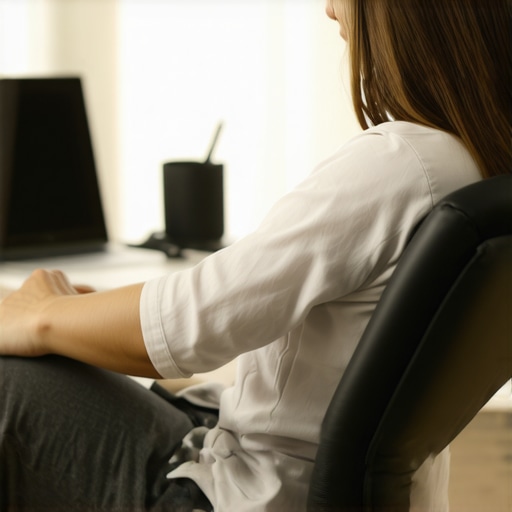
How do I keep my spine feeling young over time?
Maintenance isn’t a chore; it’s a hygiene habit, just like brushing your teeth. I stick to a philosophy of mobility mastery where I spend five minutes every morning just checking in with my joints. If I feel a hint of that familiar sciatic burn, I don’t panic anymore. I immediately go into the nerve glide exercise that calms burning leg pain. It’s about having a toolkit ready so you can act before a ‘tweak’ becomes a ‘tear.’ This proactive mindset is exactly why maintenance care is better than waiting for a spinal crisis.
The Future of Not Feeling Like a Pretzel
Looking ahead, I suspect we are going to see a massive shift toward biofeedback wearables. We already have watches that track our steps; soon, we’ll have shirts with haptic sensors that give a tiny vibration when our shoulders round too far forward or when our pelvis tilts. As we move further into 2025, unlocking mobility expert tips will involve more than just stretches—it will involve real-time data on how we move throughout the day. I challenge you to try this today: take that tennis ball, find the spot in your glute that feels like a knot, and breathe through 30 seconds of pressure. It’s uncomfortable, but the relief on the other side is the first step toward reclaiming your freedom of movement.
Lessons from the Driveway Saga That Changed My Life
I used to think a 60-minute deep tissue massage was the only way to fix my stiffness. I was wrong. True recovery happened when I stopped chasing the symptoms and started paying attention to the ‘whispers’ my body was sending before a full-blown flare-up. One of the biggest shifts for me was learning how to tell if your leg pain is sciatica or a deep muscle knot, which prevented me from over-stretching a sensitized nerve. I also discovered that sometimes the most confusing symptoms have a simple mechanical cause; for instance, understanding why your shoulder blade pain might be a rib out of place can be a total game-changer for those ‘unfixable’ mid-back aches. The most important lesson? Consistency in small movements always beats intensity in occasional workouts. #IMAGE_PLACEHOLDER_E#
The Only Tools I Actually Use Every Single Week
You don’t need a gym full of equipment to keep your spine and shoulders happy. I’ve narrowed my toolkit down to three essentials that provide the highest return on investment. First, a firm lumbar roll is non-negotiable for any car trip longer than ten minutes. Second, I recommend learning how to pick a chair that actually supports your lumbar curve because your home office is where your posture habits are truly forged. Finally, I never leave home without a tennis ball. Knowing how a simple tennis ball can fix deep glute tension has saved me from countless days of hip discomfort during long commutes. These aren’t just gadgets; they are the anchors of a pain-free lifestyle.
Reclaiming Your Life One Movement at a Time
You don’t have to live in fear of your next car ride or a simple reach for the groceries. By making these small adjustments—turning your whole body as a unit, unbuckling your seatbelt before reaching, and respecting your nerve tension—you are building a body that can handle the demands of daily life. Achieving back pain breakthroughs is rarely about one big surgery or a miracle pill; it’s about these tiny, intentional shifts in how you move through the world. Your journey to better mobility starts with the very next time you put your car in park. Have you ever felt that sharp ‘electric zap’ when reaching for something in the backseat? Let me know your experience in the comments below!