
The truth about yoga for sciatica sufferers

I was staring at my ceiling fan, tears blurring my vision, while my right leg felt like it was being toasted by an electric wire. Everyone told me yoga was the answer. “Just stretch it out,” they said. So, I forced myself into a deep pigeon pose, thinking I was “releasing” my hip. Instead, I triggered a flare-up so intense I couldn’t even load the dishwasher for a week. That was my rock bottom. I realized then that yoga isn’t a magic wand; it is a tool that, if used incorrectly, can be a weapon against your own recovery. Today, I want to help you avoid that same pitfall and show you how to actually find sciatica relief without the constant fear of making things worse. Have you ever tried a stretch that felt good for a second, only to have your leg throb with a vengeance all night long? I want to hear your story because I have been in that exact spot.
Your yoga mat might be a minefield for nerve pain
For years, I made the classic mistake of thinking that more stretching equaled more healing. I would spend twenty minutes in a seated forward fold, blissfully unaware that I was essentially tugging on a highly irritated nerve. It is a common trap. When you are dealing with chronic sciatica, your body is in a state of high alert, and aggressive flexibility training can backfire. I remember thinking I just needed to “breathe through the pain,” but all I was doing was stretching my hamstrings until my nerve was screaming. Before you dive into a flow, you have to understand that your nerve needs space, not tension.
Is yoga actually worth the risk when you are already hurting?
It is a fair question to ask. Why would you get on a mat and risk a lightning bolt moment? Interestingly, research published in the Annals of Internal Medicine has shown that structured yoga can be as effective as physical therapy for chronic back pain, but it depends entirely on the type of yoga and the specific poses you choose. If you have ever felt that sharp nerve irritation during a class, you know exactly what I mean. I used to think I was just too stiff, but the reality was that certain poses were actively compressing my sciatic nerve. We need to talk about distinguishing between a muscle stretch and nerve pain before you ever roll out that mat again, because pushing through the wrong sensation is the fastest way to end up back on the floor.
Treat your nerve like a sliding wire, not a rubber band
The biggest mistake I ever made was thinking I could simply stretch the pain out of my leg. Imagine your sciatic nerve is like a thread passing through a series of narrow straws. If the straws are inflamed or out of alignment, pulling on that thread from both ends just creates more friction and heat. This is exactly what happens when you dive into a deep hamstring stretch while your nerve is irritated. Instead, you need to slide the thread back and forth without tension. This is known as nerve gliding or flossing. I remember the first time I tried this; I was so terrified of a flare-up that I only moved my ankle an inch. But that tiny, rhythmic motion did more for my burning calf than an hour of static stretching ever could. You can start with the nerve glide exercise that calms burning leg pain to get that internal sliding motion without the trauma of over-stretching. Think of the nerve as a wet noodle; if it is stuck, yanking it will make it snap, but gently wiggling it helps it find its way home. This is why the nerve flossing technique that silences burning thigh pain is a total game-changer for anyone who feels like their leg is constantly on fire.
Stop pulling your knees to your chest right now
It feels so intuitive to curl into a tight ball when your lower back is throbbing, but if your pain is caused by a disc issue, you are likely just pushing that disc material further toward the nerve. I used to spend every single morning in a knees-to-chest pose, thinking I was helping my L5-S1 disc. In reality, I was just keeping the cycle of inflammation alive by rounding my spine under pressure. You need to stop pulling your knees to your chest for back relief and focus on maintaining a neutral, supported spine. If you feel a sharp pinch during any yoga move, your body is screaming that the straws are pinching the thread. Instead of that deep curl, try the gentle rocking move that calms down a pinched nerve fast. It is subtle, almost like rocking a baby to sleep, and it tells your nervous system that it is finally safe to let go of the protective muscle spasms.
Focus on your hips to give your spine a break
When your glutes fall asleep from hours of sitting, your hip flexors tighten up like a drumhead, pulling your pelvis into a tilt that crushes your lower back. 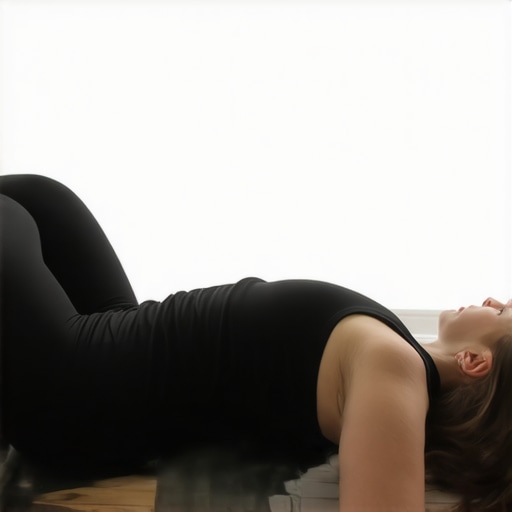 I spent years obsessing over my hamstrings, only to realize that why stretching your hamstrings often makes your sciatica worse was because I was ignoring the front of my body. When I finally shifted my focus to the 5-minute hip flexor release for desk workers, the pulling sensation in my leg actually started to fade because my pelvis was no longer being yanked out of place.
Use the floor as your ultimate feedback loop
The floor is the most honest coach you will ever have. If you cannot keep your lower back in a stable, neutral position during a bridge or a leg lift, you are going too far and risking a setback. I once tried to force a complex yoga transition, only to feel my back seize up because I wasn’t using my core properly. Now, I use the one-legged standing test for hidden spinal instability to check my readiness before I even roll out my mat. It is about building a biological corset around your spine rather than just being flexible. You can even practice the 3-second pelvic reset you can do while waiting in line to keep that alignment consistent throughout the day, ensuring that your yoga practice actually translates into real-world relief.
I see it every day: someone comes in with a tight lower back and spends their morning trying to touch their toes. But here is the nuance most people miss. That stiffness you feel isn’t always a short muscle; often, it is your nervous system’s way of putting on the brakes to protect a sensitized nerve. When you try to stretch through that, you aren’t lengthening tissue—you are just tugging on a defensive reflex. We need to look at back pain breakthroughs that prioritize stability over raw flexibility. If you have been stuck in a cycle of stretch-relief-flare-up, you have likely fallen into the neural tension trap. Have you ever felt like your hamstrings are permanently tight no matter how much you stretch? I would love to hear if you have fallen into this trap in the comments below.
Stop trying to out-stretch a protective spasm
Everyone tells you to stay mobile, but in my experience, pushing for range of motion during a flare-up is like trying to fix a frayed electrical wire by pulling on it. This is the contrarian truth: sometimes the best thing for your mobility is to stop stretching entirely for a week. When your brain perceives a threat to the spine, it creates a ‘muscle splint.’ By forcing a stretch, you are fighting your brain’s survival mechanism. Instead of aggressive lengthening, focusing on expert strategies for lasting comfort often means doing less, not more. I remember a client who spent months on a foam roller, only to find that foam rolling your IT band was actually keeping her hip in a state of constant inflammation. Her body didn’t need more pressure; it needed more support.
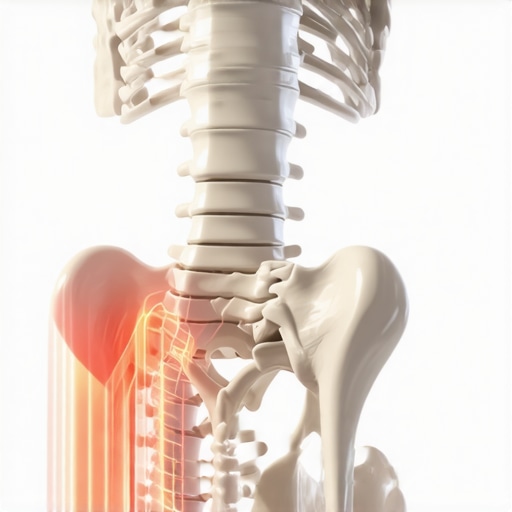
The biggest mistake I see advanced students make is ignoring the difference between a good ache and a neural zing. Research published in the Journal of Orthopaedic & Sports Physical Therapy (JOSPT) suggests that ‘fear-avoidance’ and ‘neural sensitivity’ play a massive role in how we perceive stiffness. If you feel a burning sensation or a sudden sharp pull that lingers, that is not a muscle release—it is nerve irritation. You have to learn how to tell the difference between muscle soreness and nerve irritation before you ever attempt a deep twist or fold. Pushing through neural tension is a fast track to a month of bed rest.
Why does my pain migrate even when I am being careful?
This is a sophisticated question many people ask when they start doing the right things. You might fix your lower back only to have your calf start throbbing, or your neck starts acting up. This ‘peripheralization’ or ‘centralization’ is your body’s way of processing the nerve signal. It is a sign that your mechanical load is shifting. If you notice your pain moving further down your leg, it is a red flag that you are over-doing the mobility work. You must check if your back pain is a sign of something more serious if the pain starts traveling away from the spine. True progress is when the pain moves from the foot or calf back up toward the center of your back, even if it feels more intense in that one spot. This is why I advocate for daily tips to keep your spine healthy that focus on core integration rather than just hanging out in a deep lunge.
Building a bulletproof back isn’t about one hero session; it is about the boring, quiet stuff you do when no one is looking. I used to think I needed a $2,000 ergonomic throne to fix my issues, but I quickly learned that even the most expensive chair cannot save you if you do not know how to pick a chair that actually supports your lumbar curve. My secret weapon is actually far cheaper: a simple McKenzie lumbar roll. I take it everywhere—to the office, in the car, and even on planes. Using it correctly is the difference between constant fatigue and preventing mid-day back fatigue because it maintains that natural curve that prevents your discs from bulging outward. I also learned to stop relying solely on high-tech massage guns for every ache. While they feel great, often nothing beats using a tennis ball to relieve glute tension. It is localized, intense, and forces you to actually breathe into the tight spot rather than just numbing it with vibration.
Dr. Stuart McGill, a world-renowned spine biomechanics expert and author of Back Mechanic, emphasizes the concept of ‘spinal hygiene’—the idea that how you move throughout your entire day matters more than the 30 minutes you spend exercising. This research highlights that maintaining the ‘stiffness’ of the core through specific, non-bending movements is often more protective than raw flexibility. This is why I have realized that maintenance care is better than waiting for a spinal crisis. If you are only reacting to pain, you are already behind the curve.

How do I maintain my mobility progress for the long haul?
The answer lies in consistency over intensity. I have transitioned my routine to focus on ‘movement snacks’ throughout the day rather than one grueling hour at the gym. Looking toward the future, I predict we will see a surge in smart-clothing and AI-powered wearable sensors that track spinal shear in real-time, effectively giving us a ‘digital coach’ to prevent injury before the first twinge of pain even occurs. Until then, you are the coach. You have to be the one to manage your back pain in 2025 by staying ahead of the stiffness. Every time I feel that familiar tightness creeping in from a long session at my desk, I perform the Bruegger position to reset my posture. It takes thirty seconds and completely opens up my chest and spine. If you are serious about long-term results, try doing this every single hour for the next three days. You will be shocked at how much simple exercises make a difference when they are performed consistently. Do not wait for the next big flare to start caring about the little things.
The Lessons I Learned the Hard Way About Nerve Recovery
If I could go back to that day on the floor, I’d tell myself that flexibility is a luxury, but stability is a necessity. My biggest lightbulb moment was realizing that ‘tightness’ was actually a protective shield. When your brain thinks your spine is in danger, it clamps down the muscles. Trying to stretch those muscles is like trying to force a locked door; you’re better off finding the key through stability work.
Secondly, I learned that ‘no pain, no gain’ is the fastest route to a doctor’s office. In the world of nerves, if it feels like a stretch, it might be a strain. You have to learn how to tell if your sciatica is a disc or muscle issue before you ever commit to a long-term yoga plan. Finally, I realized that my environment—the way I sat at my desk and drove my car—mattered more than the hour I spent on my mat. Understanding the link between poor posture and chronic back pain changed the way I lived every minute of my day.
My Non-Negotiable Kit for a Healthy Spine
#IMAGE_PLACEHOLDER_E#
You don’t need a gym full of equipment to see progress. My daily toolkit is surprisingly simple. First, I never travel without a McKenzie lumbar roll. It’s the only way I can sit for long periods without my legs going numb. Second, the book Back Mechanic by Dr. Stuart McGill is my ‘spine bible’; it taught me the mechanics of movement better than any fitness class ever could. Finally, a simple tennis ball is my best friend for releasing those deep knots that crop up after a stressful day. These tools empower me to handle minor twinges before they become full-blown crises.
Your Path to a Pain-Free Future Starts Today
Recovery isn’t a straight line, and there will be days when you feel like you’ve taken two steps back. But every time you choose stability over a risky stretch, you are winning. You have the power to change your narrative from ‘I have a bad back’ to ‘I am building a stronger spine.’ By using proven approaches to end discomfort now, you are investing in your future mobility. Don’t be afraid to take it slow. Your body is incredibly resilient when you give it the right environment to heal. If you ever feel stuck or overwhelmed, don’t hesitate to reach out and contact us for guidance tailored to your specific journey.
Have you ever had a specific yoga pose that you thought was helping, but it actually made your leg pain worse? I’d love to hear your experience in the comments below.