
The Proper Way to Hold a Baby to Protect Your Back

I remember the exact moment my spine decided it had enough. I was standing in the middle of our dimly lit nursery at 3:00 AM, rocking my newborn. To get her to stop crying, I had aggressively shifted my hip to the left, creating a temporary shelf for her to rest on. Suddenly, a sharp, white-hot flash of pain shot through my lower back, radiating down my thigh. I almost collapsed right there on the rug. Over the next few weeks, that temporary tweak blossomed into daily discomfort, leaving me searching for lasting sciatica comfort. I realized that my maternal instincts were spot on for comforting my baby, but my posture was absolute garbage for my skeleton. If you are currently nursing a sore back alongside your little one, know that you do not have to just live with this pain. We are going to fix your lifting mechanics today so you can hold your sweet baby without destroying your spine.
Your Spine is Screaming Because of the Hip Shelf
When we bring home a new baby, we naturally adapt our bodies to keep them safe and comfortable. The absolute biggest mistake I made early on was treating my body like a piece of modular furniture. I would bend completely at the waist to scoop my daughter out of her crib, or I would pop my hip out to the side to support her weight while trying to stir a pot of soup. By doing this, I was completely turning off my deep stabilizing muscles and putting all that pressure directly on my ligaments and joints. This constant, uneven loading is why so many new parents suffer from chronic issues. In fact, research published by the National Institutes of Health highlights that poor lifting techniques and sustained awkward postures are direct contributors to postpartum musculoskeletal pain, affecting up to 70% of new mothers. Transitioning into parenthood shouldn’t mean sacrificing your physical health. By adjusting how you lift and carry, you can actively improve your back mobility and keep pain at bay. Have you found yourself leaning to one side or waking up with a stiff lower back just from holding your little one?
Is baby-wearing and carrying actually supposed to hurt this much?
Absolutely not. Many parents accept back and neck stiffness as an unavoidable rite of passage, but pain is your body’s alarm system telling you that your structural alignment is compromised. When you hold a baby with a rounded spine, you mimic the exact same strain that office workers get. This is why learning how posture affects chronic back pain is so critical for new parents. You aren’t just holding a baby; you are performing repetitive heavy lifting hundreds of times a day. If your joints are misaligned, every lift acts like a tiny hammer chipping away at your spinal health. Let us look at how we can easily change these daily habits to keep your body strong and pain-free.
Step Out of the Hip Shelf and Into Your Feet
To stop using your hip as a biological shelf, you have to change how your feet interact with the floor. When my daughter was four months old, I found myself standing in front of the microwave, holding her on my popped-out left hip while trying to stir oatmeal with my right hand. Suddenly, my left knee buckled and a familiar pinch flared up in my lower back. In that moment, I forced myself to shift my weight so that both feet pressed evenly into the linoleum. When you distribute your weight equally, your pelvis levels out. This simple alignment trick instantly reactivates your glutes and core, taking the pressure off your lumbar joints. It helps to imagine your feet as four-cornered stamps; you want to press all four corners of both feet into the ground at the same time. If you constantly stand on one leg, learning why crossing your legs is the fastest way to tilt your pelvis will help you realize how these minor, seemingly harmless daily habits slowly pull your entire skeletal frame out of alignment.
Keep Your Kiddo Close to Your Center of Gravity
Every inch your baby moves away from your chest multiplies the force on your lower spine. Imagine holding a ten-pound bowling ball right against your chest versus holding it at arm’s length; your arms and back would give out within seconds of holding it far away. Yet, we do this constantly with our kids when reaching into strollers or deep cribs. To fix this, always step as close to your baby as possible before you bend down. Bring your chest right up to the crib rail, hinge at your hips, and hug your baby close to your body before you begin the upward lift. Keeping the load close to your center of gravity prevents the shearing forces that lead to disc injuries and severe discomfort. If you are already dealing with shooting sensations down your leg, learning proven approaches to end discomfort can help you soothe those aggravated nerve pathways.
Ditch the Waist Bend and Use a True Hip Hinge
The classic parent lift involves keeping the legs completely straight and rounding the spine like a fishing rod to scoop the child off the floor. This is a fast track to a herniated disc. Instead, you need to initiate the movement by pushing your butt backward, as if you are trying to close a car door with your hips while your hands are full of groceries. This is a hip hinge, and it forces your massive glute and hamstring muscles to do the heavy lifting instead of your delicate lower back. I remember practicing this in my living room with a pile of plush toys before I felt confident doing it with my wriggling baby. Keeping your spine long and straight protects your lower back from twisting under pressure, which is crucial for preventing severe nerve irritation. If your hips feel too tight to even attempt a hinge, you can learn exercises that make a difference in your back mobility to free up your pelvic range of motion.
Keep Your Head Up to Save Your Neck and Shoulders
When we look down at our babies to check on them, our heavy heads pull our neck vertebrae forward out of alignment. This constant downward gaze is a major cause of upper back tension. To avoid this, bring your baby up to your eye level rather than dropping your head down to theirs. Keep your ears stacked directly over your shoulders while you hold them. Keeping your skull balanced atop your spine drastically reduces the strain on your upper trapezius muscles. If you are already struggling with a stiff upper back, you can explore proven techniques to regain your range of motion to help release that deep, stubborn muscular tension.
The Myth of Standing Up Straight for Spinal Health
When you are exhausted and your body aches from carrying a newborn, the most common advice you will hear is to simply stand up straight. However, this is actually a massive trap. Forcing your body into a rigid, military-style posture actually locks up your joints and prevents your natural shock-absorbing curves from doing their job. In fact, learning why standing up straight is actually making your back pain worse reveals that overcorrecting by pulling your shoulders rigidly back and tucking your tailbone tight creates massive static tension in your lumbar spine. Instead of finding relief, you end up exhausting your secondary stabilizer muscles, which eventually give out and trigger a painful spasm. Real spinal health requires dynamic, fluid alignment, not rigid, frozen postures.
Why do standard core exercises fail to protect your back after pregnancy?
Many well-meaning fitness guides tell postpartum parents to perform planks and sit-ups to rebuild their core strength after baby. However, traditional abdominal exercises often do more harm than good if your deep pelvic floor and transverse abdominis muscles are not firing properly. A study published in the Journal of Women’s Health Physical Therapy emphasizes that postpartum core rehabilitation must focus on intra-abdominal pressure control rather than superficial muscle contraction. If you jump straight into standard abdominal work without correcting your breathing mechanics, you increase pressure on your lower back and pelvic organs. This is why you should learn why you should stop doing sit-ups for core strength and focus on deeper, stabilizing movements instead.
The Hamstring Stretch Trap that Makes Sciatica Worse
When parents feel a tight, pulling sensation in the back of their legs, their immediate instinct is to bend over and stretch their hamstrings. This is a critical mistake if your discomfort is actually originating from an irritated sciatic nerve. Static hamstring stretches put intense tension on the sciatic nerve pathway, pulling it taut across the piriformis muscle and the lumbar discs. If your leg pain is caused by a mild disc bulge, this pulling motion acts like a saw blade on an already inflamed nerve root. You must learn why some sciatica stretches actually pinch the nerve further to avoid turning mild postpartum soreness into a chronic, debilitating condition. If you want to truly release that tension, you need to address the root pelvic alignment rather than aggressively pulling on the nerve. Have you ever fallen into this trap of stretching a tight spot only to find it felt worse the next day? Let me know in the comments.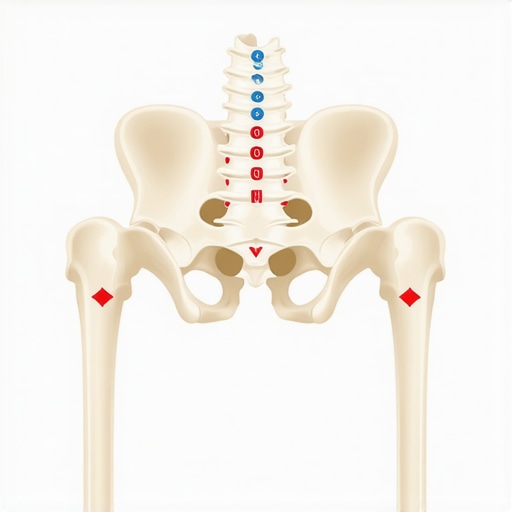
Fix Your Hips to Save Your Spine
Real, lasting relief from parenting-induced back pain does not come from passive stretching; it comes from establishing pelvic stability. When your pelvis is tilted or rotated from carrying a child on one side, your lower back is forced to overwork with every single step you take. By learning the simple way to check your own spine for pelvic tilt, you can identify these subtle structural imbalances right at home. Once you know which way your pelvis is shifting, you can use targeted exercises to level your hips, deactivate your tight hip flexors, and finally allow your back muscles to relax. Transitioning your physical recovery from random stretches to targeted pelvic balancing is the ultimate secret to lifting and carrying your baby completely pain-free.
Maintain Your Spine Health with These Daily Tools
Once you understand how your pelvic alignment affects your posture, you need consistent, daily tools to maintain those gains. I do not believe in buying expensive, high-tech gadgets that end up gathering dust in a closet. Instead, I rely on simple, highly specific tools that integrate directly into your daily routine with your baby. My absolute favorite tool is a high-density, half-round foam roller. Unlike standard round rollers which can be too aggressive on an inflamed postpartum back, a half-round roller provides a stable flat edge on the floor. I use this flat surface to practice a modified pelvic tilt, allowing me to gently realign my lower back without triggering muscle spasms. I also highly recommend using a lumbar roll specifically designed for your chair. If you use a lumbar roll during feed times, you can easily enhance your back mobility while taking the pressure off your sciatic nerve. When we look at the future of postpartum care, I predict we will see smart, wearable posture sensors integrated directly into nursing bras and baby carriers, giving parents real-time haptic feedback before they even realize they are leaning into their hip.
How do I maintain my spinal alignment over time while carrying a growing child?
Consistency is much more important than intensity when keeping your spine healthy. You do not need to spend an hour in the gym to keep your joints moving. Instead, focus on small, micro-movements throughout your day. Every time you pick up your baby from their crib, treat it as a deliberate practice. Focus on pressing both feet firmly into the floor and keeping your head balanced over your shoulders. If you find yourself slipping back into your old habits, take thirty seconds to reset. I recommend practicing the dead bug exercise on your living room rug while your baby is doing tummy time. Using the dead bug exercise variation that actually protects your spine helps rebuild that deep pelvic floor connection. Additionally, biomechanics expert Katy Bowman emphasizes that varied movement throughout the day, rather than one concentrated workout session, is what truly prevents tissue degeneration. If your calves are tight from constantly leaning forward to soothe your baby, learning why your calves are tight and how it pulls on your lower back will help you release that tension from the ground up, protecting your lumbar spine from chronic wear and tear.

My challenge to you today is to try just one advanced adjustment: the next time you hold your baby, deliberately focus on your feet. Press all four corners of both feet into the floor, level your pelvis, and feel your core immediately engage to support your baby’s weight. If you are struggling with persistent pain that does not seem to budge even with better mechanics, explore back pain breakthroughs for restored mobility to help guide your recovery.
My challenge to you today is to try just one advanced adjustment: the next time you hold your baby, deliberately focus on your feet. Press all four corners of both feet into the floor, level your pelvis, and feel your core immediately engage to support your baby’s weight. If you are struggling with persistent pain that does not seem to budge even with better mechanics, explore back pain breakthroughs for restored mobility to help guide your recovery.
The Hardest Postpartum Lessons I Had to Learn the Hard Way
When you are in the thick of sleep deprivation, body mechanics are usually the last thing on your mind. However, surviving those early months taught me a few invaluable truths about my body that no standard parenting book ever mentioned:
- My baby’s weight wasn’t the problem: It was my constant physical compensation. Carrying a growing child is a natural progressive overload; your body is designed to adapt to it if you maintain clean structural alignment.
- Resting on the couch often made it worse: Soft, sink-in cushions actually collapsed my pelvis into a deeper tilt, which is why I eventually learned why your back hurts more after a day of resting on the couch instead of recovering.
- Your breath is your actual corset: Tightening your stomach muscles isn’t enough. Learning how to breathe down into your pelvic floor and lower back does more to stabilize your spine than a hundred crunches ever could.
The Simple Gear That Saved My Spine
You do not need a living room full of complex therapeutic equipment to get your physical health back on track. These are the highly specific, low-cost tools that kept me moving safely during my recovery:
- A High-Density Half-Round Foam Roller: Placing the flat side down gives you a completely stable base to perform gentle pelvic tilts and calf stretches without risking a sudden lumbar spasm.
- A Firm Lumbar Roll: I strapped this to my nursing chair immediately. If you feed your baby multiple times a night, using the specific way to use a lumbar roll for maximum relief keeps your lower back supported during long, static holds.
- The Babywearing Hip Seat Carrier: When your child gets heavier, a carrier with a solid, built-in shelf distributes their weight directly to your legs, preventing you from throwing your own hip out to the side.
How to Reclaim Your Body While Raising Your Child
Parenthood is an incredible physical marathon, but it should not require you to live in a state of constant pain or limited mobility. You do not have to wait until your kids are grown to start feeling like yourself again. By making tiny, conscious changes to how you stand, bend, and breathe during your daily routine, you can actively heal your body from the ground up. True, lasting lasting sciatica comfort comes from these small, consistent moments of mindful movement.
Which of these lifting mistakes have you been making during your daily parenting routine? Let me know in the comments below!