
The dead bug exercise variation that actually protects your spine
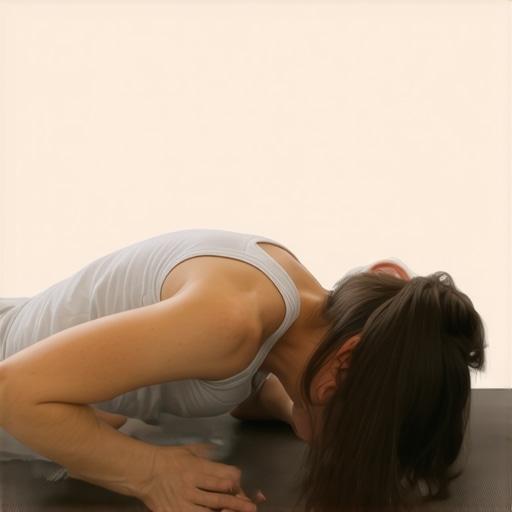
I was lying on my living room rug, legs in the air, feeling like a flipped-over beetle, and my lower back was absolutely killing me. It didn’t make sense. Every physical therapist and fitness expert online said the dead bug was the holy grail for core stability, yet here I was, feeling a familiar, sharp pinch in my lumbar spine. I realized then that I was making the same mistake most of us do: I was focusing on moving my limbs instead of anchoring my spine to the floor. My back was arching so high you could have slid a thick paperback novel under there. That’s not core work; that’s just asking for a flare-up. I was desperately searching for back pain breakthroughs that actually worked, but I was failing at the basics.
Your Spine Deserves Better Than a Flailing Core
We’ve been told that core strength is the key to fixing everything from stubborn sciatica to that nagging morning stiffness. But if you’re performing the dead bug and your ribs are flaring toward the ceiling, you’re actually putting more pressure on your discs. I learned the hard way that tight legs aren’t always the culprit; often, it’s a lack of stiffness in the right places. The variation I want to share with you today changes the game by forcing your spine into a protected, neutral position before you even think about moving a finger. It’s about creating a canister of pressure in your midsection that acts like a natural back brace.
Can This Simple Tweak Really Fix My Back Pain?
I get it. You’re skeptical because you’ve tried core exercises before and ended up needing to ice your lower back for three days straight. I was right there with you, thinking my spine was just broken. But the truth is, most of us are using our back muscles to do the work our deep abdominals should be handling. According to research published in the Journal of Electromyography and Kinesiology, the deep transverse abdominis must fire before limb movement to effectively stabilize the spine. If you miss that timing, the exercise is useless. Today, we’re going to fix that timing and finally give you a move that builds strength without the subsequent agony. Have you ever felt like a core exercise was actually making your back feel worse? You aren’t alone, and it’s usually just a tiny technical error.
Anchor Your Spine with the Wall Dead Bug
The secret to this movement isn’t just lying on the floor and flailing; it’s about the tension you create before a single limb moves. If you’ve been told to stop doing planks if your back already hurts, this is your new baseline. Start by lying on your back with your head about six inches away from a sturdy wall. Reach your arms overhead and press your palms flat against the wall. You aren’t just touching it; you are trying to push that wall into the next room. This overhead reach engages your serratus anterior and helps pin your rib cage down, which is crucial because why your rib cage position determines your shoulder health is directly linked to how your lower back behaves. 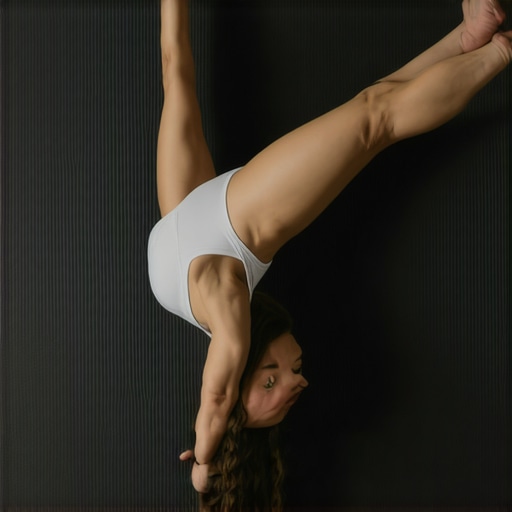
Turn Your Torso into a Sealed Canister
Think of your torso as a soda can. A full, sealed can is incredibly strong and can support weight, but an open, empty can crumples the moment you step on it. Most of us move through life as ’empty cans’ because of the breathing habit that is keeping your back muscles tight. To fix this, take a deep breath into your belly and sides—not your chest. As you exhale, imagine ‘knitting’ your ribs down toward your hip bones. You should feel your lower back flatten against the floor. I remember the first time I actually got this right in my basement; I pushed against a heavy weight bench so hard my arms started shaking. My wife thought I was having a seizure, but for the first time in years, that ‘clicking’ feeling in my hip just stopped. It was messy and I was red-faced, but it worked.
The Slow Motion Leg Drop
Once you have the wall tension and the breath-lock established, lift your legs into a tabletop position—knees bent at 90 degrees directly over your hips. This is where most people fail. They drop their leg fast and let their back arch. Instead, slowly lower one heel toward the floor while keeping the pressure against the wall constant. Only go as low as you can without your back leaving the floor. If you can only move three inches, move three inches. This is one of those simple exercises that make a difference only if you prioritize form over range of motion.
Keep Your Neck Out of the Equation
While you are focusing on your core, don’t let your neck take the strain. If you feel your chin jutting toward the ceiling, you’re likely compensating for a stiff mid-back. You might find that how a simple reach and breathe move can decompress your back also helps relax those neck extensors. Keep your gaze straight up and tuck your chin slightly, as if you’re holding a tennis ball against your throat. This ensures the tension stays in your ‘canister’ and doesn’t migrate to your cervical spine.But even when you get the neck and the canister right, there’s a deeper nuance most people miss: the difference between flexibility and functional stability. We often treat mobility like a gymnastics competition, but for those of us with chronic issues, ‘more’ isn’t always ‘better.’ In fact, why stretching your hamstrings won’t fix your tight legs is one of the hardest pills to swallow. Most people don’t realize their hamstrings feel tight because they are being pulled taut by a tilted pelvis, not because the muscles themselves are short. If you keep stretching them without addressing the pelvic position, you’re just making the spine more unstable.
Stop Stretching Your Way into More Pain
I used to think that every ‘pinch’ in my lower back required a deep stretch, but I was actually falling into a dangerous loop. When you have nerve irritation, why some sciatica stretches actually pinch the nerve further becomes a painful reality. You’re essentially flossing a raw, inflamed nerve over a hard bone. The contrarian truth is that you often need more ‘stiffness’—a dirty word in the yoga world, but a lifesaver in clinical practice. Dr. Stuart McGill, a world-renowned spine biomechanics expert, has proven that creating ‘stiffness’ through the core musculature helps transfer load away from the sensitive discs. If you lack this control, you’ll likely find that why standing up straight is actually making your back pain worse because you’re using your ligaments and joints for support instead of your muscle ‘canister.’ 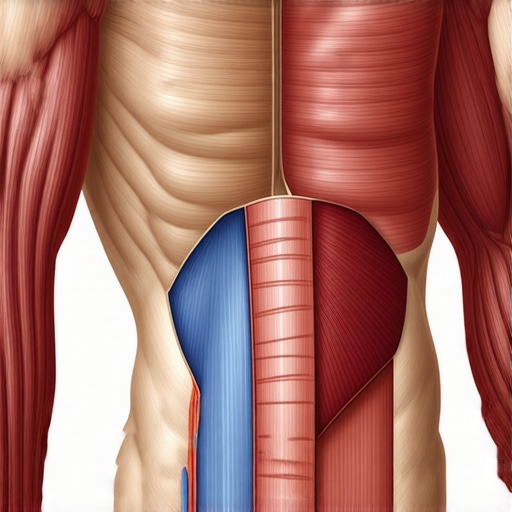
Does a Hyper-Mobile Spine Actually Increase Injury Risk?
This is the question that separates the beginners from those who truly understand spinal health. If your vertebrae move too much—what we call segmental instability—your brain will ‘lock down’ the surrounding areas as a protective reflex. This is exactly how a stiff upper back is forcing your neck to move too much. You end up with a chronically stiff neck and an overly mobile lower back—a recipe for long-term wear and tear. True mobility mastery isn’t about how far you can bend, but how well you can resist unwanted movement under load.
The Compensation Trap That Ruins Your Progress
One of the biggest ‘oops’ factors I see in my own journey and with others is chasing the sensation of a stretch rather than the function of the movement. If you feel a ‘good stretch’ in your lower back while performing the wall dead bug, you’ve already lost the battle. Your lower back shouldn’t feel ‘stretched’; it should feel pinned, protected, and incredibly boring. When you cheat and let the back arch just to get your leg lower to the ground, you aren’t working your core; you’re just grinding your facet joints together. Research in the Journal of Orthopaedic & Sports Physical Therapy suggests that patients who prioritize this type of segmental stabilization show significantly better long-term recovery than those who stick to general stretching routines. If you’ve finally started seeing the one sign that your sciatica is finally starting to heal, the last thing you want to do is regress by over-stretching the nerve. Often, the hidden reason your legs feel heavy during your evening walk is simply your nervous system screaming for more stability. Have you ever fallen into this trap of thinking more flexibility was the cure, only to find yourself stiffer the next morning? Let me know in the comments.If you’re serious about making these changes stick, you need a way to see what your body is doing when your nervous system is lying to you. I spent months thinking my back was flat against the floor, only to set up a tripod and realize I was still arching like a cat. This is where the simple test for text neck you can do in the mirror becomes an essential daily ritual. You simply cannot fix what you cannot see. I personally recommend using your smartphone—not for scrolling, but for recording one 30-second set of your wall dead bugs from the side. When you watch it back, you’ll see the exact millisecond when your ribs start to lift or when the real reason your neck feels stiff reveals itself through a jutting chin.
Stop Guessing and Start Filming Your Sets
Beyond the camera, my favorite low-tech tool is a standard bathroom towel. I use the simple towel roll trick to provide tactile feedback during floor work. If I can feel the towel under my lumbar spine, I know I’ve lost my ‘canister’ pressure. This kind of immediate sensory feedback is more valuable than any expensive gym machine because it trains your brain to recognize proper alignment in real-time. In the coming years, I predict we will see a surge in wearable biofeedback sensors that vibrate when our spinal ‘canister’ loses pressure, but for now, your phone and a rolled-up towel are your best allies for back pain breakthroughs. 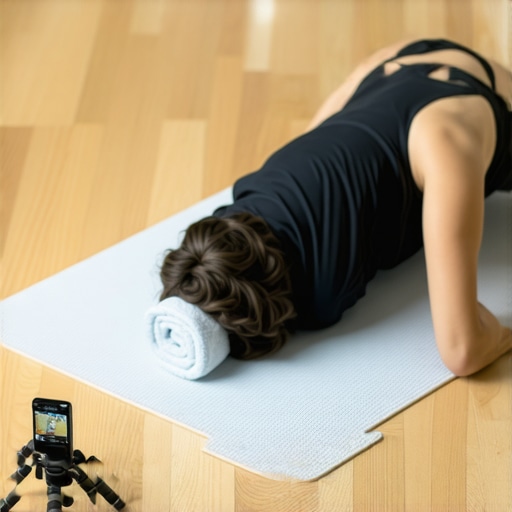
How do I keep my spine stable for the long haul?
Long-term maintenance isn’t about doing more exercises; it’s about integrating that ‘canister’ feeling into your most boring daily tasks. If you can hold that wall dead bug tension for a minute but then immediately go back to how your kitchen counter height is straining your neck, you’re just treading water. You have to learn the specific way to vacuum that protects your lower back and how to carry a heavy laundry basket without a back spasm. The goal is to move from ‘doing an exercise’ to ‘moving with intention’ throughout the day. Dr. Kelly Starrett, a physical therapist and author of Becoming a Supple Leopard, emphasizes that human beings should be able to perform basic maintenance on their own bodies, which requires constant vigilance over these small, repetitive movements.
The Low-Tech Tools That Actually Move the Needle
Don’t overlook the impact of your environment on your progress. If you’ve achieved mobility mastery in your morning routine, don’t throw it away at the office. Implementing the 15-degree rule for your computer monitor can prevent your core from switching off while you type. I also suggest looking into how to set up your home office for less than fifty dollars to ensure your chair height and desk angle aren’t undoing the stability you’re working so hard to build. Here is my advanced challenge for you today: the next time you feel that 3 PM slump, don’t reach for caffeine. Instead, stand up and perform three ‘canister’ breaths while maintaining the exact overhead reach feeling we used against the wall. See if your focus returns when your spine is finally supported.
What I Finally Understood About My Spinal Canister After Years of Failing
Reflecting on my own journey, the first thing I realized was that “more” is almost never better. I used to think doing fifty reps of a sloppy exercise was superior to five reps of a perfect one. I was wrong. True back pain breakthroughs happen in the quiet, focused moments of high-tension holds, not during high-rep sweat sessions. Secondly, your brain will try to cheat as a survival mechanism. When your deep core gets tired, your nervous system will naturally recruit your neck or your hip flexors. You have to stay hyper-vigilant to catch these shifts before they turn into a flare-up. Third, that annoying “click” in your hip is usually a signal of instability, not a permanent injury. Once I mastered the canister breath and anchored my spine, that clicking vanished within weeks. Finally, understanding the link between poor posture and chronic back pain isn’t just about how you stand; it’s about how you manage internal pressure during movement.
My Non-Negotiable Kit for a Bulletproof Back
I didn’t get better by using expensive machines; I got better by using the right knowledge and a few simple tools. Back Mechanic by Dr. Stuart McGill is the first thing I recommend to everyone; it’s the definitive guide to understanding why your spine hurts and how to stop the cycle. Secondly, a cheap smartphone tripod is essential because you cannot fix what you cannot see. Filming my sets revealed that my ribs were flaring long before I could “feel” it. I also rely on a yoga block placed between the knees during the dead bug to help engage the adductors and further stabilize the pelvis. Lastly, I’ve integrated the specific way to use a lumbar roll for maximum relief into my office chair to ensure the stability I build on the floor doesn’t evaporate while I work.
#IMAGE_PLACEHOLDER_E#
Your Path to Pain-Free Movement Starts Today
You don’t need a massive lifestyle overhaul to start reclaiming your life. The wall dead bug is a portable, potent tool that you can use in a hotel room, at the office, or right in your living room. Remember, you aren’t just moving your limbs; you are building a protective shield for your spine. Stay consistent, prioritize the quality of your “canister” breath over the range of your leg drop, and keep aiming for mobility mastery. Your back has supported you through every challenge of your life; it’s finally time to return the favor by giving it the structural stability it deserves. When you feel that core engage correctly for the first time, you’ll realize that relief was never about stretching more—it was about stabilizing better. Did you find it harder to keep your back flat or to keep the constant pressure against the wall? Share your experience in the comments below!