
Why standing up straight is actually making your back pain worse
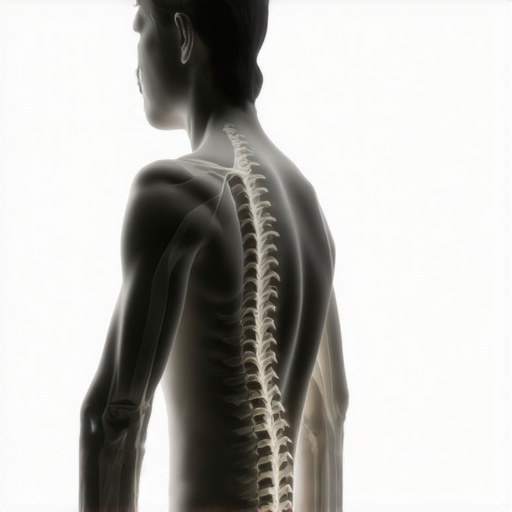
I remember sitting at my desk, shoulders pinned back and chin tucked like I was on parade, wondering why I felt like a coiled spring ready to snap. I had been told my whole life to ‘sit up straight,’ so I did. I forced it. I fought my body every single hour. But my lower back was screaming, and my neck felt like it was being gripped by a pair of pliers. It was a miserable, rigid existence. I thought I was doing everything right, but the truth was, my obsession with being upright was the very thing fueling my agony. I had fallen into the trap of thinking that ‘good posture’ meant ‘static posture,’ and it was a mistake that cost me years of comfort. If you have ever felt more exhausted from trying to sit correctly than from actually working, you are not alone. Today, I want to show you why that stiff, military stance is actually a recipe for disaster and how we can find a way to move that doesn’t leave you feeling like a brittle mannequin.
Stop Trying to Look Like a Statue
The biggest mistake I made early on—and I see this everywhere—is equating ‘straight’ with ‘healthy.’ When we force ourselves into an unnaturally tall position, we aren’t actually supporting our bones; we are just clenching our muscles into a state of perpetual fatigue. I used to think my back was weak, but in reality, it was just overworked from trying to maintain a ‘perfect’ look. Research actually backs this up. According to data highlighted by the National Institute of Neurological Disorders and Stroke, most back pain is mechanical in nature, often exacerbated by the way we hold ourselves under tension. This constant bracing can lead to your perfect upright posture actually tensing your spine rather than protecting it. We are biological organisms designed for movement, not marble sculptures designed for a museum shelf. When you lock your joints to stand straight, you’re often just compressing your facet joints and cutting off the natural ‘pump’ that keeps your discs hydrated. I learned the hard way that why your straight posture is actually straining your muscles was the reason I couldn’t sit for more than twenty minutes without a flare-up.
Is forcing myself to be upright actually worth the effort?
The short answer is a resounding no. In fact, many of the ‘posture hacks’ we see online are just teaching us new ways to be stiff. Have you ever felt a sharp, localized ache right between your shoulder blades after trying to keep your chest open all day? That is your body begging for a break from the ‘correction.’ We need to shift our focus from how we look in the mirror to how we feel from the inside out. By looking into the link between poor posture and chronic back pain, we see that the ‘poor’ part isn’t the slouching—it’s the lack of variety. If you’re struggling with this right now, I have to ask: do you find yourself constantly ‘resetting’ your shoulders throughout the day only to have the pain return ten minutes later? If so, you’re chasing a ghost. We need to stop the bracing and start the breathing. We are going to explore back pain breakthroughs that prioritize ease of movement over the rigidity of ‘perfect’ form. If you’re ready to stop the tug-of-war with your own muscles, feel free to reach out to us for a more personalized approach. It’s time to let your spine breathe again.
Let Your Ribs Drop and Your Breath Lead
When we try to stand perfectly straight, we often suck our bellies in and lift our chests high. Think of your rib cage like a bell; if it’s tilted too far up, the ‘clapper’ (your spine) is under constant stress. I remember a specific Tuesday afternoon where my neck was so jammed I couldn’t even check my blind spot while driving. I realized I was bracing my belly and holding my breath just to keep my back ‘flat’ against the car seat. The second I let my ribs settle and took a deep belly breath, the tension in my jaw literally dissolved. This is because why your rib cage position determines your shoulder health is a foundational concept most people miss. When you flare your ribs, you lock your diaphragm, and the breathing habit that is keeping your back muscles tight becomes a self-reinforcing loop of pain. Instead of pulling your shoulders back, try exhaling fully until you feel your front ribs knit together. This ‘soft’ front allows your back to actually expand and support you without the muscular effort. A how a simple reach and breathe move can decompress your back is often more effective than an hour of forced upright sitting. 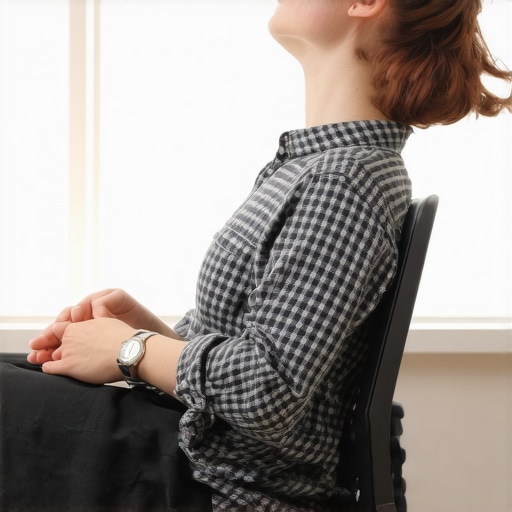
Stop Sitting Still
The best posture is your next posture. We are not designed to be static. If you find yourself wondering why your head feels heavy by 3 pm every afternoon, it is likely because your neck muscles have been holding the same ten-pound weight in the exact same position for hours. I used to be a ‘posture purist,’ sitting like a statue for forty minutes at a time. By the end of the day, I was exhausted. Now, I fidget. I shift my weight from one sit-bone to the other. I use mobility mastery daily tips to keep your spine and joints healthy to remind myself that movement is the lubricant for our joints. If you are stuck in a chair, try the simple footstool trick to stop lower back pain while sitting. Changing the angle of your hips even by a few inches can completely change which muscles are firing, giving your overworked lower back a much-needed break.
Give Your Feet a Job
It sounds strange, but your back pain often starts at the floor. When your foundation is unstable, everything upstairs has to overcompensate. If your ankles are stiff, your lower back has to move more to make up for the lack of range. I started incorporating the 30-second ankle drill that reduces your risk of back injury into my morning routine, and the ‘pinching’ I used to feel when standing up from my desk almost vanished. Your body is a kinetic chain; you cannot fix the middle link (your back) if the bottom link (your feet) is frozen solid. Stop focusing solely on where it hurts and start looking at how you are anchored to the ground.We need to talk about the ‘stretching trap’ because I fell for it for years. Most people think that if a muscle feels tight, the solution is to pull on it. But here is the nuance: your brain often makes a muscle feel tight as a protective mechanism. If you have ‘tight’ hamstrings that never seem to loosen up no matter how much you reach for your toes, it’s likely that your brain is keeping them short to protect an unstable lower back. In fact, why stretching your hamstrings wont fix your tight legs is one of the hardest lessons for most of us to learn. When you force a stretch on a muscle that is trying to protect you, you are essentially trying to override your body’s own security system. This is a classic ‘oops’ factor—aggressively stretching a ‘tight’ area can actually trigger more spasms.
Why Does Your Back Ache More After a ‘Resting’ Day?
It feels like a betrayal, doesn’t it? You spend all Sunday on the sofa to ‘recover,’ only to wake up Monday morning feeling like you’ve been hit by a truck. This happens because ‘rest’ in a slumped position often leads to sustained loading on your spinal discs. I learned that why your back hurts more after a day of resting on the couch is due to the lack of ‘intermittent loading’—your joints need movement to stay lubricated. Instead of total rest, we need ‘active recovery.’ For those of us dealing with more intense issues, like nerve pain, unlocking sciatica relief requires a balance of stability and gentle decompression rather than just lying still. Have you ever fallen into this trap of resting until you’re stiffer than before? Let me know in the comments.
Nerves Don’t Like Being Pulled Like Taffy
If you’re dealing with shooting pain down your leg, you might be tempted to try every ‘sciatica stretch’ on YouTube. But stop right there. Nerves do not have the same elastic properties as muscles. While a muscle might enjoy a long hold, a nerve reacts to tension by becoming more inflamed. I’ve seen so many people make their condition worse because why some sciatica stretches actually pinch the nerve further is a reality that generic advice ignores. According to research highlighted in the Journal of Orthopaedic & Sports Physical Therapy, stabilization and ‘nerve gliding’ are often far superior to traditional static stretching for radicular pain. If you’re chasing conquering sciatica, you have to stop the ‘more is better’ approach to stretching. 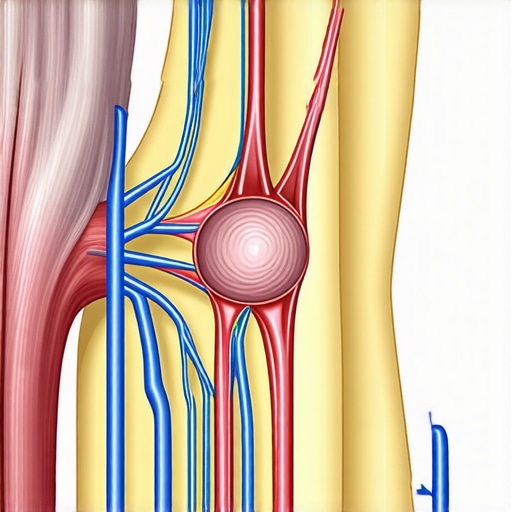
The Hidden Link Between Your Desk and Your Breath
Finally, we can’t ignore the upper body. If your neck is screaming, don’t just look at your monitor height. Look at your rib cage. When we are stressed or trying to sit ‘perfectly,’ we breathe into our upper chests. This overuses the scalene and trap muscles, which are supposed to be ’emergency’ breathing muscles, not your primary ones. This is why neck pain and stress are so intimately linked. By applying neck pain solutions that focus on rib cage mobility and diaphragm breathing, you can often find relief that no massage could ever provide. If you’re ready to move beyond the basics and actually address these nuances, back pain breakthroughs are waiting for you. Stop guessing and start moving with intent. If you need a hand figuring out which ‘tight’ muscle is actually a ‘weak’ one, reach out to us today.I’ve spent thousands on gadgets that promised to fix me. From vibrating posture sensors that buzzed every time I slumped to chairs that looked like they belonged in a spaceship, I’ve tried them all. What I eventually realized is that the most expensive tools usually just provide another way to stay static. These days, my toolkit is embarrassingly simple and focused on high-yield results. I keep a high-density lacrosse ball—or even a slightly softer one, like how a simple tennis ball can release your deep glute tension—at my desk at all times. It isn’t about “rolling out” for hours until I’m bruised; it’s about targeted pressure to remind my nervous system that it’s okay to let go of a specific knot in my hip or shoulder. I also ditched the heavy, cushioned “supportive” sneakers and moved toward minimalist footwear. I started noticing that when I wore thick, ‘orthopedic’ shoes, I lost the ability to feel where my weight was shifting. By switching to wide toe-box shoes, my big toe could actually grip the ground, which naturally engaged my glutes and took the pressure off my sacroiliac joint. It sounds counterintuitive, but why your thin shoes are impacting your lower back shock absorption taught me that my feet were becoming lazy and disconnected from the ground. By waking up my arches and feeling the floor, my lower back didn’t have to work nearly as hard to stabilize my entire frame.
The Low-Tech Tools That Outperformed My Expensive Chair
Many people ask me if they need to spend a fortune on a standing desk. While I love the variety, the real breakthrough comes from the monitor height. For me, that meant finally applying the 15-degree rule for your computer monitor to save your neck so I wasn’t constantly in a state of “tech neck.” This small tilt forces your eyes to do the work rather than your cervical spine. If you combine this with a lumbar roll, you create an environment where your body can’t help but sit with more ease.
How do I keep my spine happy without turning it into a full-time job?
The secret to long-term results isn’t a 90-minute yoga session every morning. It’s what Dr. Stuart McGill, a world-renowned expert in spine biomechanics and author of *Back Mechanic*, calls “spinal hygiene.” It’s about the little things you do a hundred times a day. As Dr. McGill notes in his research on spinal stability, the key is avoiding “micro-movements” of the spine under load, which is why simple hygiene is so critical. I realized that mobility mastery daily tips to keep your spine and joints healthy are exponentially more effective when they are sprinkled throughout the day. I treat my movement like a snack rather than a heavy meal. Every time I get up for a glass of water, I perform the 30-second ankle drill that reduces your risk of back injury. This consistency builds a “movement reserve” that protects me when I inevitably have to sit through a long flight or a marathon meeting. 
Why the Next Era of Spine Health is About Brain Training
As we look toward the next few years, I predict we’re going to see a massive shift away from mechanical “correction” and toward neurological “adaptability.” In unlocking mobility expert tips on managing back pain in 2025, the focus is moving toward how we can use biofeedback to stay in tune with our bodies. We are finally realizing that the brain is the ultimate gatekeeper of pain. If your brain feels safe and your joints feel mobile, your muscles will relax on their own without being forced. The future isn’t about finding a better chair; it’s about reclaiming the ability to move through any environment. If you want to start today, I challenge you to try the “monitor tilt” tonight before you log off. It’s the smallest change with the biggest immediate payoff for that 3 PM heavy-head feeling.
Hard Truths I Learned While Chasing a Perfect Spine
Looking back at my years of struggle, the most important shift wasn’t in my chair or my desk—it was in my mindset. I had to accept that stiffness is not strength. For years, I confused holding myself rigid with being stable, when in fact I was just exhausting my muscles and compressing my joints. I also realized that my body’s constant feeling of tightness was often just a protective signal from my brain trying to create stability where it felt none. If you find that why stretching your hamstrings wont fix your tight legs, it’s because your nervous system is prioritizing safety over flexibility. The biggest lightbulb moment? Realizing that discomfort is a data point, not a life sentence. Once I stopped fighting my body and started listening to its subtle cues, the path to unlocking mobility became much clearer. Real progress happens in the small, quiet adjustments you make when no one is watching.
The Simple Gear That Actually Made a Difference
I’ve thrown away more “posture correctors” and vibrating gadgets than I care to admit, but a few low-tech tools have stood the test of time and actually helped me find ease. First, I always recommend the book Back Mechanic by Dr. Stuart McGill; it is the gold standard for anyone who wants to understand the actual mechanics of their own injury and stop the cycle of pain. Second, I swear by using a targeted pressure tool like how a simple tennis ball can release your deep glute tension. It’s portable, incredibly cheap, and allows for much more nuance than a bulky foam roller when you are trying to unstick a specific spot in your hip. Lastly, I suggest checking your setup using the 15-degree rule for your computer monitor to save your neck. It’s a tiny ergonomic tweak that removes the constant tug-of-war on your cervical spine while you work.
Reclaiming Your Freedom to Move Without Fear
Your journey toward a pain-free life won’t be a straight line, and that is perfectly okay. The goal isn’t to never feel a tweak or a pull again, but to have the tools and the confidence to handle it when you do. By focusing on spinal hygiene and movement variability rather than a forced, “perfect” stance, you are setting yourself up for long-term success. I truly believe that real back pain breakthroughs happen when we stop trying to fix ourselves like broken machines and start treating ourselves like resilient, biological organisms that crave movement. It’s time to stop overthinking every inch of your alignment and start moving with a sense of play and curiosity. What is the one “posture hack” or piece of advice you’ve tried that actually made your pain feel worse? Let’s swap stories in the comments below.