
The specific way to use a lumbar roll for maximum relief
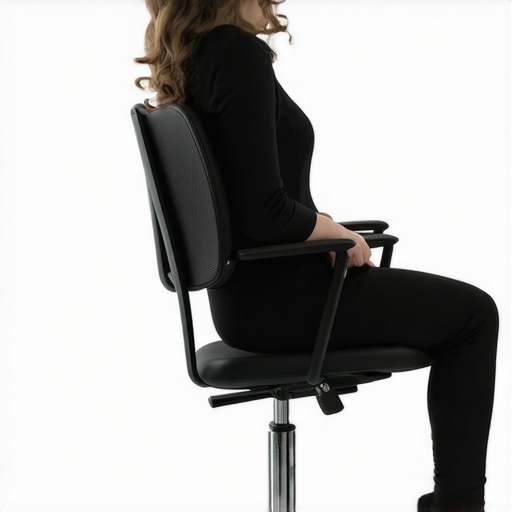
I remember sitting at my desk three years ago, staring at a computer screen while a dull, throbbing heat radiated from my lower spine. I had just spent forty dollars on a fancy, D-shaped foam lumbar roll because the internet told me it was the ‘holy grail’ for desk workers. I wedged it behind me, sat up tall, and waited for the magic to happen. Instead, within twenty minutes, my legs started tingling and the ache turned into a sharp, localized bite. I was furious. I felt like I had been sold a lie. It turns out, I wasn’t just using it wrong; I was practically begging my spine to rebel by placing it in the completely wrong spot. Most people do exactly what I did—they treat the lumbar roll like a pillow for their mid-back rather than a precision tool for their pelvis.
Why Your Support Cushion Is Actually Wrecking Your Day
The hard truth is that a lumbar roll is not a ‘set it and forget it’ accessory. If you place it too high, you are actually forcing your spine into an exaggerated arch that pinches the facet joints. If you place it too low, you are just pushing on your tailbone, which does absolutely nothing for your discs. I spent months making the mistake of thinking ‘higher is better’ for my posture, only to realize I was feeding into the link between poor posture and chronic back pain. Today, I am going to show you the exact, inch-perfect placement that actually offloads the pressure from your L4 and L5 discs. We are going to fix your sitting mechanics so you can finally stop wondering why your back hurts more after resting than it does after a workout.
Does a Cheap Piece of Foam Actually Change Anything?
You might be skeptical. I certainly was. How can a small cylinder of foam outperform a thousand-dollar ergonomic chair? The secret isn’t in the material; it is in the mechanical leverage. According to research cited by Harvard Health Publishing, maintaining the natural inward curve (lordosis) of the lower spine is the single most effective way to reduce intradiscal pressure while seated. The roll acts as a physical reminder for your muscles to stop slouching into that ‘C’ shape we all default to. Have you ever felt like your ‘supportive’ chair was actually making you slouch even more? You are not alone. When we don’t use these tools correctly, we often end up with issues like legs falling asleep because of the sheer pressure on our nerves. In the next section, I will walk you through the ‘Belt Line Rule’—the one technique that changed everything for my recovery journey.
To get this right, you have to stop thinking about your back as a flat board and start seeing it as a series of pressurized chambers. When you sit, those chambers—your spinal discs—are under constant load. If you don’t support the natural inward curve, the pressure shifts to the front of the disc, pushing the inner ‘jelly’ backward toward your nerves. I call this the ‘Tube of Toothpaste’ effect. If you squeeze the front, the back bulges out. This is exactly why your straight posture is actually straining your muscles; you are trying to use muscle power to fight physics. You need mechanical support instead.
Find Your Natural Arch Without the Guesswork
The biggest mistake people make is placing the roll in the middle of their back because that’s where the ache ‘feels’ most prominent. But the ache is the symptom, not the cause. You need to target the L4 and L5 vertebrae. To find this spot, stand up and put your hands on your hips. Feel that bony ridge at the top of your pelvis? That is your landmark. When you sit down, the center of the lumbar roll should be exactly level with that ridge—essentially, right at your belt line.
I remember a wedding I attended last year where the chairs were these tiny, hard-plastic nightmares. I knew my back would be screaming by the toasts. I didn’t have my professional roll, so I grabbed a spare cloth napkin, rolled it into a tight cylinder, and tucked it right at my belt line. While everyone else was shifting and groaning by the third course, I felt totally fine. That tiny adjustment prevented the classic ‘sacral slump’ that usually triggers my flares. It’s not about the fancy equipment; it’s about the anatomy.
The Proper Way to Lock the Roll into Your Chair
Once you’ve identified the belt line, you can’t just throw the cushion back there. You need to ‘set’ the spine. First, scoot your hips all the way to the back of the chair until your tailbone is touching the backrest. If there is a gap between your butt and the chair back, the roll will just push you into a slouch. Next, lean your upper body forward, slide the roll into the small of your back at that belt-line height, and then lean back into it. You should feel an immediate sense of ‘lift’ in your chest. If you feel like you are being pushed out of the chair, you might need to learn how a slight change in your sitting angle stops leg numbness by slightly reclining the backrest.
Adjust for Your Specific Environment
Your office chair isn’t the only place where this matters. Your car seat is often the worst offender because the ‘bucket’ shape forces your hips lower than your knees, which flattens the spine. When you fix your slump while driving long distances, you have to ensure the roll is firm enough to not compress under your body weight. If you’re using a soft pillow, it’s useless within ten minutes. You want something with enough density to actually move the bone. This simple habit will enhance your back mobility with ergonomic tips you can actually use while stuck in traffic or a boring meeting.
While finding the belt line is half the battle, the other half is unlearning the ‘military posture’ myth. We have been often conditioned to believe that ‘good posture’ means shoulders pinned back and chest out. In reality, this rigid approach is a fast track to muscular exhaustion. When you force your spine into a static, unyielding position, you aren’t actually supporting yourself; you are just outsourcing the work to your smaller stabilizing muscles that aren’t built for long-duration holds. This is exactly why your straight posture is actually straining your muscles. Research published in the Journal of Biomechanics highlights that static loading—even in ‘perfect’ positions—can lead to increased tissue creep and disc fatigue compared to more dynamic, varied sitting. The key isn’t to be a statue; it’s to be supported but mobile.
The Danger of Over-Correcting Your Arch
One major ‘oops’ factor I see constantly is the over-correction into an extreme anterior pelvic tilt. People get so worried about slouching that they arch their lower back like a gymnast. This actually compresses the facet joints and can lead to a sharp, localized pain that makes you worry if your back pain is a sign of something more serious. If you feel a pinching sensation in the bone rather than an ache in the muscle, you’ve likely over-arched. You can easily use the simple way to check your own spine for pelvic tilt to see if you’ve gone too far. When you over-arch, your core goes dormant and why your glutes turn off when you sit for over an hour becomes your new reality. This lack of engagement creates a cycle of instability where your back has to do all the heavy lifting.
Why does ‘perfect’ posture still lead to burning back pain?
It usually comes down to ischaemic pain—essentially, poor blood flow to muscles that are held in a state of constant tension. Even with the best lumbar roll, if you don’t allow for micro-movements, those muscles will starve for oxygen. I spent years trying to sit ‘perfectly’ only to realize I was suffocating my own tissue. When we brace ourselves into what we think is a ‘correct’ shape, we are often just substituting one type of strain for another. I call this the ‘Bracing Paradox.’ You think you’re being disciplined, but you’re actually just creating a massive amount of isometric tension in your paraspinal muscles. This is where those deep, gnawing aches come from, usually around 3:00 PM.
The Secret to Sustainable Spine Health
Advanced mobility mastery daily tips to keep your spine and joints healthy always emphasize that the best posture is your next posture. Use the lumbar roll to offload the pressure, but don’t treat it as a cage. If you’ve ever noticed that you’re holding your breath while trying to sit up straight, that is a huge red flag. Your body is using your breath to create artificial stability because your natural mechanics are offline. Integrating better breathing habits with your sitting routine is a core part of long-term recovery. Have you ever fallen into this trap of trying to be too perfect with your sitting and ended up in more pain? Let me know in the comments.
I have tried every “ergo-hack” in the book, but the most important tool in my arsenal is a high-density, D-shaped lumbar roll—specifically the Original McKenzie Lumbar Roll. Most cheap store brands use a soft, open-cell foam that compresses into a pancake within three weeks. You need something firm enough to provide mechanical leverage. When I travel, I don’t leave this to chance; I have a portable version that fits in my carry-on because I know that a single bad flight can undo a month of progress. Maintaining this isn’t about expensive chairs; it is about the consistent application of small, smart adjustments. For example, I swear by a simple, slanted footstool. If your feet are dangling or uneven, your pelvis will tilt and nullify your lumbar support. Using the simple footstool trick to stop lower back pain while sitting changed how I felt after a long day of writing.
Stop Relying on Your Chair to Do the Heavy Lifting
Your chair is a passive tool, but your body requires active input to stay resilient. I recommend setting a “mobility alarm” every fifty minutes. This isn’t just to stand up; it is to reset your mechanics. I keep a tennis ball under my desk at all times. When I feel that familiar tightness in my hips, I spend two minutes using how a simple tennis ball can release your deep glute tension to break up the “glue” in my fascia. This prevents the compression from migrating to my lower back. I also strictly follow the 15-degree rule for your computer monitor to save your neck because if your eyes aren’t level, your spine will follow your gaze, leading to that heavy-head feeling. It is a holistic system—your eyes, your feet, and your spine all have to be in sync.
How do I maintain my spinal mobility over time?
The secret to long-term success is moving from passive support—like your lumbar roll—to active stability. Dr. Stuart McGill, a world-renowned expert on spine biomechanics and author of Low Back Disorders, emphasizes that the endurance of your core stabilizers is the greatest predictor of back health. You have to build the internal “scaffolding” so you eventually don’t need the external roll for short durations. I incorporate boost your back mobility simple exercises that make a difference into my morning routine before I ever touch a cup of coffee. I also found that the 30-second ankle drill that reduces your risk of back injury is a game-changer because stiff ankles often force the lower back to overcompensate during daily movements.
The Future of Desktop Spine Health
As we look toward 2030, I predict we will see a massive shift toward biofeedback-integrated workstations. We are already seeing the early stages with unlocking mobility expert tips on managing back pain in 2025, but soon, your chair will likely use haptic sensors to vibrate when your pelvis tilts incorrectly or when you have been static for too long. We are moving away from the idea of “static perfection” toward “dynamic support.” Until then, we have to be our own biofeedback systems. If you are constantly looking at your keyboard while typing, no amount of smart tech will save you from neck strain. You have to be the one to make the change. My challenge for you today: Spend two minutes using a tennis ball on your glutes while you are on your next phone call. Feel the difference that one small, targeted action makes. You don’t need a total life overhaul; you just need to keep the tools you have working for you.
The Truth About Sitting I Learned the Hard Way
After years of trial and error, I realized that the lumbar roll is a gateway drug to better movement, not the finish line. One major lightbulb moment was discovering that pain in the back is often a mechanical signal rather than a damage signal; it is your body’s way of saying the leverage is wrong. Another lesson: don’t ignore the key symptoms that signal your back pain might need professional eyes. I also learned that if I focus too much on my lower back, I miss the fact that stiff ankles can trigger back aches just as much as a bad chair can. Finally, remember that your spine thrives on variety. No matter how perfect your roll placement is, your discs need you to stand up and walk every hour to stay hydrated.
Gear That Actually Earned a Spot in My Office
If you are looking for restored mobility, these are the tools I genuinely use every single day. First, the Original McKenzie Lumbar Roll—it is the only one I have found firm enough to actually restore the lumbar curve without flattening. Second, I highly recommend reading Back Mechanic by Dr. Stuart McGill; it is the definitive guide to understanding spinal load. Third, never underestimate the power of your footwear. I found out the hard way that certain sneakers can actually cause your back to ache by changing how your body absorbs shock. Lastly, keep a firm tennis ball in your desk drawer to release glute tension during long calls.
Your Journey Toward a Resilient Spine
Achieving lasting sciatica relief isn’t about one giant change, but a dozen tiny ones that add up over time. You now have the blueprint for proper lumbar support, the belt line rule, and the importance of micro-movements. Don’t let the fear of doing it wrong stop you from starting today. Your spine is incredibly resilient if you give it the right mechanical environment to heal. Whether you are conquering sciatica or just trying to get through a workday without stiffness, these small ergonomic shifts will compound into a life with much more freedom of movement. You deserve to sit without a timer on your comfort.
Have you noticed that your back pain feels different depending on which chair you sit in? Let me know which seat gives you the most trouble in the comments below!