
The simple test to see if your leg pain is actually sciatica
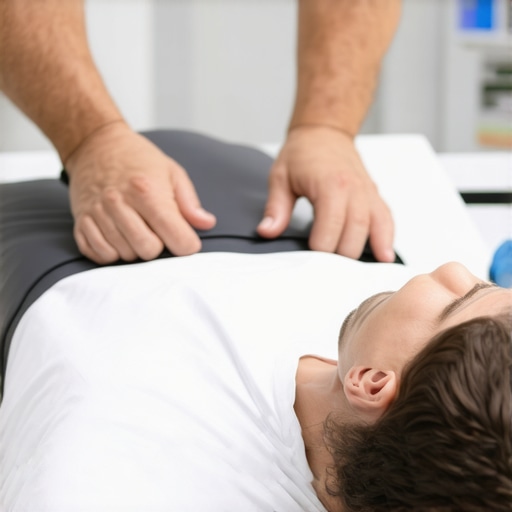
I was stuck in my driveway, gripping the steering wheel like a life raft. Every time I tried to pivot my right leg to get out of the car, a bolt of white-hot lightning screamed from my lower back all the way to my calf. I did what most of us do: I assumed I was just “tight” and spent twenty minutes on the living room floor pulling my knees to my chest. I didn’t realize back then that my DIY physical therapy was actually making the fire worse. [image_placeholder]
Stop Guessing Why Your Leg Hurts
For years, I treated every leg ache like a simple muscle strain. I’d roll out the yoga mat and tug on my legs, wondering why the pain only got sharper. The truth is, if your pain is actually coming from the sciatic nerve, traditional “tight muscle” fixes are often like throwing gasoline on a campfire. You need to know exactly what you’re dealing with before you start conquering sciatica with proven approaches. Today, I’m sharing the Slump Test—a quick way to check if that leg pain is nerve-related or just a stubborn muscle.
Is this test actually worth the hype?
You might be skeptical. I was too. I thought, “How can sitting in a chair tell me more than a month of rest?” But here’s the kicker: according to Harvard Health, roughly 40 percent of people will experience sciatica at some point, yet so many of us waste weeks treating the wrong symptom. My biggest mistake was thinking deep tissue massage would fix recurring back pain when the real issue was a compressed nerve. Have you ever felt like you were doing all the “right” stretches but only felt worse the next day? This test isn’t a replacement for a doctor’s visit, but it is a massive first step in understanding if your back pain is something more serious. Let’s get into how to perform this correctly so you can finally stop the guesswork and start the right kind of recovery.
Put Your Nerves to the Test
Think of your sciatic nerve as a long, sensitive piece of dental floss running from your lower spine all the way down to your toes. In a healthy body, that floss slides freely through the “tubes” of your muscles and joints. But when a disc is bulging or a muscle is spasming, it’s like someone put a kink in the tube or a heavy weight on the floss. The Slump Test works by putting that “floss” under maximum tension from both ends—your neck and your foot. If the pain jumps, you’ve found your culprit.
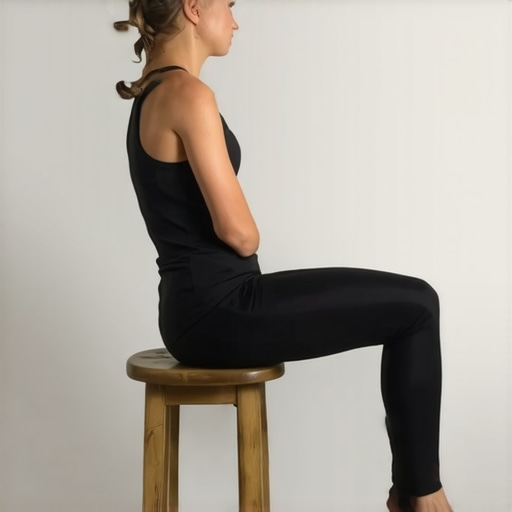
Find a Firm Surface and Get Heavy
Start by sitting on the edge of a firm chair or a kitchen stool. Your feet should be flat on the floor, and your knees should be at a 90-degree angle. Now, here is where most people mess up: they try to keep “good” posture. For this test, I want you to do the opposite. Let your mid-back and lower back round completely. Imagine you’re a sack of potatoes. You should feel a slight stretch in your spine, but no sharp pain yet. If you already feel that familiar “zing” down your leg, stop right there—you already have your answer and there’s no need to push further.
Tuck Your Chin and Lock the Tension
Once you’re slumped, slowly bring your chin toward your chest. This pulls the nerve “floss” from the top end. This was the part that surprised me most when I first tried it. I didn’t think my neck had anything to do with my calf, but the body is one continuous chain. If your leg pain increases just by looking down, it’s a massive sign you need nerve glide exercises that calm burning leg pain rather than aggressive stretching. Many people mistakenly think this is just neck pain and stress overlapping, but it is actually the mechanical tension of the spinal cord being pulled taut from the top down.
Straighten the Leg Without Forcing It
While holding the slump and the chin tuck, slowly straighten your “bad” leg. I can’t emphasize “slowly” enough. I once rushed this step during a flare-up and sent my back into a three-day spasm because I triggered a protective guard reflex. As you extend your knee, pay close attention to where the sensation starts. Is it a dull ache behind the knee or that familiar white-hot bolt? This distinction is vital for telling if your sciatica is a disc or muscle issue. If the leg won’t go straight without you having to lift your head to relieve the pressure, the nerve is definitely being caught somewhere along the line.
Add the Final Pull with Your Toes
If you’ve made it this far and the pain is still manageable, pull your toes back toward your shin. This is the ultimate “stress test.” If this makes your symptoms skyrocket, you are likely dealing with true neural tension. This is why you should stop pulling your knees to your chest for back relief immediately—that move is just adding more tension to an already angry nerve. Instead, you should be looking at stretches that relieve pressure on the sciatic nerve specifically. If you can straighten the leg and flex the foot while looking up at the ceiling, but the pain returns the moment you look down, you’ve just confirmed the issue is neural, not a simple tight hamstring.
Now, here is the nuance that most people miss. We’ve been conditioned to think that ‘tightness’ always equals a need for more stretching. But if you passed that Slump Test with a bolt of pain, your hamstrings aren’t actually the problem—your nervous system is just sounding the alarm. In fact, why stretching your hamstrings often makes your sciatica worse is because you’re literally yanking on a nerve that is already inflamed and trapped. It’s like trying to fix a frayed electrical wire by pulling on it from both ends. Most ‘mobility experts’ will tell you to just push through the discomfort, but in my experience, that’s a fast track to a month of bed rest.
The Myth of the Straight Spine
Everyone tells you to ‘sit up straight’ to save your back, but why your perfect sitting posture is making you stiffer is a conversation we aren’t having enough. When you hold a rigid, military-style posture, you’re creating constant isometric tension in your paraspinal muscles. This reduces blood flow to the very discs you’re trying to protect. True mobility mastery isn’t about finding one ‘perfect’ position and staying there; it’s about frequent, varied movement. If you’re stuck in a ‘perfect’ slump or a ‘perfect’ upright position for hours, you’re losing the battle.
Why does my leg feel tighter after I stretch?
This is the question that haunts every sciatica sufferer. You spend twenty minutes on the floor, feel a temporary release, and then an hour later, you can barely stand. This happens because of ‘protective guarding.’ According to research published in the Journal of Orthopaedic & Sports Physical Therapy, when a nerve is sensitized, aggressive stretching triggers a reflex where the muscles around the nerve seize up even tighter to prevent further damage. This is the ultimate ‘trap’ for the DIY physical therapy crowd. Instead of pulling, you should be focused on sciatica relief secrets like nerve flossing, which creates movement without the high-tension pull. The hidden nuance here is that pain is often a lagging indicator. You might feel ‘good’ during the stretch, but the inflammatory response peaks hours later. If you find that your symptoms are worsening despite your best efforts, it’s a clear signal that the warning signs your sciatica needs professional help are already present. Have you ever fallen into this trap of stretching a nerve and paying for it the next day? Let me know in the comments.
Once you’ve used the Slump Test to identify that your pain is neural, the goal shifts from immediate relief to long-term resilience. I spent years in a cycle of injury and recovery because I only focused on the ‘fire’ and never the ‘slow-burning embers.’ The reality is that why maintenance care is better than waiting for a spinal crisis became the foundation of my daily life. It’s not about doing an hour of rehab every morning; it’s about the small, specific tools that keep the pressure off your discs while you aren’t even thinking about it.
The Two-Dollar Solution in Your Gym Bag
If you saw my desk right now, you’d see a plain yellow tennis ball and a rolled-up towel. You don’t need a thousand-dollar ergonomic chair to save your back. In fact, learning how a simple tennis ball can fix deep glute tension was more effective for my sciatica than any ‘pro’ massage I ever paid for. I use the ball to target the piriformis muscle, which often clamps down on the sciatic nerve. Combined with knowing how to use a lumbar roll to prevent mid-day back fatigue, these tools act as an early warning system. When the ball feels ‘tighter’ than usual, I know I’ve been sitting too long, and I get up before the nerve starts to flare.
Your Monitor is a Neck Health Tool
We often separate neck pain from back pain, but for the nervous system, it is all one highway. I realized that my recurring lower back ‘zings’ were often preceded by a week of heavy deadlines where I was leaning into my screen. Understanding how to adjust your monitor to stop that burning neck pain is actually a secret weapon for sciatica. When your head drifts forward, it pulls on the entire spinal cord, increasing the tension all the way down to your feet. I personally use a stack of books to ensure my eye level hits the top third of the screen, which keeps my chin tucked and my ‘nerve floss’ slack and happy.
How can I keep my spine healthy for the next decade?
Maintenance is about diversifying your movement. Dr. Shirley Sahrmann, a renowned physical therapist and author of Diagnosis and Treatment of Movement Impairment Syndromes, argues that we develop ‘paths of least resistance’ in our joints. If you always bend at your lower back instead of your hips, that segment will eventually wear out. To counter this, I’ve integrated the simple ankle drill that improves your walking balance into my daily routine. It sounds unrelated, but if your ankles are stiff, your back has to work twice as hard to stabilize you when you walk. Looking ahead, I predict we will see a massive shift toward wearable biofeedback—clothing that uses haptic vibrations to alert us the moment we lose our neutral spine. Until then, we have to be our own sensors. I want you to try this: for the next 24 hours, use a lumbar roll every time you sit. Just that one change can reduce the mechanical load on your discs by up to 40 percent. If you want to dive deeper into these habits, check out these mobility mastery daily tips to keep your spine and joints healthy and start building your own ‘maintenance kit’ today.
A Few Hard Truths About Sciatic Nerve Recovery
After years of trial and error, I’ve realized that sciatica isn’t something you just ‘beat’ in a single afternoon. It requires a fundamental shift in how you view your body’s signals. Here are the biggest realizations that changed everything for me:
- Nerve pain is a boundary, not a challenge. When you feel that zing, your body is telling you to stop, not to push harder. Most of my setbacks happened because I tried to ‘stretch out’ the pain.
- Your environment is your best therapist. I spent thousands on treatments but didn’t see real change until I changed how I sat for eight hours a day. Your furniture is either helping you heal or keeping you hurt.
- Consistency beats intensity. Five minutes of nerve glides every morning is worth more than a two-hour yoga session once a week. It is about the small, frequent resets.
The Tools That Actually Earned a Spot on My Desk
I’ve tried every gadget on the market, but only a few stay in my rotation because they offer more than just a temporary distraction. First, I always keep a tennis ball nearby; learning how a simple tennis ball can fix deep glute tension was a game-changer for my long travel days. Second, a lumbar roll is non-negotiable for my car seat to keep my spine from rounding into that dangerous C-shape. If you are looking for a more permanent office solution, you should learn how to pick a chair that actually supports your lumbar curve to prevent fatigue before it starts. Finally, I trust the expert advice found in expert strategies for lasting comfort because it focuses on mechanical causes rather than just masking the symptoms with temporary fixes.
Take the First Step Toward Real Relief
The Slump Test was the moment I stopped guessing and started healing. It gave me the clarity I needed to stop fighting my body and start supporting it. Whether you are just beginning your journey or have been struggling for years, remember that overcoming sciatica is a marathon of small, smart choices. You don’t have to live in fear of that next lightning bolt of pain. By making simple lifestyle changes for better quality of life, you can reclaim your mobility and get back to the activities you love. Have you ever tried the Slump Test only to realize your ‘tight hamstrings’ were actually an angry nerve issue? Let me know your results in the comments below!