
Why deep tissue massage isn’t fixing your recurring back pain
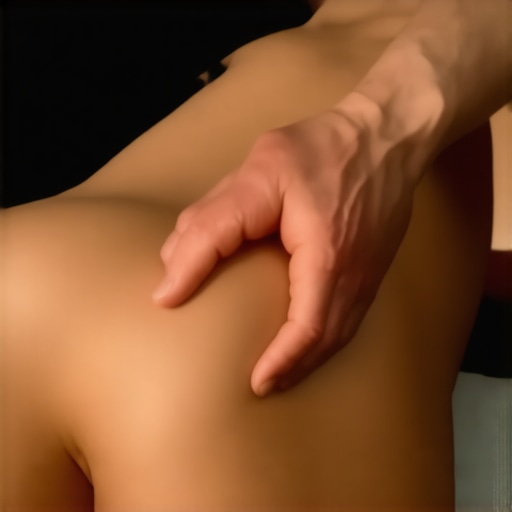
I remember lying on my living room floor a few years ago, staring at the ceiling fan and wondering why I’d just spent a small fortune on a ‘deep tissue’ session only to have my back lock up again two hours later. I was convinced that if a therapist could just press hard enough, they’d finally ‘pop’ the knot that was ruining my life. But that’s the trap we all fall into, isn’t it? We treat our bodies like a piece of tough steak that just needs tenderizing, but the relief never sticks. It’s frustrating and, quite frankly, a little soul-crushing when you realize your therapeutic Sacramento massage is only a temporary band-aid. Today, I’m going to share the hard-learned truth about why chasing the pain with heavy pressure is a losing game and how you can actually start managing your back pain by addressing the root of the issue: how you move every single day.
Your Muscles are Tighter for a Very Good Reason
I made a massive mistake early in my journey: I assumed my muscles were just ‘tight’ because they were mean or stubborn. I didn’t realize that my brain was actually ordering those muscles to tighten up because it felt my spine was unprotected. If you have poor posture habits or weak stabilizers, your body uses muscle tension as a secondary bracing system. When a massage therapist forces those muscles to relax, your brain panics because its ‘brace’ is gone, and it tightens everything right back up—often even harder than before. Research in the Journal of Bodywork and Movement Therapies suggests that while massage is fantastic for calming the nervous system, it doesn’t actually ‘lengthen’ tissue in the way we’ve been told. You have to combine that relief with daily mobility mastery to show your brain that it’s safe to let go for good.
Is the deep pressure actually making things worse?
It sounds counterintuitive, but sometimes the ‘no pain, no gain’ approach to massage backfires by triggering a protective inflammatory response. If you aren’t also looking at things like why your hips are locked or how you’re sitting at your desk, you’re essentially just paying for a temporary silence while the house is still on fire. Have you ever left a massage feeling ‘beat up’ rather than better? I’d love to hear if you’ve felt stuck in that cycle too. Before we get into the exercises, we need to understand that real relief comes from stability, not just stretching.
Why your hips are holding your lower back hostage
To stop the cycle of temporary relief, you have to look at the joints above and below where you hurt. If your hips are locked up like a rusted hinge, your lower back—the lumbar spine—is forced to move way more than it was ever designed to. This constant ‘over-moving’ leads to those nasty micro-tears and inflammation. I used to think my back was the problem, but the real culprit was my hip capsules. One of the most effective ways to create space is the one hip stretch that relieves pressure on the l5-s1 disc. Instead of just pulling your leg around, you’re teaching your pelvis to stay neutral while the femur moves. This simple mechanical shift takes the ’emergency’ signal off your lower back.
The tennis ball trick that actually works
I remember a Tuesday about three years ago when I couldn’t even sit at my dinner table because my right glute felt like it had a hot poker in it. I tried every aggressive stretch I knew, but it only got worse. In a moment of desperation, I grabbed a tennis ball from the garage. Instead of rolling on it like a maniac, I just sat on it right where the tension was and breathed. Within five minutes, the muscle let go. This works because you aren’t fighting the muscle; you’re using sustained pressure to tell the nervous system to down-regulate. You can learn exactly how a simple tennis ball can fix deep glute tension without causing more inflammation. 
Calm the nerve first, stretch the muscle later
If you’re dealing with that lightning-bolt pain down your leg, you’re likely dealing with sciatica. The biggest mistake I see (and one I made for years) is trying to stretch your hamstrings to fix it. Here is the hard truth: why stretching your hamstrings often makes your sciatica worse is because you are literally pulling on an inflamed nerve like a rubber band. Nerves don’t like to be stretched; they like to be ‘slid’ or ‘flossed.’ Instead of a static stretch, try the nerve flossing technique that silences burning thigh pain. This movement allows the nerve to glide through the surrounding tissue without the tension that triggers a protective spasm.
Stop fighting your furniture
You can do all the exercises in the world, but if you go home and collapse into a bucket-style sofa, you’re undoing all your hard work. Think of your spine like a mast on a ship; it needs even tension from all sides. Check your living room right now—why your favorite recliner might be the cause of your sciatica flares is usually down to the way it rounds your lower back into a ‘C’ shape. Even small daily chores matter. Learning how to load the dishwasher without hurting your lower back by hinging at the hips rather than rounding your spine is the difference between a productive morning and a three-day flare-up. It’s about building a body that moves with intention, not just one that reacts to pain.We’ve all been told since grade school to ‘sit up straight,’ but here’s the contrarian truth: that rigid, military-style posture is often what’s keeping you in pain. I spent years trying to force my spine into what I thought was the ‘perfect’ shape, only to realize that why your perfect sitting posture is making you stiffer is because you’re essentially asking your muscles to hold a static contraction for eight hours a day. Your spine isn’t a steel rod; it’s a dynamic system designed for movement. When you lock yourself into one position, you’re cutting off blood flow and creating ‘ischemic’ pain—the kind that feels like a dull, heavy ache by 3 PM. Research published in The Spine Journal indicates that frequent micro-movements are far more beneficial for disc health than maintaining any single ‘ideal’ position.
Stop trying to sit like a statue
If you want to stop the cycle of stiffness, you have to embrace ‘dynamic sitting.’ This means changing your position every 20 to 30 minutes. I used to be a stickler for a 90-degree knee bend and a flat back, but I found much more relief when I started alternating between leaning back, sitting on the edge of the chair, and even standing. If you’re struggling with the transition, managing your back pain effectively requires you to stop viewing ‘rest’ as a static state. Even while seated, your core should be subtly active, not braced like you’re about to take a punch.
Why does ‘correcting’ your posture sometimes cause a new flare-up?
It’s the most common ‘oops’ factor I see in my clinic and something I fell for myself. People decide to ‘fix’ their back, so they start aggressively stretching their back into a C-shape or doing the classic knee-to-chest move every morning. While it feels like a relief for about thirty seconds because you’re stimulating the stretch reflex, you might actually be making things worse. If your pain is coming from a disc issue, stop pulling your knees to your chest for back relief because that deep flexion can actually push the disc material further against the nerve root. 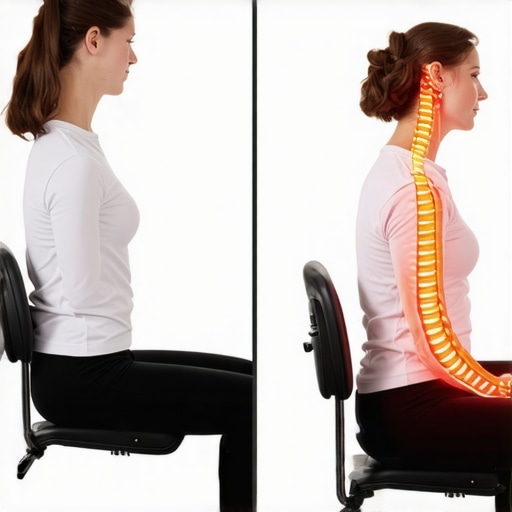 It’s a sophisticated trap: the very thing that feels like a ‘stretch’ is actually a mechanical stressor. Instead, you need to learn how to tell if your sciatica is a disc or muscle issue before you start any new stretching routine. Another nuance most people miss is the role of the neck and eyes in lower back health. We tend to compartmentalize our bodies, but if you’re constantly leaning forward to see your screen because your prescription is off, your lower back has to counter-balance that 10-pound weight of your head. I finally found relief when I looked at why your vision might be the cause of your neck leaning and how that tension trickles all the way down to the tailbone. And don’t even get me started on the jaw; the connection between jaw clenching and chronic neck pain is a major hurdle for people who feel like they’ve tried everything for their shoulders. When you clench, you activate the deep stabilizers in the neck, which pulls on the fascia that connects all the way down to your mid-back. This is why neck pain and stress are so hard to decouple—it’s a physical feedback loop. Have you ever fallen into this trap of trying to ‘force’ your body into a position it wasn’t ready for? Let me know in the comments.I’ve spent a ridiculous amount of money on gadgets that promised to fix me overnight—weighted vests, expensive ergonomic chairs, and vibrating massage guns that felt like I was holding a jackhammer. Most of them are currently buried in my hall closet. The tools that actually changed my life were much simpler and focused on the long-term game. For instance, I never go to the office without a McKenzie-style lumbar roll. It’s not about having a soft pillow; it’s about knowing how to use a lumbar roll to prevent mid-day back fatigue by maintaining that natural curve that prevents your discs from bulging outward. If I’m standing for a long time, like when I’m prepping dinner, I use a small platform under one foot. Learning how to use a step stool to save your lower back in the kitchen was a game-changer for my SI joint stability.
How do I keep my spine happy for the long haul?
Maintenance is the most boring part of recovery, but it’s the only part that keeps you out of the doctor’s office. We tend to stop our exercises the moment the pain hits a level 2 out of 10, but why maintenance care is better than waiting for a spinal crisis is because it builds movement debt. You want to have a surplus of mobility so that when you inevitably trip or have to lift something heavy, your body has the capacity to handle it. 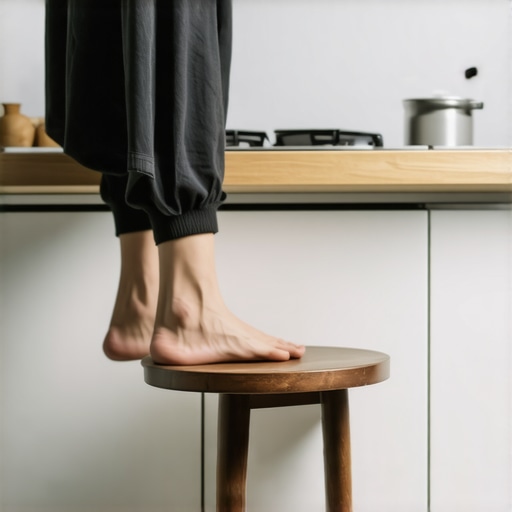 I’ve also found that my feet are my secret weapon. If my arches are collapsing, my knees turn in, my hips tilt, and my lower back screams. I’ve started a the daily foot massage habit that relaxes your entire back using a simple lacrosse ball. It sounds disconnected, but the fascia on the bottom of your feet is the starting point for the entire posterior chain.
Prepare your body for the world instead of hiding from it
As we look toward the future, I suspect we’ll see a massive shift toward real-time biofeedback. Imagine a wearable that doesn’t just count your steps but alerts you when your glutes have turned off during a long walk. Until then, we have to be our own sensors. Dr. Stuart McGill, a leading expert in spinal biomechanics and author of Back Mechanic, often discusses the importance of the Big Three exercises for core stability. One of my favorites for building that endurance is the simple wall sit that builds spine-supporting strength without the high impact of traditional squats. I also swear by using a foam roller—not on my back, which can be risky—but on the muscles that pull on my pelvis. Knowing how to use a foam roller on quads to relieve back pressure is far more effective than rolling the actual site of the pain. My biggest advice for you today is this: don’t wait for the next flare-up to start your mobility mastery. Try the step stool trick tonight while you’re doing the dishes. It feels small, but those 10 minutes of neutral spine are exactly what your body needs to finally trust you again.
I spent years thinking my back was a “broken” part of me. The biggest shift in my recovery was realizing my body was actually trying to protect me. I learned that stretching through a flare-up is like yelling at a fire alarm to stop making noise—it doesn’t put out the fire. Real progress happened when I stopped chasing the “pop” and started respecting my body’s need for stability.
What Your Brain Won’t Tell You About Those Chronic Knots
One of my biggest lightbulb moments was realizing that chronic tension is often a “software” issue rather than a “hardware” one. When I stopped trying to beat my muscles into submission and started focusing on proven approaches to end discomfort, my body finally stopped bracing for impact. I also learned that lasting pain relief for the neck often starts with how you use your eyes and jaw, not just how you stretch your shoulders. Most importantly, I realized that my “tight” muscles were often actually weak muscles in disguise, begging for strength rather than more stretching.
The Essential Gear I Use to Stay Pain-Free
I swear by a few low-tech items that have stood the test of time. A standard lacrosse ball is my go-to for releasing tension in your upper traps or glutes when a professional session isn’t an option. I also recommend digging into the “Big Three” exercises by Dr. Stuart McGill, which are the gold standard for restored mobility and core endurance. Finally, never underestimate the power of a simple lumbar roll for your office chair; it is the cheapest insurance policy for your discs you will ever find.
Reclaim the Freedom of Movement You Deserve
You don’t have to live in fear of a single wrong move or a sneeze. By focusing on mobility mastery and small daily habit shifts, you’re teaching your nervous system that movement is safe and even desirable. Start with one small change tonight—perhaps use that step stool at the kitchen sink or swap your soft couch for a firmer chair. Those tiny wins compound into a life where you aren’t constantly managing symptoms, but actually living. Which of these small daily habit changes are you going to try first? Let me know in the comments below!