
Why your high-arched shoes are causing your lower back to ache
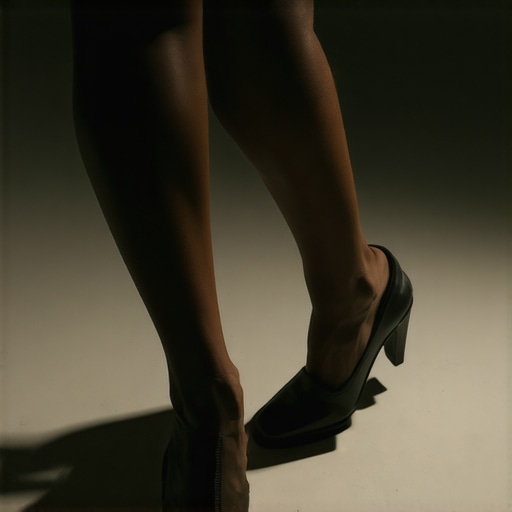
I remember standing in line at the post office about three years ago, shifting my weight every thirty seconds like a nervous bird. My lower back wasn’t just tired; it felt like a tightly wound guitar string ready to snap. I looked down at my feet, feeling proud of the money I’d spent on those premium sneakers with the aggressive arch support. I thought I was doing everything right for my body. Boy, was I wrong. That throbbing ache wasn’t coming from my age or a lack of exercise; it was coming from the very things I was using to support myself. Today, I want to show you why those ‘perfect’ shoes are secretly tilting your pelvis and how you can finally find relief.
Your Feet Are Dictating Your Spine’s Position
When you shove a high-arch support under your foot, you aren’t just hugging your sole. You are effectively changing the angle of your entire leg. This forces your knees to rotate and your pelvis to tilt forward, which is a major factor in understanding the link between poor posture and chronic back pain. I spent a whole summer adding even thicker inserts into my shoes, thinking ‘more is better.’ In reality, I was just locking my joints into a rigid cage. My biggest mistake was assuming my feet were the problem, when the real issue was how my footwear was preventing my feet from moving naturally. According to the Journal of Foot and Ankle Research, excessive arch support can actually weaken the intrinsic muscles of the foot over time, leading to a cascade of biomechanical issues. It’s similar to how the connection between flat feet and recurrent lower back pain works, just from the opposite side of the spectrum. Even the seasonal switch to summer footwear matters, as seen in why your flip-flops are causing your morning heel and back pain. If your foundation is off, your roof—your lower back—is going to leak.
Aren’t These Shoes Supposed to Save My Spine?
It sounds counterintuitive, doesn’t it? We are told from day one that support is king. But think of it this way: your foot is a complex bridge of twenty-six bones designed to flex and absorb shock. When you jam a rigid arch under it, you turn that shock absorber into a solid block. That energy has to go somewhere, and usually, it travels straight up into your L4 and L5 vertebrae. Have you ever bought a pair of shoes specifically for ‘comfort’ only to find your back screaming by lunchtime? Tell me about it in the comments. By following mobility mastery daily tips to keep your spine and joints healthy, I finally realized that my shoes were making me stiff, not supported. We need to look at how to restore that natural movement so your back can finally stop doing all the heavy lifting.
Waking Up the Muscles That Orthotics Put to Sleep
The first step to fixing your back through your feet isn’t throwing away your shoes—it’s re-educating your nervous system. Think of your feet as a set of hands that have been wearing thick mittens for twenty years. They’ve become clumsy and weak. When I first started this journey, I tried to spend an entire Saturday barefoot in my garden. By Sunday morning, I couldn’t even stand up straight because my feet were so weak they had collapsed, pulling my entire lower back into a painful spasm. I learned the hard way that you have to introduce movement in micro-doses. Start by spending just fifteen minutes a day walking on varied surfaces like carpet, tile, or grass without socks. This variety forces the thousands of nerve endings in your soles to fire again. This neurological wake-up call is essential because why your toes are the key to better balance and back health starts with sensory input. If your brain can’t feel the ground, it will compensate by tensing your lower back muscles to create a false sense of stability.
Test Your Foot Freedom with the Toe Splay
Can you move your big toe without moving the others? If not, your foundation is essentially a solid, immobile block. This lack of dexterity forces your hips to work double time, which is often the hidden reason your hamstrings always feel tight. Try this: sit in a chair and try to spread your toes as wide as possible. If they barely budge, you are likely suffering from ‘shoe-shaped’ feet. To fix this, use your fingers to manually spread your toes apart for two minutes every evening. 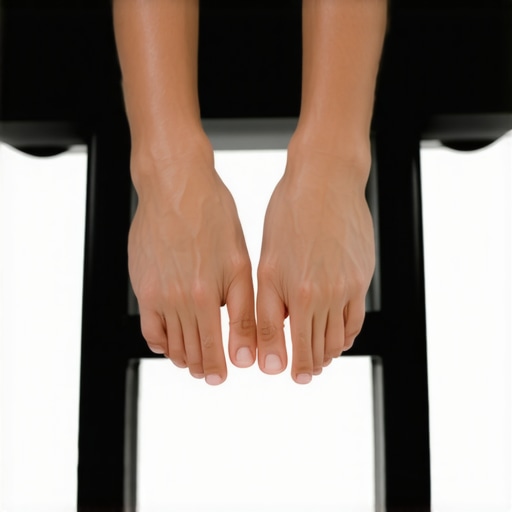 This manual stretch breaks up the adhesions in the fascia that keep your foot locked in that narrow, arch-supported position. When your toes can splay, your weight is distributed evenly across your foot, preventing that anterior pelvic tilt that crushes your lumbar discs. If you don’t address this, why your workout might be causing your pelvic tilt will continue to be a mystery regardless of how many squats you do.
How to Transition Without Triggering a Flare-Up
You cannot jump from max-cushion sneakers to flat shoes overnight. Your Achilles tendon and calf muscles have likely shortened from years of elevated heels. When you suddenly drop to a flat surface, those tight muscles pull on your pelvis, which can lead to a sciatica flare-up. To prevent this, you should gradually lower the ‘drop’ of your shoes over several months while incorporating boost your back mobility simple exercises that make a difference. I found that using a simple tennis ball to roll out the bottom of my feet for five minutes before bed changed everything. This daily foot massage habit that relaxes your entire back acts like a reset button for your spine. It releases the tension in the superficial back line—a sheet of connective tissue that runs from the bottom of your feet, over your head, and down to your toes. When the feet relax, the back finally gets permission to let go. If you feel a sharp zing while doing this, it’s a sign your nerves are compressed, and you might need to look into overcoming sciatica top lifestyle changes for better quality of life to ensure you aren’t over-straining the system during your transition.Most people think that if their back or legs feel tight, the solution is to pull, tug, and stretch until the sensation goes away. This is where I see the most common—and most painful—mistakes happen. We’ve been conditioned to believe that flexibility equals health, but for someone with nerve issues, flexibility can be a trap. If you have sciatica, you might find yourself constantly trying to ‘loosen up’ by reaching for your toes. But here is the nuance: your sciatic nerve isn’t a muscle; it’s a cable. You can’t stretch a cable; you can only tension it. When you reach for your toes, you aren’t just stretching your hamstrings; you are putting that sensitive nerve under extreme tension. This is exactly why stretching your hamstrings often makes your sciatica worse. Instead of relief, you get more inflammation. Have you ever fallen into this trap where you stretched for an hour only to feel stiffer the next day? Let me know in the comments.
Why does my back still hurt even after I started stretching every morning?
The problem usually lies in the type of movement you’re doing. Advanced recovery isn’t about range of motion; it’s about stability and ‘neural flossing.’ According to research published in the Journal of Orthopaedic & Sports Physical Therapy, neurodynamic techniques—or nerve glides—are significantly more effective at reducing pain than static stretching. This is because glides allow the nerve to move through its canal without being pulled taut. If you’re struggling, the nerve glide exercise that calms burning leg pain is a much safer bet than a standard forward fold. Transitioning your focus from intensity to precision is the hallmark of back pain breakthroughs navigating your path to restored mobility.
The C-Shape Trap That Crushes Your Discs
Another major ‘oops’ factor is the common advice to pull your knees to your chest to ‘open up’ the lower back. While it feels good for about thirty seconds, you are actually rounding your spine into a C-shape, which pushes your discs toward the back of your spinal canal. This is precisely why you should stop stretching your back into a C-shape if you have a known disc issue. You are essentially squeezing a jelly donut on one side and wondering why the filling is leaking out the other. 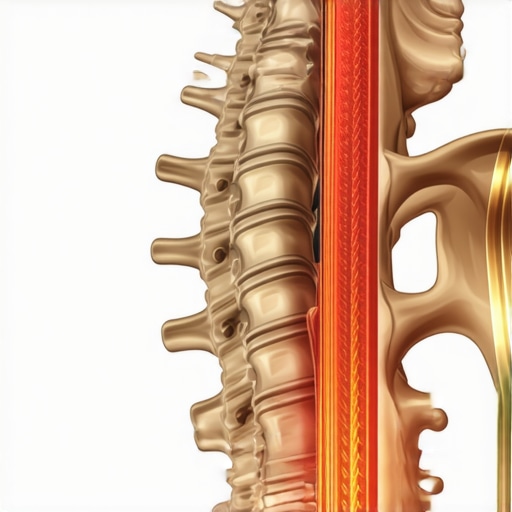 Instead of rounding, focus on maintaining your natural lumbar curve. I used to spend my mornings in a deep ‘child’s pose,’ thinking I was a mobility master. In reality, I was just irritating my L5-S1 joint. It wasn’t until I learned about mobility mastery daily tips to keep your spine and joints healthy that I realized you should stop pulling your knees to your chest for back relief if you want long-term results. Real mobility is the ability to control your joints through a range of motion, not just how far you can passively sag into a stretch. If you find yourself constantly needing to ‘crack’ your own back for relief, you’re likely dealing with instability, and why cracking your back at home is a temporary fix becomes clear once you understand that your muscles are tightening up to protect a loose joint.Once I stopped making those common stretching mistakes, I realized that living pain-free isn’t a destination—it’s a maintenance schedule. I used to wait until I couldn’t tie my shoes before seeking help, but I eventually learned that why maintenance care is better than waiting for a spinal crisis. It’s like changing the oil in your car; you don’t wait for the engine to smoke. My daily routine now involves ‘check-ins’ where I test my hip range of motion before I even have my first cup of coffee. If things feel tight, I don’t panic; I just adjust my day to include more movement.
Daily Check-ins Beat Emergency Visits
The tools I keep in my bag aren’t expensive, but they are precise. I never leave for a road trip without a simple lumbar roll. If you’ve ever felt that dull ache after an hour of driving, you need to learn how to use a lumbar roll to prevent mid-day back fatigue. It keeps your spine in its natural S-curve, preventing the ‘slump’ that leads to disc pressure. I also carry a lacrosse ball everywhere. While a tennis ball is great for beginners, the firmness of a lacrosse ball allows for deeper trigger point release in the glutes. According to Dr. Stuart McGill, a world-renowned spine biomechanics expert and author of Back Mechanic, building ‘spine hygiene’—the way you move throughout your entire day—is far more important than any single exercise. This means focusing on enhance your back mobility ergonomic tips for everyday comfort in every environment, from your kitchen to your car.
How do I keep my spine healthy for the next decade?
The key is consistency over intensity. You don’t need a two-hour gym session; you need five minutes of high-quality movement every few hours. I’ve found that unlocking mobility expert tips on managing back pain in 2025 will likely shift even further toward wearable technology that tracks our pelvic tilt in real-time. But until then, we have to be our own sensors. I personally recommend auditing your workspace. If you’re struggling, start with the basics like how to pick a chair that actually supports your lumbar curve. A good chair isn’t just about padding; it’s about where that padding hits your vertebrae. I suggest you try this one advanced tip tonight: spend ten minutes on the floor in a ’90/90′ hip position while watching TV. It forces your hips to open up without putting any shear force on your lower back. Small shifts like this create a body that is resilient, not just ‘fixed’ for the moment. 
The Hardest Truths I Learned About My Own Spine
One of the biggest shifts in my thinking happened when I realized that ‘tightness’ is often a defensive response from the brain, not a physical limitation of the tissue. If you feel like you’re constantly fighting your own body, it is worth checking if is your back pain a sign of something more serious key symptoms to watch to ensure you aren’t ignoring a deeper neurological issue. I also learned that more ‘cushion’ in a shoe usually means less ‘feedback’ for the brain, which leads to harder heel strikes and more vibration traveling up into your L4-L5 discs.
Another realization was that sciatica relief secrets how to banish pain quickly today aren’t found in a bottle or a quick fix; they are found in the simple geometry of how you stand. If your toes are squished, your glutes can’t fire properly. If your glutes can’t fire, your lower back takes the hit for every step you take. It’s a chain reaction that starts the moment you lace up your shoes in the morning.
Tools That Saved My Sanity on the Road to Recovery
I don’t recommend products lightly, but a high-quality lacrosse ball is the best five dollars you will ever spend. While I have previously shared how a simple tennis ball can fix deep glute tension, the firmer pressure of a lacrosse ball is what I eventually needed to target the deep piriformis muscle that was irritating my sciatic nerve. I also swear by Dr. Stuart McGill’s book, ‘Back Mechanic’—it is the definitive guide for anyone who wants to stop guessing and start healing their own spine through better movement patterns.
Lastly, I transitioned to shoes with a wide toe box. Learning how to fix your gait to reduce chronic hip clicking was only possible once my feet had the room to actually move like feet again instead of being bound in narrow leather. These tools aren’t just gadgets; they are the bridge between being a chronic patient and becoming your own best therapist.
Believe That Your Body Can Still Change
You do not have to accept a life of limited movement or constant ‘twinges’ as your permanent reality. By focusing on your foundation and respecting the delicate nature of your nervous system, you can reclaim the activities you love without fear. Managing back pain is about making small, consistent choices that add up to a resilient, adaptable spine. If you ever feel stuck or overwhelmed by the conflicting advice out there, don’t hesitate to contact us for professional guidance tailored to your specific needs. Which part of your footwear routine are you most nervous about changing—the arch support or the heel height? Let me know in the comments below!