
Why your reading habit is causing that hump in your neck
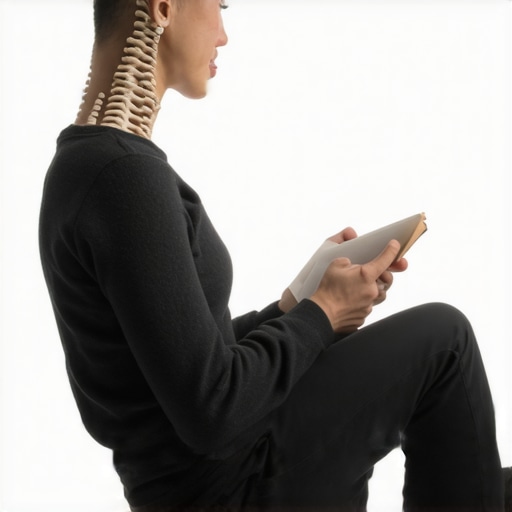
Last Tuesday, I was curled up with a historical biography, completely engrossed in the 17th century. It wasn’t until I reached for my cold tea that I felt it—that familiar, sharp burn at the base of my skull. I stood up, walked past the hallway mirror, and stopped dead. My neck didn’t just hurt; it looked different. There was a distinct, rounded prominence right where my shoulders meet my spine. I had spent years telling people to watch their posture, yet here I was, looking like a human question mark. We often blame ‘old age’ for that little hump at the base of the neck, but for most of us, it is actually a physical adaptation to our favorite quiet pastime.
Your Favorite Book is Reaching for Your Spine
I have spent a lot of time in the trenches of neck pain, and I have made every mistake you can imagine. Early on, I thought buying a more expensive chair would solve everything. It did not. The real issue is the physics of your head. In a neutral, upright position, your head weighs about 10 to 12 pounds. However, according to research published by Dr. Kenneth Hansraj in Surgical Technology International, when you tilt your head forward at a 60-degree angle to look at a book, the strain on your cervical spine jumps to a staggering 60 pounds. That is like carrying an average-sized eight-year-old on your neck for hours. Often, why your reading glasses are forcing your neck into a painful crane is the hidden culprit behind this strain. Your body, being the efficient machine it is, starts building up extra fat and connective tissue to protect that joint from the massive pressure. That is the ‘hump’ you see in the mirror. To combat this, you might need to realize how to adjust your monitor to stop that burning neck pain during your work hours so you do not carry that tension into your reading time.
Can I actually reverse this or am I stuck this way?
I get it. You are worried that the hump is permanent. You think you have ‘set’ like wet concrete and there is no going back. I felt that same fear when I first noticed my own slouch. But here is the good news: unless there is an underlying bone density issue, most of this prominence is a mix of muscle guarding and postural adaptation. I found that simple changes, like learning why you must stop sleeping on your stomach if you have chronic neck pain, made a massive difference in my recovery speed. Even something as small as knowing how a simple breath reset can calm a back spasm can help relax the very muscles that are pulling your neck out of alignment. We are going to dive into the exact steps to retrain your muscles and reclaim your silhouette today. Have you noticed a persistent ache or a change in your posture after a long reading session?
The first thing I had to unlearn was the ‘shoulders back’ lie. When I first noticed that rounded hump, I spent three days walking around with my shoulder blades squeezed together so hard I developed a rib cramp. It was exhausting and, frankly, it did not help the neck pain at all. Real correction happens when you stop trying to ‘fix’ your appearance and start addressing the mechanical lockout in your upper back. Think of your spine like a mast on a ship. If the base of the mast is tilted, pulling on the top ropes—your neck muscles—won’t straighten it; it will just snap the ropes. You need to address the structural base before the tension will ever truly release.
Stop fighting your own skeleton
The ‘hump’ is essentially a defensive wall your body builds. To tear it down, you have to convince your nervous system that it is safe to let go. This starts with the deep neck flexors—muscles so small and deep you have probably never felt them work. When these are weak, your big outer muscles, like the traps, take over, which leads to that burning sensation. Integrating mobility mastery daily tips to keep your spine and joints healthy is essential here because you are not just stretching; you are rewiring how your brain controls your head position.
Give your chin a job
The most effective tool in my kit is the ‘double chin’ tuck. I do this every time I finish a chapter or a long article. Imagine a string pulling the crown of your head toward the ceiling while you gently slide your chin straight back, as if you are trying to make as many neck rolls as possible. It is not glamorous, but it is the secret to the 30-second neck tuck to stop tension headaches at your desk and during your reading marathons. I remember doing this in a coffee shop once; the person at the next table thought I was glitching, but the relief in my upper cervical spine was instantaneous. It shifts the weight of your head back over your center of gravity.

Open the front door of your chest
Your neck cannot sit back if your chest is pulling it forward. If you spend hours holding a heavy book or tablet, your pec muscles shorten into a tight knot. Use a doorway to reset this. Place your forearms on the frame and lean through until you feel a deep stretch across the front of your shoulders. Knowing how to use a doorway to release chest tension and improve posture acts like a release valve for the pressure at the base of your neck. I found that doing this for just sixty seconds before bed stopped the morning stiffness that used to plague my reading days.
The move that actually moves the needle
If your mid-back—the thoracic spine—is as stiff as a board, your neck has no choice but to crane forward to look at the world. This is where most people fail. You must regain rotation and extension in those middle vertebrae. I swear by the thoracic bridge move that fixes slouching. It targets the exact hinge point where the hump forms. When I started doing this daily, I did not just feel better; I actually felt taller because my spine was no longer collapsed in on itself. This is one of the most neck pain solutions proven techniques to regain your range of motion that provides long-term structural change rather than just a five-minute fix.
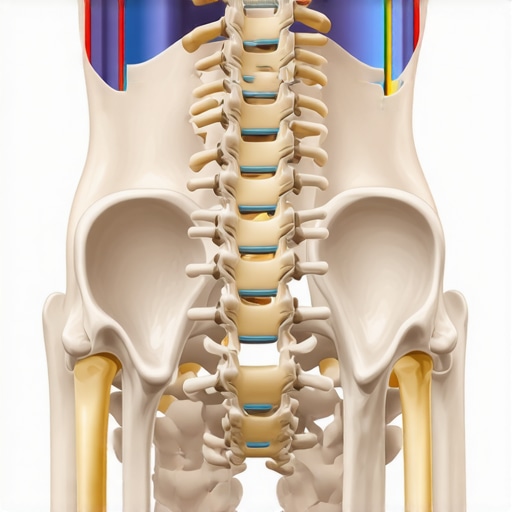
The biggest lie we are told in the fitness world is that a ‘strong core’ is the universal antidote to back and neck pain. I used to believe this religiously, spending hours on planks and crunches, only to find my back feeling more fragile than ever. Here is the nuance most people miss: stability is not just about raw strength; it is about timing and coordination. If you have a rock-solid six-pack but your glutes are functionally ‘off,’ your spine is going to take the hit every single time. This is exactly why your core strength won’t fix your back if your hips are locked. You are essentially building a skyscraper on a foundation of marshmallows.
Why does my back feel tight if I am not actually injured?
The ‘tightness’ you feel is often a brain-level decision, not a muscle-level problem. When your nervous system senses instability—perhaps because you have been sitting for six hours—it ‘clacks down’ the surrounding muscles to prevent a perceived injury. If you try to stretch that tightness away, you are fighting your own safety mechanism. Dr. Stuart McGill, a world-renowned spine biomechanist, often highlights in his research that for many patients, *too much* flexibility is actually the precursor to pain. We need enough functional stiffness to protect the discs, but enough mobility to move freely. This is a delicate dance, and it’s why understanding the link between poor posture and chronic back pain requires looking at how you move during transitions, not just how you stand in front of a mirror.
Don’t fall for the hamstring trap
One of the most dangerous ‘expert’ tips I see repeated is telling people with sciatica to stretch their hamstrings. If your leg pain is coming from a disc issue or nerve entrapment, that ‘tight’ feeling in the back of your leg isn’t your muscle—it’s your nerve being pulled like a guitar string. Stretching it further is like picking a scab. In my experience, I have seen this mistake turn a minor ache into a full-blown flare-up that lasts for weeks. Instead of aggressive pulling, you need to realize why stretching your hamstrings often makes your sciatica worse and opt for nerve flossing or gentle resets instead.
The real secret is finding the right balance between stability and movement. Sometimes that means doing the specific core move that stabilizes the si joint rather than a generic yoga flow. It is about precision, not intensity. Most of us are over-training the big, visible muscles and under-training the tiny stabilizers that actually hold us upright during a long reading session. Have you ever fallen into the trap of ‘stretching through the pain’ only to wake up stiffer the next day? Let me know in the comments.
Consistency is where most people—including myself—fall off the wagon. It is easy to do your exercises when your neck is screaming, but once the pain subsides to a dull hum, we return to our old habits. I realized early on that why maintenance care is better than waiting for a spinal crisis is more than just a catchy phrase; it is a survival strategy for the modern office worker. If you only fix the problem once it’s broken, you’re spending your life in a cycle of repair rather than growth.
Why a Cheap Lumbar Roll Beats My Expensive Office Chair
I used to believe that a thousand-dollar ergonomic chair was the holy grail of back health. I bought one, sat in it, and within two weeks, my sciatica was flaring again. The problem? Most high-end chairs are designed for comfort, which often means they allow you to ‘melt’ into a slumped position. Now, I use a basic, firm foam lumbar roll that cost less than a pizza. I use it because it provides a tactile reminder to maintain my lordosis—the natural inward curve of the low back. Knowing how to use a lumbar roll to prevent mid-day back fatigue has been a game-changer for my productivity. It forces the spine into a neutral position where the discs are least stressed. According to the McKenzie Method of Mechanical Diagnosis and Therapy, as pioneered by the late physical therapist Robin McKenzie, the vast majority of back pain is caused by sustained poor posture rather than traumatic injury. By using a roll, you are providing a constant mechanical correction that your tired muscles simply can’t maintain on their own.
Stop Guessing and Start Measuring
In the next five years, I predict we will see a massive shift toward bio-feedback wearables that don’t just track steps, but measure the actual angle of your cervical spine in real-time. We are moving away from general advice toward hyper-personalized data. Until then, my favorite low-tech tool is a simple digital timer set for 20 minutes. I follow the 20-20-20 rule for neck and eye strain relief religiously. Every 20 minutes, I look 20 feet away for 20 seconds and perform three neck tucks. This prevents the ‘creep’—a phenomenon where your ligaments slowly stretch and deform under a sustained load. You have to learn how to pick a chair that actually supports your lumbar curve, but more importantly, you have to learn when to get out of it.
How do I keep my spine healthy for the next decade?
Maintenance isn’t about doing an hour of yoga every morning; it’s about the three-second resets you do throughout the day. I keep a tennis ball in my desk drawer and another in my car. If I feel that familiar pinch, I spend 60 seconds hitting the trigger points in my glutes. This proactive approach is central to unlocking mobility expert tips on managing back pain in 2025 and beyond. My challenge for you today is simple: find one ‘spinal checkpoint’ in your house—maybe the doorway to the kitchen—and every time you walk through it, perform one deep breath and a shoulder reset. It costs nothing but builds a literal lifetime of resilience.
The Brutal Truths About Spinal Health I Had to Learn the Hard Way
I spent years thinking I could just ‘stretch away’ the damage I was doing during my reading marathons. One of my biggest lightbulb moments was realizing that more stretching isn’t always the answer. In fact, I discovered why stretching your hamstrings often makes your sciatica worse because nerves don’t respond to tension the same way muscles do. Here is what I wish I had known sooner:
- Pain is a messenger, not an enemy: That burning at the base of your neck is your body asking for a change in position, not a handful of ibuprofen.
- Stability beats flexibility: You don’t need to be a contortionist; you need your deep stabilizers to fire correctly so your big muscles can relax.
- The ‘Hump’ is protective: Your body builds that tissue to save your spine from the 60-pound load of a tilted head. If you change the load, the body will eventually change the structure.
- Micro-habits are the only way out: A one-hour gym session cannot undo ten hours of slouching. It’s the 30-second resets that actually save you.
Finding the fix for that constant burning sensation between your shoulder blades didn’t come from a fancy gadget; it came from moving my mid-back and letting my ribs breathe again.
The Tools That Keep My Neck From Glitching
I have tried every ergonomic gimmick on the market, but only a few things have earned a permanent spot in my home. I trust these because they address the root cause of mechanical tension rather than just masking the symptoms. First, I never travel without two tennis balls taped together. Learning how to use a tennis ball to release tension in your upper traps has been more effective for my headaches than any professional massage I have ever received. It allows for targeted pressure that you can control. Second, I finally looked at my sleep setup. I realized that how your choice of pillow filling affects your neck curvature is the missing link for many people who wake up stiff. If your pillow is too high or too soft, you are basically spending eight hours in a side-bent position, undoing all the good work you did during the day.
Reclaim Your Height and Your Health
Your spine is incredibly resilient, but it requires the right inputs to stay that way. You are not destined to become a ‘human question mark’ just because you love to read or work at a computer. By integrating these small, intentional resets into your day, you are ensuring that unlocking sciatica relief expert strategies for lasting comfort becomes a natural part of your lifestyle. It is about playing the long game with your body. Start small, stay consistent, and watch how quickly your silhouette—and your energy levels—begin to shift back to center. Have you noticed your neck getting stiffer as you get deeper into a good book, or do you have a favorite way to reset your posture during a long day? Let me know in the comments below!