
How a simple breath reset can calm a back spasm

I was leaning over the sink, just trying to get the last few plates into the dishwasher, when it happened. A sharp, lightning-bolt sensation shot through my lower back, and suddenly, I was stuck. I couldn’t stand up, and I certainly couldn’t sit down. I was paralyzed by a muscle spasm that felt like a giant’s hand was squeezing my spine. In that moment of pure panic, my first instinct was to fight it. I tried to force myself upright and even attempted a few frantic stretches—a mistake I’ll never make again. What I didn’t know then was that my body wasn’t just “broken”; it was in a high-alert defensive state, and my shallow, terrified gasping for air was only feeding the fire.
Your Nervous System Is Holding the Remote Control
The reason most of us fail to find relief during a flare-up is that we focus on the muscle itself rather than the “software” running it. When your back seizes, your brain has hit the emergency brake because it perceives a threat. Early in my journey, I used to think I just had “weak muscles,” but the reality is often that our central nervous system is overreacting to stress and poor movement patterns. I wasted years focusing on gym routines when I should have been focusing on the signals I was sending my brain. Today, I’m going to show you how a specific, intentional breath reset can act as a “kill switch” for that agonizing muscle guarding, giving you a chance to move again without the fear of another serious back pain episode.
Can a simple inhale really beat a muscle relaxer?
It sounds almost too easy to be true, right? I used to be the biggest skeptic. I thought “breathing exercises” were for yoga retreats, not for someone who could barely walk to the bathroom. But here is the science that changed my mind: the diaphragm is physically attached to your lumbar vertebrae and your psoas muscle. According to research published in the Journal of Bodywork and Movement Therapies, proper diaphragmatic breathing actually increases intra-abdominal pressure in a way that stabilizes the spine from the inside out, effectively acting like a natural back brace. When you learn to tap into this, you aren’t just “relaxing”—you are providing the mechanical stability your brain is screaming for. Have you ever felt your back lock up so tight you forgot how to breathe? Tell me your story in the comments; I’ve been there, and I know how isolating it feels. Once you understand this link, you can start navigating your own path to restored mobility with way more confidence.
Stop Fighting Your Muscles and Find the Floor
To stop the cycle of pain, you have to get your body into a position of total safety. I call this the ‘de-weighting’ phase. When your back is screaming, your muscles are working overtime just to keep you upright. You need to fire the ‘security guards’ so the spine can actually relax. The most effective way to do this is the 90/90 position. Lie on your back and place your calves on a chair, couch, or even a stack of pillows so your hips and knees are both at 90-degree angles. This shuts off the psoas muscle, which is often the culprit pulling on your lumbar vertebrae. 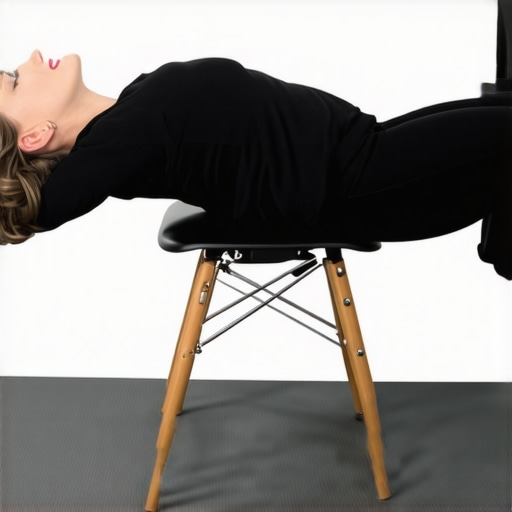 If you are in the middle of a sharp episode, you might also want to check how to use heat and ice correctly for a sudden back flare-up to help quiet the initial inflammation.
Breathe Into Your Hips Not Your Chest
Once you are on the floor, the real work begins. Most people breathe into their upper chest when they are in pain, which actually triggers the ‘fight or flight’ response. Instead, place your hands on the sides of your lower ribs. As you inhale through your nose, imagine you are trying to push your hands out sideways. You aren’t just filling your lungs; you are creating 360 degrees of internal pressure. This internal pressure is like an airbag for your spine. I remember one time I was at a gas station, halfway through a road trip, when my back locked up so badly I couldn’t get back into the driver’s seat. I ended up lying on the questionable tile of the family restroom, focusing on this 360-degree breath for ten minutes. It was messy and embarrassing, but it was the only reason I was able to drive the rest of the way home. It works because it forces the nervous system to let go of the ’emergency brake.’
Move Like Water With a Pelvic Reset
When the muscles start to soften, you can’t just jump up and start running. You have to introduce movement in a way that doesn’t trigger the alarm again. This is where people often mess up by trying to touch their toes. Instead, try the 3-second pelvic reset while still lying down. Think of your pelvis like a bowl of water. Very gently, without using your leg muscles, try to tilt the bowl so a little water spills toward your belly button, then tilt it back so it spills toward your heels. These are tiny, almost invisible movements. If you feel a sharp pinch, you’ve gone too far. For those dealing with shooting leg pain, it is vital to remember to stop pulling your knees to your chest for back relief as this can often aggravate a disc issue rather than helping it.
The Gentle Rocking Method
If the pelvic tilts feel okay, you can progress to the gentle rocking move that calms down a pinched nerve fast. This isn’t about stretching; it’s about ‘flossing’ the nerves and letting the brain know that movement is safe again. By combining this rhythmic motion with your deep diaphragmatic breathing, you are effectively rewriting the software of your movement patterns. This is the foundation of boost your back mobility simple exercises that make a difference, ensuring that you aren’t just masking the pain, but actually teaching your body how to stay fluid and resilient.The most common trap I see people fall into—and trust me, I was the poster child for this—is the ‘stiffen up’ mentality. We are often told to keep our cores tight and our backs straight, but this frequently creates a rigid cage that prevents the spine from doing its primary job: moving. If you are constantly bracing your midsection like you are about to take a punch, you are effectively increasing the compressive load on your own vertebrae. This is exactly why your core strength won’t fix your back if your hips are locked. You need local stability, certainly, but you also need global mobility. Research published in the International Journal of Sports Physical Therapy highlights that over-relying on global mobilizers, like the ‘six-pack’ muscles, can actually shut down the deep stabilizers like the multifidus. This leaves your spine vulnerable and exhausted despite your apparent strength. 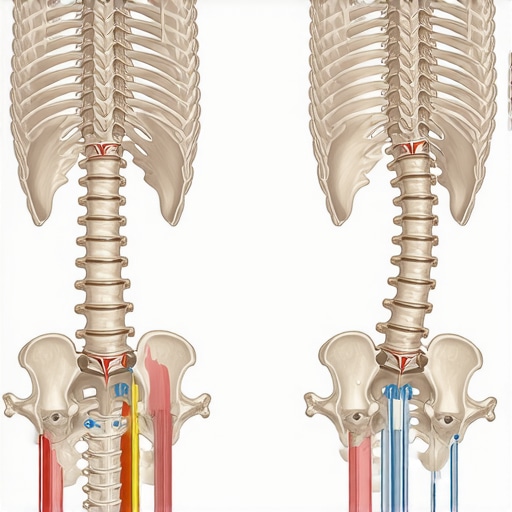
Your ‘Rock Hard’ Core Might Be the Real Culprit
Most people believe that more ‘strength’ is the universal answer to every ache. In reality, a back that is too stiff is just as prone to injury as one that is too weak. When you over-brace, you are sending a persistent signal to your brain that every movement is a potential threat. This creates a neurological feedback loop of tension that can make it difficult to tell if your sciatica is a disc or muscle issue because everything is simply locked down in a defensive crouch. Have you ever tried to ‘brace’ your way out of a back spasm only to feel tighter and more fragile the next day? Let me know in the comments; I spent years thinking my core was weak when it was actually just overworked and exhausted.
The Dangerous Trap of Stretching Through Sciatica
One specific ‘oops’ factor to avoid at all costs is the classic hamstring stretch when you feel a sharp pull in the back of your leg. We have been conditioned to think that ‘tightness equals a need for stretching.’ However, if that tightness is actually neural tension caused by a sensitized sciatic nerve, pulling on the muscle is like tugging on a frayed electrical wire. This is why stretching your hamstrings often makes your sciatica worse. Instead of providing relief, you are further irritating an already inflamed nerve. I’ve seen people set their recovery back by weeks just by doing three sets of ‘toe touches’ they thought were helpful. Recovery requires slackening the nerve, not lengthening it.
Why does my neck still ache even when my posture is ‘perfect’?
The ‘perfect posture’ trap is perhaps the most deceptive of all. Many people sit as straight as a board with their shoulders pinned back, yet they still suffer from relentless tension. The nuance here is that static posture—no matter how ‘correct’ it looks on a diagram—is a form of mechanical stress. Your body craves variety and blood flow. If you are holding that ‘perfect’ position for hours without a break, you are starving your tissues of the movement they need to stay healthy. This is why your perfect sitting posture is making you stiffer. You are often better off moving slightly ‘poorly’ for five minutes than sitting ‘perfectly’ for five hours. Furthermore, the source of your pain is often nowhere near the sensation. If you are searching for the fix for that constant burning sensation between your shoulder blades, the culprit might actually be your jaw or your breathing patterns. There is a documented link between jaw clenching and chronic neck pain that most standard treatments completely ignore. We have to stop looking at the body as a collection of isolated parts and start seeing it as a single, beautifully connected system.
Once you’ve calmed the initial storm of a flare-up, the real challenge begins: staying out of the danger zone. I used to think that because the pain was gone, I was ‘cured.’ I’d go right back to sitting for eight hours and lifting heavy boxes with zero preparation, only to end up right back where I started. This cycle of ‘pain and rest’ is exhausting. I finally realized that why maintenance care is better than waiting for a spinal crisis is because it treats your body like a high-performance machine rather than a disposable part. If you only change the oil when the engine seizes, you aren’t maintaining it; you’re just surviving.
Stop Waiting for the Flare-Up to Take Action
Maintaining a healthy spine isn’t about doing an hour of yoga every morning—it’s about the little decisions you make throughout the day. I call this ‘spinal hygiene.’ For instance, I started paying attention to how I interacted with my environment. I learned how to use a lumbar roll to prevent mid-day back fatigue, and it was a total game-changer for my productivity. Instead of my lower back slowly rounding into a ‘C’ shape while I typed, the roll kept my natural curve intact without me having to think about it. This is the secret to mobility mastery and daily tips to keep your spine and joints healthy—building an environment that supports you so you don’t have to rely on willpower alone.
The Simple Gear That Saved My Spine From Desk Fatigue
People always ask me what expensive gadgets I recommend, but the most effective tools are often the simplest. I carry a tennis ball everywhere. Seriously. Using a tennis ball to release my glutes while sitting in my car or at my desk is how I prevent that ‘locked’ feeling. If you haven’t tried it, you need to learn how to use a tennis ball to relieve glute tension immediately. It’s localized self-massage that keeps the tissue pliable. I also swear by the 20-20-20 rule to keep my neck from seizing. You can use the 20-20-20 rule for neck and eye strain relief to break the cycle of static loading that leads to those nasty tension headaches. According to a study published in the Journal of Manipulative and Physiological Therapeutics, patients who engaged in consistent, low-intensity maintenance routines saw a 40% reduction in the frequency of recurrent episodes compared to those who only sought care when in pain. This isn’t just my opinion; it’s backed by clinical data.
How do I keep my mobility gains without spending hours at the gym?
The key is integration, not isolation. You don’t need a gym membership to stay mobile. I started sneaking in the ‘Bruegger Position’ while waiting for my coffee to brew. It’s the Bruegger position which is a fast way to reset your posture at work or anywhere else. Looking forward, I predict we will see a massive shift toward wearable biofeedback sensors that vibrate when our posture begins to collapse, making ‘spinal hygiene’ almost automatic. Until then, we have to be our own sensors. I highly recommend you start today by trying the nerve glide exercise that calms burning leg pain as a preventative measure. It keeps the sciatic nerve sliding smoothly through the tissues so it doesn’t get snagged the next time you reach for something. Consistency is the only way to achieve lasting comfort and expert strategies for unlocking sciatica relief.
The Lessons I Had to Learn the Hard Way
If I could go back to that day by the dishwasher, I wouldn’t just tell myself to ‘be careful.’ I would explain that my body wasn’t failing; it was talking to me in the only language it had left. One of the biggest shifts for me was realizing that pain is often an invitation to change how we relate to our environment. I spent years treating symptoms while ignoring the fact that poor posture and chronic back pain are two sides of the same coin. I also learned that ‘rest’ doesn’t mean staying still; it means moving within a safe range. If you wait until you are 100% pain-free to move, you might be waiting forever. You have to conquer sciatica by showing your brain that small, controlled movements are not a threat.
My Personal Recovery Toolkit
You don’t need a basement full of equipment to maintain a healthy spine. My daily ‘survival kit’ includes a simple tennis ball for glute release and a dedicated lumbar roll for my desk chair. I’ve found that knowing how to use a lumbar roll to prevent mid-day back fatigue is worth more than ten expensive massage sessions. I also prioritize effective techniques for lasting neck pain relief like the 20-20-20 rule to keep tension from creeping down my spine. These tools aren’t just gadgets; they are my defense against the static nature of modern life. #IMAGE_PLACEHOLDER_E#
Take Back Your Mobility Today
Healing isn’t a straight line, and there will be days when your back feels like it’s taking a step backward. But with these back pain breakthroughs, you are no longer a victim of your anatomy. You have the breathing techniques, the pelvic resets, and the movement shifts to navigate your way back to comfort. You are more resilient than you feel right now. What is the one thing you find most difficult about managing your back pain daily? Let’s chat in the comments below.