
Why your standing desk is giving you lower back pain
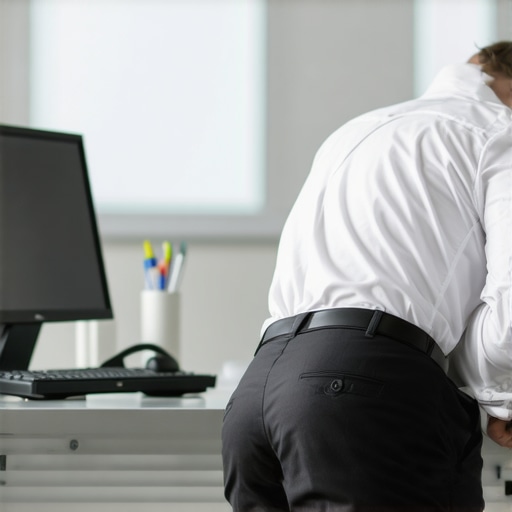
I remember the day I finally unboxed my shiny new motorized standing desk. I was convinced I was “cured.” No more slumping in a chair! No more understanding the link between poor posture and chronic back pain. I threw my old office chair into the garage and prepared to be the picture of ergonomic health. Fast forward three days, and I was lying on the floor with a heating pad, wondering why my lower back felt like it had been through a car compactor.
Stop Standing Like a Statue at Your Desk
The mistake I made—and maybe you’re making it too—was thinking that “standing” is a magic pill. I stood for eight hours straight on Monday. By Wednesday, my hips were locked and my lower spine was screaming. It turns out, just standing there isn’t enough; in fact, learning how to transition to a standing desk without leg pain requires a bit more strategy than I gave it credit for. We’re going to fix your setup today so you can actually enjoy your workday without that “afternoon ache.” Have you ever found yourself shifting your weight from foot to foot just to survive the last hour of emails?
Are standing desks just a giant marketing scam?
You might be feeling skeptical. I certainly was when I couldn’t even bend over to tie my shoes after a “healthy” standing day. But the problem usually isn’t the desk; it’s how our bodies compensate when we get tired. When we stand too long without moving, our pelvis tilts, our glutes turn off, and our lower back takes the brunt of the weight. A study published in the Journal of Physical Therapy Science points out that prolonged static standing can lead to significant musculoskeletal strain if the individual lacks proper support or movement breaks. If your hips are locked up, your spine doesn’t stand a chance, because your core strength won’t fix your back if your hips are locked. We need to look at why your specific stance is causing this flare-up and how a simple 10-second hip reset can change your entire day. Let’s dig into the mechanics of why your back is angry and how to appease it. [image_placeholder]
Stop Treating Your Spine Like a Single Piece of Wood
Think of your spine not as a rigid rod, but as a stack of coins balanced on a moving tray. When you stand perfectly still, your muscles eventually fatigue and the “tray” (your pelvis) tips. I used to think standing “straight” meant locking my knees and tensing my abs until I was blue in the face. I was wrong. Instead, you need to adopt a “dynamic” stance that allows your weight to shift naturally.
Keep Your Hips from Spilling Over
Imagine your pelvis is a bowl full of water. If you stand with your belly pushed forward and your butt sticking out, the water spills out the front. This “anterior pelvic tilt” puts a massive amount of pressure on your L4 and L5 vertebrae. You might find that why your workout might be causing your pelvic tilt actually stems from how you stand during the day rather than your gym form. To fix this, tuck your tailbone slightly—just enough to feel your glutes engage. This levels the bowl and lets your core do its job without you having to think about it.
The Kickstand Method for Instant Relief
During a grueling three-hour marathon of client calls last month, I felt that familiar, sharp burn in my SI joint. I grabbed a small stack of heavy books and put my right foot up on them while I kept my left foot on the floor. Instantly, the pressure vanished. This is the “kickstand.” By elevating one foot, you force your pelvis to rotate and take the strain off your lumbar spine. You can apply the same logic when you’re not at your desk; for example, knowing how to use a step stool to save your lower back in the kitchen is a total game changer for long dish-washing sessions or meal prep. 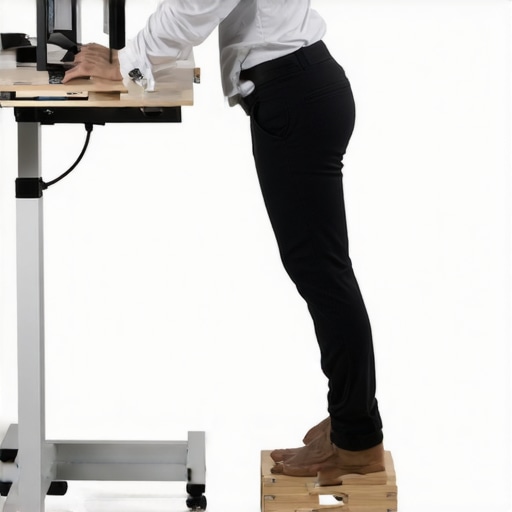
Movement Trumps Position Every Time
No matter how “perfect” your posture is, your body wasn’t meant to be a statue. If you stay in one spot for more than 20 minutes, your tissues begin to “creep,” which is just a fancy way of saying they stretch out and lose their supportive tension. This is why mobility mastery and daily tips to keep your spine and joints healthy emphasize variety over perfection.
Release the Front of Your Body
The biggest enemy of the standing desk worker isn’t actually the back—it’s the front. Your hip flexors have been shortened from years of sitting, and now they are pulling on your spine while you stand. Try the 5-minute hip flexor release for desk workers halfway through your morning. When these muscles are tight, they act like a bowstring, pulling your spine into a curve that causes that deep, dull ache that no amount of coffee can distract you from.
Check Your Monitor Height One More Time
If you’re looking down even slightly, your neck muscles are working triple time to hold up your head. This tension travels down your spine like a kinetic chain, eventually manifesting as lower back pain. You need to enhance your back mobility with ergonomic tips for everyday comfort to ensure your eye line is level with the top third of your screen. If you have to lean your head forward to see, your lower back is the part of the body that will eventually pay the price for that forward head posture.Most of us were taught that if a muscle feels tight, we should stretch it until the cows come home. But let’s dig deeper into why this common sense approach is actually a recipe for chronic inflammation. When you feel that biting tension in the back of your leg, your instinct is to reach for your toes. However, if that tension is coming from the sciatic nerve rather than the muscle fibers, you aren’t stretching—you are tugging on a highly sensitive electrical cable. This is exactly why stretching your hamstrings often makes your sciatica worse. It creates a bowstring effect that irritates the nerve further.
Stop pulling on your tight hamstrings
Here is the contrarian truth: that tightness you feel is often a neurological defense mechanism. Your brain is intentionally tightening your hamstrings because it feels a lack of stability in your spine. If you force those muscles to relax through aggressive stretching, you’re stripping away your body’s last line of defense. This leads to back pain breakthroughs and navigating your path to restored mobility by focusing on stabilization rather than just flexibility.
How can you tell if your leg pain is a disc or just a tight glute?
It’s a nuance most people miss. True disc-related sciatica usually presents with sharp, electric-like pain that follows a specific path to the foot, whereas muscle-based entrapment (like Piriformis Syndrome) tends to stay in the glute and upper thigh. You can learn how to tell if your sciatica is a disc or muscle issue by testing your range of motion without the electric zing. A study in the Journal of Orthopaedic & Sports Physical Therapy found that nerve gliding—a method of gently sliding the nerve through its canal—is significantly more effective for recovery than static stretching. Instead of the old-school methods, try the nerve glide exercise that calms burning leg pain. #IMAGE_PLACE_HOLDER_C#
The hidden reason your core isn’t helping
Another massive oops factor is the common advice to just strengthen your core. I’ve seen athletes with six-packs who can’t stand for ten minutes without a flare-up. If you are doing standard crunches, you might be making things worse. You need unlocking mobility and expert tips on managing back pain in 2025 to understand that the core must function as a stabilizer, not a mover. For example, many people stop pulling your knees to your chest for back relief once they realize that rounding the spine actually increases pressure on the lumbar discs. If you’ve ever felt a sharp pinch when you sneeze or cough, is your back pain a sign of something more serious? These are the red flags that your stretching routine is actually a nerve-irritation routine. Have you ever fallen into this trap of over-stretching only to feel worse the next day? Let me know in the comments.
If you have already fallen into the trap of over-stretching only to feel worse the next day, you are not alone. Transitioning from reactive pain management to a proactive, long-term strategy requires shifting your focus from ‘fixing a break’ to ‘maintaining a machine.’ We have talked about the mistakes, but let’s talk about the gear and the habits that actually keep the needle moving in the right direction.
Ditch the Flat Mat for Something More Rugged
One of the first things I upgraded in my own home office was my anti-fatigue mat. Most people buy a cheap, flat foam rectangle and call it a day. I switched to a topographical mat—one with mounds, ramps, and different textures. This forces your feet into ‘micro-movements.’ When your feet are constantly adapting to different angles, your calves, knees, and hips never get the chance to lock into a static, painful position. This is a crucial part of how to enhance your back mobility with ergonomic tips for everyday comfort. If your feet are bored, your back will eventually pay the price.
How do I maintain my spinal health over a long career?
The secret is consistency over intensity. I used to think a 90-minute yoga session on Saturday would undo 40 hours of poor posture. It doesn’t work like that. Maintenance is about ‘greasing the groove’ throughout the day. I now use a simple lumbar roll to prevent mid-day back fatigue whenever I do have to sit. Dr. Stuart McGill, a world-renowned expert in spine biomechanics, emphasizes that the ‘dose’ of movement matters more than the specific exercise. He suggests that short, frequent walks are far superior to one long gym session for those with disc issues. This philosophy is why I advocate for why maintenance care is better than waiting for a spinal crisis. 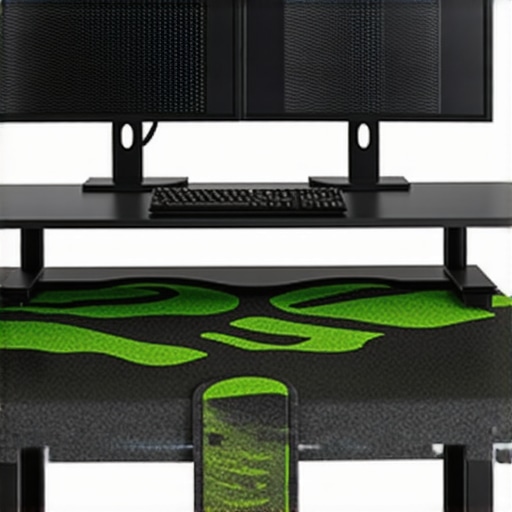
Your Monitor Arm is More Important Than Your Desk
If you are still using a stack of books to prop up your screen, you are playing a dangerous game with your cervical spine. A gas-spring monitor arm allows you to adjust your screen height based on whether you are standing in a ‘power stance’ or leaning slightly back. This precision is vital to adjust your monitor to stop that burning neck pain that usually starts at the base of the skull and radiates down. When your monitor is at the wrong height, your chin drifts forward—a phenomenon often called ‘tech neck’—which places up to 60 pounds of extra pressure on your neck joints.
The Biofeedback Revolution is Coming
I predict that in the next five years, we won’t just have ‘smart’ desks; we will have biofeedback sensors integrated into our work chairs and mats. We are already seeing the beginning of this with wearable posture cues. These tools aren’t just gadgets; they are training wheels for your nervous system. For now, you can create your own biofeedback by setting a ‘posture alarm’ every 30 minutes. When it goes off, perform a quick body scan: Are your glutes squeezed? Is your chin tucked? Is your weight even? This level of mobility mastery and daily tips to keep your spine and joints healthy is what separates those who recover from those who stay in a cycle of flare-ups.
Try the Two-Minute Desk Reset Today
Don’t wait until your back is screaming to change your setup. I want you to try one specific thing right now: Lower your monitor by just one inch if you find yourself tilting your chin up, or raise it if you are looking down. Then, commit to a simple exercise that makes a difference by performing three slow ‘neck tucks’ against your headrest. This small adjustment can be the catalyst for back pain breakthroughs and navigating your path to restored mobility.
Hard Truths About Why My High-End Desk Didn’t Fix Everything
Looking back at my first few weeks with a motorized desk, I realize I was trying to buy my way out of a problem that required a change in behavior rather than just a change in furniture. Here are the lightbulb moments that finally made the difference: First, a ‘perfect’ position doesn’t exist; even the best ergonomics fail if you don’t move, because why your perfect sitting posture is making you stiffer usually comes down to the lack of micro-movements your body craves. Second, pain isn’t something to power through with caffeine—it’s your nervous system’s way of asking for a change in stance. Finally, I learned that stability is the forgotten half of the mobility equation. If you don’t stabilize your core correctly, all the standing in the world won’t save your lumbar discs from the pressure of gravity.
The Small Kit That Changed My Workday Forever
If you’re ready to upgrade your setup without spending a fortune, these are the resources and tools I personally rely on every single day to keep the ‘afternoon ache’ at bay. I am a huge advocate for using a topographical anti-fatigue mat rather than a flat one, as the uneven surface keeps your ankles and calves engaged. I also keep a simple tennis ball nearby for a quick glute release if I feel tension creeping into my hips. When I do need to sit, knowing how to pick a chair that actually supports your lumbar curve is non-negotiable for protecting my lower back. For those moments when the ache feels different or sharper than usual, I always recommend checking if is your back pain a sign of something more serious to ensure you aren’t ignoring a red flag. These aren’t just gadgets; they are the baseline for a sustainable, healthy career.
#IMAGE_PLACEHOLDER_FINAL#
Your Next Step Toward a Pain-Free Work Life
Transitioning away from chronic pain isn’t about one giant leap; it’s about these small, intentional adjustments you make every hour. You deserve a workday where your focus is on your projects, not on the burning sensation in your lower back or the tightness in your neck. By integrating these strategies, you are moving toward back pain breakthroughs and navigating your path to restored mobility. Remember, your body is resilient and incredibly capable of change if you provide it with the right environment and movement cues. Start with one small tweak today—perhaps raising your monitor or engaging your glutes—and watch how your energy levels transform. Which part of your current desk setup feels the most ‘stiff’ or uncomfortable by 3 PM? Let’s troubleshoot your specific setup in the comments below!